
Why Belly Fat Is About More Than Appearance
Belly fat is often viewed as a cosmetic issue.

But biologically, excess visceral fat may function more like an active inflammatory organ.
Visceral fat surrounds internal organs and is strongly connected to:
- insulin resistance,
- chronic inflammation,
- hormonal disruption,
- fatty liver,
- cardiovascular risk,
- and metabolic dysfunction.
This is why waist circumference can sometimes reveal more about metabolic health than body weight alone.
The body stores fat differently depending on:
- stress hormones,
- sleep quality,
- insulin levels,
- inflammation,
- muscle mass,
- and lifestyle patterns.
Chronic stress may be especially important.

When cortisol remains elevated for long periods, the body may shift toward greater abdominal fat storage while increasing cravings for highly processed foods.
Poor sleep can worsen the problem further by disrupting hunger hormones like ghrelin and leptin.
The solution is rarely “exercise harder.”
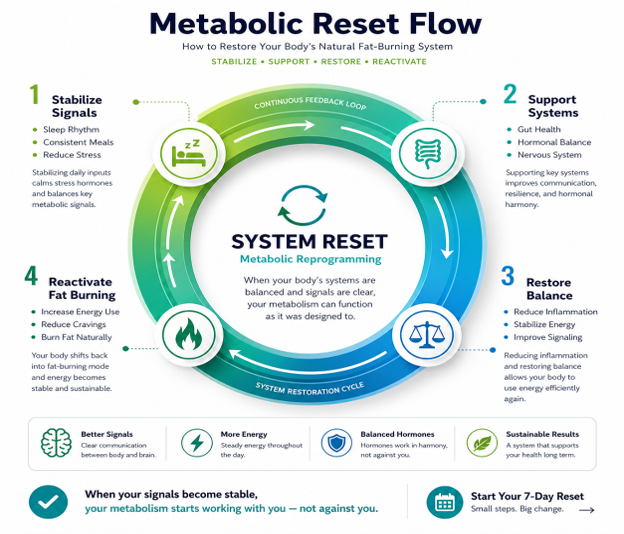
The deeper solution is improving the metabolic environment itself.
That often means:
- improving recovery,
- stabilizing blood sugar,
- supporting circadian rhythm,
- building muscle,
- lowering inflammatory load,
- and reducing chronic stress signals.

Fat loss becomes more sustainable when the body is functioning more efficiently internally.
👉 The Metabolism Reset Blueprint explains how metabolism, hormones, inflammation, and lifestyle systems interact to influence long-term weight regulation.