
Why Poor Sleep Can Slow Fat Burning
Sleep is one of the most overlooked factors in metabolism.
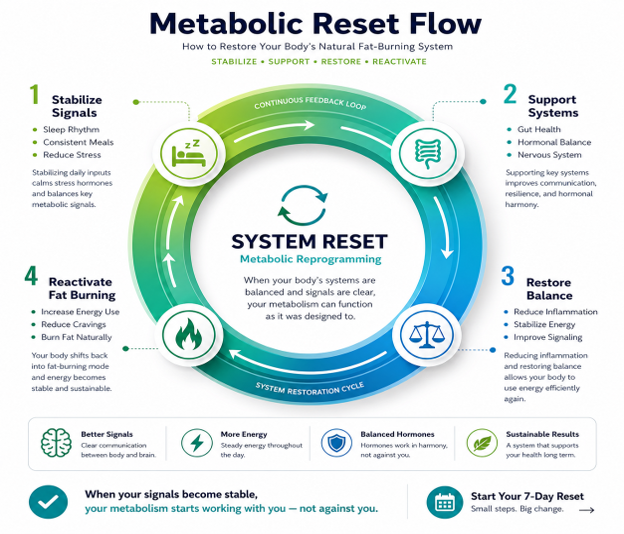
Even a few nights of poor sleep may influence:
- appetite hormones,
- insulin sensitivity,
- cravings,
- recovery,
- stress hormones,
- and fat storage patterns.
When sleep quality declines, the body often increases ghrelin (the hunger hormone) while reducing leptin (the fullness hormone).

This may lead to:
- increased hunger,
- stronger sugar cravings,
- lower energy,
- and poorer food choices.
Sleep deprivation may also elevate cortisol, which can contribute to abdominal fat accumulation and metabolic stress.
At the same time, fatigue often reduces movement and exercise performance, creating a compounding metabolic effect.

The body performs many repair processes during sleep:
- hormonal regulation,
- nervous system recovery,
- glucose regulation,
- inflammation control,
- and cellular restoration.
Without adequate recovery, fat loss becomes much harder.

Improving metabolism sometimes begins not in the gym —
but in the bedroom.
Helpful strategies may include:
- consistent sleep schedules,
- reducing nighttime light exposure,
- limiting late caffeine,
- morning sunlight,
- stress management,
- and improving circadian rhythm consistency.
Recovery is not laziness.
Recovery is metabolic biology.
👉 The Metabolism Reset Blueprint explores how sleep, hormones, stress, and inflammation influence fat-burning and long-term metabolic health.