
The Sleep–Inflammation Cycle and Accelerated Aging
Chronic sleep deprivation does more than cause fatigue.
It may accelerate biological aging itself.
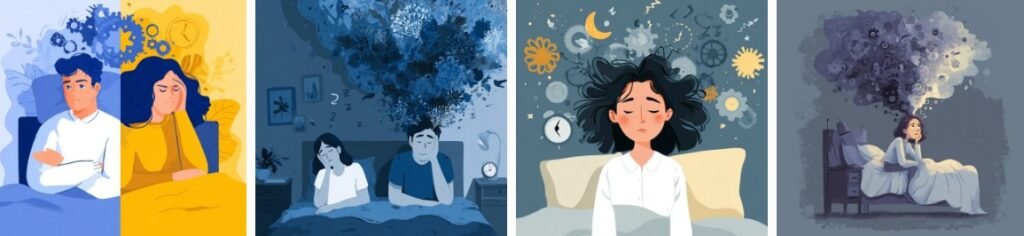
Poor sleep increases inflammatory activity throughout the body. Inflammation is a natural survival mechanism designed to protect against infection and injury. But when inflammation becomes chronic, it contributes to many modern diseases.
Sleep loss acts as a physiological stressor.
Research shows that inadequate sleep may increase inflammatory markers such as:
- C-reactive protein (CRP),
- interleukin-6 (IL-6),
- and tumor necrosis factor-alpha (TNF-α).
Over time, chronic inflammation can damage blood vessels, metabolic systems, immune regulation, and cellular repair processes.
This may contribute to:
- cardiovascular disease,
- obesity,
- diabetes,
- depression,
- arthritis,
- cognitive decline,
- and accelerated aging.
The relationship between sleep and inflammation is bidirectional.
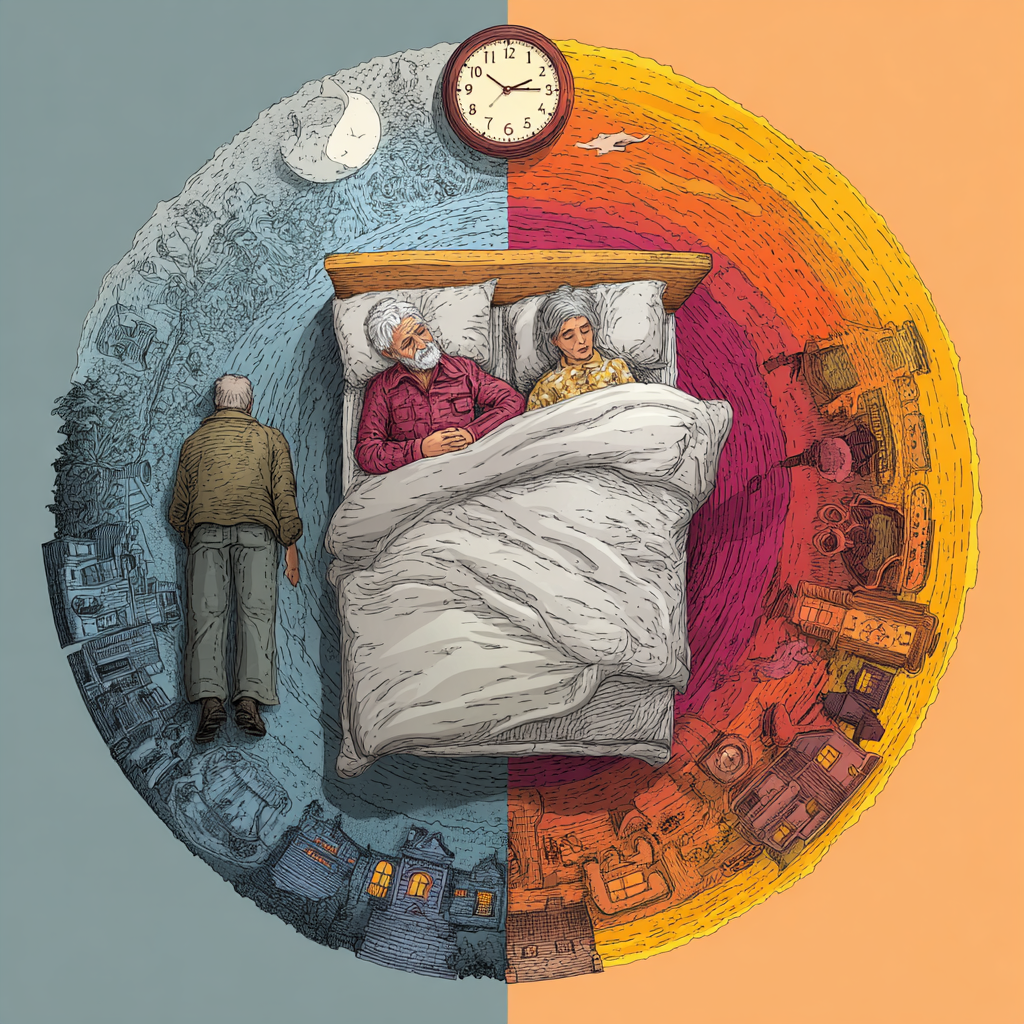
Poor sleep increases inflammation.
Inflammation then worsens sleep quality.
This creates a self-reinforcing cycle that can slowly erode long-term health.
Sleep deprivation also increases oxidative stress — an imbalance between free radical production and the body’s antioxidant defense systems. Excess oxidative stress may damage DNA, mitochondria, proteins, and cellular membranes.
Mitochondria — the energy-producing structures inside cells — appear particularly sensitive to chronic sleep disruption.
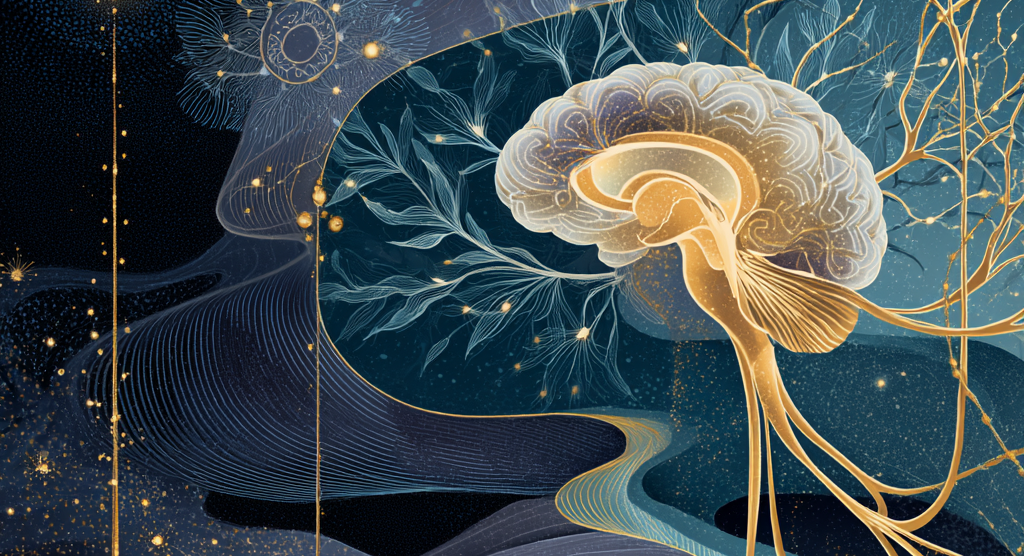
As mitochondrial efficiency declines:
- fatigue increases,
- metabolic resilience decreases,
- and recovery slows.
Sleep is also deeply connected to hormonal aging.
Insufficient sleep may disrupt:
- growth hormone production,
- testosterone balance,
- cortisol rhythms,
- insulin sensitivity,
- and appetite regulation.
This hormonal disruption may accelerate biological wear and tear over time.
Many scientists now view sleep as one of the central pillars of longevity medicine.
Healthy aging is not only about lifespan.
It is about preserving resilience, function, cognition, and recovery capacity.
Deep sleep is one of the body’s most powerful anti-inflammatory and regenerative states.
Protecting sleep may therefore help slow biological aging and support long-term vitality.
8. Natural Sleep Recovery: Rebuilding Healthy Sleep Without Dependence
Many people desperately want better sleep but feel trapped in cycles of exhaustion, stimulation, and dependence on sleep aids.
The good news is that the human body often retains a remarkable ability to restore natural sleep when underlying biological systems are supported correctly.
Healthy sleep is not usually created by forcing unconsciousness.
It is created by restoring the conditions that allow the brain to feel safe enough to enter deep recovery states naturally.
Sleep recovery begins with circadian restoration.
Some of the most effective foundational strategies include:
- waking at consistent times,
- obtaining morning sunlight exposure,
- dimming lights in the evening,
- reducing nighttime screen use,
- and maintaining predictable sleep schedules.

Consistency trains the body’s internal clock.
Movement also matters.
Regular physical activity improves:
- insulin sensitivity,
- stress regulation,
- body temperature rhythms,
- and sleep pressure accumulation.
Even simple daily walking may improve sleep quality significantly.
Nutrition plays an important role as well.
Sleep-supportive nutrition often emphasizes:
- stable blood sugar,
- adequate protein,
- magnesium-rich foods,
- omega-3 fats,
- fiber,
- and reduced ultra-processed food intake.
Late-night heavy meals, excessive alcohol, and high sugar intake may impair sleep architecture.
Stress reduction is equally important.
Helpful calming practices may include:
- meditation,
- breathwork,
- stretching,
- prayer,
- journaling,
- reading,
- warm baths,
- or quiet evening routines.
The goal is to signal safety to the nervous system.
Sleep environments also matter.
Ideal sleep environments are often:
- cool,
- dark,
- quiet,
- and free from excessive stimulation.
Even small environmental changes may improve sleep quality dramatically.
Importantly, recovery takes time.
Modern sleep dysfunction often develops over years of chronic stress and circadian disruption. Rebuilding healthy sleep patterns may require patience and consistency.
The body heals gradually.
But many people experience meaningful improvements in:
- energy,
- mood,
- focus,
- inflammation,
- metabolism,
- and emotional resilience
once deep restorative sleep begins returning.
9. The 30-Day Sleep Reset: A Systems-Based Recovery Approach
Sleep recovery is often most effective when approached as a full-body systems reset rather than a single “sleep hack.”
A systems-based sleep reset focuses on restoring biological rhythm, calming the nervous system, stabilizing metabolism, and rebuilding recovery capacity over time.
The first week typically focuses on circadian stabilization.
Key priorities may include:
- waking at the same time daily,
- obtaining morning sunlight,
- limiting nighttime light exposure,
- and reducing evening overstimulation.
This helps retrain the brain’s internal clock.
The second phase often emphasizes nervous system recovery.
Helpful additions may include:
- evening relaxation rituals,
- meditation,
- reduced caffeine intake,
- gentle movement,
- and improved stress management.
Many people notice reductions in nighttime anxiety and racing thoughts during this stage.
The third phase targets metabolic support.
Stable blood sugar regulation becomes important for reducing nighttime awakenings and improving hormonal balance. Strategies may include:
- reducing refined carbohydrates,
- increasing protein and fiber,
- avoiding heavy late-night eating,
- and improving daily movement patterns.
The final stage focuses on optimization and consistency.
At this point, many individuals begin experiencing:
- deeper sleep,
- improved morning energy,
- more vivid recovery,
- better mood stability,
- and reduced daytime fatigue.
Importantly, the goal is not perfection.
Modern life will always contain stressors. The purpose of a sleep reset is to strengthen resilience so the body can recover more efficiently even in imperfect environments.
A sustainable sleep routine is more valuable than extreme short-term interventions.
The most successful sleep recovery plans are usually:

- practical,
- consistent,
- biologically aligned,
- and sustainable long term.
Deep sleep is one of the body’s most powerful healing mechanisms.
Restoring it may improve nearly every major system in human health.
10. The Future of Sleep Medicine and Human Recovery
Sleep science is entering a new era.
For decades, modern medicine often treated sleep problems primarily with sedatives and symptom management. But researchers increasingly recognize that sleep is not an isolated nighttime issue — it is a central regulator of nearly every biological system.
The future of sleep medicine is becoming more systems-based, personalized, and prevention-focused.
Emerging technologies now allow researchers to study:
- circadian biology,
- brain wave activity,
- heart rate variability,
- metabolic health,
- inflammation,
- environmental exposures,
- and nervous system regulation in far greater detail.
Wearable devices and digital health tools are making sleep tracking more accessible than ever. While no consumer device perfectly measures sleep, these technologies may help individuals recognize patterns related to:
- bedtime consistency,
- stress load,
- recovery quality,
- and circadian disruption.
Artificial intelligence may eventually help personalize sleep optimization by integrating:
- biomarker data,
- environmental information,
- lifestyle behaviors,
- and physiological trends.
Future sleep medicine may increasingly focus on root-cause restoration rather than symptom suppression alone.
Researchers are also exploring:
- light therapy,
- chronobiology,
- microbiome influences,
- metabolic interventions,
- neuroplasticity,
- and nervous system regulation.
The future of human health may depend heavily on protecting recovery biology.
Modern civilization has become extraordinarily efficient at stimulating humans — but far less effective at helping humans recover.
Deep sleep may become one of the defining health priorities of the future longevity movement.

Because ultimately, sleep is not simply about rest.
It is about:
- repair,
- resilience,
- memory,
- immunity,
- emotional balance,
- metabolic stability,
- and the preservation of human vitality itself
Sleep is one of the most underestimated pillars of preventive longevity.
Modern neuroscience now shows that high-quality sleep directly supports: