
The Stress–Sleep Connection
Why Your Brain Feels Exhausted but Still Can’t Relax at Night

One of the most frustrating experiences in modern life is feeling physically exhausted while mentally unable to sleep.
Millions of people lie in bed every night with racing thoughts, elevated anxiety, shallow breathing, and nervous system tension. Their bodies are tired, but their brains remain alert.
This is not simply a lack of discipline.
It is often a nervous system problem.
Modern humans are living in a state of chronic overstimulation that the human brain was never designed to handle continuously. The result is a widespread biological conflict between exhaustion and hypervigilance.

Understanding the relationship between stress and sleep may be one of the most important steps toward restoring deep natural recovery.
The Human Nervous System Was Built for Survival
The nervous system evolved to protect humans from danger.
When the brain perceives threat, the sympathetic nervous system activates the “fight or flight” response. Stress hormones such as cortisol and adrenaline rise, heart rate increases, blood sugar elevates, and alertness sharpens.
This survival response is useful during short-term emergencies.
The problem is that modern stress is rarely short term.

Today’s brain faces:
- Constant notifications
- Financial pressure
- Information overload
- Social comparison
- Emotional burnout
- Digital stimulation
- News anxiety
- Sleep deprivation
- Chronic work stress
Unlike ancient threats, these stressors often never fully stop.
The nervous system therefore remains chronically activated.
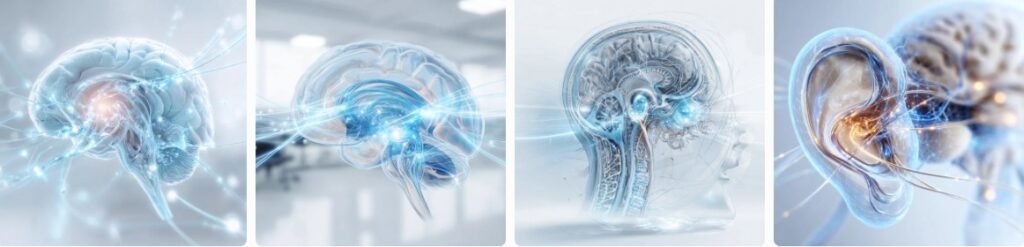
Hyperarousal: The Modern Sleep Problem
Many sleep disorders are linked to a condition called hyperarousal.
Hyperarousal occurs when the brain remains excessively alert even when the body is trying to rest.
Symptoms may include:
- Racing thoughts
- Difficulty falling asleep
- Frequent nighttime waking
- Anxiety before bed
- Muscle tension
- Elevated heart rate
- Feeling “wired but tired”
The brain essentially struggles to switch from survival mode into recovery mode.
This is why many people feel exhausted during the day but suddenly more mentally awake at night.

The nervous system has lost flexibility.
Cortisol and the Sleep Cycle
Cortisol is often called the “stress hormone,” but it is also a critical circadian hormone.
Healthy cortisol follows a daily rhythm:
- Higher in the morning
- Lower at night
Morning cortisol helps increase alertness and energy.
At night, cortisol should naturally decline so melatonin and parasympathetic recovery can emerge.
Chronic stress disrupts this rhythm.
Late-night cortisol elevation may interfere with:
- Melatonin production
- Deep sleep
- REM sleep
- Nervous system recovery
Many modern adults therefore experience “reversed” stress biology:
- Exhausted in the morning
- Alert at night
This pattern reflects circadian and nervous system dysregulation.

The Brain Needs Safety to Sleep Deeply
Deep sleep is not merely a mechanical process.
It is also a biological state of safety.
The brain continuously scans the environment for signs of danger. If the nervous system perceives ongoing threat, deep restorative sleep becomes more difficult.
Modern overstimulation creates persistent danger signals:
- Loud media
- Emotional stress
- Late-night work
- Social conflict
- Blue light exposure
- Uncertainty and anxiety
Even subtle psychological stress may keep the brain partially alert during sleep.
This is why nervous system regulation matters so much.
The goal is not simply sedation.
The goal is helping the brain feel safe enough to fully recover.
Sleep Deprivation Increases Stress Sensitivity
The relationship between stress and sleep works both ways.
Poor sleep increases emotional reactivity and stress vulnerability.
Even one night of inadequate sleep may:
- Increase cortisol
- Reduce emotional regulation
- Heighten anxiety
- Impair decision-making
- Increase inflammation
The amygdala — the brain’s emotional threat detector — becomes more reactive during sleep deprivation.
At the same time, the prefrontal cortex, responsible for rational thinking and emotional control, becomes less effective.
The result is a brain that becomes more emotionally overwhelmed by everyday stressors.
This creates a vicious cycle:
Stress disrupts sleep → poor sleep increases stress sensitivity → stress worsens further.
Technology and Nervous System Overload
Modern technology profoundly affects sleep biology.
Humans are now exposed to near-continuous stimulation:
- Emails
- Social media scrolling
- Streaming platforms
- News feeds
- Gaming
- Smartphone notifications
The brain rarely experiences true psychological silence.
This constant input increases dopamine-driven alertness and reduces opportunities for mental decompression.
Many people transition directly from intense stimulation into bed without giving the nervous system time to downshift.
The brain therefore remains cognitively active long after lights are turned off.

The Role of Deep Sleep in Brain Recovery
Deep sleep is essential for neurological restoration.
During deep sleep:
- Brain energy metabolism resets
- Memory consolidation occurs
- Emotional processing improves
- Glymphatic detoxification activates
- Inflammatory waste products clear
Without adequate deep sleep, the brain accumulates recovery deficits over time.
This may contribute to:
- Brain fog
- Mood instability
- Reduced focus
- Anxiety
- Burnout
- Cognitive fatigue
Sleep is therefore not passive inactivity.
It is active neurological repair.
Natural Strategies to Calm the Nervous System
Restoring sleep often requires calming the nervous system before bedtime.
Helpful approaches may include:
- Evening light reduction
- Reduced screen exposure
- Breathwork
- Gentle stretching
- Meditation
- Reading physical books
- Journaling
- Warm showers
- Consistent sleep timing
- Relaxing nighttime rituals
These activities help shift the body toward parasympathetic activation.
Consistency matters more than perfection.
The nervous system responds to repeated signals of safety and predictability.

Sleep Support Is About Recovery, Not Sedation
Many modern sleep solutions focus only on forcing unconsciousness.
But sedation is not always the same as restorative sleep.
True sleep recovery depends on:
- Circadian alignment
- Nervous system regulation
- Stress reduction
- Metabolic balance
- Brain recovery
Natural sleep support should therefore aim to restore biological balance rather than simply suppress symptoms.
Final Thoughts
Modern humans are not failing at sleep because they are weak.
They are struggling because their nervous systems are overloaded.
The modern environment continuously pushes the brain toward vigilance, stimulation, and stress activation. Deep sleep becomes difficult when the nervous system no longer feels biologically safe.

The solution is not simply “trying harder” to sleep.
It is rebuilding the conditions that allow the brain and body to shift naturally into recovery.
Deep sleep begins when survival mode finally quiets down.
If you’re exploring evidence-informed approaches to sleep support, the next step is understanding what current research suggests. Not every solution works the same way for everyone, but knowing science can help you make more confident and informed decisions.