
Your Brain Is an Energy-Hungry Organ
Although the brain represents only about 2% of body weight, it consumes roughly 20% of the body’s resting energy. Every thought, memory, and decision depends on a continuous supply of oxygen, glucose, and healthy mitochondrial function. Supporting brain energy starts with supporting the entire body—not just the brain itself.
The Brain: A Small Organ with Extraordinary Energy Demands
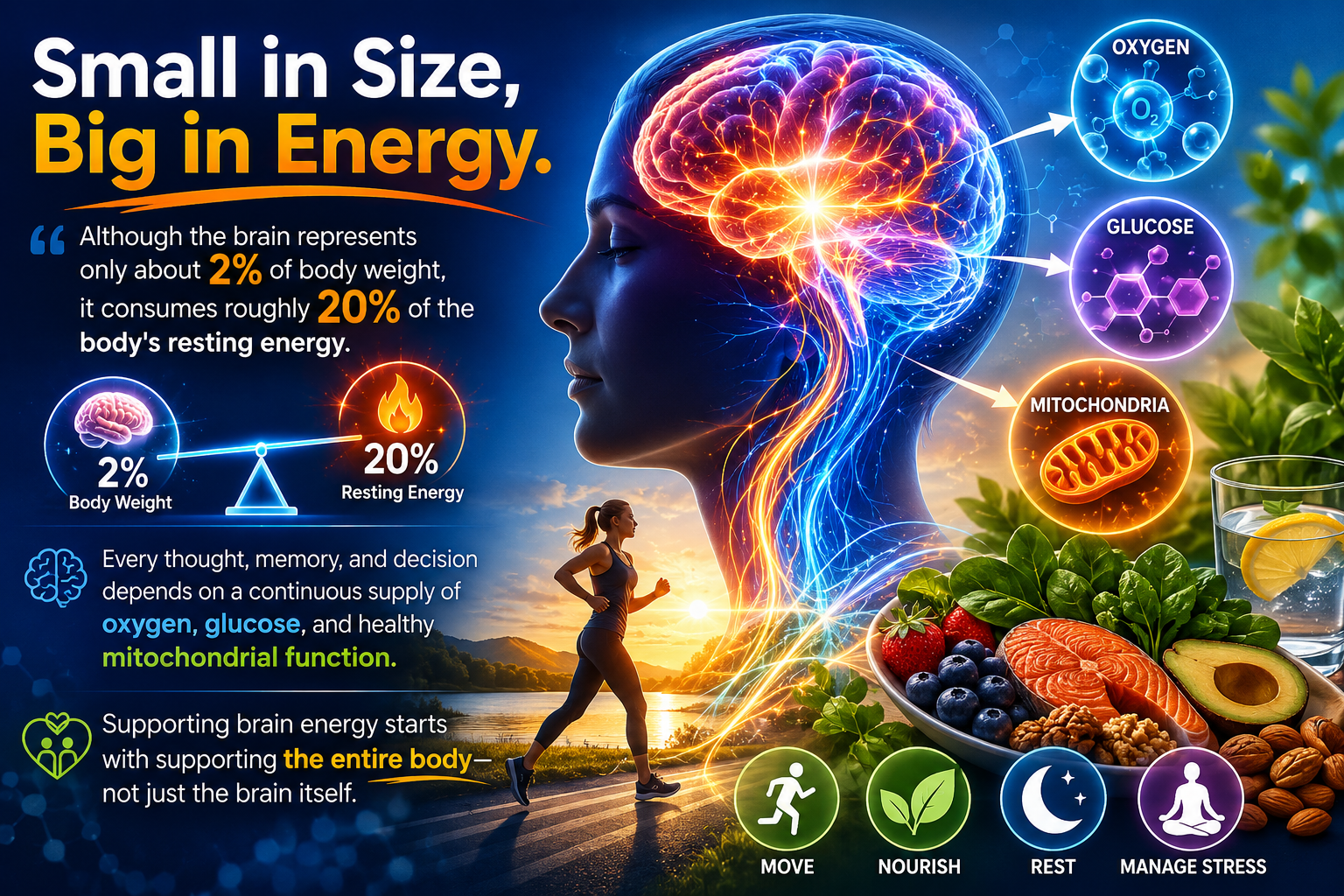
Although the human brain accounts for only about 2% of total body weight, it consumes approximately 20% of the body’s resting energy. This remarkable contrast highlights just how metabolically active the brain is. Every second, billions of neurons communicate through intricate electrical and chemical signals that allow us to think, remember, solve problems, regulate emotions, and interact with the world around us. These continuous activities require an uninterrupted supply of energy.
Unlike many other tissues, the brain stores very little energy. Instead, it depends on a constant delivery of oxygen and nutrients through healthy blood circulation. Glucose serves as the brain’s primary energy source under most normal conditions, while oxygen enables cells to efficiently convert that fuel into usable energy. Even brief interruptions in blood flow or oxygen delivery can influence cognitive performance, emphasizing the importance of maintaining healthy cardiovascular function.
At the center of this energy-producing process are mitochondria, often called the “powerhouses” of the cell. These tiny structures transform nutrients into adenosine triphosphate (ATP), the molecule that powers virtually every cellular activity. Neurons are especially rich in mitochondria because of their enormous energy requirements. Healthy mitochondrial function supports communication between nerve cells, neurotransmitter production, memory formation, learning, and many other aspects of brain performance.
Researchers continue to investigate how mitochondrial health may influence healthy cognitive aging and overall brain resilience. While aging naturally affects mitochondrial efficiency, healthy lifestyle habits may help support normal cellular function throughout life. Scientific evidence suggests that regular physical activity, balanced nutrition, restorative sleep, and effective stress management all contribute to maintaining healthy energy metabolism across multiple organ systems.
Brain energy, however, does not depend on the brain alone. It reflects the coordinated function of the entire body. The cardiovascular system delivers oxygen and nutrients. The lungs provide oxygen through respiration. The digestive system absorbs nutrients needed for energy production. The liver helps regulate glucose availability. Muscles influence insulin sensitivity and metabolic flexibility. Hormones coordinate energy balance, while the immune system helps maintain a healthy internal environment. Together, these systems form an interconnected biological network that supports healthy brain function every day.
Nutrition plays an important role in this process. Diets that emphasize vegetables, fruits, legumes, whole grains, healthy fats, lean proteins, nuts, and seeds provide vitamins, minerals, antioxidants, and other nutrients that participate in normal cellular metabolism. Adequate hydration also supports circulation and the delivery of nutrients throughout the body. While no single food can dramatically enhance cognitive performance, long-term dietary patterns contribute to overall health and may help support normal brain function.
Physical activity is another essential contributor to brain energy. Exercise promotes healthy circulation, improves cardiovascular fitness, enhances oxygen delivery, and supports metabolic health. Regular movement also stimulates the release of signaling molecules that encourage neuroplasticity—the brain’s ability to adapt, reorganize, and form new neural connections throughout life. Even moderate activities such as walking, cycling, swimming, or resistance training can become valuable components of a brain-supportive lifestyle.
Sleep provides another critical opportunity for restoration. During healthy sleep, the brain consolidates memories, regulates hormones, supports waste clearance, and restores energy balance. Chronic sleep deprivation may reduce attention, reaction time, learning efficiency, and emotional regulation. Prioritizing consistent, high-quality sleep is therefore an important investment in long-term cognitive wellness.
Finally, chronic psychological stress can influence brain energy through hormonal, inflammatory, and metabolic pathways. Developing healthy coping strategies—including mindfulness, social connection, relaxation techniques, and regular physical activity—may help maintain a healthier balance between the brain and the body.
Ultimately, supporting brain energy means supporting the entire human system. The brain does not function in isolation; it depends on healthy circulation, efficient metabolism, resilient mitochondria, restorative sleep, balanced nutrition, regular movement, and effective stress management. By caring for the whole body, we create the biological foundation that allows the brain to perform at its best throughout every stage of life.
#BrainEnergy #Mitochondria #BrainHealth #HealthyAging #CognitiveHealth #Neuroscience #PreventiveMedicine #Longevity #BrainWellness #HealthyLifestyle
The Hippocampus: The Brain’s Memory Processing Center
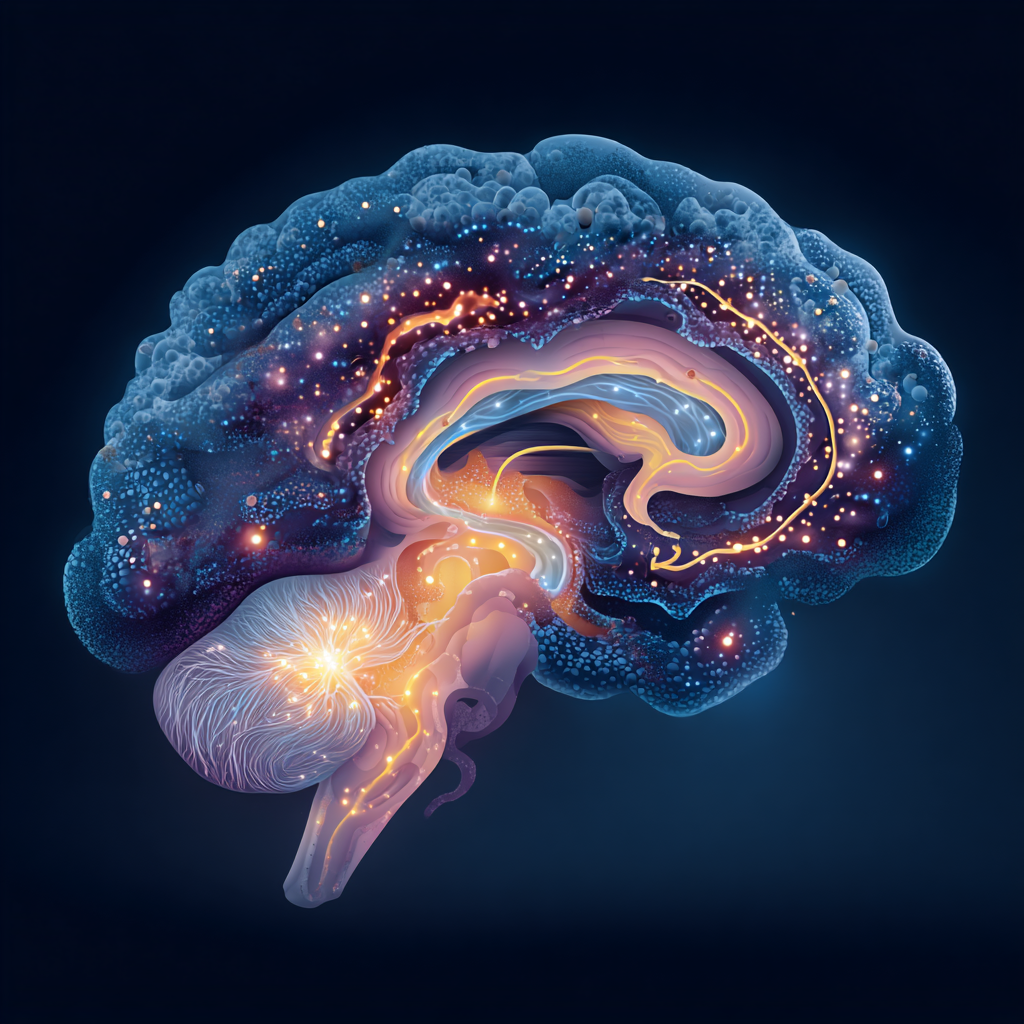
The hippocampus is one of the brain’s most important structures for learning and memory. Located deep within the medial temporal lobe, this small, seahorse-shaped region acts as a central hub that helps transform everyday experiences into long-term memories. Rather than storing memories permanently, the hippocampus organizes, strengthens, and transfers new information to broader networks throughout the cerebral cortex for long-term storage.
Every time we learn a new name, navigate an unfamiliar city, or recall an important life event, the hippocampus plays a vital role. It integrates information from multiple brain regions—including those responsible for vision, hearing, language, emotion, and attention—to create coherent, meaningful memories. It is particularly essential for episodic memory, which allows us to remember personal experiences, as well as spatial memory, which helps us understand our surroundings and navigate through space.
Healthy hippocampal function depends on a continuous supply of oxygen, glucose, and cellular energy produced by mitochondria. It is also highly influenced by sleep quality, physical activity, emotional well-being, and cardiovascular health. During deep sleep, the hippocampus actively consolidates newly acquired information, strengthening neural connections and transferring memories into more stable, long-term storage. This process is fundamental for learning efficiency and cognitive performance.
Research also demonstrates that the hippocampus remains remarkably adaptable throughout life through a process known as neuroplasticity. Regular aerobic exercise, lifelong learning, social engagement, stress management, and a nutrient-rich diet may all support healthy hippocampal function and help preserve memory as we age.
This illustration highlights the hippocampus at the center of an interconnected neural network, symbolizing the dynamic flow of information throughout the brain. The glowing neural pathways represent continuous communication among neurons, while the surrounding structures emphasize that memory is not created by a single region but emerges from the coordinated activity of multiple brain systems working together. Supporting healthy memory therefore involves caring for the entire body—including cardiovascular health, metabolic function, sleep, emotional resilience, and overall brain energy. A healthy hippocampus serves as one of the cornerstones of lifelong learning, cognitive resilience, and healthy brain aging.
Understanding brain energy is not merely an academic exercise—it is an invitation to take action. Small daily choices involving sleep, nutrition, movement, stress management, and mental engagement can profoundly influence how the brain functions over time. Continue exploring the Brain Energy Reset framework and discover how science-informed strategies may help support clarity, focus, and cognitive well-being throughout the years ahead.