
Sleep Is a Biological System, Not a Switch
Many people believe sleep begins the moment they lie down. In reality, quality sleep is the result of biological processes that unfold throughout the day. Light exposure, physical activity, nutrition, stress levels, body temperature, and circadian rhythms all influence how easily we fall asleep and how deeply we rest.
Instead of asking, “How can I fall asleep faster?” ask, “How can I support my body’s natural sleep biology all day long?”
Small daily habits often produce the biggest long-term improvements.
Quality Sleep Starts All Day Long
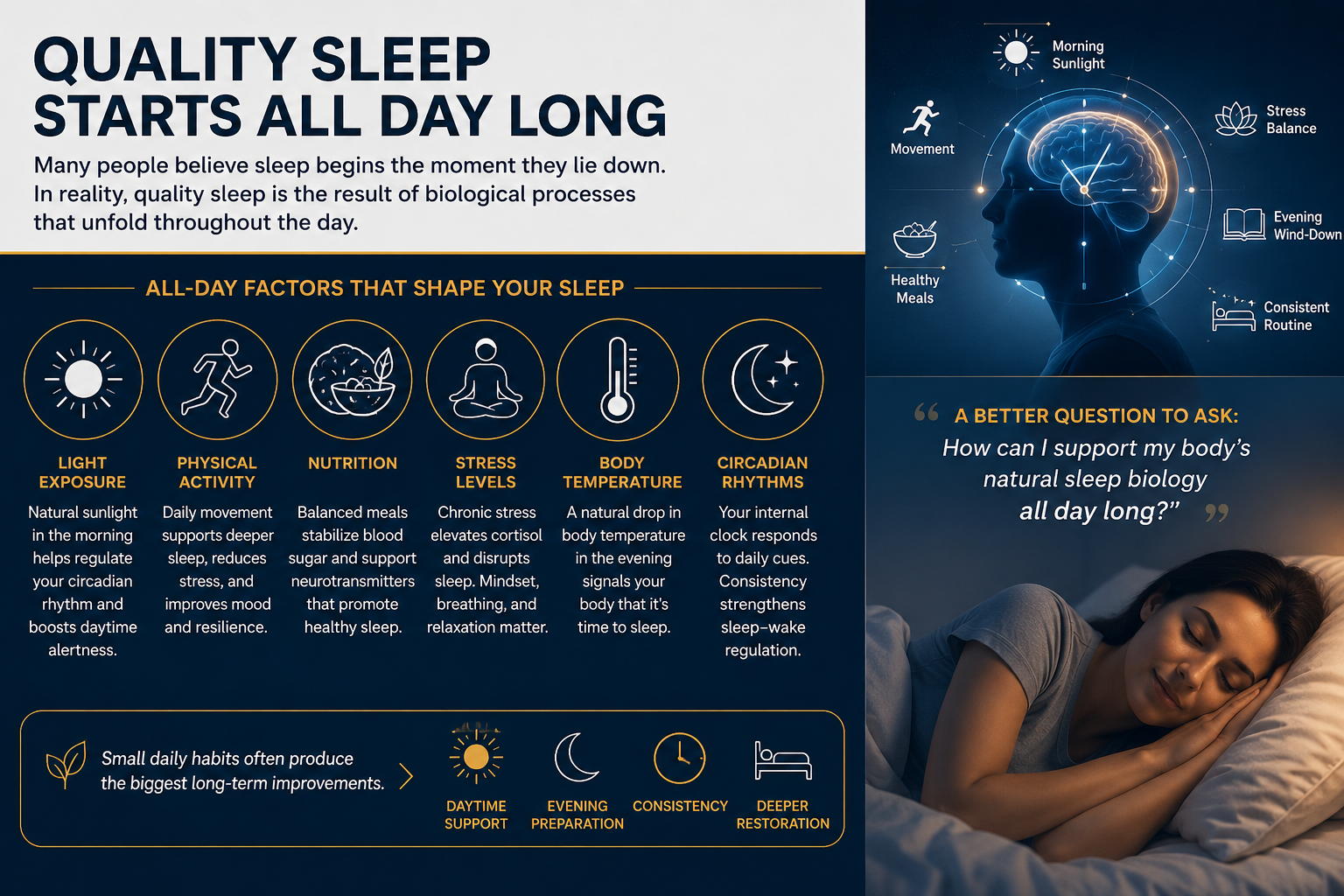
Many people believe that sleep begins the moment they climb into bed. In reality, healthy sleep is not an isolated nighttime event but the final outcome of countless biological processes that occur throughout the entire day. Every exposure to sunlight, every meal, every stressful moment, every bout of physical activity, and every evening routine helps shape the body’s ability to fall asleep naturally and remain asleep through the night.
Sleep is governed by an intricate network of systems rather than a single “sleep switch.” The brain continuously integrates information from the eyes, hormones, metabolism, nervous system, immune system, and internal biological clock to determine when the body is ready for restorative rest. When these systems work together in harmony, sleep often comes more easily. When they become disrupted, even the most comfortable mattress or sleep supplement may have limited benefit.
One of the strongest influences on sleep is light exposure. Morning sunlight helps synchronize the circadian rhythm—the body’s internal 24-hour clock—by signaling the brain that a new day has begun. This natural light exposure supports healthy melatonin timing later in the evening while promoting daytime alertness. Conversely, excessive exposure to bright artificial light or electronic screens late at night may delay melatonin release and make falling asleep more difficult.
Physical activity is another powerful regulator of sleep biology. Regular movement supports cardiovascular health, improves metabolic flexibility, reduces stress, and helps regulate body temperature. Exercise also increases the body’s need for recovery, often leading to deeper and more restorative sleep. Even moderate activities such as walking, cycling, swimming, or resistance training can contribute to improved sleep quality when performed consistently.
Nutrition also plays an important supporting role. Balanced meals help maintain stable blood sugar levels, reducing large fluctuations that may interfere with nighttime rest. Nutrients involved in neurotransmitter production—including magnesium, certain B vitamins, and adequate protein intake—help support the body’s normal sleep physiology. Heavy meals, excessive alcohol, or large amounts of caffeine close to bedtime, however, may interfere with normal sleep architecture.
Stress management is equally important. Throughout the day, the body’s stress-response system adjusts levels of hormones such as cortisol. While cortisol is essential for maintaining energy and responding to challenges, chronically elevated stress may keep the nervous system in a heightened state of alertness. Relaxation practices such as deep breathing, meditation, reading, gentle stretching, or spending time in nature may help shift the body toward a calmer state that is more conducive to sleep.
Body temperature also follows a predictable daily rhythm. As evening approaches, core body temperature naturally begins to decline, signaling that it is time for sleep. Maintaining a cool, comfortable sleeping environment and establishing a consistent bedtime routine may support this natural transition.
Perhaps the most important factor is consistency. The circadian system thrives on regularity. Going to bed and waking at approximately the same time every day—even on weekends—helps reinforce the body’s internal clock. Over time, this consistency strengthens the natural sleep-wake cycle and improves both sleep onset and sleep quality.
Rather than viewing sleep as something that begins only after the lights go out, it is more helpful to think of it as the culmination of healthy behaviors practiced throughout the day. Every healthy choice—whether taking a morning walk, eating balanced meals, managing stress, limiting evening screen exposure, or maintaining a regular schedule—contributes to the biological environment that supports restorative sleep.
Instead of asking, “How can I fall asleep faster tonight?” a more effective question may be, “How can I support my body’s natural sleep biology all day long?” This shift in perspective encourages a systems-based approach to sleep health, recognizing that lasting improvements rarely come from a single intervention. Small, consistent daily habits often create the greatest long-term benefits, helping the body restore its natural rhythms and promoting deeper, healthier, and more refreshing sleep over time.
Where Cells Speak and Systems Respond

This image suggests a microscopic world of cellular communication, neural networks, and biological repair. The glowing blue structures resemble neurons or connective tissue pathways, creating a sense of movement, energy, and internal coordination. The repeated “Chapter 3” concept makes the image feel like a book section opener, suitable for a scientific or wellness-themed publication.
The strongest visual theme is life at the cellular level. Bright central nodes appear like active cells sending signals through branching networks. This can represent how the body communicates internally through electrical impulses, biochemical messengers, hormones, immune signals, and metabolic pathways. The soft blue tones create a calm, futuristic atmosphere, while the pink and gold accents add warmth and vitality.
The left panel, with clockwork inside a cell-like structure, suggests the connection between biology and time. This could symbolize circadian rhythm, aging, cellular timing, or the body’s internal repair schedule. The other panels emphasize tissue structure, cellular activation, and network communication.
Overall, the image works well for topics such as sleep biology, brain health, circadian science, cellular repair, inflammation, neurobiology, longevity, or systems-based medicine.
#SleepReset #DeepSleep #CircadianRhythm #SleepHealth #HealthyHabits #PreventiveHealth #Longevity #BrainHealth #Wellness #LifestyleMedicine
During deep sleep, the brain activates critical restoration systems linked to cellular repair, glymphatic clearance, inflammation control, and neural recovery.
Poor sleep does not simply cause fatigue — it may gradually influence metabolism, stress biology, cognitive aging, and whole-body resilience over time.
Sleep is not passive inactivity.
It is one of the body’s most important biological recovery systems.
👉 Explore science-based sleepe support supplement comparisons and ingredient quality.