
Hormones Are Messengers, Not Enemies
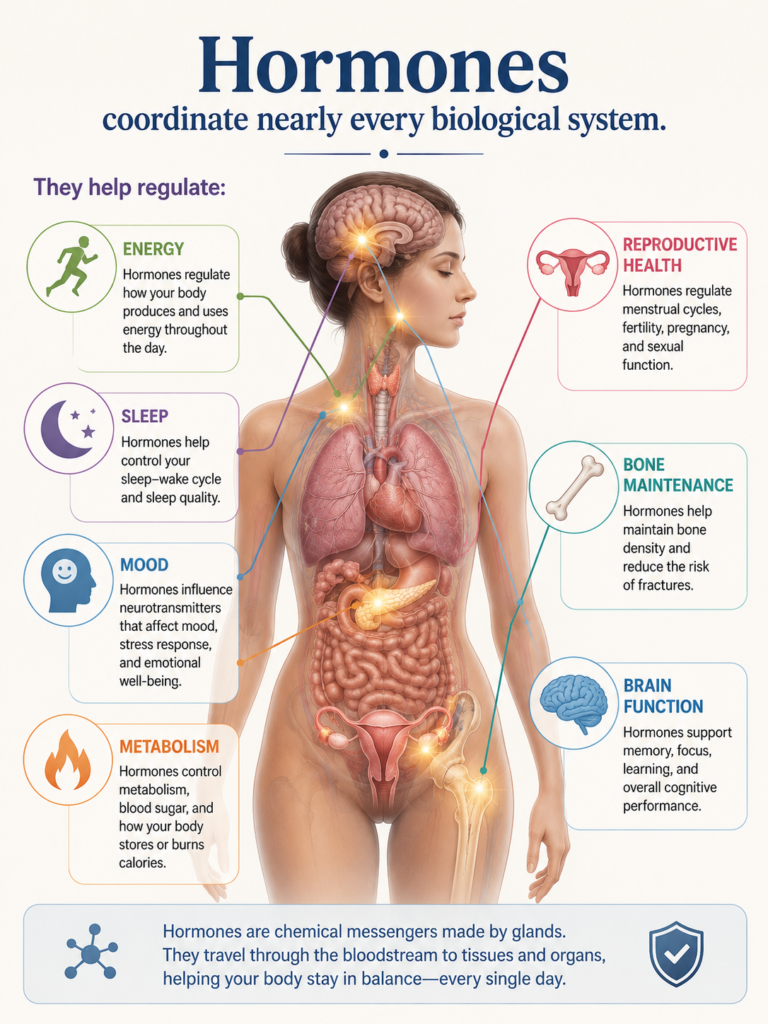
Hormones coordinate nearly every biological system.
They help regulate:
• Energy
• Sleep
• Mood
• Metabolism
• Reproductive health
• Bone maintenance
• Brain function
Rather than fearing hormonal changes, understanding them allows women to make informed lifestyle decisions throughout every stage of life.
Knowledge supports healthier choices.
Hormones: The Chemical Messengers That Coordinate the Entire Body
Hormones are among the body’s most powerful communication molecules. Although they are produced in relatively small amounts, these chemical messengers influence nearly every organ and biological system. From the moment we wake up until we fall asleep, hormones help coordinate countless physiological processes that keep the body functioning in balance.
Rather than acting independently, hormones operate within an intricate communication network known as the endocrine system. Glands such as the hypothalamus, pituitary, thyroid, adrenal glands, pancreas, ovaries, and testes continuously release hormones into the bloodstream. These hormones travel throughout the body, delivering highly specific instructions to target tissues equipped with specialized receptors.
This remarkable signaling system allows different organs to communicate efficiently, helping maintain a stable internal environment despite constant changes in the external world.
Energy Production and Metabolism
One of the primary roles of hormones is regulating how the body produces, stores, and uses energy. Hormones such as insulin, glucagon, thyroid hormones, cortisol, and adrenaline work together to maintain healthy blood glucose levels and ensure that cells receive a continuous supply of fuel.
After eating, insulin helps move glucose into cells where it can be used for energy or stored for future needs. During fasting or exercise, glucagon and other hormones help release stored energy, allowing the body to continue functioning efficiently. Thyroid hormones influence metabolic rate, determining how quickly the body converts nutrients into usable energy.
Because metabolism involves many interacting hormones, maintaining metabolic health depends on supporting the entire endocrine network rather than focusing on a single hormone alone.
Sleep and Circadian Rhythm
Hormones also help regulate the body’s internal clock. Melatonin, often called the “sleep hormone,” rises in the evening as darkness increases and supports the body’s natural sleep-wake cycle. Cortisol follows an opposite pattern, typically rising in the early morning to promote alertness and gradually declining throughout the day.
Consistent sleep schedules, morning sunlight exposure, regular physical activity, and limiting bright light before bedtime can help support healthy circadian rhythms and hormonal balance.
Mood, Stress, and Emotional Well-Being
Hormones interact closely with the brain’s neurotransmitters to influence mood, motivation, resilience, and emotional regulation. Cortisol helps the body respond to physical and psychological stress, while hormones such as estrogen and testosterone also affect brain function, cognition, and emotional health.
Short-term increases in stress hormones are a normal part of human physiology. However, chronic stress, inadequate sleep, poor nutrition, and prolonged inactivity may disrupt normal hormonal signaling, potentially affecting overall well-being.
Reproductive Health and Healthy Aging
Hormones play central roles in reproductive development throughout life. Estrogen, progesterone, testosterone, luteinizing hormone, and follicle-stimulating hormone coordinate fertility, menstrual cycles, pregnancy, sexual development, and reproductive function.
As people age, hormone production naturally changes. These gradual shifts influence muscle mass, bone density, body composition, cardiovascular health, and many other biological processes. Understanding these normal age-related changes helps support realistic expectations and informed discussions with healthcare professionals.
Bone Health and Brain Function
Hormones are essential for maintaining healthy bones throughout life. Estrogen, testosterone, growth hormone, vitamin D, and parathyroid hormone all contribute to bone remodeling, mineral balance, and skeletal strength.
The brain is equally dependent on hormonal communication. Hormones influence memory, attention, learning, motivation, and neuroplasticity—the brain’s ability to adapt and form new connections. Researchers continue exploring how endocrine function interacts with cognitive health during healthy aging.
A Whole-Body Communication Network
Modern systems biology emphasizes that hormones rarely work in isolation. Instead, they function within highly interconnected feedback networks linking the brain, metabolism, immune system, cardiovascular system, digestive tract, muscles, bones, and reproductive organs.
Lifestyle habits—including balanced nutrition, regular physical activity, restorative sleep, stress management, and routine preventive care—can help support the body’s natural hormonal regulation. While no single habit can optimize every hormone, consistent healthy behaviors create an environment that supports normal endocrine function over time.
Understanding hormones as part of an integrated biological system encourages a broader perspective on health. Rather than viewing hormones as isolated chemicals, we can appreciate them as essential messengers that help coordinate nearly every aspect of human physiology, supporting resilience, adaptation, and lifelong wellness.
How Hormones Coordinate the Entire Body
Understanding How the Endocrine System Coordinates Energy, Sleep, Metabolism, Brain Function, and Healthy Aging

Hormones act as the body’s invisible communication network, continuously sending signals that help every organ work together as a coordinated system. Although each hormone has specific functions, they rarely work alone. Instead, they interact through complex feedback loops that connect the brain, thyroid, adrenal glands, pancreas, reproductive organs, muscles, bones, and immune system. This remarkable network allows the body to adapt to changing environments while maintaining internal balance, a process known as homeostasis.
The illustration highlights this interconnected biology. Rather than viewing hormones as isolated chemicals, modern systems biology recognizes them as messengers that influence nearly every aspect of human health. They help regulate energy production, blood sugar balance, sleep cycles, mood, stress responses, metabolism, reproductive function, bone remodeling, immune activity, and cognitive performance. Even small changes in hormonal signaling can influence multiple biological systems simultaneously.
Researchers continue exploring how lifestyle habits affect hormonal health throughout life. Regular physical activity, nutrient-rich foods, restorative sleep, stress management, healthy body composition, and consistent daily routines all help support normal endocrine function. These habits do not target a single hormone; instead, they promote the resilience of the body’s entire regulatory network.
Understanding hormones from a whole-body perspective encourages a broader view of health. Supporting the endocrine system means supporting the communication pathways that allow every organ to function together efficiently, helping maintain long-term vitality, healthy aging, and overall physiological balance.
The Lifestyle Blueprint for Healthy Hormones
How Nutrition, Exercise, Sleep, Stress Management, Recovery, and Daily Habits Work Together to Support the Endocrine System

This illustration highlights the lifestyle foundations that help support healthy hormonal function throughout life. While hormones regulate essential processes such as metabolism, sleep, energy production, mood, stress response, and reproductive health, their activity is also influenced by everyday habits. Rather than relying on a single intervention, modern research shows that endocrine health is supported through a combination of nutrition, physical activity, restorative sleep, stress management, hydration, and recovery.
The interconnected circles surrounding the individual emphasize that hormonal balance emerges from the interaction of multiple lifestyle factors. A nutrient-rich diet provides the building blocks for hormone production, while regular exercise improves insulin sensitivity, muscle function, and metabolic flexibility. Quality sleep supports circadian rhythms and the natural release of hormones such as melatonin, growth hormone, and cortisol. Meanwhile, relaxation and effective stress management help maintain healthy communication between the brain and endocrine glands.
These lifestyle habits work together rather than independently. Small, consistent choices made each day gradually strengthen the body’s regulatory systems, helping maintain internal balance and resilience. Although hormones naturally change with age, supporting the body’s overall health can help promote healthy endocrine function across the lifespan. Hormonal wellness is not achieved through perfection—it is built through sustainable daily habits that nourish the body’s interconnected biological systems.
Hormonal health is influenced by many factors working together, including nutrition, movement, sleep, stress management, and healthy daily routines. While no supplement can replace these lifestyle foundations, some evidence-based nutrients may help support normal endocrine function as part of a balanced wellness plan. If you’re looking to complement healthy habits, explore science-informed options designed to support overall hormonal wellness.