
Muscle: Your Metabolic Engine
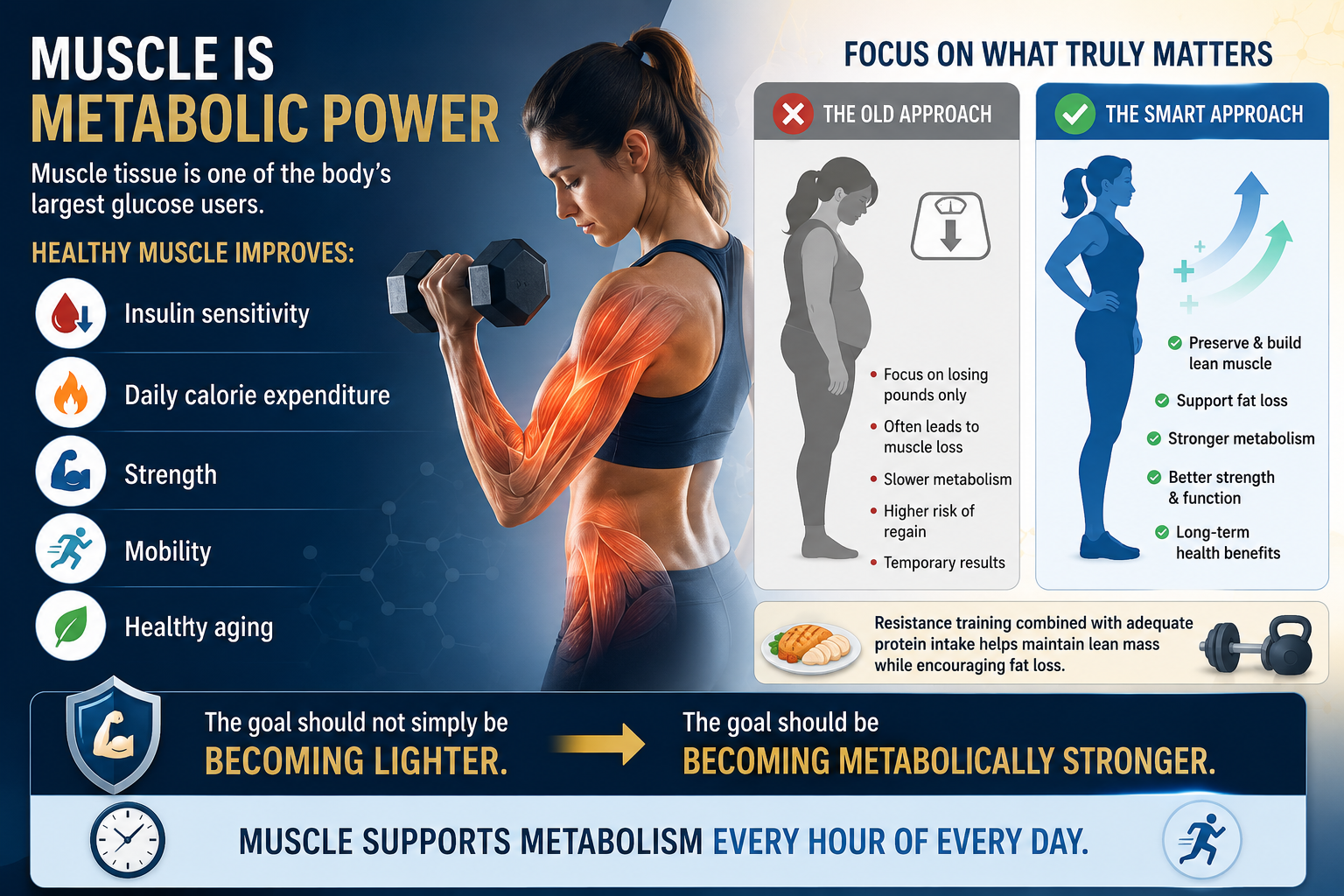
Muscle tissue is one of the body’s largest glucose users.
Healthy muscle improves:
Insulin sensitivity
Daily calorie expenditure
Strength
Mobility
Healthy aging
Unfortunately, many weight-loss programs focus only on losing pounds rather than preserving muscle.
Resistance training combined with adequate protein intake helps maintain lean mass while encouraging fat loss.
The goal should not simply be becoming lighter.
The goal should be becoming metabolically stronger.
Muscle supports metabolism every hour of every day.
Why Muscle Matters More Than the Scale
When most people think about weight loss, they focus on one number—the number on the scale. While body weight can provide useful information, it tells only part of the story. A healthier body is not simply a lighter body. One of the most important goals of long-term health should be preserving and building healthy muscle, because muscle is one of the body’s most metabolically active tissues.
Skeletal muscle accounts for approximately 30–40% of total body weight in many adults and serves as one of the largest consumers of glucose. After eating, insulin helps move glucose from the bloodstream into muscle cells, where it can be stored as glycogen or converted into energy during physical activity. Because muscle uses such a large proportion of circulating glucose, maintaining healthy muscle mass plays a central role in blood sugar regulation and metabolic health.
Healthy muscle also improves insulin sensitivity. Individuals with greater muscle mass generally respond more efficiently to insulin, allowing glucose to enter cells more effectively. Better insulin sensitivity helps reduce the workload on the pancreas and may lower the risk of developing insulin resistance and type 2 diabetes. In contrast, declining muscle mass with aging or inactivity can contribute to impaired glucose metabolism and increased metabolic disease risk.
Another important benefit of muscle is its contribution to daily energy expenditure. Even while the body is at rest, muscle requires energy to maintain cellular function, protein turnover, and metabolic activity. Although muscle does not dramatically increase resting metabolic rate by itself, preserving lean body mass helps maintain overall energy expenditure during weight loss. This is particularly important because losing significant amounts of muscle can slow metabolism, making long-term weight maintenance more difficult.
Muscle is equally important for physical strength and mobility. Strong muscles stabilize joints, improve posture, enhance balance, and make everyday activities easier. Whether climbing stairs, lifting groceries, playing sports, or simply getting out of a chair, muscle provides the force required for movement. Maintaining muscle throughout life reduces the risk of falls, fractures, disability, and loss of independence, particularly in older adults.
Unfortunately, many traditional weight-loss programs focus primarily on reducing body weight as quickly as possible. Severe calorie restriction without adequate exercise often results in the loss of both fat and muscle. While the scale may show impressive progress, the body may become metabolically weaker rather than healthier. Losing excessive muscle reduces physical performance, lowers energy expenditure, and can make weight regain more likely once normal eating resumes.
For this reason, experts increasingly emphasize body composition rather than body weight alone. The goal is not simply to lose pounds but to lose excess fat while preserving—or even increasing—lean muscle mass. This approach supports healthier metabolism, better physical function, and more sustainable long-term results.
One of the most effective strategies for preserving muscle is resistance training. Exercises using free weights, resistance bands, weight machines, or body weight stimulate muscle protein synthesis and strengthen muscles throughout the body. Even two or three sessions per week can produce meaningful improvements in muscle mass, strength, and insulin sensitivity when performed consistently.
Nutrition is equally important. Adequate protein intake supplies the amino acids needed for muscle maintenance and repair. High-quality protein sources—including fish, poultry, eggs, dairy products, soy foods, beans, lentils, and lean meats—can help support muscle health throughout life. Combining sufficient protein with regular resistance exercise produces greater benefits than either strategy alone.
Healthy sleep, stress management, and regular physical activity also contribute to muscle maintenance by supporting hormone balance, recovery, and overall metabolic function. Together, these lifestyle factors create an environment that allows muscle tissue to remain healthy despite aging.
Ultimately, muscle represents far more than strength or athletic performance. It is a vital metabolic organ that influences glucose regulation, energy expenditure, mobility, independence, and healthy aging. Rather than pursuing weight loss alone, a more effective goal is to build a body that is metabolically resilient. By protecting and strengthening muscle throughout life, individuals support healthier metabolism every hour of every day and lay the foundation for long-term wellness and longevity.
Metabolic Adaptation Loop: Why Your Body Fights Back During Weight Loss

Weight loss is often viewed as a simple equation of eating fewer calories and exercising more. However, human metabolism is far more sophisticated. The body has evolved powerful survival mechanisms that protect against starvation, making it naturally resistant to prolonged calorie restriction. This biological response, known as metabolic adaptation, explains why many people experience weight-loss plateaus or regain weight after dieting.
The process begins with calorie restriction, when energy intake falls below the body’s requirements. Specialized regions of the brain, particularly the hypothalamus, detect this energy deficit and activate multiple hormonal pathways designed to preserve life. Rather than recognizing dieting as a healthy choice, the body interprets it as a potential threat to survival.
As a result, several important hormonal changes occur. Levels of leptin, the hormone that promotes fullness, decline, while ghrelin, often called the hunger hormone, increases. Cortisol may rise in response to physiological stress, and thyroid hormone activity may decrease slightly, reducing the body’s overall metabolic rate. Together, these hormonal adaptations increase appetite while simultaneously conserving energy.
The body then enters a state of metabolic adaptation, lowering resting energy expenditure and becoming more energy efficient. Daily calorie burn decreases, spontaneous movement—known as non-exercise activity thermogenesis (NEAT)—often declines without conscious awareness, and the body becomes more efficient at storing energy. At the same time, hunger intensifies, food cravings become stronger, and maintaining dietary adherence becomes increasingly difficult.
These adaptations frequently lead to slower weight loss or a weight-loss plateau. Many individuals mistakenly believe they have failed, when in reality their bodies are responding exactly as human physiology has evolved to do. If calorie restriction continues without strategies to preserve metabolic health, the cycle may repeat, increasing the likelihood of future weight regain.
Fortunately, metabolic adaptation is normal and not permanent. Sustainable weight management focuses on supporting metabolism rather than fighting against it. Adequate protein intake, resistance training to preserve muscle mass, regular physical activity, quality sleep, effective stress management, and gradual, realistic lifestyle changes all help maintain metabolic function during weight loss.
The ultimate goal is not simply to lose weight quickly, but to build a healthier metabolism that supports lifelong wellness. By understanding metabolic adaptation, individuals can adopt evidence-based strategies that promote sustainable fat loss while preserving muscle, metabolic health, and long-term success.
Although metabolic adaptation can make weight loss more challenging, it is a normal biological response—not a sign of failure. Understanding how your body adapts allows you to work with your metabolism instead of against it. By preserving muscle, eating adequate protein, exercising regularly, and adopting sustainable habits, long-term success becomes both healthier and more achievable.