
How It Works — Nitric Boost
Understanding Nitric Oxide and Blood Flow
Nitric oxide functions as one of the body’s most important vascular signaling molecules. It helps blood vessels relax and expand, supporting healthier circulation, oxygen delivery, nutrient transport, and communication between tissues. Healthy nitric oxide production is closely connected to cardiovascular performance, exercise endurance, recovery, metabolic efficiency, and overall vitality.
The Science Behind Declining Nitric Oxide Levels
As the body ages, nitric oxide production may gradually decline due to factors such as chronic inflammation, oxidative stress, sedentary lifestyle patterns, poor sleep, metabolic dysfunction, and reduced physical activity. This decline can affect vascular flexibility, circulation efficiency, exercise capacity, and recovery processes over time.
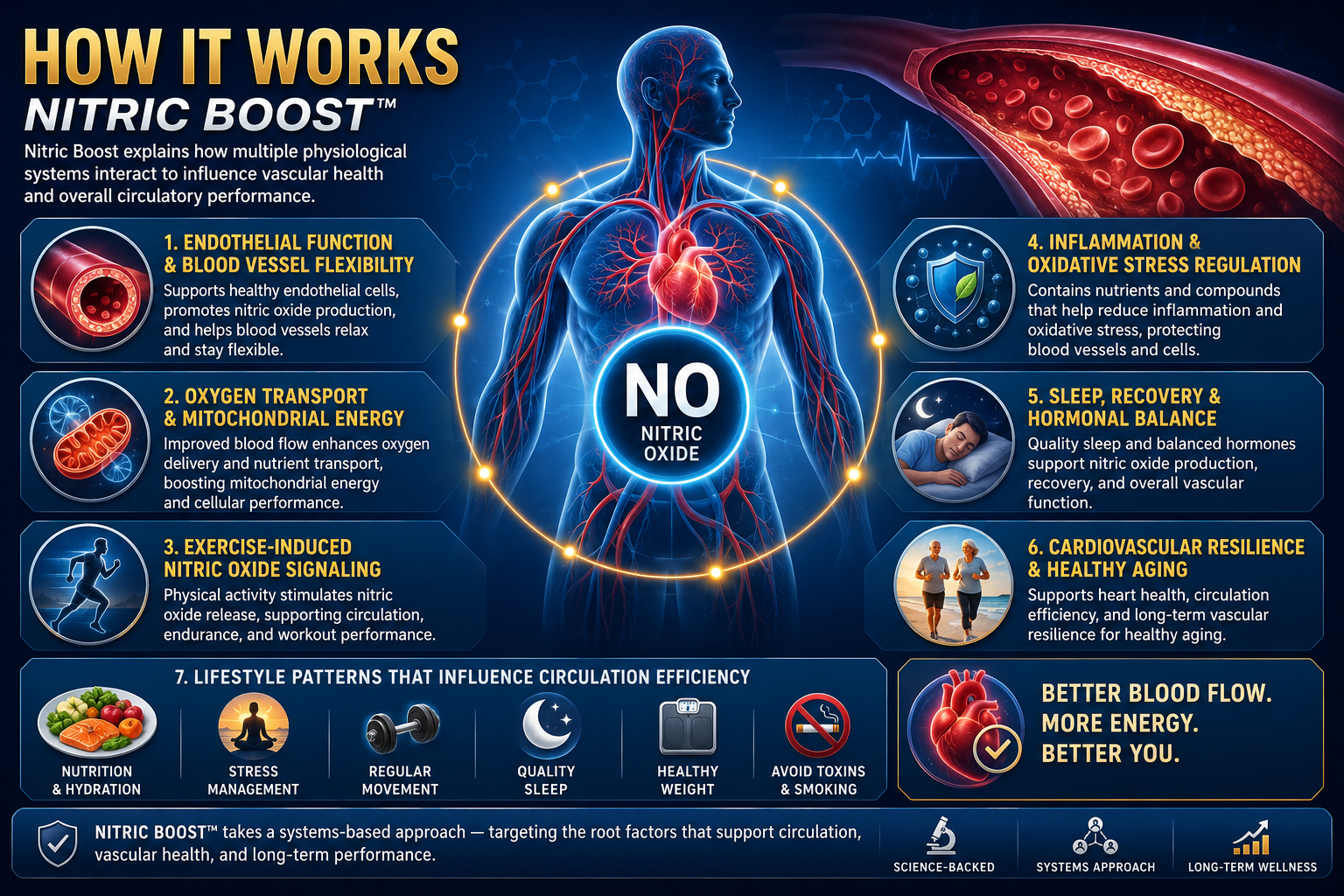
Nitric Boost explains how multiple physiological systems interact to influence vascular health, including:
- Endothelial function and blood vessel flexibility
- Oxygen transport and mitochondrial energy production
- Exercise-induced nitric oxide signaling
- Inflammation and oxidative stress regulation
- Sleep, recovery, and hormonal balance
- Cardiovascular resilience and healthy aging
- Lifestyle patterns that influence circulation efficiency
Lifestyle Factors That Help Maintain Healthy Blood Flow
Nitric Oxide (NO) Signaling Pathway: The Science Behind Healthy Circulation
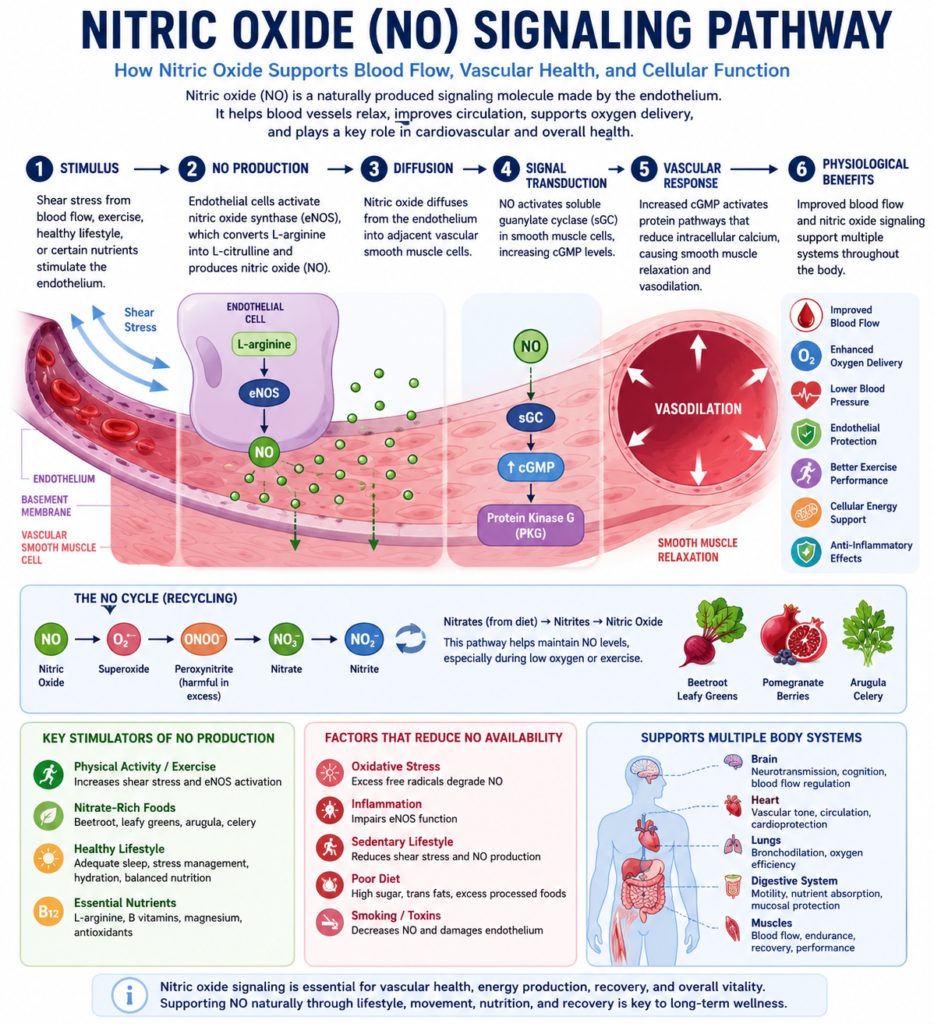
Nitric oxide (NO) is one of the body’s most important signaling molecules for maintaining healthy blood vessels and efficient circulation. Produced primarily by endothelial cells that line the inner walls of blood vessels, nitric oxide helps relax vascular smooth muscle, allowing blood vessels to widen and improve blood flow. This process supports oxygen delivery, nutrient transport, and communication between tissues throughout the body.
The illustration demonstrates the complete nitric oxide signaling pathway—from endothelial stimulation and nitric oxide synthesis to cellular signaling, vasodilation, and the physiological benefits that follow. Healthy nitric oxide production depends on several interconnected biological systems, including endothelial function, mitochondrial energy metabolism, cardiovascular health, exercise, nutrition, and oxidative stress regulation. Regular physical activity, nitrate-rich vegetables, adequate hydration, restorative sleep, and balanced nutrition may help support these natural processes.
Conversely, aging, chronic inflammation, oxidative stress, smoking, poor dietary habits, metabolic dysfunction, and sedentary lifestyles may reduce nitric oxide availability over time, potentially affecting vascular flexibility and circulation efficiency. Because nitric oxide influences multiple organs—including the heart, brain, muscles, lungs, and digestive system—maintaining healthy nitric oxide signaling may contribute to exercise performance, recovery, cardiovascular resilience, metabolic function, and healthy aging. Understanding this pathway provides a systems-based perspective on how everyday lifestyle choices can help support long-term vascular wellness and overall physiological health.
30-Day Blood Flow Reset Framework: A Systems-Based Path to Better Circulation
Rather than promoting quick fixes, this systems-based framework focuses on long-term wellness, sustainable lifestyle support, and improving the body’s natural capacity for circulation, recovery, performance, and metabolic balance.
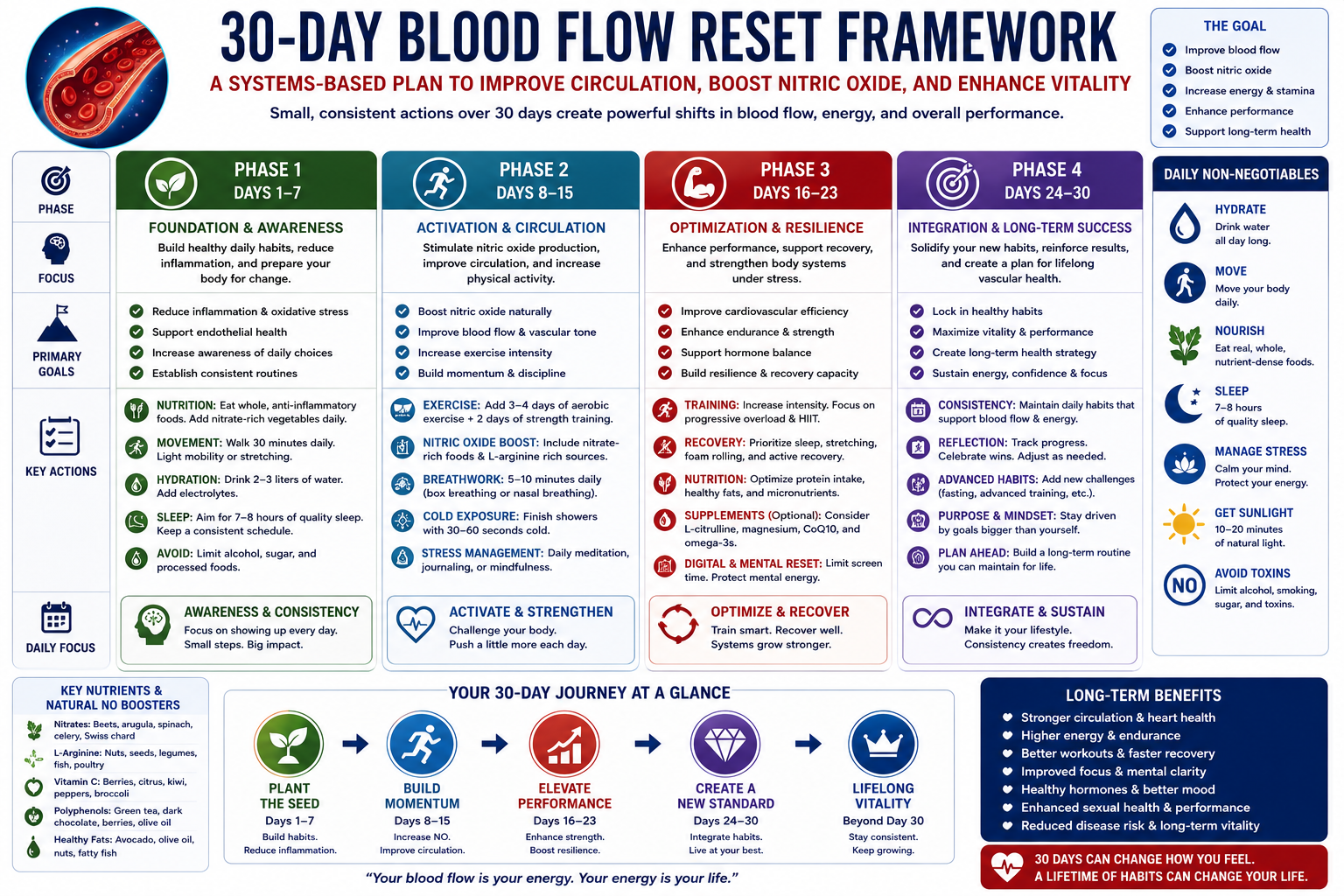
Healthy circulation develops through consistent daily habits rather than quick fixes. This 30-day framework presents a structured, systems-based approach to supporting blood flow, nitric oxide production, cardiovascular function, and long-term vitality. Instead of focusing on a single intervention, the plan combines movement, nutrition, hydration, recovery, stress management, and healthy lifestyle practices that work together to support vascular health.
The program progresses through four phases. The first week establishes foundational habits by emphasizing anti-inflammatory nutrition, adequate hydration, quality sleep, and regular movement. The second phase encourages greater physical activity and natural strategies that may support nitric oxide production and improve circulation. During the third phase, the focus shifts toward enhancing performance, recovery, endurance, and resilience through progressive exercise, balanced nutrition, and restorative habits. The final phase reinforces consistency, helping transform short-term actions into sustainable lifelong behaviors.
Throughout the framework, daily priorities such as hydration, exercise, whole-food nutrition, stress reduction, sunlight exposure, and avoiding harmful lifestyle factors reinforce healthy vascular function. Nutrient-rich foods—including leafy greens, beets, citrus fruits, berries, and healthy fats—may further support nitric oxide availability and cardiovascular wellness.
While individual results vary, this educational roadmap illustrates how small, evidence-informed lifestyle changes, practiced consistently over time, may contribute to healthier circulation, improved energy, enhanced physical performance, and long-term cardiovascular resilience.
The guide also explores how supportive habits — including movement, nutrition, hydration, sleep quality, stress management, and consistent physical activity — may help maintain healthier vascular function and circulation throughout life.
Ready to explore the science in greater depth?
This evidence-informed guide explains how nitric oxide supports circulation, oxygen delivery, vascular flexibility, and physical performance. Learn how nutrition, movement, sleep, and other everyday lifestyle factors interact with the body’s natural nitric oxide pathways to support long-term cardiovascular health.