
Nitric Boost Guide
A Systems-Based Guide to Blood Flow, Nitric Oxide, Energy, Circulation, and Men’s Performance Health
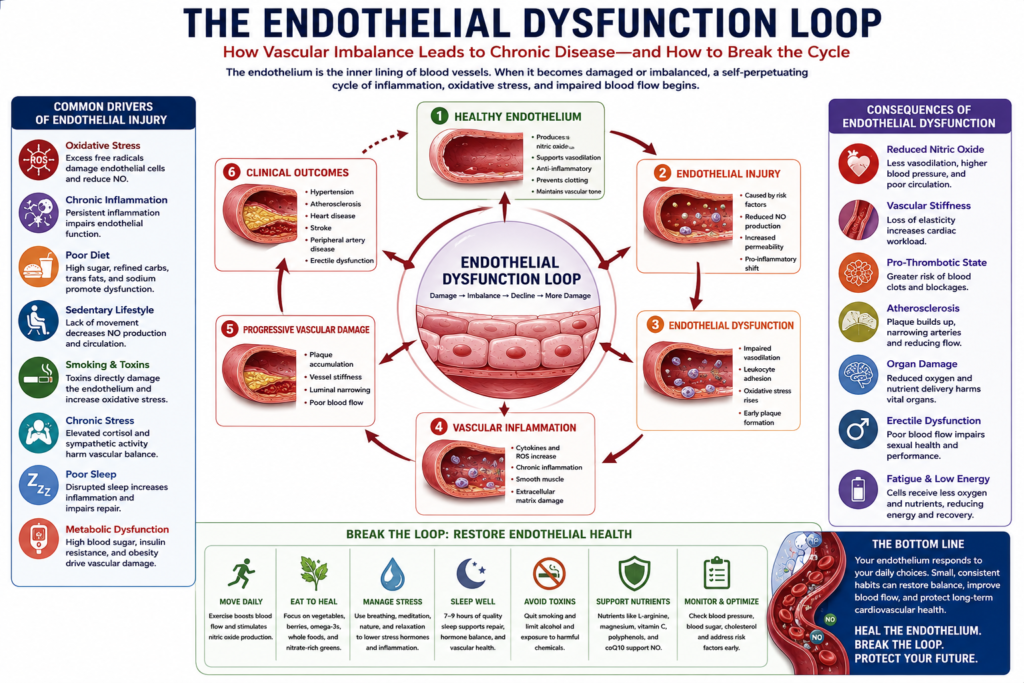
Modern health challenges often begin silently within the body’s circulation systems. Fatigue, reduced stamina, slower recovery, brain fog, declining exercise performance, and age-related vitality changes may all be connected to how efficiently oxygen and nutrients move through the vascular network. At the center of this process is nitric oxide — a naturally produced signaling molecule that helps support healthy blood vessel function, circulation, oxygen delivery, and metabolic communication throughout the body.
Nitric Boost explores the science of vascular health through a systems-based preventive medicine perspective. Rather than focusing on short-term performance trends or exaggerated wellness claims, this guide examines how lifestyle patterns, exercise, sleep, nutrition, inflammation, stress, metabolism, and aging collectively influence circulation and long-term physiological resilience.
Inside this guide, readers will explore:
- The biology of nitric oxide and endothelial function
- Blood flow, oxygen transport, and energy production
- Exercise physiology and cardiovascular adaptation
- Recovery, inflammation, and vascular aging
- Nutrition and lifestyle factors that support circulation
- Men’s wellness, stamina, and performance health
- Long-term strategies for healthy aging and metabolic vitality
This educational resource is designed for individuals seeking a deeper understanding of how circulation influences whole-body wellness. By combining evidence-based science with practical lifestyle insights, Nitric Boost provides a clearer framework for supporting cardiovascular performance, recovery capacity, energy balance, and long-term health optimization.
How It Works — Nitric Boost
Nitric oxide functions as one of the body’s most important vascular signaling molecules. It helps blood vessels relax and expand, supporting healthier circulation, oxygen delivery, nutrient transport, and communication between tissues. Healthy nitric oxide production is closely connected to cardiovascular performance, exercise endurance, recovery, metabolic efficiency, and overall vitality.
Nitric Boost Guidebook
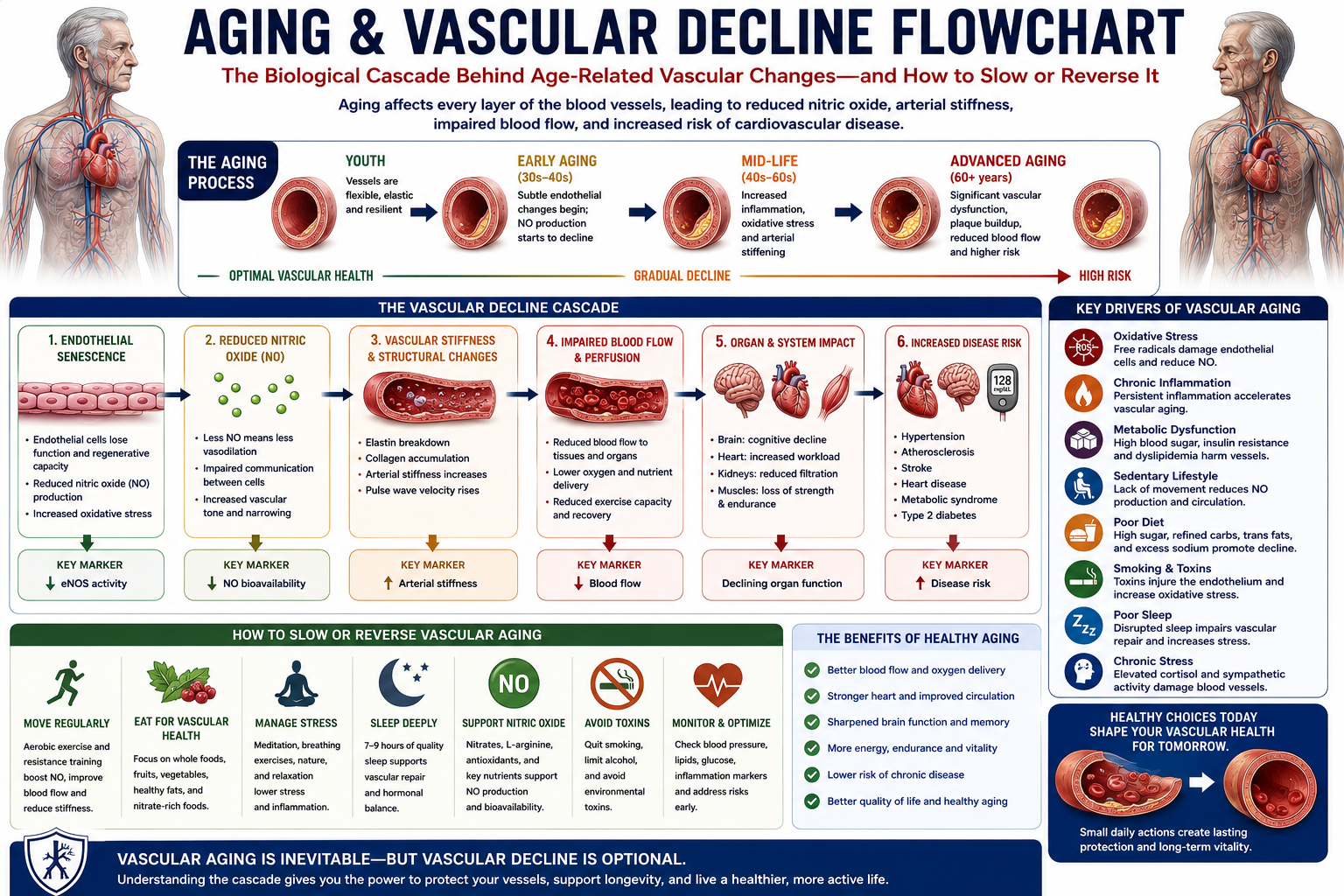
As the body ages, nitric oxide production may gradually decline due to factors such as chronic inflammation, oxidative stress, sedentary lifestyle patterns, poor sleep, metabolic dysfunction, and reduced physical activity. This decline can affect vascular flexibility, circulation efficiency, exercise capacity, and recovery processes over time.
Nitric Boost explains how multiple physiological systems interact to influence vascular health, including:
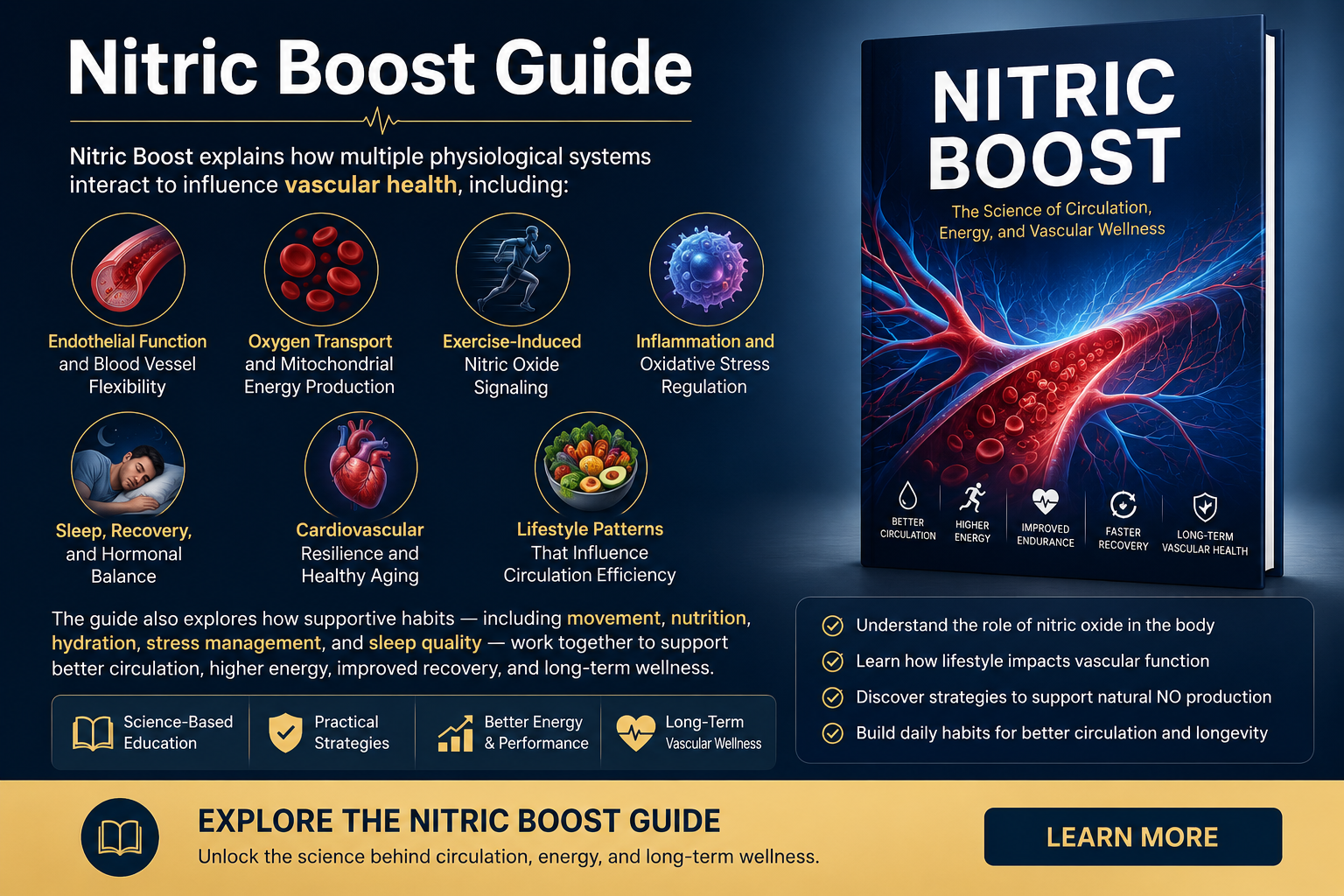
- Endothelial function and blood vessel flexibility
- Oxygen transport and mitochondrial energy production
- Exercise-induced nitric oxide signaling
- Inflammation and oxidative stress regulation
- Sleep, recovery, and hormonal balance
- Cardiovascular resilience and healthy aging
- Lifestyle patterns that influence circulation efficiency
The guide also explores how supportive habits — including movement, nutrition, hydration, sleep quality, stress management, and consistent physical activity — may help maintain healthier vascular function and circulation throughout life.
Rather than promoting quick fixes, this systems-based framework focuses on long-term wellness, sustainable lifestyle support, and improving the body’s natural capacity for circulation, recovery, performance, and metabolic balance.