
Review — Nitric Boost
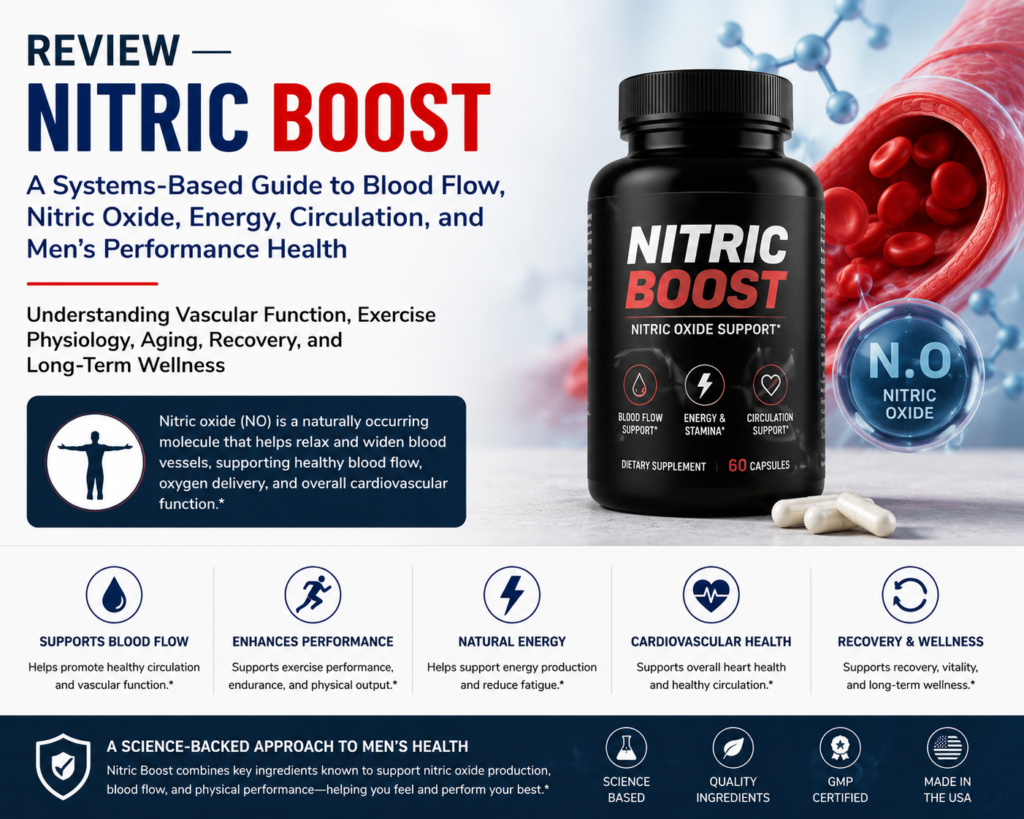
Nitric Boost Review: Ingredients & Performance
Nitric Boost is promoted as a dietary supplement designed to support the body’s natural production of nitric oxide—a molecule that plays an important role in healthy blood flow, vascular function, and oxygen delivery. Interest in nitric oxide support has grown as research continues to explore its relationship with exercise performance, cardiovascular wellness, energy production, recovery, and men’s health.
This review takes an educational, evidence-based approach to examining Nitric Boost. Rather than relying on marketing claims, it explores the scientific rationale behind the formula, its ingredient profile, the quality of available evidence, and the realistic benefits and limitations consumers should understand before making a decision.
You’ll learn how nitric oxide functions within the cardiovascular system, why production may decline with age, which ingredients are commonly included in nitric oxide supplements, and the factors that influence their effectiveness. The goal is to help you evaluate Nitric Boost with a clearer understanding of the science, supporting informed and realistic expectations.
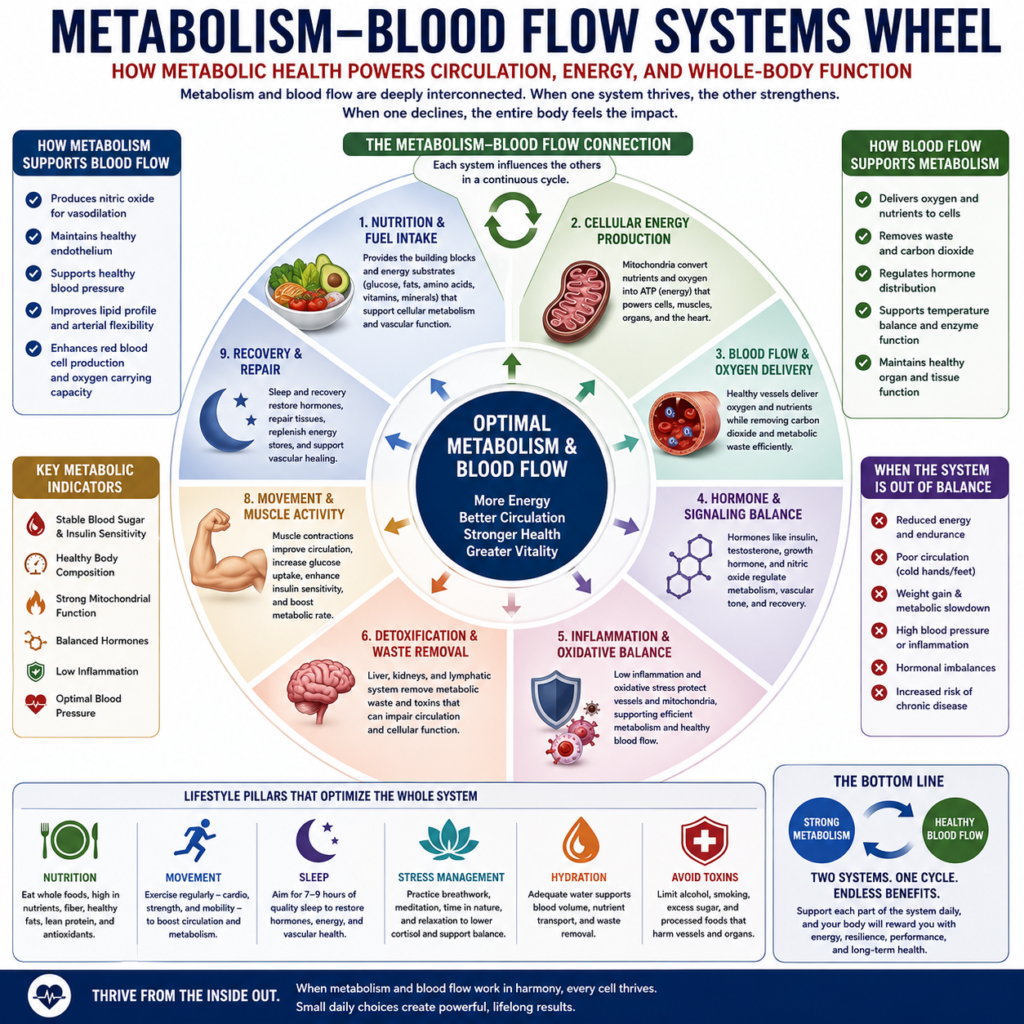
A Science-Based Perspective on Circulation, Energy, and Long-Term Vascular Wellness
Healthy circulation is essential for delivering oxygen and nutrients throughout the body, supporting the heart, brain, muscles, and every major organ system.
One of the body’s key regulators of vascular function is nitric oxide, a naturally produced signaling molecule that helps blood vessels relax and maintain healthy blood flow. As people age, nitric oxide production may gradually decline, while factors such as physical inactivity, poor nutrition, chronic stress, and metabolic imbalance can further influence vascular health.
This educational guide explores these concepts from a systems-based perspective, explaining how circulation, nitric oxide signaling, exercise physiology, metabolism, recovery, and healthy aging interact. Rather than focusing on quick fixes or exaggerated claims, it examines the scientific principles behind nutritional support, lifestyle habits, and evidence-informed supplementation.
By understanding the broader biology of vascular wellness, readers can make more informed decisions about products such as Nitric Boost while developing realistic expectations and supporting long-term cardiovascular and overall health.
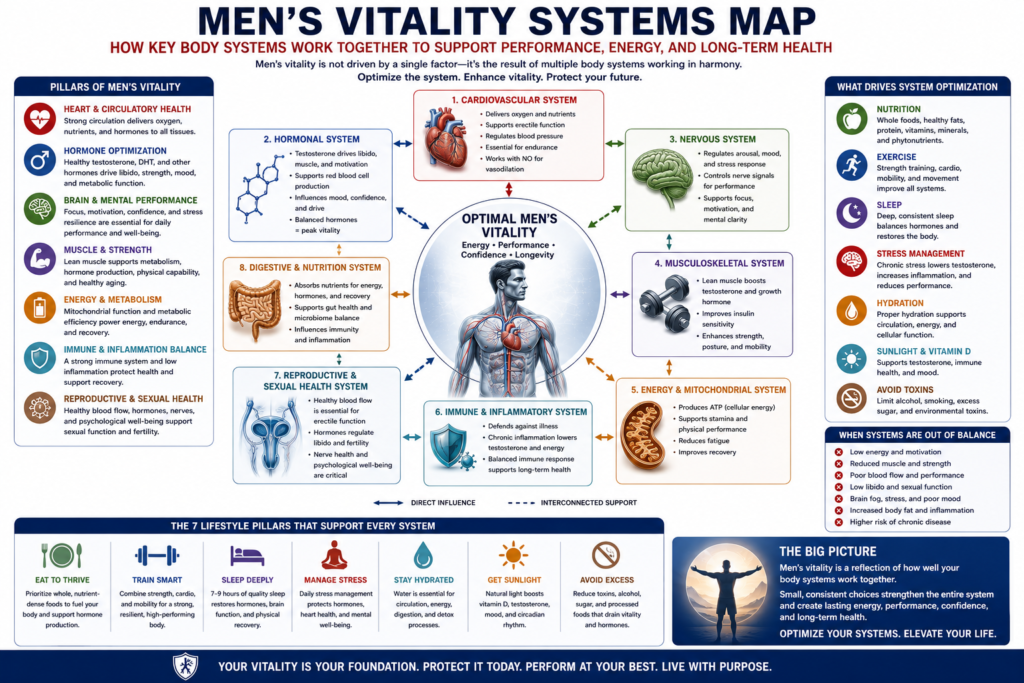
Men’s Vitality Is a Connected Biological System
coordinated function of the cardiovascular, hormonal, nervous, muscular, immune, metabolic, digestive, and reproductive systems working together to support energy, strength, resilience, and long-term health. Healthy blood flow delivers oxygen and nutrients throughout the body, while hormones regulate metabolism, muscle maintenance, and motivation. The nervous system coordinates physical performance, recovery, and mental focus, while mitochondria generate the cellular energy needed for everyday function. Meanwhile, nutrition, sleep, physical activity, hydration, stress management, and healthy lifestyle habits continuously influence every part of this interconnected network. When one system becomes compromised, others often respond, affecting overall vitality and performance. Understanding these biological connections encourages a broader, systems-based approach to men’s wellness rather than focusing on isolated symptoms. Supporting the entire network through evidence-informed nutrition, regular exercise, restorative sleep, and healthy daily habits may help promote cardiovascular function, physical performance, metabolic health, healthy aging, and long-term vitality.
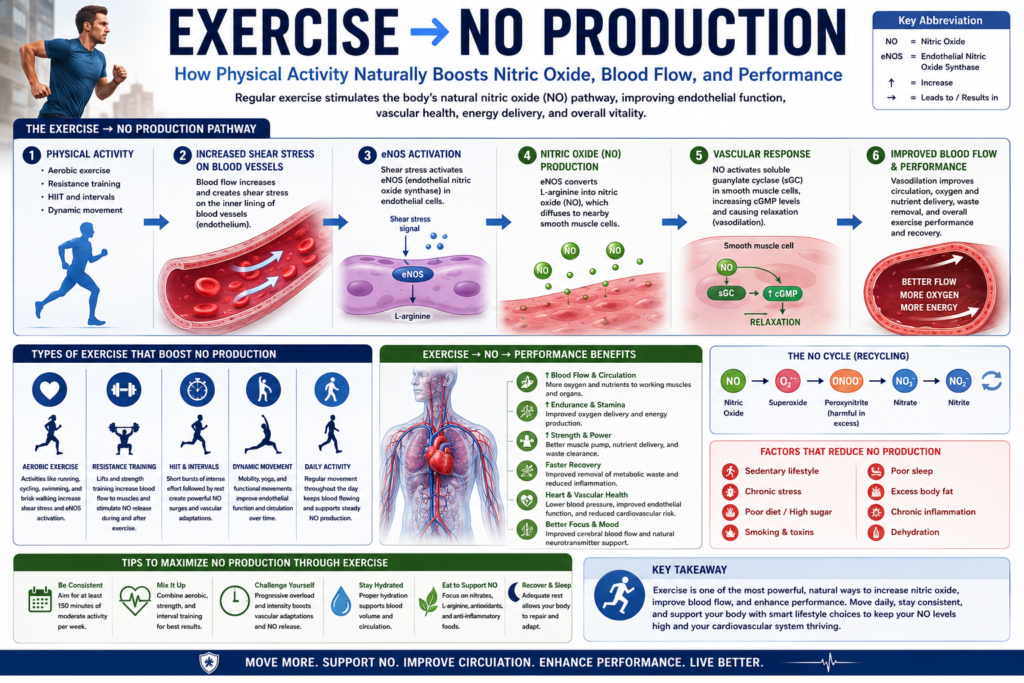
Exercise: A Natural Way to Support Nitric Oxide and Circulation
Physical activity is one of the most effective lifestyle strategies for supporting the body’s natural production of nitric oxide (NO), a signaling molecule that helps blood vessels relax and maintain healthy circulation. During exercise, increased blood flow creates gentle shear stress along the vessel walls, stimulating endothelial cells to activate nitric oxide synthase (eNOS), the enzyme responsible for producing NO. This process promotes vasodilation, allowing oxygen and nutrients to reach working muscles more efficiently while supporting energy production and recovery. Regular aerobic exercise, resistance training, interval workouts, and daily movement may also contribute to improved endothelial function, cardiovascular fitness, metabolic health, and long-term vascular resilience. However, factors such as physical inactivity, chronic stress, poor nutrition, inadequate sleep, smoking, and aging can reduce nitric oxide availability over time. Understanding how exercise influences this biological pathway highlights why consistent movement remains a cornerstone of healthy circulation, physical performance, cardiovascular wellness.
Who May Find This Guide Helpful?
Unlike many performance-focused resources that rely on hype or exaggerated promises, this guide emphasizes education, physiology, and sustainable health strategies. Readers will gain a clearer understanding of how endothelial function, oxygen delivery, inflammation, sleep, movement, and cardiovascular resilience interact throughout the body’s interconnected systems.
This guide may be especially valuable for individuals interested in:
- Cardiovascular and circulation health
- Exercise performance and endurance
- Recovery and energy support
- Men’s wellness and vitality
- Healthy aging and metabolic resilience
- Lifestyle-based preventive health strategies
Whether used as an educational introduction or as part of a broader wellness journey, Nitric Boost provides a thoughtful overview of the vascular systems that help support human performance, recovery, and long-term physiological health.