
Why Building Muscle Is Essential for Sustainable Weight Loss
Many people trying to lose weight focus entirely on becoming smaller.
But true metabolic health depends less on simply losing weight and more on maintaining healthy body composition.
One of the most important factors in long-term fat loss is muscle mass.
Muscle is not only for athletes or bodybuilders. It is one of the body’s most powerful metabolic organs.
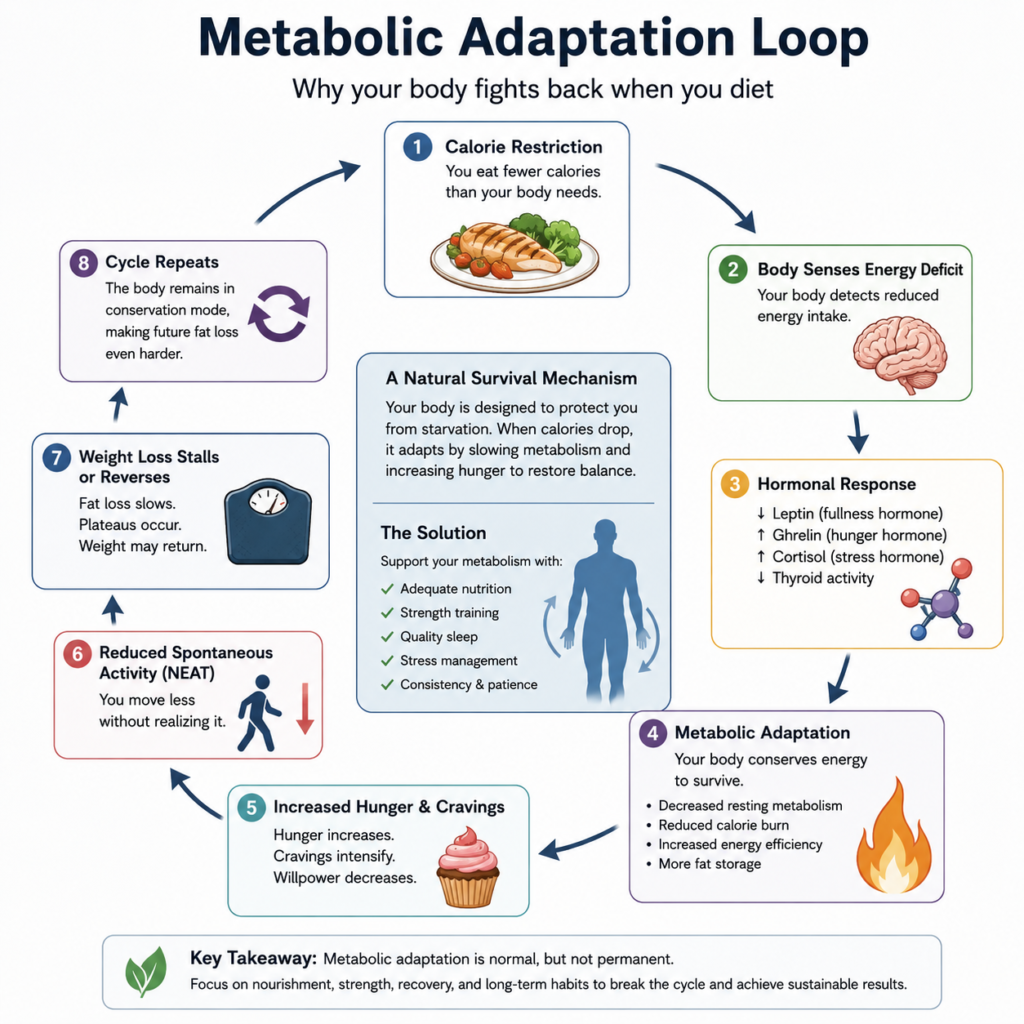
Metabolic Adaptation Loop: Why Your Body Fights Back During Weight Loss
This diagram illustrates the body’s natural defense mechanisms during calorie restriction. When food intake drops, the brain perceives an energy shortage and initiates a series of hormonal and metabolic adjustments designed to preserve survival.
Hunger hormones increase, satiety signals decline, and resting metabolic rate slows to conserve energy. Reduced spontaneous movement and intensified cravings further contribute to the challenge of sustained weight loss.
As a result, progress may plateau despite continued effort, creating a frustrating cycle of dieting and regain.
Understanding this adaptive response reframes weight-loss resistance not as a failure of willpower, but as a normal biological process. Long-term success depends on adequate nutrition, resistance training, stress management, and sustainable lifestyle habits that support metabolic resilience and health.
Muscle Improves Insulin Sensitivity
Muscle tissue helps absorb glucose from the bloodstream.
When muscle mass declines:
- insulin sensitivity worsens
- blood sugar regulation becomes less efficient
- metabolic flexibility decreases
Strength training helps improve glucose handling and reduce insulin resistance.
This supports both fat loss and long-term metabolic health.
Muscle Burns Energy Continuously
Muscle tissue requires energy even at rest.
People with higher lean muscle mass generally maintain:
- higher metabolic activity
- improved energy utilization
- better glucose control
Crash diets often reduce both fat and muscle, lowering metabolic rate over time.
This is one reason many people regain lost weight after aggressive dieting.
Aging and Muscle Loss
Beginning around middle age, many adults gradually lose muscle mass through a process called sarcopenia.
Sedentary lifestyles accelerate this decline.
Loss of muscle is associated with:
- reduced mobility
- higher metabolic disease risk
- frailty
- lower energy levels
Strength training becomes increasingly important with aging.
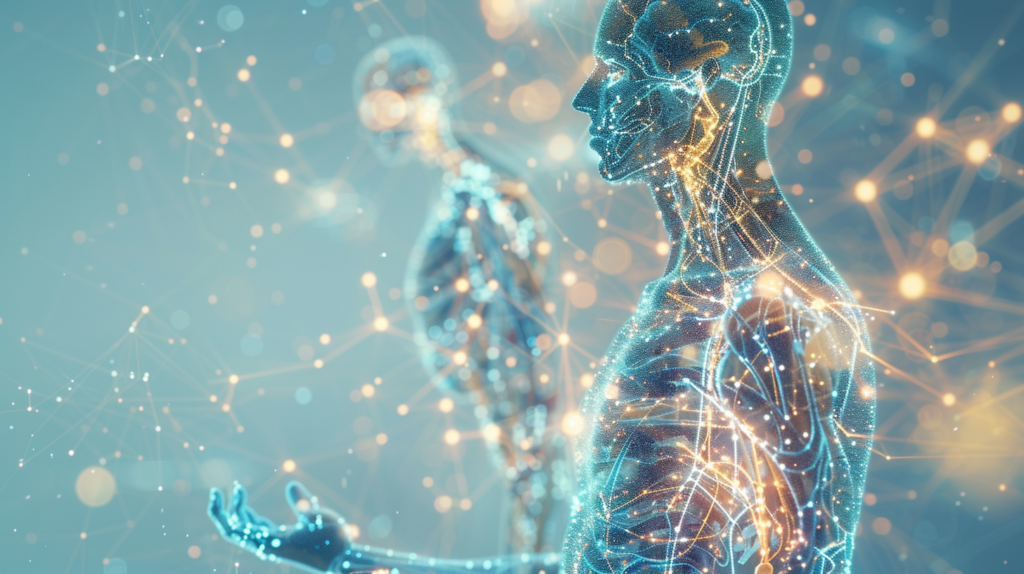
Metabolism: The Invisible Network of Life
This illustration captures metabolism as a living network of communication and energy exchange within the human body. Glowing pathways weave through the brain, heart, and organs, symbolizing how nutrients are transformed into the energy required for movement, cognition, immunity, and cellular repair. Far beyond calorie burning, metabolism coordinates hormones, neural signals, blood flow, and mitochondrial activity to maintain biological balance. The interconnected lights represent millions of biochemical reactions occurring every second, adapting to sleep, stress, nutrition, and physical activity. Healthy metabolism supports resilience, vitality, and longevity, while metabolic dysfunction can gradually contribute to chronic disease and accelerated aging.
Strength Training Does Not Require Perfection
Many people feel intimidated by resistance training.
But muscle-building can begin with simple approaches:
- bodyweight exercises
- resistance bands
- light dumbbells
- machine training
- walking hills
- functional movement
The goal is consistency and progressive improvement.
Protein Supports Muscle Preservation
Protein provides amino acids necessary for:
- muscle repair
- recovery
- satiety
- metabolic function
Many adults underconsume protein, especially during weight-loss attempts.
Digital Twin Health: Visualizing the Future of Personalized Medicine
This futuristic illustration series portrays the emergence of the human digital twin—a dynamic virtual representation of the body that integrates biological, behavioral, and physiological data. Glowing anatomical silhouettes stand within holographic platforms, symbolizing continuous health monitoring, predictive analytics, and precision prevention. The vibrant blue and magenta energy patterns reflect the flow of biomarkers, metabolism, movement, and recovery across interconnected systems. Together, these images capture a new era of AI-augmented healthcare, where disease is anticipated before it appears and longevity is engineered through real-time, personalized intelligence.
Protein-rich meals may help:
- reduce hunger
- preserve lean tissue
- support recovery
- stabilize blood sugar
Muscle and Longevity
Muscle strength strongly correlates with healthy aging.
Research associates greater muscle function with:
- lower mortality risk
- improved mobility
- better cognitive outcomes
- reduced metabolic disease risk
Muscle is deeply connected to resilience and independence later in life.
Why Cardio Alone Is Not Enough
Cardiovascular exercise has major health benefits, but excessive cardio without resistance training may contribute to muscle loss during aggressive dieting.
The best long-term approach usually combines:
- walking
- resistance training
- recovery
- proper nutrition
- adequate protein intake
Metabolic health requires balance.
Recovery Matters Too
Muscle growth occurs during recovery, not only during exercise.
Sleep, stress management, and nutrition all influence recovery capacity.
Overtraining without recovery may increase stress hormones and impair metabolic function.
Sustainable Fitness vs Punishment
Exercise should support health rather than serve as punishment for eating.
Sustainable movement patterns are far more effective than extreme temporary workouts.
Long-term consistency beats short-term intensity.
Final Thoughts
Muscle is one of the body’s greatest metabolic assets.
Protecting and building muscle supports:
- fat loss
- insulin sensitivity
- metabolic stability
- healthy aging
- long-term resilience
The goal should not simply be losing weight.
The goal should be building a stronger, healthier metabolic system that supports lifelong health.
Evidence-Based Resources for Health and metabolism Wellness