
The Brain Song™: Can Sound Really Support Memory and Focus?
In an age of constant notifications, information overload, and chronic stress, many people feel as though their minds are under siege. They forget names, struggle to concentrate, lose track of tasks, and experience a growing sense of mental fatigue. While severe cognitive decline remains a medical concern requiring professional evaluation, millions of adults are searching for safe, non-pharmaceutical ways to support everyday brain function.
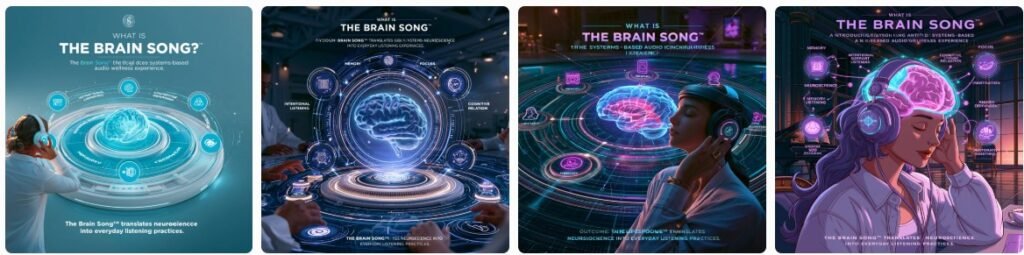
One emerging area of interest is audio wellness.
The Brain Song™ represents a systems-based audio experience designed to promote relaxation, mental clarity, and cognitive balance through carefully crafted sound environments. Rather than claiming to cure disease or reverse neurological conditions, this approach explores how sound may influence the body’s interconnected stress, attention, and emotional regulation systems.
Why Modern Brains Feel Overwhelmed
The human brain evolved in environments very different from today’s world.
Instead of processing thousands of digital stimuli daily, our ancestors encountered relatively predictable sensory experiences. Modern lifestyles expose the brain to:
- Constant multitasking
- Chronic psychological stress
- Sleep disruption
- Information overload
- Sedentary behaviors
- Reduced time in restorative environments
Over time, these pressures may contribute to what many describe as “brain fog.”
Symptoms often include:
- Difficulty focusing
- Reduced mental stamina
- Forgetfulness
- Increased distractibility
- Feeling mentally exhausted
While these experiences are common, they often reflect broader physiological patterns involving stress hormones, sleep quality, and nervous system regulation.
The Brain as an Integrated System
Traditional thinking often separates cognitive function into isolated categories:
Memory.
Attention.
Mood.
Sleep.
Systems biology suggests these functions constantly interact.
Healthy cognition depends upon communication between multiple networks:
The Stress Response System
Excessive activation of stress pathways may interfere with concentration and working memory.
The Sleep–Wake System
Poor sleep affects memory consolidation and emotional regulation.
Emotional Networks
Anxiety and emotional overload consume cognitive resources.
Sensory Processing Systems
Environmental inputs shape arousal and attentional states.
Neuroplasticity
The brain continually adapts to experiences throughout life.
Audio wellness attempts to engage several of these systems simultaneously.
How Sound Influences the Brain
Humans are deeply responsive to sound.
Research suggests that music and auditory stimulation can influence:
- Heart rate
- Breathing rhythm
- Emotional state
- Stress perception
- Attention allocation
- Relaxation responses
Music therapy has been investigated across diverse populations, including older adults, hospital patients, and individuals experiencing anxiety.
Possible mechanisms include:
Emotional Regulation
Pleasant auditory experiences may reduce perceived stress.
Attentional Anchoring
Focused listening can minimize external distractions.
Physiological Synchronization
Slow rhythmic patterns may encourage calmer breathing.
Habit Formation
Regular listening routines create predictable moments of mental recovery.
The Brain Song™
Ready to experience The Brain Song™ for yourself?
Understanding the science is only the beginning. The true value of audio wellness emerges through consistent practice. Explore how The Brain Song™ can become part of your daily rhythm—supporting moments of focus, emotional balance, cognitive relaxation, and mental recovery through intentional listening habits.