
Stress, the Hyperaroused Brain, and Why You Can’t Turn Off
Many people say:
“I’m exhausted, but my mind won’t stop.”
This experience reflects a mismatch between physical fatigue and nervous system activation.
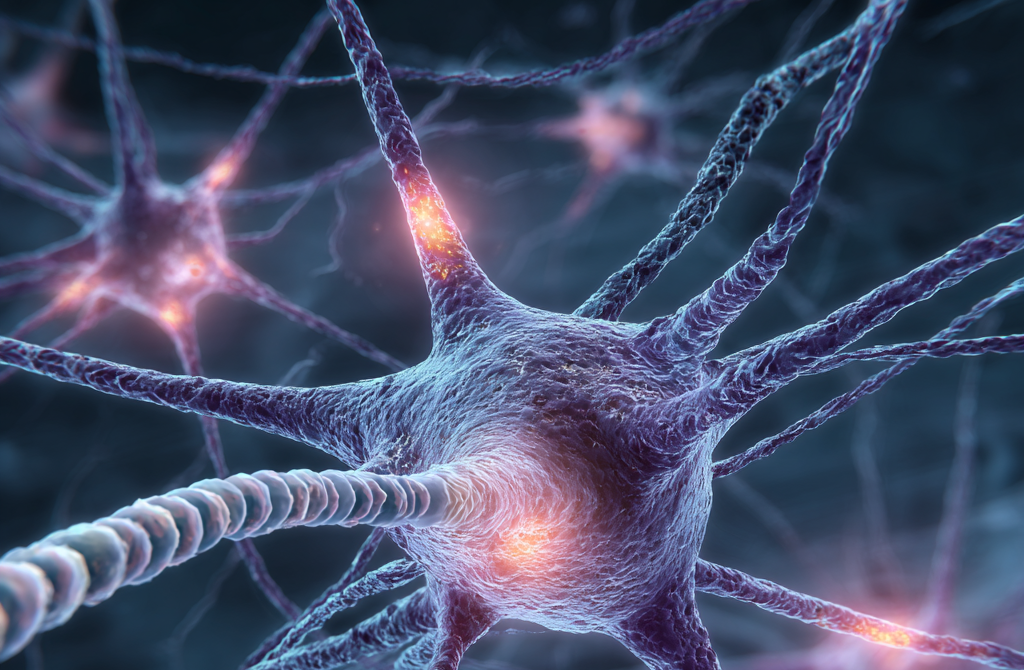
Figure 1. Many people say:
“I’m exhausted, but my mind won’t stop.”
This experience reflects a disconnect between physical fatigue and nervous system activation rather than a lack of tiredness itself.
Throughout the day, the brain continuously processes emails, conversations, notifications, decisions, and emotional stress. Even when muscles are ready to rest, the nervous system may remain in a heightened state of alertness, with ongoing activity in brain regions involved in attention, worry, and anticipation.
Stress hormones such as cortisol and adrenaline are designed to keep us awake and responsive during challenges. When these signals remain elevated into the evening, the body may feel heavy and drained while the mind continues racing from one thought to another.
This pattern is increasingly common in modern life, where constant digital stimulation, irregular sleep schedules, caffeine intake, and chronic stress reduce opportunities for the brain to transition naturally into a relaxed state.
Supportive habits that may help restore balance include:
- Maintaining a consistent sleep schedule
- Limiting bright screens before bedtime
- Practicing slow, deep breathing
- Listening to calming music or guided audio
- Reading or journaling instead of scrolling
- Creating a quiet, low-light evening environment
Rather than trying to force sleep, these practices encourage the nervous system to gradually shift from a state of high alert toward one of rest and recovery.
The goal is not to silence every thought, but to create conditions in which the brain can safely let go of constant vigilance—allowing both the mind and body to recover together.
The Hyperarousal State
Modern stressors include:
• Financial concerns
• Work demands
• Information overload
• Family responsibilities
• Social pressures
• Constant connectivity
The brain interprets chronic stress as potential danger.
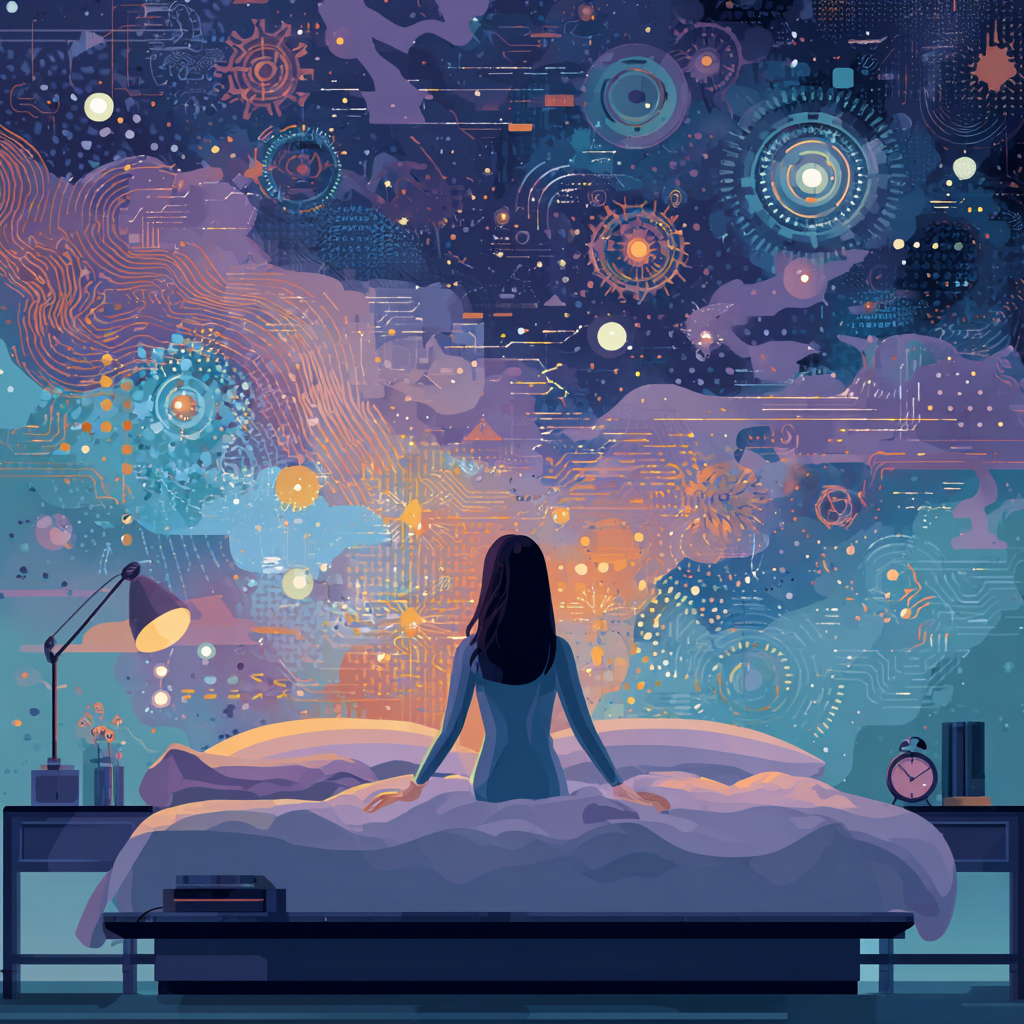
Figure 2. The Hyperarousal State
Many people assume insomnia occurs because the body is not tired enough. In reality, many individuals experience the opposite problem—they are physically exhausted while their nervous system remains highly activated.
This condition is often referred to as hyperarousal, a state in which the brain continues to operate in “alert mode” even when it is time to rest.
Modern life provides countless triggers that can keep the mind engaged long after the day has ended. Financial uncertainty may fuel ongoing worry, work demands extend beyond office hours through emails and messaging apps, and information overload exposes the brain to an endless stream of news, social media, and notifications.
Family responsibilities and social expectations add additional layers of cognitive and emotional processing, while constant connectivity leaves few opportunities for genuine mental recovery.
When these stressors accumulate, the sympathetic nervous system—the body’s “fight-or-flight” system—may remain active. Heart rate stays elevated, stress hormones continue circulating, and thoughts race from one topic to another. Instead of transitioning smoothly into restorative sleep, the brain continues scanning for problems to solve.
Breaking this cycle often involves intentionally creating moments of calm throughout the day and especially in the evening. Limiting screen exposure, practicing slow breathing, engaging in meditation or gentle stretching, listening to relaxing music, and maintaining consistent sleep routines can all help shift the body toward the parasympathetic “rest-and-digest” state.
The goal is not to eliminate every source of stress but to teach the nervous system that it is safe to relax. Over time, these small daily habits may improve sleep quality, reduce mental overactivity, and support healthier brain function, emotional resilience, and overall well-being.
As a result:
• Heart rate increases.
• Cortisol remains elevated.
• Muscle tension persists.
• Vigilance intensifies.
The body prepares for action rather than restoration.
The Sleep–Stress Loop
Poor sleep increases stress sensitivity.
Stress then disrupts future sleep.
This creates a self-reinforcing cycle.
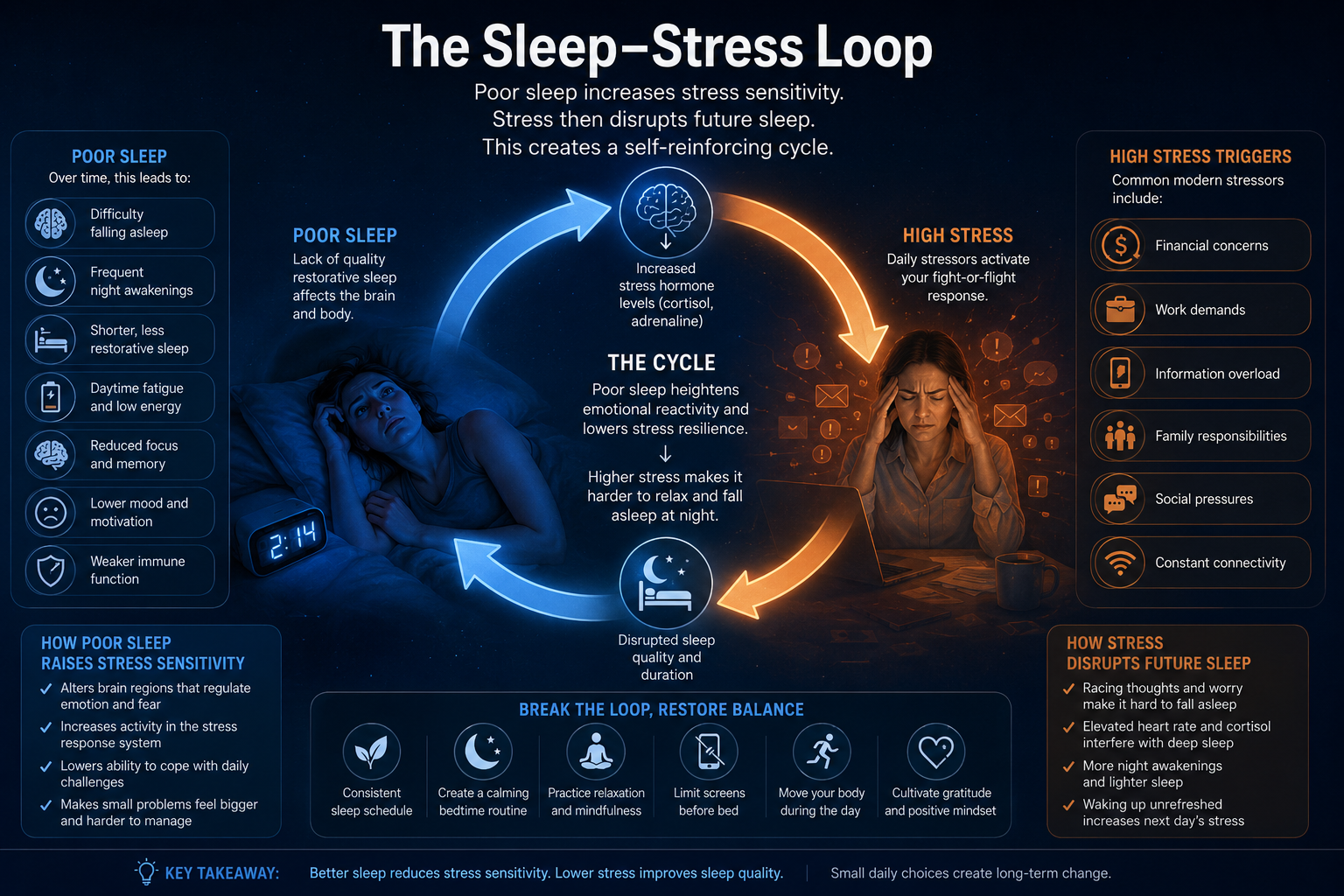
Figure 3. The Sleep–Stress Loop
Many people think stress causes poor sleep. While this is true, the relationship works in both directions. Sleep and stress form a powerful biological feedback system in which each continuously influences the other. When one becomes disrupted, the other often follows, creating a self-reinforcing cycle that can be difficult to break.
A single night of inadequate sleep may increase the body’s production of stress hormones such as cortisol and adrenaline, making the brain more sensitive to everyday challenges. Minor inconveniences can suddenly feel overwhelming, emotional regulation becomes more difficult, and concentration often declines. At the same time, chronic stress keeps the nervous system in a state of heightened alertness, making it harder to relax, fall asleep, and remain asleep throughout the night.
Modern lifestyles amplify this cycle through financial pressures, demanding work schedules, constant digital notifications, family responsibilities, information overload, and around-the-clock connectivity. The brain receives continuous signals that it should remain vigilant rather than transition into a restorative state.
Fortunately, the cycle can be interrupted through consistent daily habits rather than dramatic interventions. Maintaining a regular sleep schedule, limiting screen exposure before bedtime, practicing relaxation techniques, engaging in regular physical activity, and creating a calming evening routine all help signal safety to the nervous system. Quality nutrition and stress-management practices further support healthy sleep architecture.
The key message is simple: better sleep reduces stress sensitivity, and lower stress improves sleep quality. Small, sustainable lifestyle choices repeated every day can gradually shift the body away from chronic hyperarousal and toward a healthier rhythm of recovery, resilience, and long-term well-being.
Sleep loss affects:
• Emotional regulation
• Threat perception
• Decision-making
• Frustration tolerance
Calming the Nervous System
Simple practices may help shift the body toward recovery:
Breathing Exercises
Slow exhalations stimulate parasympathetic activity.
Mindfulness Meditation
Improves awareness of racing thoughts.
Gentle Stretching
Releases accumulated tension.
Evening Reflection
Journaling reduces mental clutter.
Digital Boundaries
Limiting stimulating content before bed supports relaxation.
Rest Is a Biological Skill
Deep sleep often emerges not from forcing sleep, but from creating safety.
The nervous system sleeps best when it perceives that the environment is secure.
By learning to downshift from survival mode into restoration mode, many individuals rediscover their natural ability to sleep.
If you’re exploring evidence-informed approaches to sleep support, the next step is understanding what current research suggests. Not every solution works the same way for everyone, but knowing science can help you make more confident and informed decisions.