
The Science of Nitric Oxide
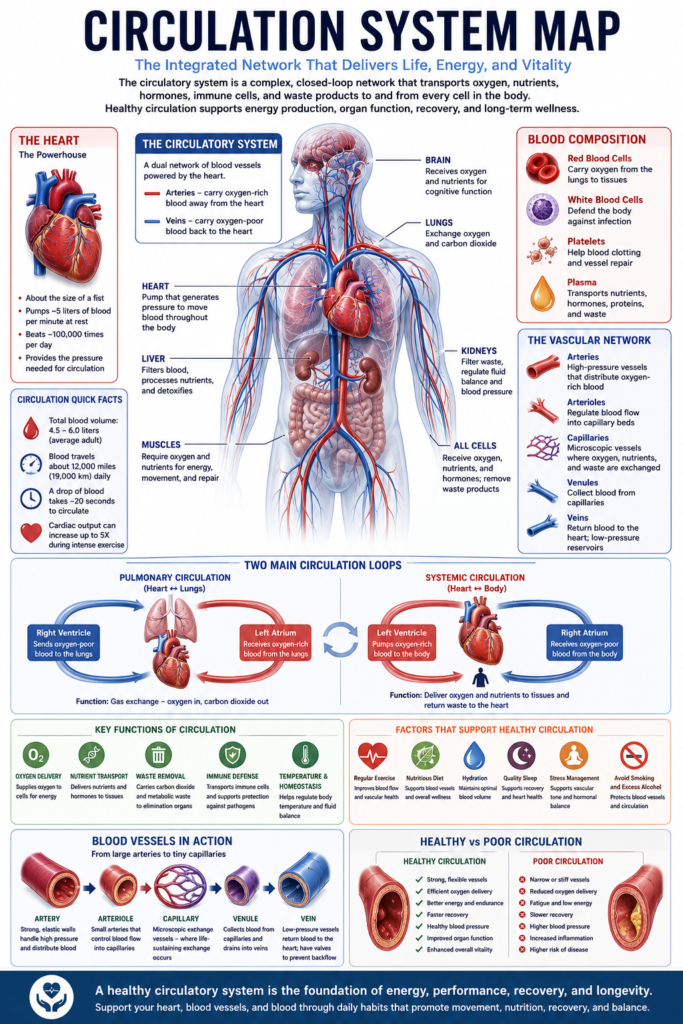
Circulation System Map: Understanding the Network That Sustains Life
The circulatory system is one of the body’s most essential biological networks, continuously delivering oxygen, nutrients, hormones, and immune cells while removing carbon dioxide and metabolic waste. Powered by the heart and an extensive network of arteries, veins, and capillaries, this integrated system supports virtually every organ and tissue, making healthy circulation fundamental to energy production, physical performance, recovery, and long-term health.
This illustration provides a comprehensive overview of how the circulatory system functions. At its center is the heart, which pumps blood through two interconnected loops: pulmonary circulation, where blood travels to the lungs for oxygen exchange, and systemic circulation, which distributes oxygen-rich blood throughout the body. Blood vessels of varying sizes—including arteries, arterioles, capillaries, venules, and veins—work together to regulate blood pressure, deliver nutrients, and maintain efficient communication between organs.
The diagram also highlights the components of blood itself. Red blood cells transport oxygen, white blood cells support immune defense, platelets contribute to clotting and tissue repair, and plasma carries nutrients, hormones, proteins, and waste products. Together, these components enable the circulatory system to support brain function, muscle performance, kidney filtration, liver metabolism, and cellular repair.
Healthy circulation depends on more than the cardiovascular system alone. Regular physical activity, balanced nutrition, adequate hydration, restorative sleep, effective stress management, and avoidance of smoking and excessive alcohol all help maintain healthy blood vessels and efficient blood flow. Conversely, aging, chronic inflammation, oxidative stress, metabolic dysfunction, and sedentary lifestyles may gradually impair vascular flexibility and circulation efficiency.
Nitric Oxide: Supporting Circulation, Performance, and Long-Term Vascular Health
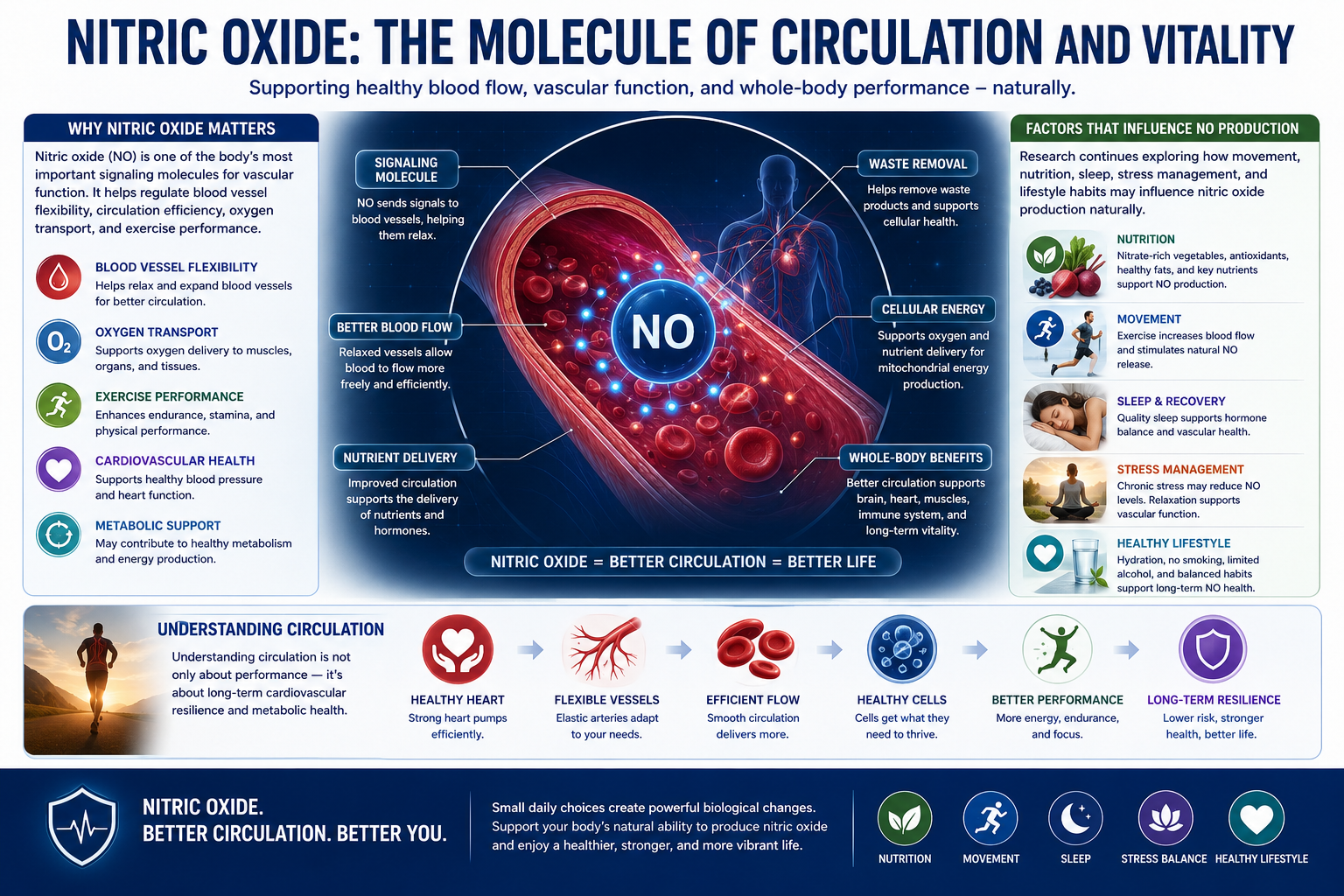
Nitric oxide (NO) is one of the body’s most important signaling molecules, playing a central role in maintaining healthy blood vessels and efficient circulation. Produced primarily by the endothelial cells that line the inside of blood vessels, nitric oxide helps arteries relax and expand, allowing blood to flow more freely throughout the body. This process supports oxygen delivery, nutrient transport, waste removal, and communication between organs, making nitric oxide essential for overall cardiovascular function.
The illustration highlights how nitric oxide influences multiple interconnected physiological systems rather than a single aspect of health. Healthy nitric oxide signaling contributes to vascular flexibility, exercise performance, cellular energy production, and cardiovascular resilience. Efficient blood flow also helps deliver oxygen and nutrients to the brain, muscles, heart, and other tissues, supporting endurance, recovery, cognitive performance, and metabolic function.
Research continues to explore how everyday lifestyle choices may naturally influence nitric oxide production. Regular physical activity increases blood flow and stimulates endothelial function, while nitrate-rich vegetables such as leafy greens and beets provide dietary compounds involved in nitric oxide metabolism. Adequate hydration, restorative sleep, balanced nutrition, and effective stress management may further support the biological environment needed for healthy vascular function. Conversely, aging, chronic inflammation, oxidative stress, smoking, sedentary behavior, and poor dietary habits may gradually reduce nitric oxide availability over time.
Understanding nitric oxide is about more than improving athletic performance. Healthy circulation influences nearly every organ system and plays an important role in long-term cardiovascular resilience, metabolic efficiency, and healthy aging. Because blood vessels connect every tissue in the body, supporting endothelial health through sustainable lifestyle habits may provide benefits that extend well beyond the cardiovascular system.
This systems-based perspective emphasizes that lasting vascular wellness is built through consistent daily choices. Rather than relying on a single intervention, combining regular movement, nutritious eating, quality sleep, hydration, and stress management may help maintain healthy nitric oxide production and support lifelong circulation, energy, recovery, and overall physiological vitality.
Nitric oxide is one of the body’s most important signaling molecules for vascular function. It helps regulate blood vessel flexibility, circulation efficiency, oxygen transport, and exercise performance.
Research continues exploring how movement, nutrition, sleep, stress management, and lifestyle habits may influence nitric oxide production naturally.
Understanding circulation is not only about performance — it’s about long-term cardiovascular resilience and metabolic health.
Because every cell depends on a continuous supply of oxygen and nutrients, the quality of circulation influences nearly every aspect of health. A systems-based approach that supports the heart, blood vessels, blood composition, and healthy lifestyle habits may help promote cardiovascular resilience, exercise capacity, cognitive performance, recovery, and healthy aging. Understanding how these interconnected systems work together provides a stronger foundation for making informed decisions that support lifelong vascular wellness.
#NitricBoost #NitricOxide #VascularFunction #CardiovascularHealth #ExerciseScience #HealthyLifestyle #Recovery #BloodPressure #MetabolicHealth #Longevity
What You Should Know Before Choosing a Circulation Support Supplement?
Improving circulation is not about finding a single miracle solution—it begins with understanding how nitric oxide, vascular function, nutrition, movement, recovery, and healthy lifestyle habits work together. Before considering any supplement, explore the science behind healthy blood flow and learn which evidence-based strategies may help support long-term cardiovascular wellness and overall vitality.