
Blood Sugar Stability—The Foundation of Metabolic Health
Blood sugar regulation influences nearly every aspect of human physiology.
Stable glucose levels support:
- Energy
- Mental clarity
- Mood
- Appetite regulation
- Physical performance
- Long-term cardiovascular health
Unfortunately, modern eating patterns often create repeated spikes and crashes.
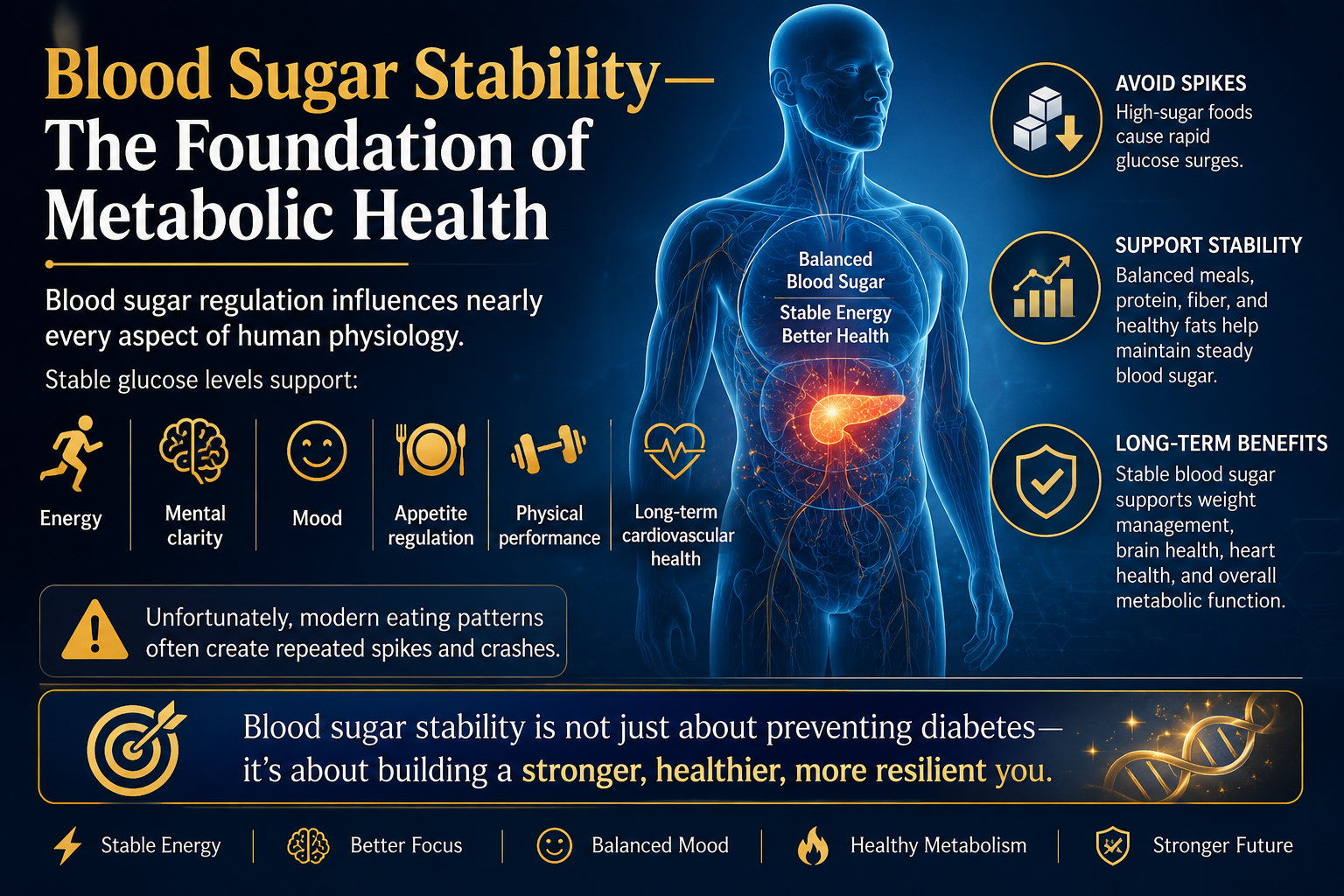
Blood sugar regulation is one of the body’s most fundamental biological processes. Every meal, every movement, and even every period of sleep requires the coordinated work of multiple organs and signaling systems to maintain glucose within a healthy range. Rather than functioning independently, the brain, pancreas, liver, skeletal muscles, adipose tissue, digestive system, kidneys, and endocrine hormones continuously exchange information to balance energy supply with the body’s changing demands.
When blood glucose remains relatively stable, cells receive a consistent source of fuel for energy production. The brain benefits from a reliable glucose supply that supports concentration, memory, learning, and mental clarity. Stable blood sugar also contributes to balanced mood, healthier appetite regulation, improved physical performance, and reduced fluctuations in energy throughout the day. Over time, maintaining healthy glucose control supports cardiovascular function, metabolic flexibility, and overall long-term health.
Modern lifestyles, however, often place significant stress on this finely tuned system. Highly processed foods, excessive added sugars, irregular meal timing, sleep deprivation, chronic psychological stress, and physical inactivity can contribute to repeated spikes and rapid declines in blood glucose. These fluctuations may increase hunger, encourage overeating, reduce energy levels, impair concentration, and place additional demands on insulin regulation. When such patterns persist for years, they may contribute to metabolic dysfunction and increase the risk of chronic health conditions.
A systems-based approach recognizes that healthy blood sugar is influenced by much more than carbohydrate intake alone. Dietary quality, fiber consumption, regular physical activity, muscle health, sleep quality, stress management, body composition, gut microbiome diversity, and hormonal balance all work together to support glucose homeostasis.
The illustration highlights this interconnected network, emphasizing that blood sugar stability is not simply about preventing diabetes. It represents a central pillar of metabolic resilience, supporting healthier aging, sustained energy, cognitive performance, cardiovascular wellness, and the body’s remarkable ability to adapt to everyday physiological demands. Maintaining stable glucose levels is therefore one of the most important foundations for lifelong health and preventive medicine.
Understanding the Glucose Roller Coaster
After eating refined carbohydrates or sugary foods, blood glucose rises rapidly.
The pancreas releases insulin to move glucose into cells.
When spikes become frequent, the body may gradually respond less efficiently.
This process may contribute to:
- Increased hunger
- Afternoon fatigue
- Brain fog
- Energy crashes
- Increased calorie intake
The objective is not eliminating carbohydrates.
It is creating smoother metabolic responses.
Metabolic Block Diagram: Why Fat Loss Stops
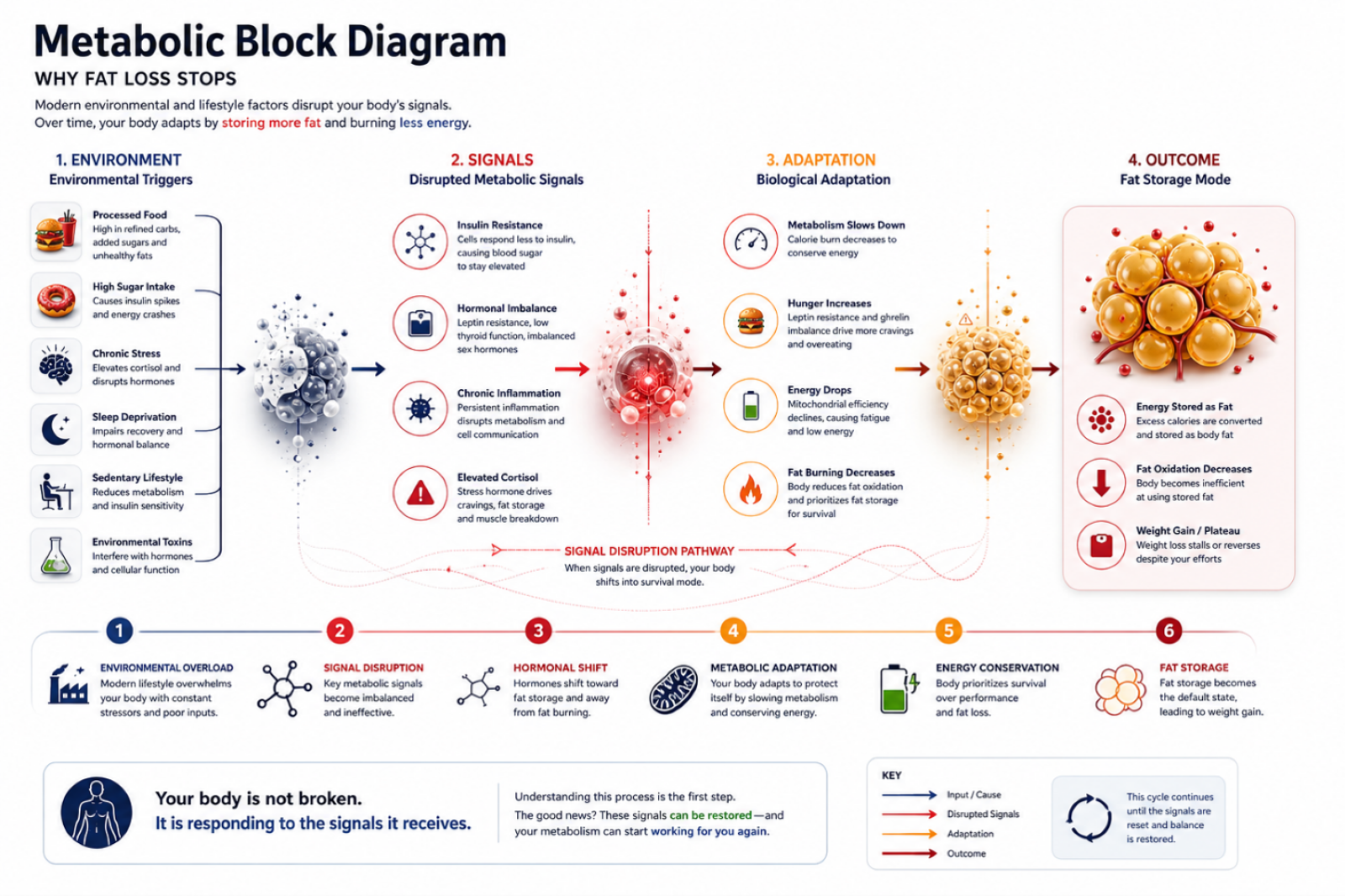
This diagram illustrates a systems-based explanation of why fat loss often becomes increasingly difficult despite calorie restriction or repeated dieting efforts. Rather than viewing excess body fat as a simple consequence of overeating, the framework demonstrates how environmental, behavioral, hormonal, and metabolic factors interact to influence the body’s energy regulation systems. Highly processed foods, chronic psychological stress, inadequate sleep, sedentary lifestyles, and environmental exposures can disrupt normal metabolic signaling over time.
As these stressors accumulate, important biological pathways begin to change. Insulin resistance may reduce the body’s ability to regulate blood glucose efficiently, while hormonal imbalances involving leptin, ghrelin, thyroid hormones, and cortisol alter hunger, satiety, and energy expenditure. Persistent low-grade inflammation further interferes with cellular communication and metabolic flexibility, making it increasingly difficult for the body to switch between storing and burning fuel.
The diagram also illustrates the body’s adaptive response to these disrupted signals. To preserve energy during perceived metabolic stress, the body may reduce resting metabolic rate, increase appetite, decrease mitochondrial energy production, and prioritize fat storage over fat oxidation. As a result, weight loss slows, plateaus, or reverses even when individuals continue restricting calories.
Importantly, this model emphasizes that the body is not “broken.” Instead, it is responding predictably to the biological signals it receives. Understanding these interconnected mechanisms supports a shift away from blaming willpower and toward restoring healthy metabolic communication through balanced nutrition, regular physical activity, quality sleep, stress management, and long-term lifestyle change. This systems perspective provides a more comprehensive foundation for sustainable weight management and preventive metabolic health.
Practical Strategies
Build Balanced Meals
Each meal benefits from combining:
Protein
Healthy fats
Fiber-rich carbohydrates
Colorful vegetables
Examples include:
Greek yogurt with berries and walnuts
Eggs with vegetables and avocado
Salmon with roasted vegetables
Beans with quinoa and olive oil
Prioritize Fiber
Fiber slows digestion and promotes gradual glucose absorption.
Helpful sources include:
Vegetables
Beans
Lentils
Whole grains
Seeds
Fruit
Stay Hydrated
Water supports circulation, digestion, temperature regulation, and numerous metabolic reactions.
Even mild dehydration may reduce physical and cognitive performance.
Move After Meals
Walking for 10–20 minutes after eating encourages muscles to utilize circulating glucose.
This simple habit may be one of the easiest ways to support metabolic function.
Consistency Matters
Perfect eating is unnecessary.
Healthy metabolism develops through repeated patterns practiced over months and years.
Every balanced meal becomes another investment in long-term resilience.
Understanding why metabolism slows is the first step toward making informed health decisions. Before considering any weight-loss program, supplement, or dietary strategy, take a moment to explore the biological processes behind metabolic adaptation. Learning how hormones, insulin sensitivity, inflammation, stress, sleep, and energy regulation interact can help you evaluate solutions more realistically and choose approaches that support long-term metabolic health rather than short-term results.