
Why Hearing Is More Than Just Your Ears
Hearing is often viewed as a simple function of the ears, but modern science tells a much broader story. Every sound you hear travels through an interconnected network involving the outer ear, middle ear, inner ear, auditory nerve, brainstem, and auditory cortex. At the same time, healthy circulation, mitochondrial energy production, inflammation regulation, and nervous system function all help support this complex process.
As we age, these interconnected systems may gradually become less efficient. Reduced blood flow, oxidative stress, chronic inflammation, metabolic dysfunction, and lifelong noise exposure can all contribute to changes in hearing. In many cases, hearing decline reflects changes throughout the body rather than a problem isolated to the ears alone.
Hearing Is a Whole-Body Process: Understanding the Systems Behind Healthy Hearing
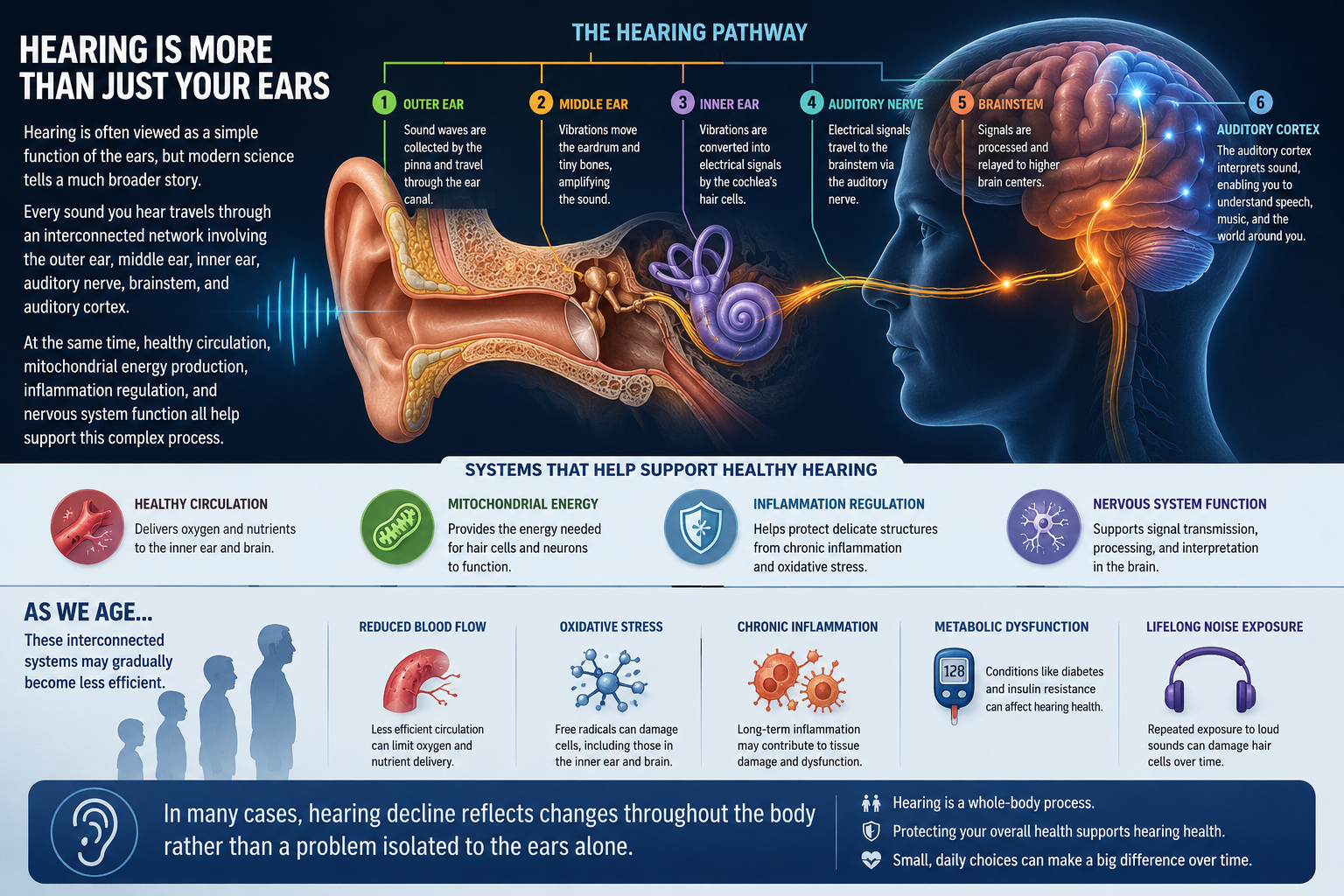
Hearing is often thought of as a function of the ears alone, but modern biology reveals that it is actually the result of multiple interconnected systems working together. Every sound begins as vibrations entering the outer ear, travels through the middle ear where those vibrations are amplified, and reaches the inner ear, where specialized sensory hair cells convert mechanical energy into electrical signals. These signals then travel through the auditory nerve to the brainstem before finally reaching the auditory cortex, where the brain interprets speech, music, environmental sounds, and spatial awareness.
Because hearing depends on this continuous chain of communication, healthy hearing requires much more than healthy ears. The auditory system relies on an adequate blood supply to deliver oxygen and nutrients to the delicate tissues of the inner ear. Unlike many other organs, the cochlea has an exceptionally high metabolic demand and a limited ability to regenerate damaged sensory cells. Even small reductions in circulation or oxygen delivery may influence auditory performance over time.
Mitochondria—the tiny energy-producing structures inside cells—also play a central role in hearing. Hair cells within the cochlea and neurons throughout the auditory pathway require a constant supply of cellular energy to maintain electrical signaling and process sound accurately. As mitochondrial efficiency naturally declines with aging, energy production may become less effective, making auditory tissues more vulnerable to stress and functional decline.
Inflammation and oxidative stress represent another important component of hearing health. Throughout life, exposure to environmental toxins, chronic disease, metabolic imbalance, smoking, poor nutrition, and excessive noise may increase the production of reactive oxygen species. When antioxidant defenses become overwhelmed, oxidative stress can damage delicate hair cells, supporting tissues, blood vessels, and auditory neurons. Chronic low-grade inflammation may further contribute to structural changes that gradually reduce hearing sensitivity.
The nervous system is equally essential. Hearing is not simply the detection of sound—it is the brain’s interpretation of complex electrical information. The brainstem coordinates rapid signal transmission, while higher brain regions recognize language, identify familiar voices, filter background noise, and determine where sounds originate. Healthy neural communication therefore supports not only hearing but also speech comprehension, balance, attention, and cognitive performance.
Aging introduces gradual changes across all of these interconnected systems. Blood vessels may become less flexible, reducing circulation. Mitochondrial energy production may decline. Oxidative stress often increases, while chronic inflammation becomes more common. Metabolic conditions such as insulin resistance, diabetes, obesity, and cardiovascular disease may further influence microvascular health and nerve function. Decades of cumulative noise exposure may also damage cochlear hair cells that cannot naturally regenerate once lost.
For these reasons, hearing changes are increasingly viewed as part of overall biological aging rather than an isolated problem affecting only the ears. Researchers now recognize important connections between hearing health, cardiovascular function, metabolic health, brain aging, sleep quality, physical activity, and healthy lifestyle habits. Supporting these systems may help maintain the biological environment needed for normal auditory function throughout life.
This systems-based perspective does not suggest that every cause of hearing loss can be prevented or reversed. Genetics, infections, medications, trauma, and certain medical conditions also contribute to hearing impairment. However, understanding hearing as a whole-body process highlights the importance of protecting cardiovascular health, managing metabolic risk factors, reducing unnecessary noise exposure, maintaining regular physical activity, consuming a nutrient-rich diet, prioritizing restorative sleep, and seeking early evaluation when hearing changes occur.
Rather than focusing solely on the ears, modern hearing science encourages a broader view: healthy hearing reflects the coordinated function of the body’s circulatory, metabolic, neurological, and cellular systems working together across the lifespan.
This systems-based perspective encourages a broader understanding of hearing wellness. Instead of focusing only on hearing loss after it occurs, it emphasizes prevention, healthy lifestyle habits, cardiovascular health, sleep quality, nutrition, and long-term brain health.

Figure. The Brain’s Auditory Processing Network
Hearing extends far beyond the ears. Once sound reaches the inner ear, electrical signals travel through the auditory nerve to specialized brain regions that decode speech, recognize familiar voices, locate sound sources, and filter background noise. This illustration highlights the complex neural networks involved in auditory perception, showing how hearing depends on continuous communication between sensory organs and the brain. Modern neuroscience increasingly recognizes that healthy hearing reflects the combined function of neural connectivity, energy metabolism, circulation, and cognitive processing. Protecting overall brain health is therefore an important component of maintaining hearing throughout the aging process.
The Hearing Support Blueprint introduces hearing as part of whole-body health, helping readers understand how multiple biological systems work together to support lifelong auditory function.
Ready to take the next step? Explore practical strategies and evidence-based approaches designed to support hearing health, cognitive wellness, and healthy aging. Small actions today may help preserve the connections that matter most tomorrow.