
The Future of Cognitive Wellness May Be Preventive

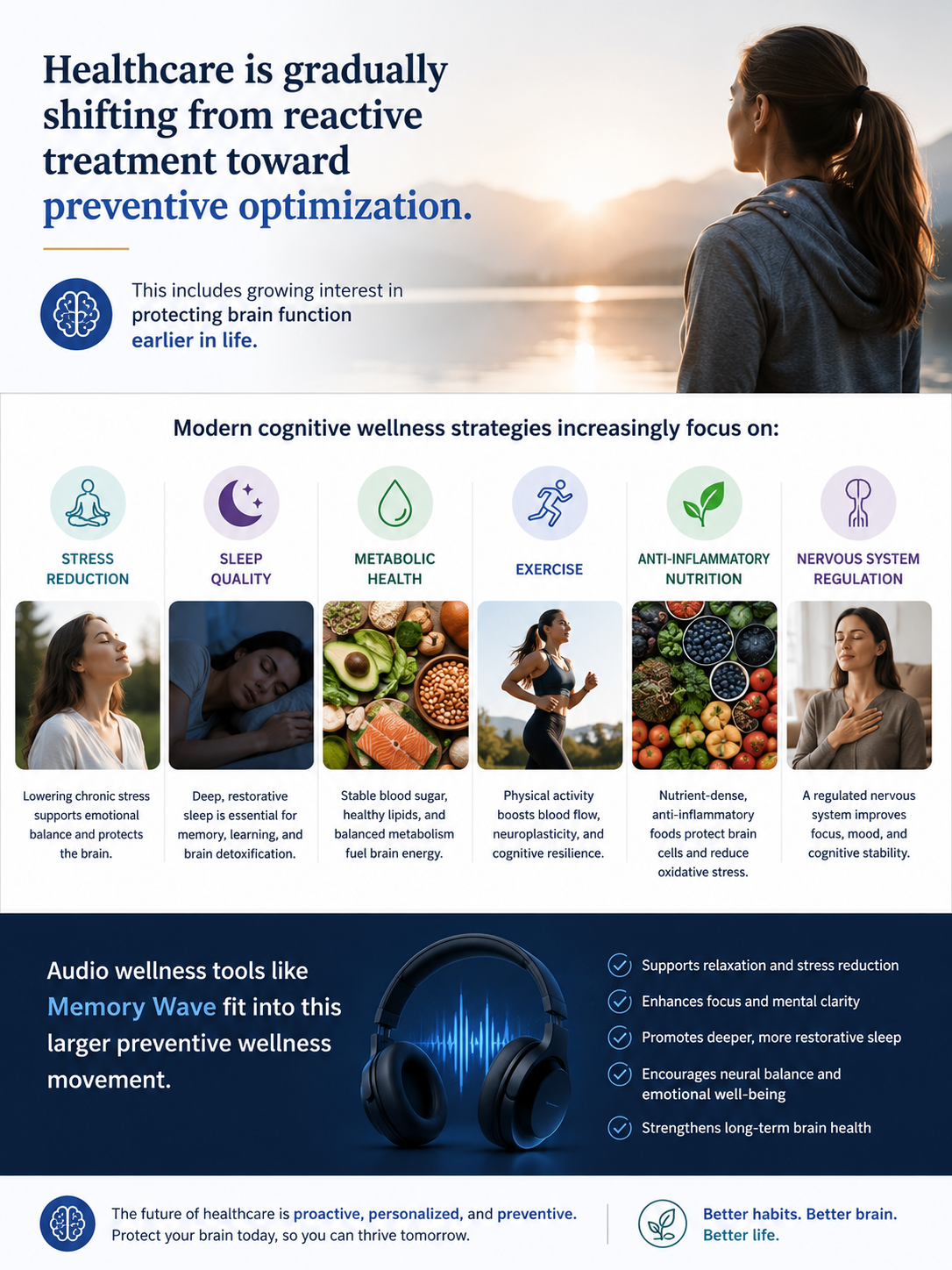
Healthcare is gradually shifting from reactive treatment toward preventive optimization.
This includes growing interest in protecting brain function earlier in life.
Modern cognitive wellness strategies increasingly focus on:
- stress reduction,
- sleep quality,
- metabolic health,
- exercise,
- anti-inflammatory nutrition,
- and nervous system regulation.
Audio wellness tools like Memory Wave fit into this larger preventive wellness movement.
Many people are searching for practical ways to reduce mental overload and create healthier daily cognitive habits.
Preventive Brain Health: Why Modern Cognitive Wellness Begins Long Before Symptoms Appear
For much of modern medical history, healthcare has primarily focused on diagnosing and treating disease after symptoms develop. While this reactive approach has saved countless lives, advances in neuroscience, preventive medicine, and systems biology are encouraging a broader perspective—one that emphasizes protecting health before significant decline occurs. Rather than waiting until memory problems, cognitive impairment, or chronic illness become apparent, many researchers now advocate supporting the biological systems that help maintain brain function throughout life.
The brain does not operate independently. Healthy cognition depends on the coordinated interaction of multiple physiological systems, including cardiovascular circulation, metabolic regulation, immune balance, hormonal signaling, mitochondrial energy production, sleep physiology, and nervous system communication. When these interconnected systems function efficiently, they help provide the oxygen, nutrients, and cellular energy required for learning, concentration, memory formation, emotional regulation, and mental resilience.
One of the most important areas receiving attention is stress management. Chronic psychological stress activates the hypothalamic-pituitary-adrenal (HPA) axis, increasing cortisol production over prolonged periods. Persistently elevated stress hormones may interfere with attention, memory, sleep quality, and emotional well-being. For this reason, relaxation practices such as mindfulness meditation, controlled breathing, nature exposure, and regular physical activity are increasingly recognized as valuable components of long-term cognitive wellness.
Sleep quality represents another essential pillar of preventive brain health. During deep sleep, the brain performs critical maintenance functions, including memory consolidation, neural recovery, metabolic waste clearance, and regulation of numerous neurotransmitters. Insufficient or fragmented sleep has been associated with reduced attention, slower information processing, impaired learning, and decreased cognitive performance. Maintaining consistent sleep schedules, limiting evening blue-light exposure, and creating healthy sleep habits are therefore considered fundamental strategies for supporting optimal brain function.
Growing evidence also highlights the importance of metabolic health. The brain consumes approximately 20 percent of the body’s energy despite representing only a small fraction of total body weight. Stable blood glucose regulation, healthy insulin sensitivity, efficient mitochondrial function, and balanced energy metabolism help ensure a reliable supply of fuel for neurons. Conversely, long-term metabolic dysfunction may negatively influence cognitive performance, mood, and overall neurological health. Nutrition, regular movement, and maintaining a healthy body composition all contribute to supporting this metabolic foundation.
Exercise offers benefits extending far beyond cardiovascular fitness. Regular physical activity promotes healthy blood circulation, improves oxygen delivery to brain tissue, stimulates neuroplasticity, supports mitochondrial function, and may encourage the production of brain-derived neurotrophic factor (BDNF), a protein involved in learning and neuronal adaptation. Both aerobic exercise and resistance training contribute to maintaining cognitive vitality across the lifespan.
Nutrition also plays a significant role in preventive cognitive care. Dietary patterns emphasizing vegetables, fruits, whole grains, legumes, healthy fats, lean proteins, and omega-3 fatty acids provide essential nutrients that support normal brain structure and function. Many researchers also emphasize dietary approaches that help maintain a healthy inflammatory balance, since chronic low-grade inflammation has become an important area of investigation in aging and neurological research.
Equally important is nervous system regulation. Modern lifestyles often expose individuals to continuous stimulation from digital devices, demanding work schedules, and environmental stressors. Intentional relaxation, balanced daily routines, social connection, and restorative leisure activities may help maintain healthy autonomic nervous system balance while supporting emotional resilience and mental clarity.
Within this broader preventive framework, some individuals also explore audio wellness technologies designed to promote relaxation, focus, or improved sleep. Programs such as Memory Wave are intended as supportive wellness tools that may complement healthy lifestyle habits by encouraging calmness and a more relaxed mental state during listening sessions. While interest in these technologies continues to grow, they should be viewed as complementary resources rather than replacements for evidence-based medical care, healthy behaviors, or professional evaluation when cognitive concerns arise.
Ultimately, preventive brain health reflects a systems-based philosophy rather than reliance on any single intervention. Sustainable cognitive wellness is built through consistent daily habits that support the body’s interconnected biological networks. By combining stress management, restorative sleep, regular exercise, balanced nutrition, metabolic health, nervous system regulation, and appropriate supportive wellness tools when desired, individuals can take meaningful steps toward maintaining brain performance, resilience, and quality of life throughout healthy aging.
Although no single tool can replace a healthy lifestyle, relaxation-focused systems may serve as one small part of a broader brain health strategy.
The science of brain aging is evolving rapidly. Rather than accepting cognitive decline as an unavoidable part of growing older, we can begin to understand the biological systems that support mental vitality. By learning how brain energy is generated, protected, and renewed, you take the first step toward building habits that support lifelong cognitive resilience. Explore the next chapter to discover practical strategies that help nourish the brain and promote healthier aging from the inside out.