
Blood Sugar and Healthy Aging
Blood Sugar and Healthy Aging
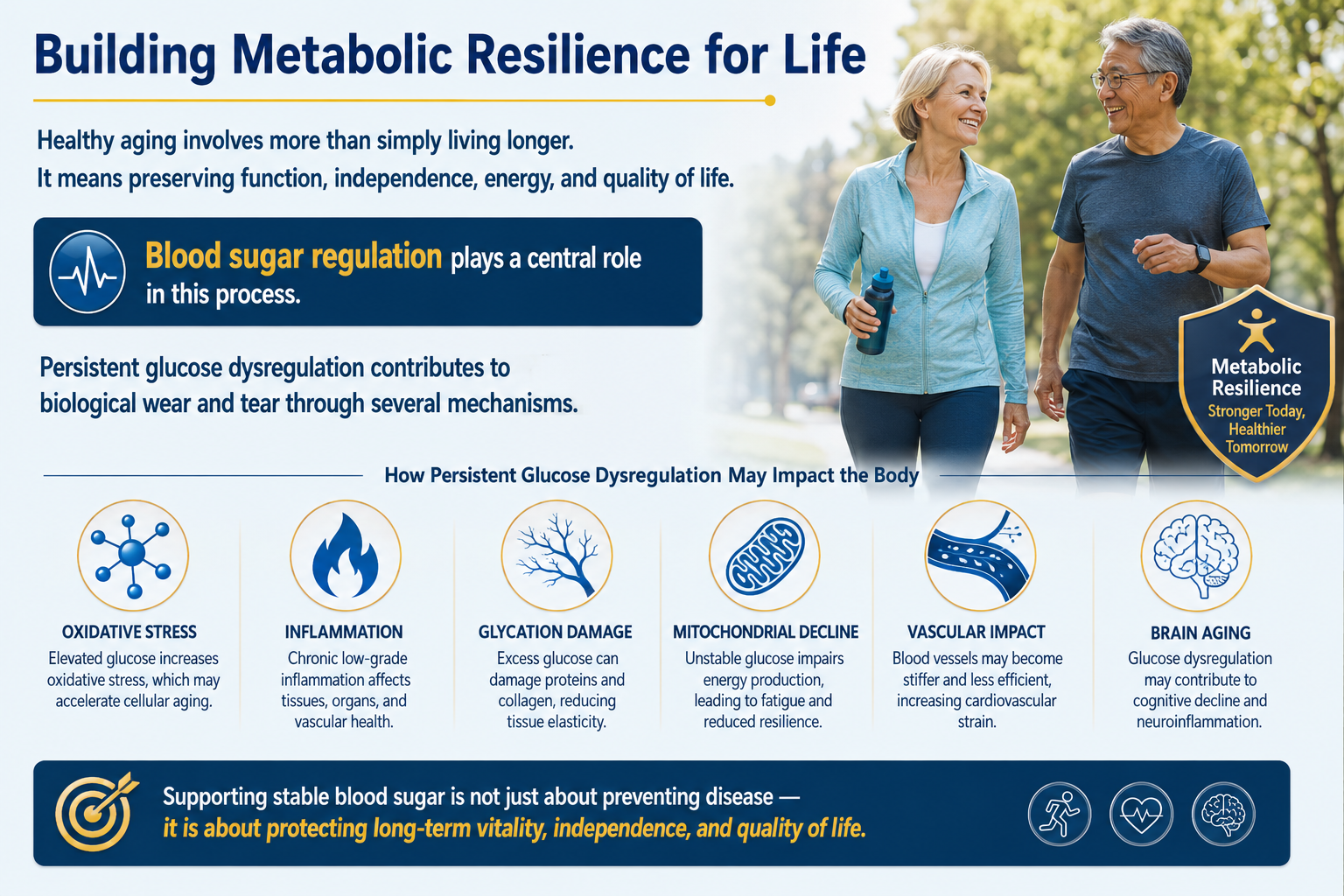
Healthy aging is not measured solely by the number of years a person lives, but by the ability to remain physically active, mentally sharp, metabolically healthy, and independent throughout those years. One of the most important biological foundations supporting this goal is stable blood sugar regulation. Glucose serves as the body’s primary energy source, but maintaining glucose within a healthy range requires precise coordination among the pancreas, liver, muscles, adipose tissue, gut hormones, nervous system, and mitochondria. Together, these interconnected systems form a complex metabolic network that supports long-term health and resilience.
When blood sugar regulation becomes chronically disrupted, the effects extend far beyond glucose itself. Repeated glucose spikes and prolonged insulin resistance can increase oxidative stress, promote persistent low-grade inflammation, accelerate the formation of advanced glycation end products (AGEs), impair mitochondrial energy production, reduce vascular flexibility, and negatively influence brain health. Over many years, these processes may contribute to biological aging and reduced physiological resilience.
The illustration highlights several major pathways through which glucose dysregulation may influence the body, including oxidative stress, inflammation, glycation damage, mitochondrial decline, vascular dysfunction, and cognitive aging. Rather than acting independently, these mechanisms interact continuously through complex biological feedback loops. This systems-based perspective emphasizes that metabolic health influences nearly every organ system, including the cardiovascular, immune, endocrine, nervous, and musculoskeletal systems.
Building metabolic resilience therefore requires more than simply lowering blood sugar. Sustainable improvements are best supported through healthy lifestyle habits such as regular physical activity, balanced nutrition, adequate sleep, stress management, maintaining healthy body composition, and preserving muscle mass. These behaviors help improve insulin sensitivity, promote mitochondrial function, reduce inflammation, and support healthy aging across multiple physiological systems.
Ultimately, metabolic resilience represents the body’s capacity to adapt to everyday physiological challenges while preserving energy production, tissue function, and overall vitality. Supporting stable glucose regulation throughout life is not only an important strategy for reducing metabolic risk but also a cornerstone of maintaining long-term health, independence, cognitive function, and quality of life as we age.
How Blood Sugar Influences Healthy Aging?

Healthy aging involves more than simply living longer.
It means preserving function, independence, energy, and quality of life.
Blood sugar regulation plays a central role in this process.
Persistent glucose dysregulation contributes to biological wear and tear through several mechanisms.
Advanced Glycation
Excess glucose can bind to proteins, forming advanced glycation end products (AGEs) that affect tissues throughout the body.
Chronic Inflammation
Metabolic dysfunction often promotes low-grade inflammation associated with aging.
Mitochondrial Stress
Energy-producing structures within cells may become less efficient.
Vascular Damage
Poor glucose control increases strain on blood vessels and endothelial function.
Cognitive Effects
Emerging research suggests relationships between insulin resistance and cognitive decline.
Why Blood Sugar Matters Beyond Diabetes?
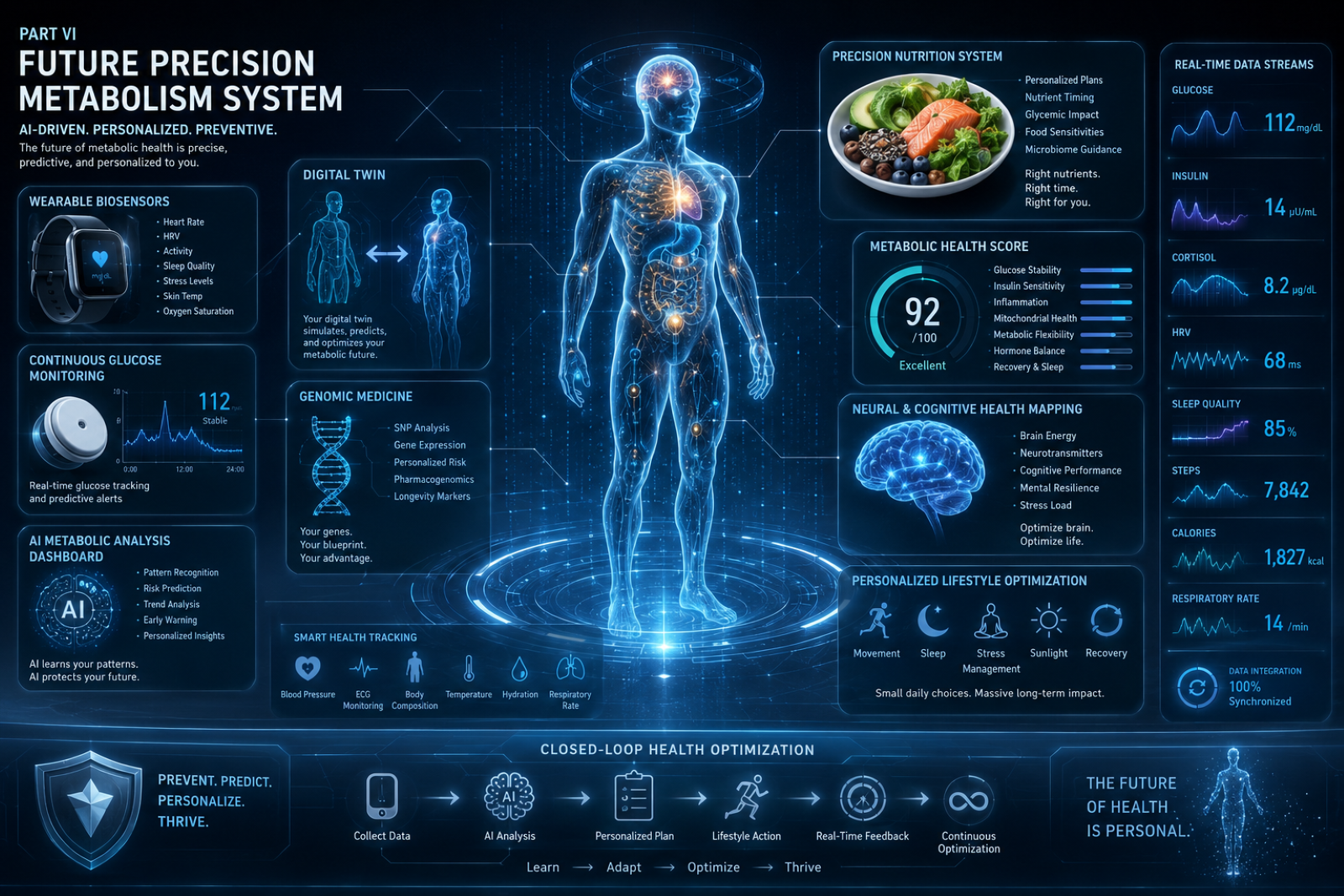
Figure: Future Precision Metabolism System
This illustration presents a vision of the future of metabolic medicine, where artificial intelligence, continuous monitoring, and personalized biology work together to optimize lifelong health. At the center is a digital representation of the human body that integrates information from multiple physiological systems, including the brain, cardiovascular system, digestive organs, endocrine network, and metabolism. Rather than treating diseases after they develop, this framework emphasizes prediction, prevention, and individualized intervention.
Surrounding the central figure are interconnected technologies that continuously collect and analyze health information. Wearable biosensors monitor heart rate, sleep, physical activity, temperature, and oxygen saturation, while continuous glucose monitoring provides real-time insight into blood sugar regulation. Genomic analysis, digital twin modeling, and AI-powered metabolic dashboards combine genetic information with lifestyle and biomarker data to generate personalized recommendations.
The system also incorporates precision nutrition, cognitive health mapping, metabolic scoring, and lifestyle optimization, recognizing that diet, exercise, stress management, sleep, and recovery influence every aspect of metabolic resilience. A closed-loop feedback process continuously collects data, analyzes physiological trends, recommends individualized actions, and evaluates outcomes, allowing health strategies to adapt over time.
Overall, the figure illustrates the transition from reactive healthcare toward precision preventive medicine, where intelligent technologies support proactive decision-making, personalized wellness, and healthier aging by optimizing the body’s interconnected biological systems rather than focusing on isolated diseases or individual laboratory values.
These interconnected processes help explain why metabolic health influences multiple organ systems simultaneously.
The encouraging reality is that biological trajectories are modifiable.
Improving glucose regulation at any age may provide benefits.
Actions that support healthy aging include:
• Maintaining a healthy body composition
• Engaging in regular exercise
• Prioritizing quality sleep
• Choosing nutrient-dense foods
• Managing stress
• Monitoring relevant biomarkers with healthcare professionals
• Building meaningful relationships and purpose
The goal is not chasing perfect laboratory values.
It is creating a resilient system capable of adapting to life’s demands.
Blood sugar is not merely a number on a test report.
It reflects the dynamic interaction between behavior, environment, genetics, and physiology.
The Blood Sugar Reset Blueprint reframes metabolic health as an investment in future vitality.
Every nourishing meal, every walk, every night of restorative sleep, and every positive choice contribute to the larger picture.
Healthy aging is built one decision at a time.
Protect your metabolism today.
Your future self will benefit from the resilience you create now.
Healthy blood sugar is about far more than preventing diabetes. It influences energy production, brain function, cardiovascular health, inflammation, and the biological processes associated with healthy aging. Before considering any supplement or lifestyle program, take a few minutes to understand the science behind glucose regulation and explore evidence-based strategies that support long-term metabolic resilience. Informed decisions are the foundation of lasting health.
Explore Science-Based Guides for Preventive Care and Healthy Support