
The Brain Needs Recovery Time
Modern lifestyles often keep the brain in a constant state of stimulation. Rest, quiet environments, quality sleep, movement, and stress reduction may help support healthier brain recovery.
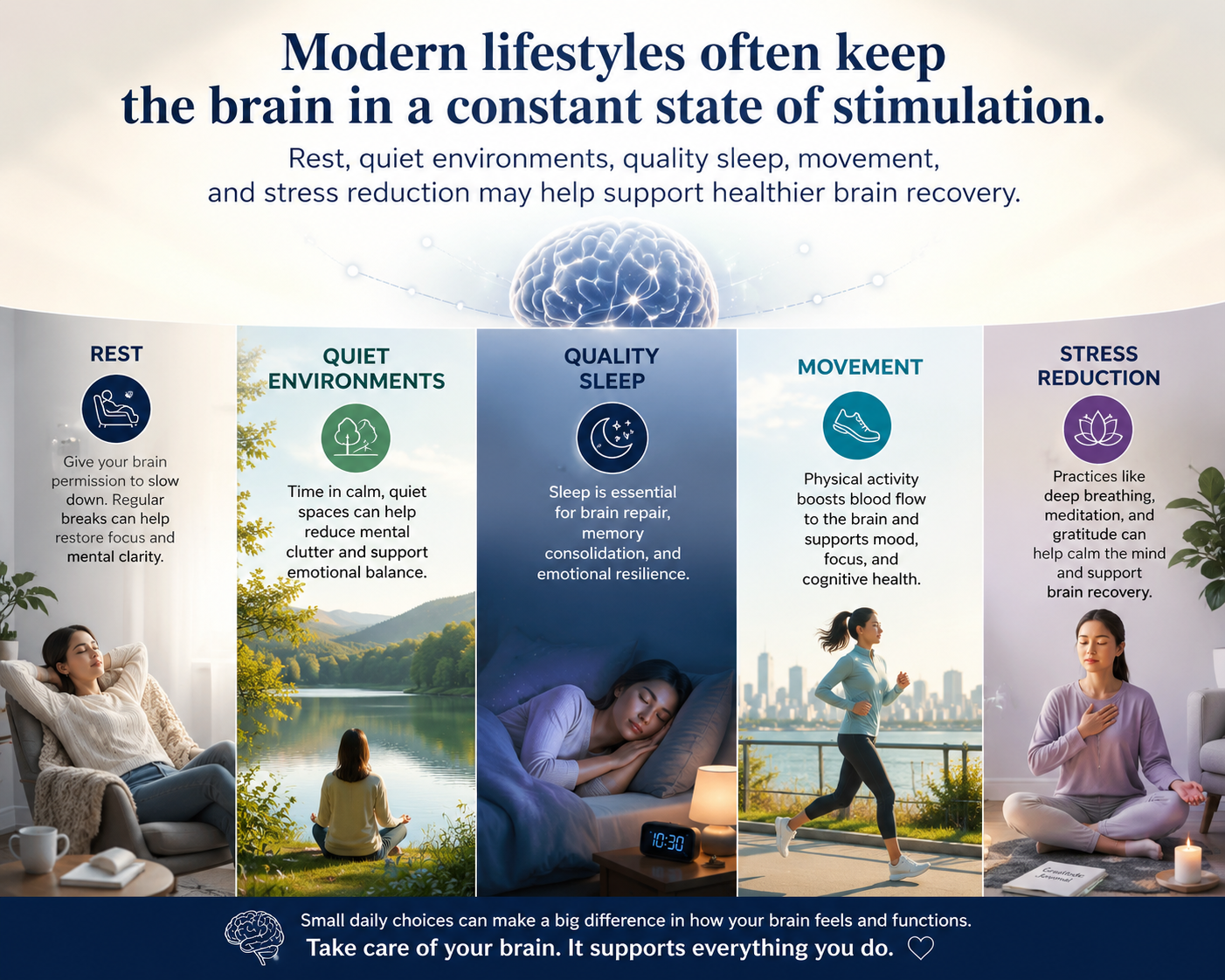
Supporting Brain Recovery in a Hyperconnected World
The human brain was never designed to process an endless stream of notifications, digital media, conversations, deadlines, and sensory information without interruption. Yet for many people, this has become the normal rhythm of modern life. From the moment we wake until we fall asleep, the brain continuously shifts attention between emails, social media, meetings, entertainment, news, and countless other demands. While the brain possesses remarkable adaptability, prolonged periods of constant stimulation may reduce opportunities for recovery, making intentional periods of rest increasingly important.
Brain recovery is an active biological process rather than simply the absence of mental activity. Throughout the day, billions of neurons communicate through electrical and chemical signals to process information, store memories, regulate emotions, coordinate movement, and maintain countless automatic functions. These complex activities require enormous amounts of energy. Although the brain represents only about two percent of body weight, it consumes approximately twenty percent of the body’s available energy under normal conditions. Continuous cognitive demands may therefore increase mental fatigue even when physical activity is minimal.
Quality sleep remains one of the most powerful contributors to healthy brain recovery. During sleep, the brain transitions through multiple stages that support different aspects of neurological function. Deep sleep is associated with tissue repair, metabolic restoration, immune regulation, and the consolidation of newly learned information. During this period, the brain’s glymphatic system becomes more active, helping remove metabolic waste products that accumulate throughout the day. Rapid Eye Movement (REM) sleep contributes to emotional processing, creativity, learning, and memory integration. Consistently obtaining sufficient, high-quality sleep allows these essential restorative processes to occur more effectively.
Periods of quiet wakeful rest also appear to benefit brain health. Constant background noise, multitasking, and uninterrupted digital engagement may keep attention networks continuously activated. Taking regular breaks from screens, spending time in peaceful natural environments, reading quietly, or simply sitting without external stimulation may help reduce cognitive overload. These moments allow the nervous system to shift away from continuous information processing and may improve concentration, emotional regulation, and mental clarity.
Physical movement provides another important pathway for supporting brain recovery. Regular exercise increases blood flow, delivering oxygen and nutrients to brain tissue while supporting cardiovascular health. Physical activity also stimulates the production of neurotrophic factors that encourage neuroplasticity, the brain’s ability to adapt, reorganize, and form new neural connections. Walking, cycling, swimming, resistance training, yoga, and other enjoyable forms of movement may contribute to improved mood, cognitive performance, and long-term brain resilience.
Managing psychological stress is equally important. Chronic stress activates the hypothalamic-pituitary-adrenal (HPA) axis, increasing the release of stress hormones such as cortisol. While these responses are essential for short-term survival, prolonged activation may influence attention, memory, emotional balance, sleep quality, and immune function. Incorporating relaxation practices—including mindfulness meditation, slow breathing, gentle stretching, time in nature, social connection, gratitude, or enjoyable hobbies—may help restore balance within the nervous system and support healthier stress regulation.
Nutrition also contributes to the brain’s recovery capacity. A dietary pattern emphasizing vegetables, fruits, whole grains, legumes, nuts, fish, healthy fats, and adequate hydration provides nutrients that support normal neuronal function, mitochondrial energy production, and healthy inflammatory balance. Stable blood sugar regulation further supports consistent cognitive performance and helps avoid the energy fluctuations associated with repeated glucose spikes and crashes.
Importantly, brain recovery should not be viewed as a single intervention but as the result of multiple interconnected lifestyle factors working together. Sleep, movement, nutrition, emotional well-being, social relationships, stress management, and environmental exposures continuously interact within the body’s integrated biological networks. Improvements in one area often reinforce positive changes in others, creating a cycle of greater resilience over time.
Rather than attempting to eliminate all sources of stress or stimulation, the goal is to create healthy rhythms of activity and recovery. Modern life will always present cognitive demands, but intentionally making space for restorative habits allows the brain to recharge, adapt, and function more efficiently. Small, consistent daily choices—taking regular breaks, prioritizing sleep, exercising, spending time outdoors, and practicing stress reduction—can collectively help support healthier brain function, emotional resilience, and lifelong cognitive wellness.
Why Brain Recovery Matters

The brain functions continuously, processing thoughts, emotions, memories, sensory information, and countless physiological processes every second of the day. In today’s hyperconnected world, however, it is often exposed to an unprecedented level of stimulation. Smartphones, social media, emails, streaming entertainment, constant notifications, and multitasking rarely allow the nervous system to fully disengage. Although the brain is remarkably adaptable, prolonged cognitive overload may contribute to mental fatigue, reduced concentration, emotional exhaustion, and impaired resilience over time.
This illustration symbolizes the importance of balancing periods of activity with intentional recovery. Just as the natural world follows rhythmic cycles of daylight and darkness, the human brain also relies on alternating phases of stimulation and restoration. Quality sleep, quiet environments, regular physical movement, mindfulness practices, and time spent in nature all provide opportunities for the brain to restore its biological balance. During these periods, neural networks consolidate memories, regulate emotional responses, support energy metabolism, and remove metabolic waste products that accumulate during wakefulness.
Rather than viewing recovery as inactivity, modern neuroscience recognizes it as an essential component of healthy brain function. Building regular moments of rest into daily life helps maintain cognitive performance, emotional well-being, creativity, and long-term brain resilience. Small, consistent habits that create space for recovery may play an important role in supporting lifelong cognitive wellness.
#BrainRecovery #MentalWellness #StressReduction #SleepRecovery #HealthyBrain #MindBodyHealth #BrainOptimization #Neuroplasticity #CognitiveHealth #BrainReset