
Sleep, Stress, and Joint Recovery
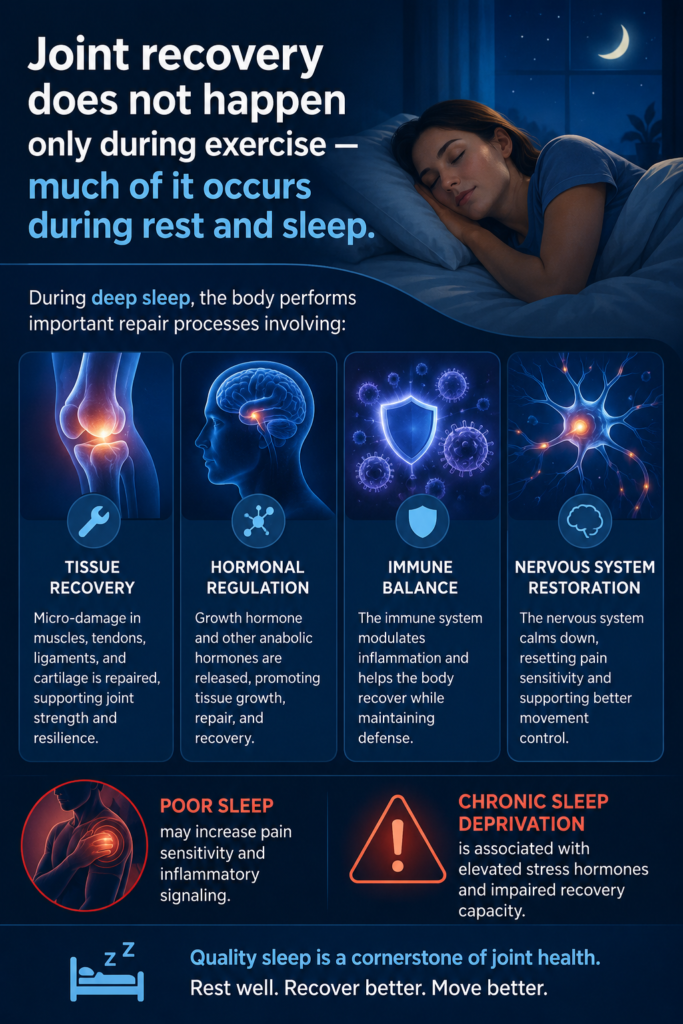
Joint recovery does not happen only during exercise — much of it occurs during rest and sleep.
During deep sleep, the body performs important repair processes involving:
- tissue recovery,
- hormonal regulation,
- immune balance,
- and nervous system restoration.
Poor sleep may increase pain sensitivity and inflammatory signaling. Chronic sleep deprivation is associated with elevated stress hormones and impaired recovery capacity.
Sleep: The Hidden Foundation of Joint Recovery
Many people associate joint health primarily with physical activity, stretching, or nutritional supplements. While these factors are undeniably important, an equally essential component of recovery often receives far less attention: sleep. Joint recovery does not occur only during movement or exercise. Much of the body’s most important repair work takes place while we are resting, particularly during deep, restorative sleep.
Sleep is an active biological process rather than a period of inactivity. Throughout the night, the brain coordinates a complex series of physiological events that support tissue repair, regulate hormones, maintain immune balance, and restore the nervous system. These processes create an internal environment that allows muscles, tendons, ligaments, cartilage, and other connective tissues to recover from the physical demands of daily life.
One of the most important functions of deep sleep is tissue recovery. Everyday movement, exercise, and even normal aging produce small amounts of microscopic stress within joints and surrounding soft tissues. During sleep, the body increases protein synthesis, repairs cellular damage, and replaces worn structural components. These continuous maintenance processes help preserve joint integrity, support mobility, and contribute to long-term musculoskeletal resilience.
Hormonal regulation also plays a central role in recovery. Several hormones involved in growth, repair, and metabolism follow natural circadian rhythms that are closely linked to healthy sleep. Deep sleep is associated with increased secretion of growth hormone, which supports tissue maintenance and normal repair. At the same time, balanced sleep contributes to appropriate regulation of cortisol, the body’s primary stress hormone. Persistent sleep disruption may interfere with these hormonal patterns, potentially reducing recovery efficiency and increasing physiological stress.
The immune system is another essential contributor to joint health. Rather than functioning solely as a defense against infection, the immune system also coordinates tissue repair and regulates inflammation. During restorative sleep, immune activity becomes carefully balanced, allowing the body to repair damaged tissues while preventing excessive inflammatory responses. Healthy immune regulation supports normal healing and helps maintain a stable internal environment for musculoskeletal function.
Equally important is restoration of the nervous system. The brain and spinal cord continuously monitor joint position, muscle coordination, and pain perception. During sleep, neural circuits involved in sensory processing and motor control undergo essential recovery. This restoration may improve movement efficiency, reduce unnecessary muscle tension, and help regulate the body’s perception of discomfort. A well-rested nervous system often contributes to smoother movement, better balance, and improved physical performance.
In contrast, insufficient or poor-quality sleep may have widespread consequences for joint health. Research has shown that inadequate sleep is associated with increased pain sensitivity, greater fatigue, impaired physical performance, and elevated inflammatory signaling. Individuals experiencing chronic sleep deprivation frequently report slower recovery following exercise, increased muscle soreness, and reduced ability to tolerate physical activity. Although sleep alone does not determine joint health, it strongly influences the body’s capacity to recover from daily mechanical stress.
Chronic sleep loss may also elevate circulating stress hormones, particularly cortisol. Persistently increased cortisol levels can contribute to metabolic disturbances, impair immune regulation, and interfere with normal tissue maintenance. Over time, this biological environment may reduce recovery capacity and make it more difficult for the musculoskeletal system to adapt to exercise or heal from minor injuries.
Improving sleep quality should therefore be viewed as a practical strategy for supporting lifelong joint wellness. Consistent bedtimes, adequate sleep duration, regular physical activity during the day, stress management, reduced evening exposure to bright screens, and a cool, quiet sleeping environment all contribute to healthier sleep architecture. These habits complement balanced nutrition, strength training, mobility exercises, and healthy body composition as part of a comprehensive systems-based approach to musculoskeletal health.
Ultimately, healthy joints depend not only on how we move during the day but also on how effectively the body restores itself each night. By prioritizing restorative sleep alongside exercise and nutrition, individuals can better support tissue recovery, hormonal balance, immune regulation, nervous system function, and the resilience needed to maintain comfortable movement throughout the aging process.
How Chronic Stress Influences Joint Function?
Stress also influences joint health through multiple pathways. Chronic psychological stress may increase muscle tension, inflammation, and nervous system activation.

High cortisol levels over long periods may contribute to:
- poor recovery,
- metabolic dysfunction,
- fatigue,
- and systemic inflammatory imbalance.
Stress management strategies that may support recovery include:
- meditation,
- breathing exercises,
- walking,
- stretching,
- time outdoors,
- and consistent sleep schedules.
Recovery should be viewed as an active part of mobility support — not merely the absence of activity.
Optimizing Recovery Through Integrated Lifestyle Systems
Healthy movement, adequate rest, balanced nutrition, and emotional resilience all interact together within the body’s recovery systems.

This illustration highlights the interconnected nature of the body’s recovery systems, emphasizing that lasting joint health depends on far more than a single intervention. Healthy movement, restorative sleep, balanced nutrition, and emotional resilience function as an integrated biological network that continuously supports tissue repair, immune regulation, metabolic balance, and nervous system recovery. Rather than operating independently, these systems communicate through hormones, inflammatory mediators, neural pathways, and cellular signaling networks to maintain musculoskeletal function.
Regular physical activity stimulates circulation, strengthens muscles, and promotes joint mobility, while adequate rest allows microscopic tissue damage to be repaired and physiological balance to be restored. Nutritious foods provide the amino acids, vitamins, minerals, healthy fats, and antioxidants required for collagen synthesis, cartilage maintenance, and cellular energy production. At the same time, emotional resilience and effective stress management help regulate cortisol and other stress hormones that influence inflammation, pain perception, immune function, and recovery capacity.
The image also illustrates the concept that the gut microbiome, immune system, metabolism, and musculoskeletal tissues form an interconnected ecosystem rather than isolated organs. Changes in one component can influence the entire network, affecting healing, resilience, and physical performance. This systems-based perspective reflects the central philosophy of Joint Genesis™: sustainable joint wellness is achieved by supporting the body’s natural communication networks, allowing multiple biological systems to work together to promote lifelong mobility, strength, flexibility, and healthy aging.
Start protecting your mobility today — one small step can support stronger joints, better movement, and heal