
The Sleep Reset Blueprint: Building Your Personal Recovery System
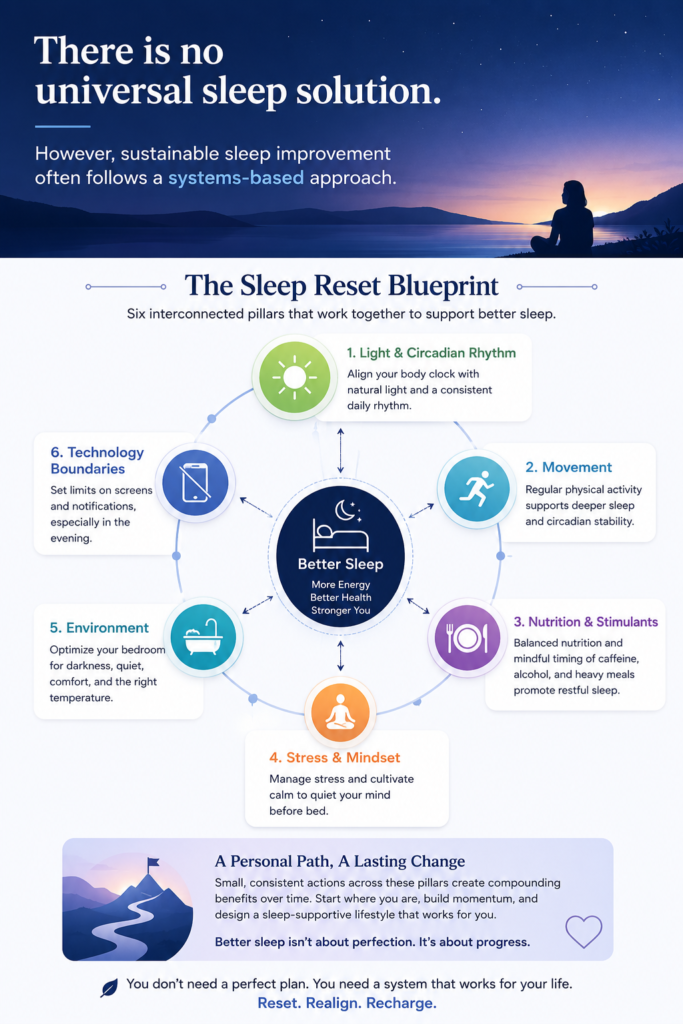
The Sleep Reset Blueprint
recognizes that healthy sleep is not determined by a single habit, supplement, or bedtime routine. Instead, restorative sleep emerges from the interaction of multiple biological systems that influence the brain, nervous system, hormones, metabolism, immune function, and circadian rhythms.
Because each person has unique genetics, daily schedules, health conditions, and environmental challenges, there is no universal solution that works for everyone.
A systems-based approach focuses on identifying and improving the factors that collectively support healthy sleep. Consistent sleep and wake times help synchronize the body’s internal clock, while regular physical activity promotes deeper sleep and overall resilience.
Nutritious eating patterns, stress management, and reduced evening exposure to bright screens further support the natural production of sleep-regulating hormones. Creating a quiet, cool, and comfortable sleep environment also encourages more restorative rest.
Rather than pursuing perfection, sustainable improvement comes from making gradual, consistent adjustments that fit an individual’s lifestyle. Small changes often reinforce one another, producing meaningful benefits over time.
Better sleep can enhance daytime energy, cognitive performance, emotional balance, metabolic health, immune function, and long-term well-being. The goal of The Sleep Reset Blueprint is not simply to increase the number of hours spent in bed, but to build a personalized system that promotes healthier, more restorative sleep throughout life.
There is no universal sleep solution.
However, sustainable sleep improvement often follows a systems-based approach.
The Sleep Reset Blueprint
Step 1: Protect Circadian Timing
• Consistent wake time
• Morning sunlight
• Evening darkness
• Predictable routines

Step 2: Optimize the Sleep Environment
Create a bedroom that is:
• Cool
• Quiet
• Dark
• Comfortable
Reserve the bed primarily for sleep.
Step 3: Support Daytime Biology
• Move regularly.
• Eat balanced meals.
• Limit excessive stimulants.
• Manage stress proactively.
Healthy days promote healthy nights.
Step 4: Develop an Evening Wind-Down Ritual
Choose calming activities:
• Reading
• Light stretching
• Meditation
• Gratitude journaling
• Gentle music
Repetition trains the brain to anticipate sleep.
Step 5: Seek Help When Needed
Persistent sleep problems deserve professional evaluation, particularly when accompanied by:
• Loud snoring
• Breathing pauses
• Severe insomnia
• Excessive daytime sleepiness
• Restless legs
• Mood disturbances
Conditions such as sleep apnea and chronic insomnia often respond well to evidence-based treatment.

The Future of Sleep Health
Sleep is not passive downtime.
It is one of the body’s most powerful regenerative tools.
When we restore healthy sleep, we support nearly every aspect of human biology—from metabolism and immunity to emotional resilience and cognitive performance.
The Sleep Reset Blueprint is ultimately an invitation to return to rhythms that the human body has known for thousands of years.
Predictable light.
Meaningful movement.
Nervous system balance.
Deep restoration.
Modern life may disrupt sleep, but it does not have to define it.
By working with biology rather than against it, natural deep sleep can become possible again—helping us wake with greater energy, clarity, resilience, and vitality for the years ahead.
During deep sleep, the brain activates critical restoration systems linked to cellular repair, glymphatic clearance, inflammation control, and neural recovery.
Poor sleep does not simply cause fatigue — it may gradually influence metabolism, stress biology, cognitive aging, and whole-body resilience over time.
Sleep is not passive inactivity.
It is one of the body’s most important biological recovery systems.