
The Future of Prostate Support
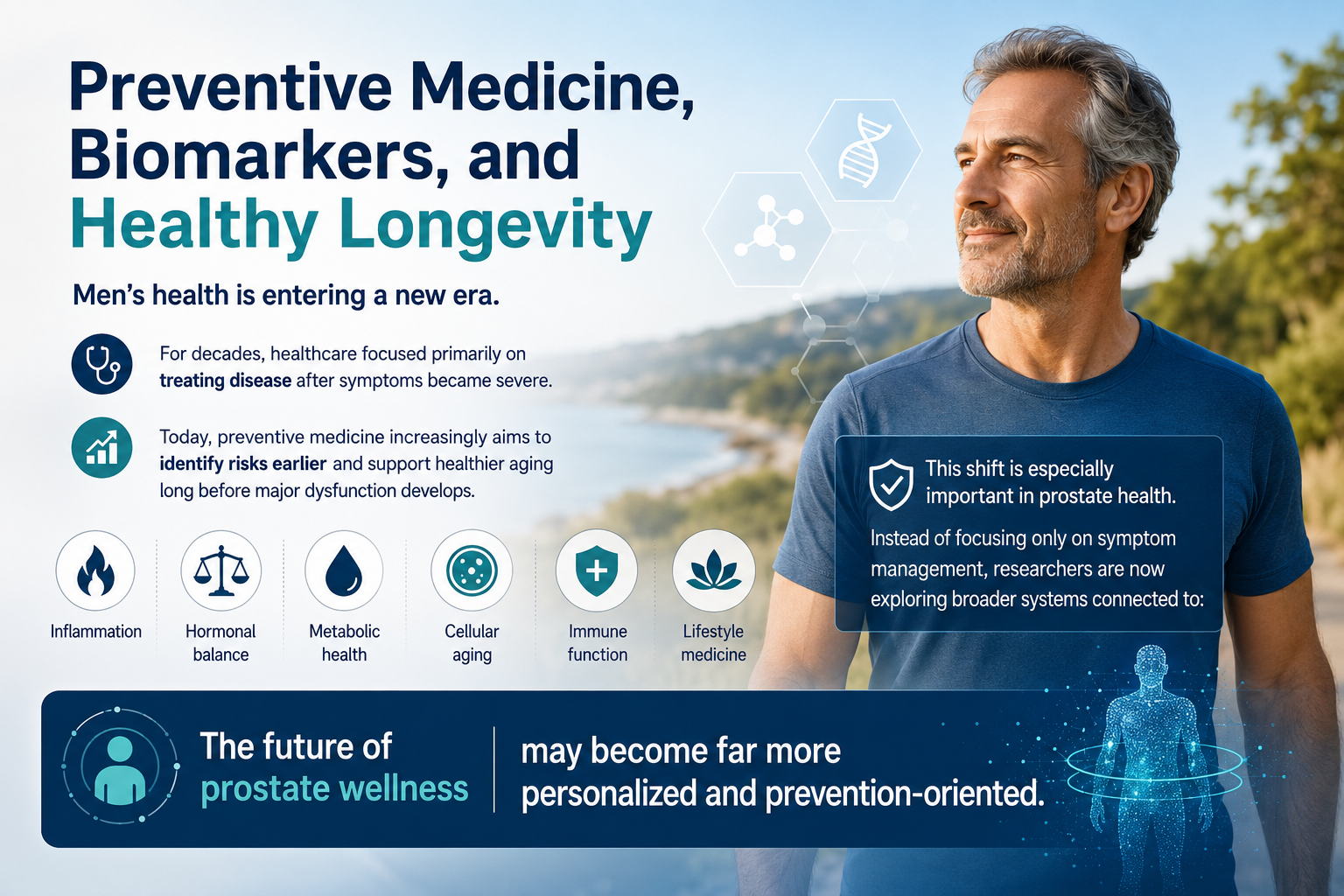
Preventive Medicine, Biomarkers, and Healthy Longevity
Men’s health is entering a new era.
For decades, healthcare focused primarily on treating disease after symptoms became severe.
Today, preventive medicine increasingly aims to identify risks earlier and support healthier aging long before major dysfunction develops.
This shift is especially important in prostate health.
Instead of focusing only on symptom management, researchers are now exploring broader systems connected to:
- Inflammation
- Hormonal balance
- Metabolic health
- Cellular aging
- Immune function
- Lifestyle medicine
The future of prostate wellness may become far more personalized and prevention-oriented.
Preventive Medicine, Biomarkers, and Healthy Longevity
Men’s health is undergoing a profound transformation. Rather than waiting for disease to develop before taking action, modern medicine is increasingly focused on prevention, early detection, and preserving long-term health. This shift reflects a growing understanding that many chronic conditions develop gradually over years or even decades, creating valuable opportunities for early intervention before significant damage occurs.
Prostate health is an excellent example of this evolving approach. While traditional care often emphasized managing urinary symptoms after they appeared, researchers now recognize that prostate wellness is influenced by an interconnected network of biological systems. Chronic inflammation, hormonal regulation, metabolic health, immune function, vascular health, and cellular aging all contribute to the environment in which prostate tissues function throughout life.
Biomarkers have become an important part of preventive medicine because they provide measurable insights into the body’s internal processes. Laboratory values, imaging studies, and emerging molecular markers may help clinicians identify subtle changes before noticeable symptoms develop. When interpreted alongside an individual’s medical history, lifestyle, and risk factors, biomarkers can support more personalized health strategies rather than a one-size-fits-all approach.
Lifestyle medicine complements these scientific advances by addressing many of the factors that influence long-term prostate health. Regular physical activity, nutritious eating patterns, healthy body weight, restorative sleep, stress management, and avoidance of tobacco all contribute to healthier inflammatory balance, metabolic function, and immune resilience. These habits support not only prostate wellness but also cardiovascular health, cognitive function, and healthy aging across multiple organ systems.
The future of men’s health is likely to become increasingly personalized, integrating biomarkers, genetics, digital health technologies, and evidence-based lifestyle interventions into comprehensive prevention plans. Instead of focusing solely on treating disease, healthcare is steadily moving toward optimizing health, preserving function, and extending years of active, independent living. This systems-based perspective offers an encouraging vision in which proactive monitoring and healthy daily habits work together to support lifelong prostate wellness and overall longevity.
Prostate Health and Longevity Science
The prostate is increasingly viewed within the context of whole-body aging.
Healthy aging involves maintaining resilience across multiple interconnected systems.
These systems include:
- Metabolism
- Cardiovascular health
- Sleep quality
- Hormonal balance
- Immune regulation
- Nervous system stability
Because these systems influence one another continuously, preventive health strategies often overlap.
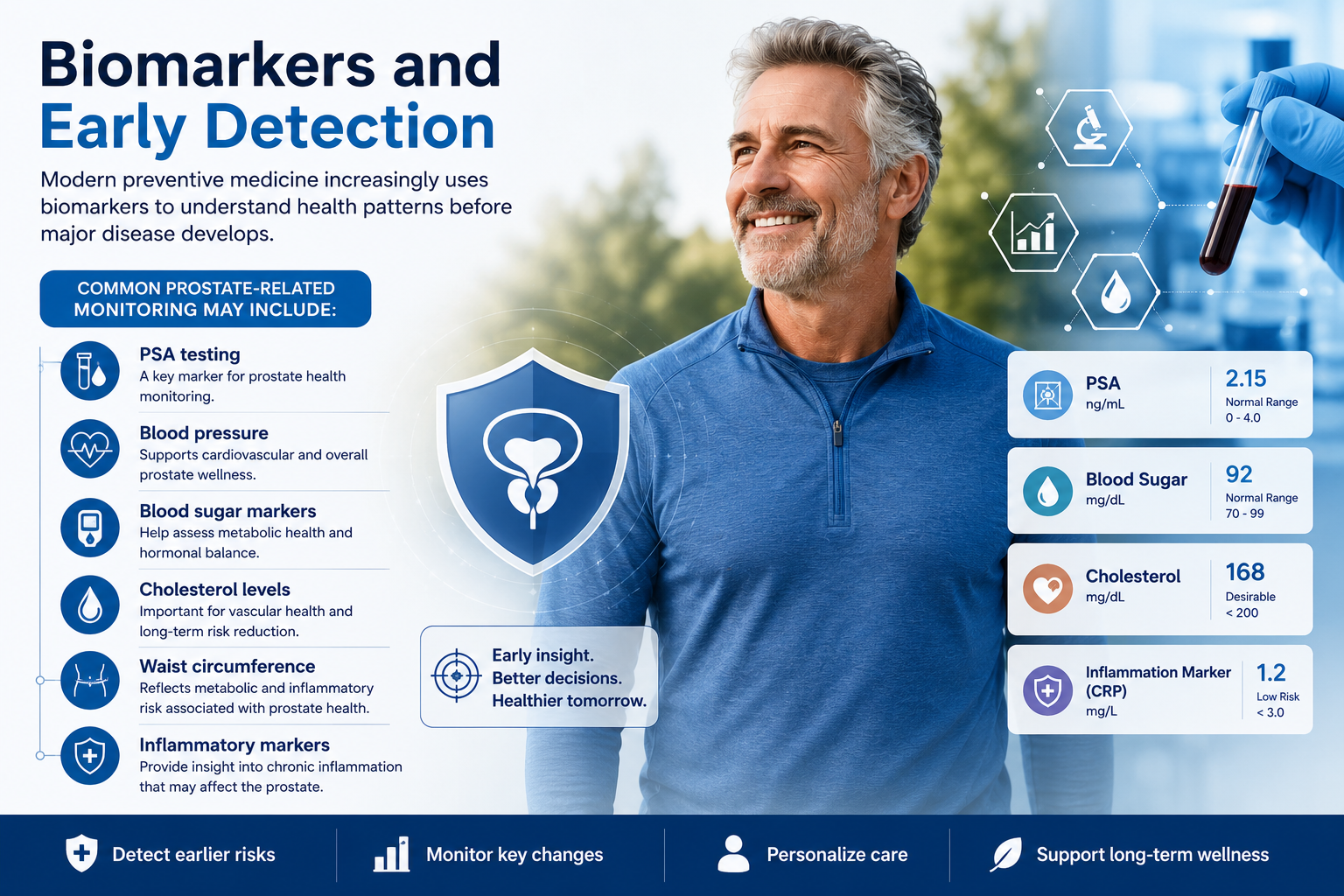
Biomarkers and Early Detection
Modern preventive medicine increasingly uses biomarkers to understand health patterns before major disease develops.
Common prostate-related monitoring may include:
- PSA testing
- Blood pressure
- Blood sugar markers
- Cholesterol levels
- Waist circumference
- Inflammatory markers
Importantly, biomarkers should be interpreted within broader clinical context rather than fear-driven reactions to isolated numbers.
Medical guidance remains essential.
Biomarkers and Early Detection
Modern preventive medicine increasingly emphasizes the use of biomarkers to identify health trends before significant disease develops. Rather than waiting until symptoms become noticeable, healthcare providers can use a combination of laboratory measurements and physical assessments to better understand an individual’s overall health status and potential risk factors. While no single biomarker can diagnose every condition, together they provide valuable information that supports more personalized clinical decision-making.
For prostate health, prostate-specific antigen (PSA) testing is one commonly used tool that may help detect changes requiring further evaluation. However, prostate wellness is also closely connected to broader aspects of systemic health. Blood pressure reflects cardiovascular function, while blood sugar markers such as fasting glucose and HbA1c provide insight into metabolic health. Cholesterol levels help assess vascular health, and waist circumference serves as a practical indicator of abdominal obesity and metabolic risk. Inflammatory markers, including C-reactive protein (CRP), may offer additional information about chronic low-grade inflammation that can influence overall health.
Viewed together, these biomarkers create a more complete picture than any single measurement alone. Combined with medical history, lifestyle habits, family history, and regular clinical evaluation, they support a proactive approach to healthy aging. The ultimate goal is not simply to detect disease earlier, but to guide evidence-based lifestyle interventions and medical care that help preserve prostate health, overall well-being, and long-term quality of life.
Precision Prevention
Researchers increasingly recognize that individuals respond differently to:
- Diets
- Supplements
- Medications
- Lifestyle changes
Genetics, metabolism, age, sleep quality, microbiome composition, and environment all influence outcomes.
Precision prevention aims to personalize health strategies rather than applying identical recommendations to everyone.

Precision Prevention
Precision prevention represents the next evolution of preventive medicine. Rather than assuming that everyone benefits from the same intervention, it recognizes that each individual has a unique biological profile shaped by genetics, metabolism, environment, lifestyle, age, and health history. As a result, people often respond differently to the same diet, nutritional supplement, medication, or exercise program.
Modern research increasingly integrates biomarkers, genomic information, wearable health technologies, and lifestyle data to better understand these individual differences. Instead of applying standardized recommendations alone, clinicians can develop more personalized prevention strategies that match each person’s specific risk profile and physiological needs. This approach aims to identify potential health challenges earlier and recommend targeted interventions before disease develops.
For prostate health, precision prevention may combine traditional clinical assessments with metabolic markers, inflammatory status, hormonal balance, cardiovascular health, body composition, and lifestyle factors. Nutritional guidance, physical activity, stress management, sleep optimization, and appropriate medical monitoring can then be tailored to the individual rather than relying on a one-size-fits-all model.
The ultimate goal is to optimize health throughout the lifespan by selecting the right intervention for the right person at the right time. As advances in systems biology, artificial intelligence, digital health, and precision medicine continue to evolve, personalized prevention is expected to become an increasingly important component of healthy aging, helping individuals maintain function, resilience, and quality of life long before significant disease occurs.
The Expanding Role of Technology
Technology may play a growing role in preventive men’s health.
Potential future tools include:
- AI-driven health analysis
- Wearable devices
- Personalized nutrition platforms
- Longitudinal biomarker tracking
- Digital health coaching
These technologies may help identify patterns earlier and support healthier lifestyle decisions.
Still, technology works best when combined with sustainable human habits.
The Microbiome and Immune Health
Research continues exploring how gut bacteria influence inflammation and aging throughout the body.
The microbiome may affect:
- Immune signaling
- Hormonal pathways
- Metabolic function
- Inflammatory balance
Scientists are increasingly studying whether these systems indirectly influence prostate health as well.
Healthy Aging Requires Multiple Systems
One of the most important lessons in longevity science is that the body operates as a network.
For example:
- Poor sleep affects hormones
- Hormones influence metabolism
- Metabolism affects inflammation
- Inflammation influences tissue health
- Stress affects all of the above
This interconnectedness explains why isolated “quick fixes” rarely produce lasting outcomes.
Supplements in Context
Prostate support supplements may provide supportive benefits for some individuals.
Ingredients such as:
- Saw palmetto
- Beta-sitosterol
- Zinc
- Lycopene
- Pumpkin seed extract
- Pygeum
continue to be studied for urinary and prostate support.
However, science generally supports realistic expectations.
Supplements work best as supportive tools within broader healthy aging strategies.
Lifestyle Remains Foundational
The strongest long-term evidence still supports core lifestyle foundations:
- Regular movement
- Better sleep
- Balanced nutrition
- Stress reduction
- Weight management
- Preventive medical care
These habits influence nearly every biological system connected to healthy aging.
The Shift Toward Preventive Men’s Health
Healthcare is gradually moving:
Reactive Care → Preventive Care
Disease Treatment → Health Optimization
Symptom Focus → Systems Biology
One-Size-Fits-All → Personalized Prevention
This shift may reshape how prostate health is understood in the coming decades.
A New Framework for Prostate Wellness
The future of prostate support is likely not about one miracle supplement.
Instead, it may involve:
- Lifestyle medicine
- Nutritional science
- Biomarker awareness
- Evidence-based supplementation
- Metabolic health optimization
- Longevity-focused prevention
This systems-based perspective creates a more balanced and scientifically grounded understanding of men’s health and healthy aging.
This educational review examines one popular prostate support supplement by discussing its ingredient profile, formulation principles, and general wellness rationale. The goal is to help readers make more informed decisions based on transparent information rather than marketing claims alone.