
Metabolism: The Foundation of Energy, Health, and Longevity
Topics
- Cellular energy
- Mitochondria
- Blood sugar regulation
- Insulin sensitivity
- Metabolic flexibility
- Aging and metabolism
Cellular Energy, Mitochondria, and Metabolic Health: Building the Foundation for Healthy Aging
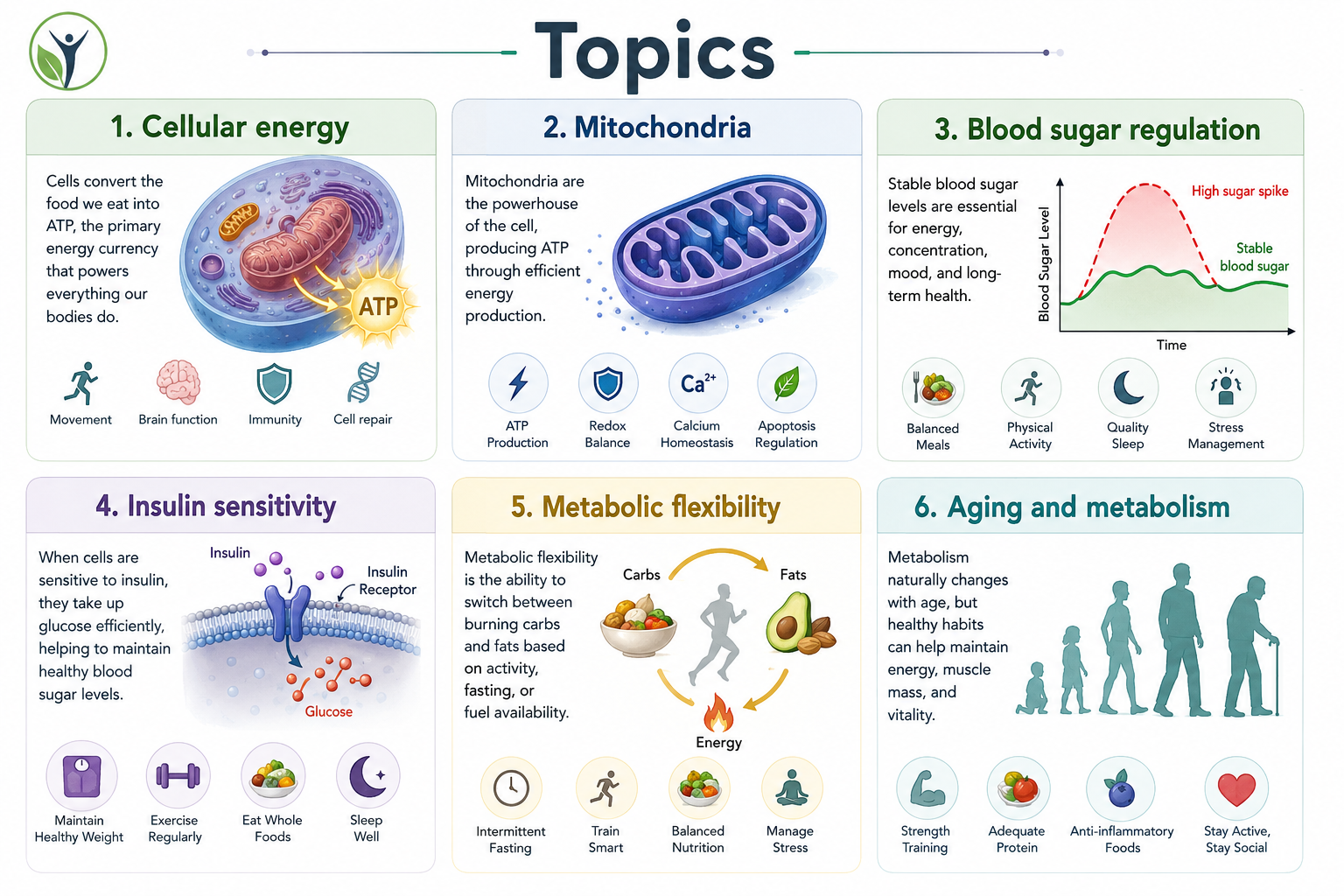
Every heartbeat, breath, thought, and movement depends on a remarkable biological process known as cellular energy production. Although many people associate metabolism simply with burning calories or losing weight, metabolism is actually the collection of thousands of chemical reactions that sustain life. At the center of this system are the mitochondria—tiny structures found inside nearly every cell that convert nutrients into adenosine triphosphate (ATP), the body’s primary energy currency.
Healthy mitochondria support far more than physical performance. They provide the energy required for brain function, muscle contraction, immune defense, tissue repair, hormone production, and cellular communication. Organs with the highest energy demands—including the brain, heart, liver, and skeletal muscles—contain especially large numbers of mitochondria because they require a continuous supply of ATP to function efficiently.
One of the most important influences on mitochondrial performance is blood sugar regulation. After eating, carbohydrates are broken down into glucose, which enters the bloodstream. The hormone insulin helps move this glucose into cells, where it can be used to produce energy or stored for future use. When blood sugar remains relatively stable, cells receive a steady supply of fuel that supports consistent energy production throughout the day.
Problems arise when blood sugar frequently spikes and falls. Repeated elevations in glucose can place stress on multiple biological systems, increasing oxidative stress and inflammatory signaling while reducing the efficiency of cellular energy production. Over time, persistently elevated blood sugar may contribute to metabolic dysfunction, cardiovascular disease, and other chronic health conditions. Maintaining healthy blood sugar levels through balanced meals, regular physical activity, quality sleep, and stress management helps support long-term metabolic health.
Closely related to blood sugar regulation is insulin sensitivity. Insulin sensitivity describes how effectively cells respond to insulin’s signal to absorb glucose. When cells remain sensitive to insulin, glucose is transported efficiently into muscles and other tissues where it can be converted into ATP. Reduced insulin sensitivity, often referred to as insulin resistance, makes this process less efficient, requiring the body to produce more insulin to achieve the same effect. Improving insulin sensitivity through exercise, healthy body composition, adequate sleep, and nutrient-dense eating patterns is considered one of the most effective lifestyle strategies for supporting metabolic wellness.
Another important concept is metabolic flexibility—the body’s ability to switch efficiently between different fuel sources, primarily carbohydrates and fats, depending on energy needs and nutrient availability. During periods of eating, carbohydrates often serve as the primary fuel source. During fasting, prolonged exercise, or overnight sleep, the body increasingly relies on stored fat for energy. Individuals with good metabolic flexibility can transition smoothly between these fuel sources, helping maintain stable energy levels, better exercise performance, and improved metabolic efficiency.
Regular physical activity plays a major role in promoting metabolic flexibility. Both aerobic exercise and resistance training stimulate mitochondrial adaptation, improve glucose utilization, and encourage muscles to use fat more effectively as an energy source. Consistent movement, rather than occasional intense exercise, appears to provide the greatest long-term benefits for metabolic resilience.
As we age, natural biological changes can gradually influence metabolism. Mitochondrial function may decline, muscle mass often decreases, hormonal regulation changes, and insulin sensitivity may become less efficient. These age-related changes can contribute to reduced energy levels, slower recovery, and increased susceptibility to metabolic disorders. Fortunately, research consistently demonstrates that healthy lifestyle habits remain powerful tools for supporting metabolic health throughout life.
Regular exercise, sufficient dietary protein, high-quality sleep, stress reduction, balanced nutrition, and maintaining a healthy body composition all work together to support mitochondrial function and preserve metabolic resilience. Rather than focusing on a single supplement or quick fix, long-term health is best supported through coordinated daily habits that strengthen multiple interconnected biological systems.
Ultimately, metabolism is far more than calorie burning. It represents the integrated network that powers every cell in the body. By supporting cellular energy production, maintaining healthy blood sugar regulation, preserving insulin sensitivity, promoting metabolic flexibility, and protecting mitochondrial health, individuals can build a stronger foundation for healthy aging, sustained vitality, and lifelong wellness.
A Systems View of Human Longevity
Understanding the Cellular and Biological Networks That Support Healthy Aging

This composite illustration presents a powerful visual narrative of human aging, cellular biology, and the scientific pursuit of healthy longevity. Across the four panels, older adults are surrounded by luminous strands resembling DNA, interconnected cells, and flowing molecular networks, symbolizing the complex biological systems that sustain life. Warm golden and cool blue tones blend together to represent the balance between aging processes and the body’s remarkable capacity for adaptation and repair.
Rather than portraying aging as a simple decline, the artwork emphasizes that longevity is influenced by countless interactions occurring within every cell. The glowing molecular pathways evoke mitochondrial energy production, cellular communication, metabolic regulation, and genetic expression, highlighting that health emerges from coordinated biological networks rather than isolated organs. The presence of healthcare professionals and researchers further reinforces the importance of preventive medicine, scientific discovery, and personalized approaches to healthy aging.
The emotional expressions of curiosity, hope, and reflection create a sense of partnership between science and the individual. Each scene suggests that understanding the biology of aging can empower people to make informed lifestyle choices that support resilience throughout life.
Overall, the image captures a modern systems biology perspective, illustrating how genetics, metabolism, cellular energy, and medical innovation converge to shape lifelong health. It serves as an inspiring representation of preventive health, precision medicine, and the ongoing quest to extend not only lifespan but also healthspan and quality of life.
Understanding the science behind longevity is the first step toward making more informed health decisions. The Longevity Blue Book brings together evidence-informed research, systems biology, and preventive medicine into one accessible learning resource. Whether you are exploring healthy aging, improving your understanding of human physiology, or building a stronger foundation for lifelong wellness, this guide offers a practical framework to help you see the bigger picture of health.
Learn how metabolism connects with every major biological system.