
Exercise and Blood Flow
Movement acts like medicine for the vascular system. Physical activity may help stimulate circulation, support endothelial health, improve oxygen delivery, and enhance recovery mechanisms.
Even walking, resistance training, stretching, and aerobic exercise can influence long-term cardiovascular wellness when practiced consistently.
The relationship between exercise physiology and nitric oxide is one of the most fascinating systems in preventive health science.
Exercise and Blood Flow: How Movement Supports Lifelong Vascular Health
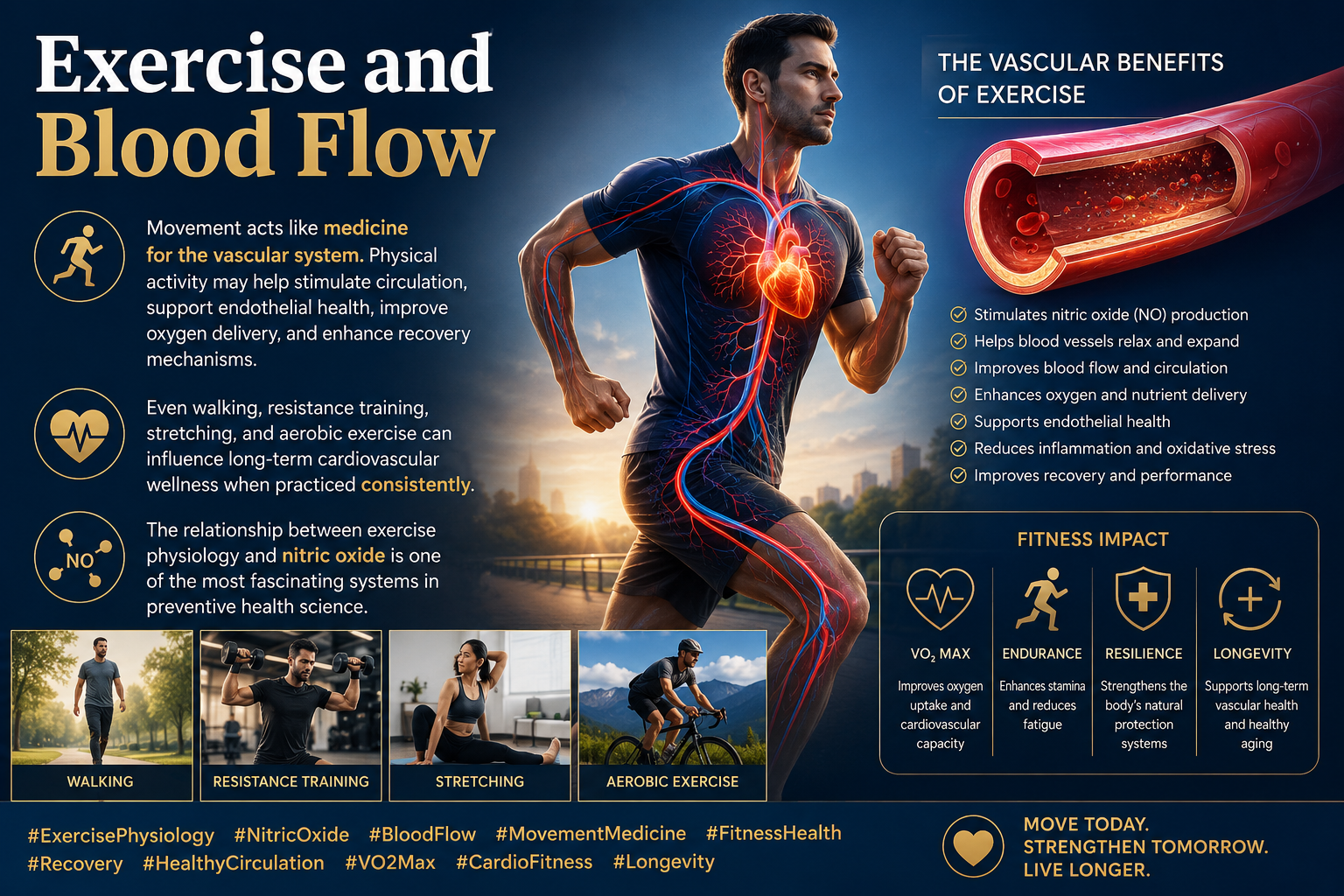
The human circulatory system is one of the body’s most remarkable transportation networks. Every heartbeat sends oxygen, nutrients, hormones, and immune cells through approximately 60,000 miles (100,000 kilometers) of blood vessels, nourishing nearly every tissue. Maintaining this complex network requires more than a healthy heart—it depends on the health of the blood vessels themselves. Among the most effective ways to support vascular function is regular physical activity.
Exercise acts as a powerful stimulus for the cardiovascular system. As muscles contract during movement, they demand more oxygen and nutrients, prompting the heart to pump more efficiently and increasing blood flow throughout the body. This temporary increase in circulation produces beneficial mechanical forces on the inner lining of blood vessels, known as the endothelium. Scientists recognize the endothelium as an active organ that helps regulate vascular tone, inflammation, blood clotting, and communication between the bloodstream and surrounding tissues.
One of the most fascinating biological responses to exercise is the increased production of nitric oxide (NO). Nitric oxide is a naturally occurring signaling molecule produced by endothelial cells. When blood flow increases during exercise, the resulting shear stress stimulates endothelial nitric oxide synthase (eNOS), the enzyme responsible for generating nitric oxide. Once released, nitric oxide relaxes the smooth muscles surrounding blood vessels, allowing them to widen—a process known as vasodilation. This improved vessel flexibility enhances circulation and allows oxygen-rich blood to reach active muscles more efficiently.
Better circulation provides benefits that extend well beyond athletic performance. Efficient blood flow supports nutrient delivery, waste removal, tissue repair, immune surveillance, and temperature regulation. Healthy circulation also contributes to brain function by improving oxygen delivery to neural tissues, while supporting kidney function, skin health, and the recovery of muscles following physical activity.
Importantly, the positive effects of exercise are not limited to vigorous workouts. Moderate activities performed consistently can produce meaningful improvements in vascular health. Walking, cycling, swimming, dancing, gardening, resistance training, yoga, and stretching all encourage blood movement and support healthy endothelial function. Even brief periods of movement throughout the day may help reduce the negative physiological effects associated with prolonged sitting.
Resistance training offers unique cardiovascular advantages as well. While traditionally associated with building muscle strength, resistance exercise also enhances glucose utilization, improves metabolic health, and promotes healthy vascular adaptation. Stronger muscles require improved blood supply, encouraging the development of new capillaries and supporting long-term circulatory efficiency.
Aerobic exercise, including brisk walking, jogging, cycling, and swimming, has been extensively studied for its cardiovascular benefits. Regular aerobic training may improve VO₂ max, a measure of the body’s ability to utilize oxygen during physical activity. Higher aerobic fitness is consistently associated with healthier aging, greater physical independence, and lower risk of cardiovascular disease. These improvements reflect coordinated adaptations involving the heart, lungs, blood vessels, and skeletal muscles working together as an integrated biological system.
Exercise also interacts with multiple pathways involved in recovery and resilience. Regular movement supports healthy inflammatory balance, promotes antioxidant defenses, enhances mitochondrial function, and improves insulin sensitivity. These interconnected adaptations contribute not only to cardiovascular wellness but also to metabolic health, cognitive function, and overall physiological resilience.
Consistency remains far more important than intensity alone. A sustainable routine performed week after week is generally more beneficial than occasional bursts of strenuous exercise followed by long periods of inactivity. Current public health recommendations encourage adults to accumulate at least 150 minutes of moderate-intensity aerobic activity per week, combined with muscle-strengthening activities on two or more days. Individual exercise plans should be adjusted according to age, medical history, physical ability, and guidance from qualified healthcare professionals.
Ultimately, movement functions as a systems-based intervention rather than targeting a single organ. Every walk, bike ride, strength-training session, or stretching routine initiates a cascade of biological responses that support vascular flexibility, efficient circulation, healthy endothelial function, and long-term cardiovascular resilience. When combined with nutritious eating, restorative sleep, effective stress management, and avoidance of tobacco, regular physical activity becomes one of the most evidence-supported strategies for promoting healthy blood flow and supporting lifelong wellness.
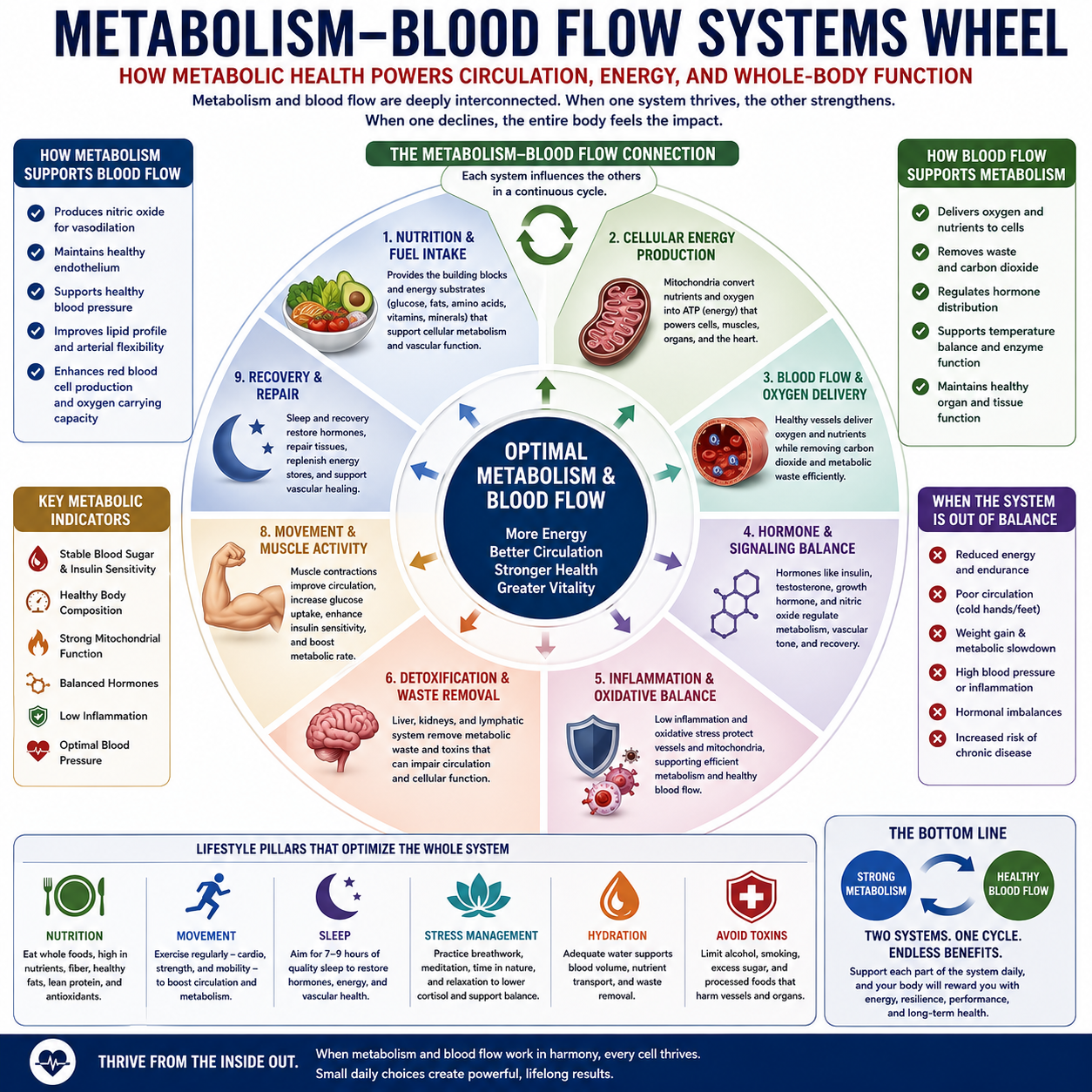
Metabolism–Blood Flow Systems Wheel: The Biological Partnership That Sustains Health
Metabolism and blood circulation are often discussed as separate aspects of health, yet they function as two tightly interconnected biological systems. Every heartbeat, every breath, and every calorie converted into energy depends on the continuous interaction between these networks. When metabolism functions efficiently, blood vessels receive the signals and nutrients needed to remain healthy. Likewise, effective circulation delivers oxygen and metabolic fuel to every organ, enabling cells to produce the energy required for life.
At the center of this systems model is the concept that optimal health emerges from continuous communication rather than isolated functions. Nutrition supplies carbohydrates, proteins, healthy fats, vitamins, and minerals that become the raw materials for cellular metabolism. Inside the mitochondria, these nutrients are converted into adenosine triphosphate (ATP), the body’s primary energy currency. This energy powers the heart, muscles, brain, immune system, and every other organ.
Healthy blood vessels then transport oxygen and nutrients to tissues while removing carbon dioxide and metabolic waste. Hormones—including insulin, thyroid hormones, growth hormone, and nitric oxide signaling pathways—coordinate this process by regulating blood sugar, vascular tone, cellular growth, and energy utilization. At the same time, balanced inflammatory responses and antioxidant defenses protect both blood vessels and mitochondria from chronic damage associated with aging and metabolic dysfunction.
The wheel also illustrates how lifestyle behaviors influence every stage of this cycle. Regular physical activity stimulates circulation, enhances insulin sensitivity, and promotes nitric oxide production, allowing blood vessels to dilate more effectively. Sleep supports hormonal regulation, tissue repair, and metabolic recovery. Stress management reduces excessive cortisol exposure that can impair both metabolism and vascular function. Adequate hydration maintains blood volume and nutrient transport, while avoiding smoking and excessive processed foods helps preserve endothelial health and healthy circulation.
When these interconnected systems become disrupted, the consequences extend far beyond one organ. Poor metabolic health may contribute to insulin resistance, reduced energy production, chronic inflammation, impaired circulation, elevated blood pressure, and increased risk of cardiovascular and metabolic diseases. Conversely, improving even one area of the system—such as increasing physical activity or improving nutritional quality—can produce beneficial effects throughout the entire network.
The Metabolism–Blood Flow Systems Wheel highlights an important principle of preventive medicine: health is created through cooperation among biological systems rather than by treating individual symptoms in isolation. By supporting nutrition, movement, sleep, hormonal balance, recovery, and vascular function together, individuals can build greater metabolic resilience, healthier circulation, improved energy production, and stronger long-term cardiovascular wellness. Small, consistent lifestyle choices reinforce this cycle every day, helping every cell function more efficiently while supporting lifelong health and healthy aging.
#ExercisePhysiology #NitricOxide #BloodFlow #MovementMedicine #FitnessHealth #Recovery #HealthyCirculation #VO2Max #CardioFitness #Longevity
Healthy circulation depends on far more than a single nutrient or supplement. Nitric oxide production is influenced by vascular health, physical activity, nutrition, sleep, metabolic function, and everyday lifestyle habits. This guide provides a science-based overview of these interconnected systems, helping you better understand how evidence-informed choices may support cardiovascular performance, healthy aging, and long-term vascular wellness.