
Recovery Is a Biological System
Recovery is not just rest — it is an active biological process involving circulation, hormones, sleep, inflammation regulation, nervous system balance, and cellular repair.
Healthy blood flow helps transport nutrients and oxygen throughout the body while supporting tissue recovery and performance adaptation.
The Nitric Boost framework explores recovery from a systems-based health perspective.
Recovery Is an Active Biological Process, Not Simply Time Off
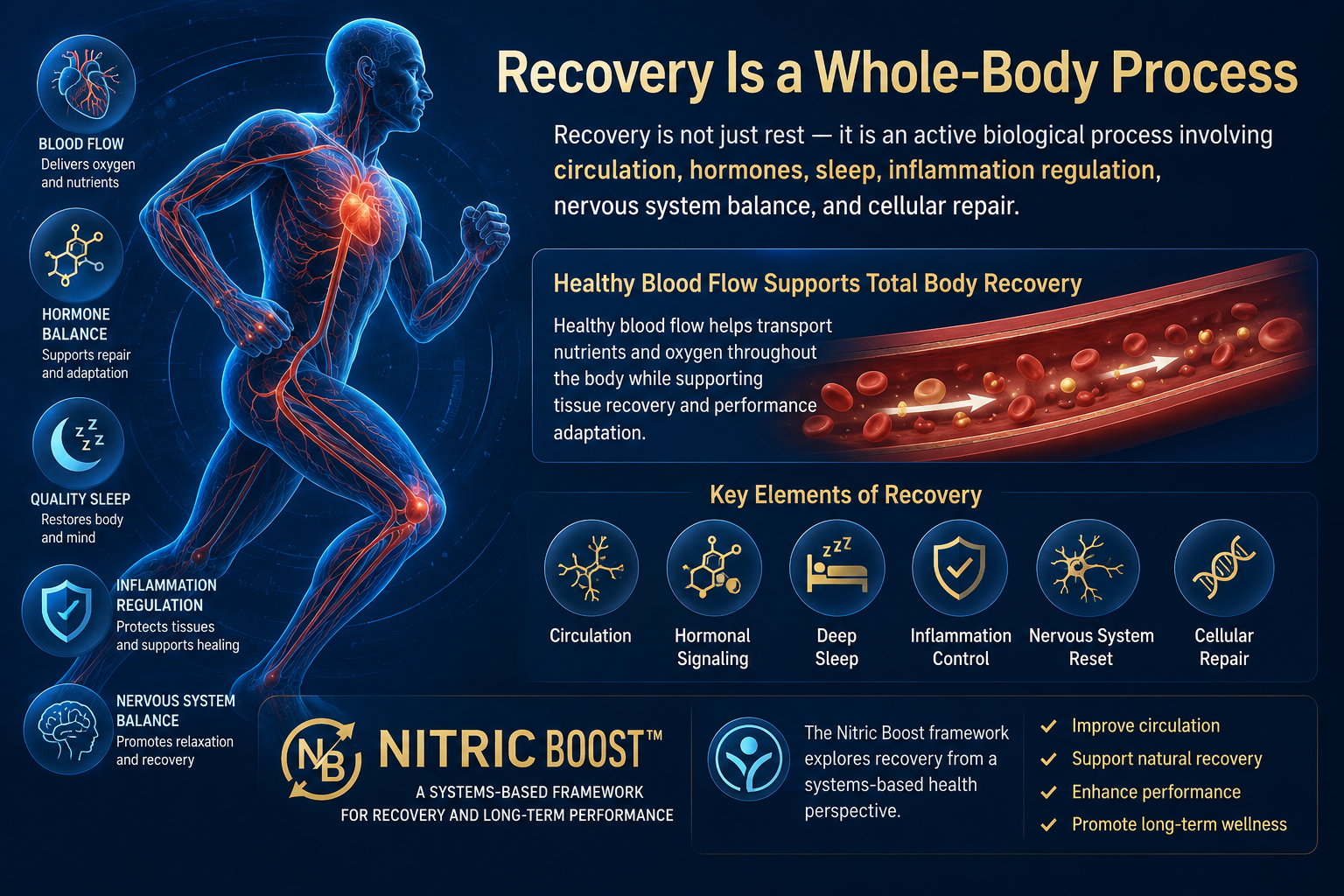
Many people think recovery means doing nothing—lying on the couch, taking a day off from exercise, or getting a little extra sleep. While rest is certainly important, modern physiology shows that recovery is far more dynamic. Recovery is an active biological process involving thousands of coordinated events occurring simultaneously throughout the body. These processes include blood circulation, hormonal regulation, nervous system adaptation, immune activity, inflammation resolution, mitochondrial energy production, protein synthesis, and cellular repair.
Every workout, stressful workday, illness, or physically demanding activity places temporary stress on the body. The body then responds by repairing damaged tissues, restoring energy stores, rebalancing internal systems, and adapting so it can better handle future challenges. In other words, improvement happens during recovery—not during the stress itself.
One of the most important drivers of recovery is healthy circulation. Blood serves as the body’s transportation network, continuously delivering oxygen, glucose, amino acids, vitamins, minerals, hormones, and immune cells to tissues that need repair. At the same time, circulation helps remove carbon dioxide, metabolic waste products, and other byproducts generated during physical activity and normal cellular metabolism.
Healthy blood flow supports muscles after exercise, nourishes connective tissues, assists wound healing, and helps maintain the function of organs throughout the body. The efficiency of this transport system influences how quickly tissues recover and how effectively the body adapts to training, daily activity, and aging.
Sleep represents another cornerstone of recovery biology. During deep sleep, the body shifts into a highly restorative state. Growth hormone secretion increases, tissue repair accelerates, immune function becomes more coordinated, and the brain clears metabolic waste through specialized clearance pathways. Memory consolidation, emotional regulation, and nervous system recovery also occur during high-quality sleep.
Without sufficient sleep, many recovery processes become less efficient. Individuals may experience prolonged fatigue, slower physical recovery, impaired concentration, increased pain sensitivity, and reduced resilience to everyday stress. Consistently prioritizing healthy sleep habits is therefore one of the most effective ways to support overall recovery.
Hormones also play a central role. Recovery depends on a delicate balance between anabolic hormones that promote repair and catabolic hormones that help mobilize energy during stress. Hormones such as growth hormone, insulin, testosterone, cortisol, thyroid hormones, and many signaling molecules continuously communicate with cells to regulate metabolism, tissue remodeling, protein synthesis, and energy production.
Recovery also requires careful regulation of inflammation. Inflammation is often misunderstood as something entirely harmful, yet short-term inflammation is a normal and essential part of healing. After exercise or minor injury, inflammatory cells help remove damaged tissue and initiate repair. Problems arise when inflammation becomes excessive, chronic, or poorly regulated. Healthy nutrition, regular physical activity, stress management, and adequate sleep all help support balanced inflammatory responses that promote healing while minimizing unnecessary tissue damage.
The nervous system is equally important. During periods of intense stress, the sympathetic nervous system prepares the body for action by increasing heart rate, blood pressure, and energy availability. Recovery involves gradually shifting toward greater parasympathetic activity—the body’s “rest and restore” mode. This transition supports digestion, tissue repair, immune regulation, and cardiovascular recovery. Practices such as deep breathing, mindfulness, gentle walking, stretching, and relaxation techniques may help encourage this beneficial physiological balance.
At the cellular level, mitochondria continuously generate the energy needed for repair processes. Every new protein, repaired muscle fiber, immune response, and nerve signal requires adenosine triphosphate (ATP), the body’s primary energy currency. Supporting mitochondrial health through regular exercise, balanced nutrition, adequate sleep, and metabolic health provides the energy foundation for effective recovery.
The systems-based philosophy behind the Nitric Boost framework recognizes that recovery cannot be explained by a single pathway. Instead, optimal recovery emerges from the coordinated interaction of circulation, vascular function, oxygen delivery, hormonal signaling, sleep quality, inflammation regulation, nervous system balance, cellular energy production, and healthy lifestyle habits. Rather than focusing on one isolated mechanism, this integrated perspective highlights how the body’s biological networks work together to maintain resilience, enhance physical performance, and support long-term health. Consistent daily habits that improve these interconnected systems may gradually strengthen the body’s natural capacity to recover, adapt, and thrive throughout every stage of life.
#Recovery #SleepHealth #NitricBoost #BloodFlow #Circulation #HormonalHealth #ExerciseRecovery #Inflammation #WellnessScience #HealthyLiving
How Endothelial Dysfunction Drives Chronic Disease?
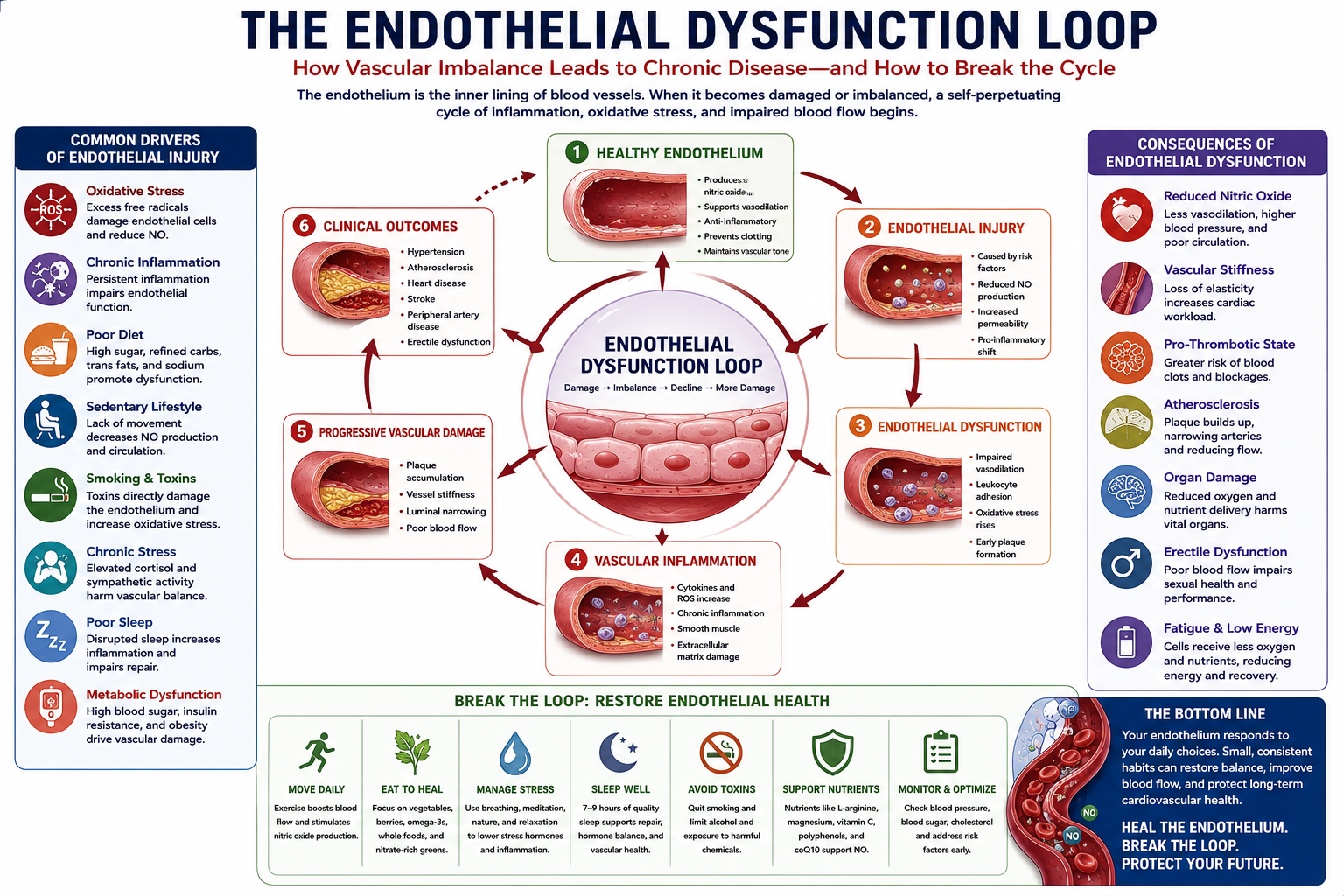
This infographic illustrates the Endothelial Dysfunction Loop, demonstrating how damage to the vascular endothelium can initiate a self-reinforcing cycle that contributes to chronic disease progression. At the center of the figure is the transition from a healthy endothelium, which supports nitric oxide production, vasodilation, and normal vascular function, to endothelial injury triggered by oxidative stress, chronic inflammation, poor diet, sedentary behavior, smoking, chronic stress, inadequate sleep, and metabolic dysfunction.
The diagram shows how endothelial injury reduces nitric oxide availability, increases vascular permeability, and promotes inflammatory signaling. As dysfunction progresses, vascular inflammation accelerates oxidative stress, immune cell activation, and early plaque formation. Persistent inflammation leads to progressive vascular damage characterized by arterial stiffness, plaque accumulation, and impaired blood flow. Over time, this cycle contributes to major clinical outcomes including hypertension, atherosclerosis, heart disease, stroke, peripheral artery disease, and erectile dysfunction.
The right panel summarizes the systemic consequences of endothelial dysfunction, including reduced nitric oxide production, vascular stiffness, thrombosis risk, organ damage, and decreased physical performance. The lower section emphasizes that endothelial dysfunction is potentially modifiable through evidence-based lifestyle strategies such as regular physical activity, a nutrient-rich diet, stress management, restorative sleep, avoidance of toxins, appropriate nutritional support, and routine monitoring of cardiovascular risk factors. Together, these interventions help restore endothelial health, improve vascular resilience, and support long-term cardiovascular and metabolic wellness.
Improving circulation is not about finding a single miracle solution—it begins with understanding how nitric oxide, vascular function, nutrition, movement, recovery, and healthy lifestyle habits work together. Before considering any supplement, explore the science behind healthy blood flow and learn which evidence-based strategies may help support long-term cardiovascular wellness and overall vitality.