
Blood Sugar Stability
The Hidden Key to Energy, Appetite, and Metabolic Recovery

Modern metabolic health conversations often focus only on body weight.
But one of the most important drivers of metabolic function is blood sugar regulation.
When blood sugar becomes unstable, the entire body may feel the consequences.
Energy crashes, cravings, brain fog, inflammation, fatigue, mood fluctuations, and abdominal fat accumulation are often connected to poor glucose regulation.
The Metabolism Reset Blueprint views blood sugar stability as one of the foundational pillars of long-term metabolic recovery.

Why Blood Sugar Matters
Glucose is one of the body’s primary energy sources.
Every cell depends on carefully regulated energy delivery systems.
After eating carbohydrates, blood glucose rises, triggering insulin release from the pancreas.
Insulin helps move glucose into cells where it can be used or stored.
In a healthy system:
- Blood sugar rises gradually
- Insulin responds efficiently
- Energy remains stable
- Hunger stays controlled
But repeated spikes from highly processed foods and constant eating may overwhelm these systems over time.

The Modern Glucose Rollercoaster
Many people unknowingly live on a daily blood sugar rollercoaster.
A common pattern looks like this:
Morning
- Sugary breakfast
- Rapid glucose spike
- Short-term energy boost
Mid-Morning
- Energy crash
- Hunger returns
- Brain fog begins
Afternoon
- More sugar or caffeine
- Another spike-and-crash cycle
Evening
- Cravings increase
- Overeating becomes more likely
Over time, this pattern may contribute to:
- Insulin resistance
- Weight gain
- Chronic inflammation
- Fatigue
- Hormonal disruption
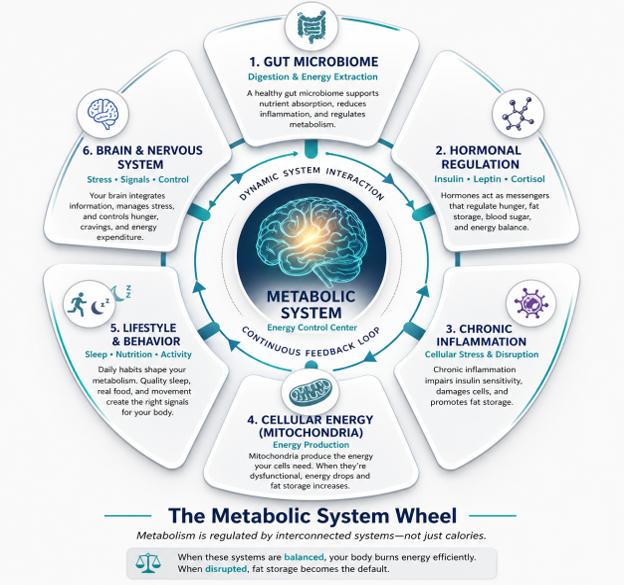
Understanding Insulin Resistance
Insulin resistance occurs when cells become less responsive to insulin signals.
The body compensates by producing more insulin.
High insulin levels may encourage:
- Fat storage
- Increased hunger
- Reduced fat burning
- Metabolic dysfunction
Insulin resistance is increasingly associated with:
- Type 2 diabetes
- Cardiovascular disease
- Fatty liver disease
- Cognitive decline
- Polycystic ovary syndrome
- Obesity
Many experts now view insulin resistance as one of the central drivers of modern chronic disease.

Blood Sugar and Brain Function
The brain consumes enormous amounts of energy.
Rapid glucose swings may affect:
- Concentration
- Mood
- Cognitive clarity
- Mental stamina
Many individuals notice improved focus and emotional stability when blood sugar becomes more balanced.
Stable energy often supports stable thinking.
Foods That Promote Stability
The Metabolism Reset Blueprint encourages whole-food strategies that help slow glucose absorption.
Helpful components often include:
Protein
Protein supports:
- Satiety
- Muscle maintenance
- Slower digestion
Examples:
- Eggs
- Fish
- Greek yogurt
- Beans
- Lean meats
- Tofu

Fiber
Fiber helps:
- Slow glucose absorption
- Improve gut health
- Support fullness
Examples:
- Vegetables
- Oats
- Legumes
- Chia seeds
- Berries
Healthy Fats
Healthy fats may:
- Reduce hunger
- Slow digestion
- Improve meal satisfaction
Examples:
- Olive oil
- Avocados
- Nuts
- Seeds

The Problem With Ultra-Processed Foods
Ultra-processed foods are often designed for hyper-palatability.
They may combine:
- Refined sugars
- Processed starches
- Artificial additives
- Excess sodium
- Low fiber content
These foods can rapidly elevate blood sugar while providing limited satiety.
The result is often:
- Increased cravings
- Overconsumption
- Reduced metabolic stability
Meal Timing Matters Too
Constant snacking may keep insulin elevated throughout the day.
Some individuals benefit from structured eating patterns that allow insulin levels to normalize between meals.
This does not mean extreme fasting is necessary for everyone.
The key principle is reducing constant metabolic overload.
Movement After Meals
Even light activity after meals may improve glucose regulation.
Simple strategies include:
- Walking
- Light stretching
- Household movement
- Gentle cycling
Muscle activity helps absorb glucose more efficiently.
Small habits can create meaningful long-term effects.

Sleep and Blood Sugar
Sleep deprivation may impair insulin sensitivity surprisingly quickly.
Poor sleep often increases:
- Hunger hormones
- Sugar cravings
- Appetite dysregulation
Improving sleep may support:
- Better glucose control
- Appetite regulation
- Energy stability
Stress and Glucose Regulation
Stress hormones like cortisol can raise blood sugar levels.
Chronic stress may contribute to:
- Emotional eating
- Fat accumulation
- Metabolic dysfunction
This is why metabolic recovery must address both physiology and lifestyle.
Continuous Glucose Monitoring
Modern technology is changing how people understand metabolism.
Continuous glucose monitors (CGMs) now allow individuals to see how:
- Foods
- Sleep
- Exercise
- Stress
- Meal timing
affect glucose responses in real time.
This may help personalize metabolic strategies.

Sustainable Blood Sugar Support
The goal is not perfection.
The goal is creating more stable biological rhythms.
Long-term metabolic health often improves through:
- Better food quality
- Consistent sleep
- Daily movement
- Stress reduction
- Sustainable habits
Final Thoughts
Blood sugar stability is not just about diabetes prevention.
It influences:
- Energy
- Appetite
- Brain performance
- Hormonal balance
- Fat storage
- Longevity
The Metabolism Reset Blueprint encourages a smarter approach:
Instead of chasing extreme diets, support the body’s natural regulatory systems through sustainable metabolic habits.
Stable energy may become the foundation for long-term health resilience.
Your metabolism is not broken forever.
With the right daily habits, the body can often restore healthier energy balance, improve fat-burning efficiency, and support long-term metabolic resilience naturally.