
Gum Disease and Chronic Inflammation
The Hidden Driver of Systemic Health Problems
Modern medicine increasingly recognizes chronic inflammation as one of the central mechanisms behind aging and chronic disease. Conditions such as cardiovascular disease, diabetes, neurodegeneration, arthritis, and metabolic syndrome all involve inflammatory pathways.

One major but often overlooked source of chronic inflammation originates inside the mouth.
Periodontal disease—commonly called gum disease—is among the most widespread chronic inflammatory disorders in the world. Yet many people still think of it as a minor dental issue rather than a systemic health concern.
Modern dentistry is changing that perspective.
What Is Periodontal Disease?
Periodontal disease begins when bacterial biofilms accumulate around the gumline.
The immune system responds by triggering inflammation.
Initially this causes gingivitis:
- redness
- swelling
- bleeding gums
At this stage, the condition may still be reversible.
But when inflammation becomes chronic, deeper structures become damaged.
This includes:
- connective tissue
- periodontal ligaments
- alveolar bone
- blood vessels
Advanced periodontal disease may eventually lead to tooth loss.
But tooth loss is only part of the story.
Chronic Inflammation Changes Everything
Inflammation is a protective biological response.
Short-term inflammation helps defend the body against injury and infection.
But chronic low-grade inflammation becomes destructive.
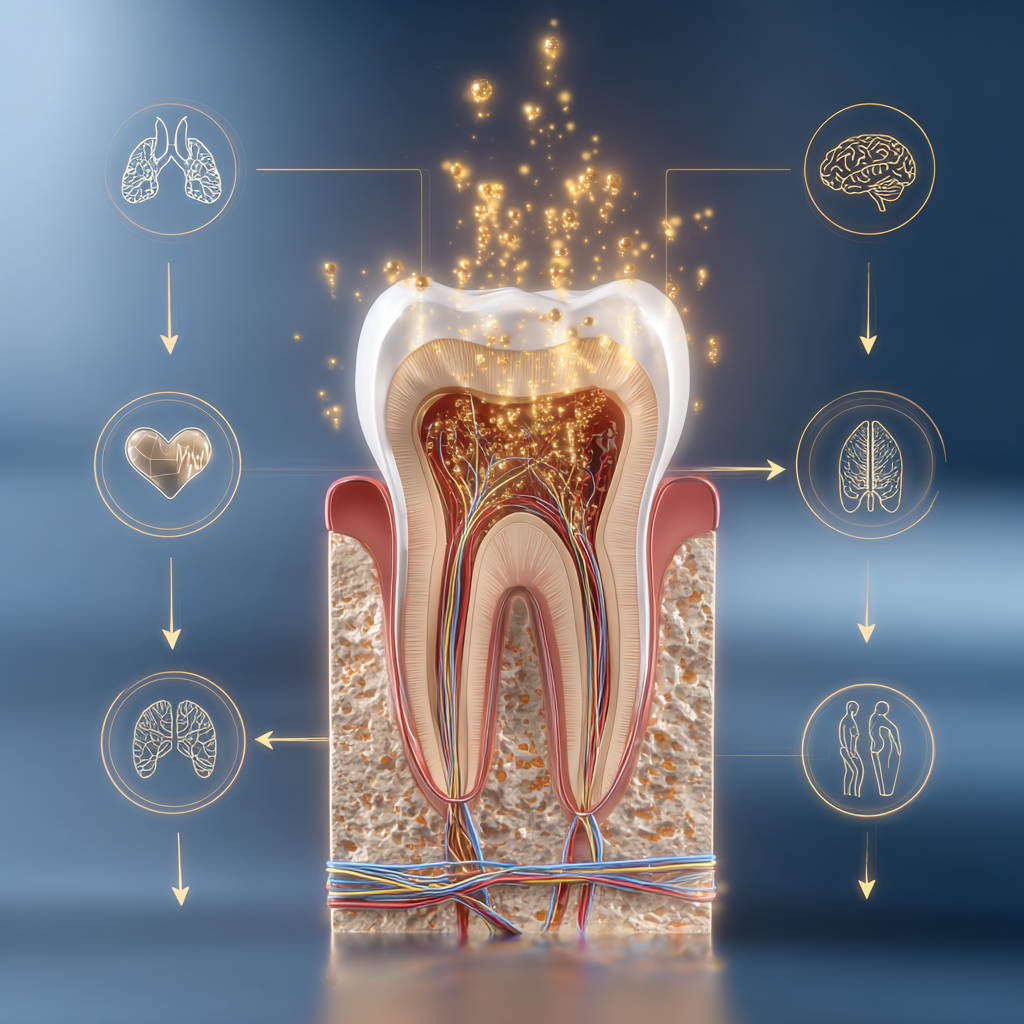
Persistent periodontal inflammation may continuously release:
- inflammatory cytokines
- bacterial toxins
- oxidative stress molecules
into local tissues and systemic circulation.
This chronic inflammatory burden may affect multiple organ systems.
The Cardiovascular Connection
Researchers have spent decades studying links between gum disease and heart disease.
People with severe periodontal disease often show higher rates of:
- atherosclerosis
- endothelial dysfunction
- coronary artery disease
- stroke risk
Several mechanisms may contribute.
Inflammatory molecules from diseased gums may damage blood vessels.
Oral bacteria may enter circulation and contribute to vascular inflammation.
Chronic immune activation may accelerate arterial aging.
Modern preventive medicine increasingly views oral inflammation as part of overall cardiovascular risk assessment.

Diabetes and Gum Disease
The relationship between diabetes and periodontal disease is especially important.
High blood sugar weakens immune defenses and impairs healing, increasing vulnerability to gum disease.
At the same time, periodontal inflammation may worsen insulin resistance.
This creates a metabolic-inflammatory feedback loop.
\text{Hyperglycemia} \rightarrow \text{Inflammation} \rightarrow \text{Periodontal Disease} \rightarrow \text{Insulin Resistance}
Managing oral inflammation may therefore support better metabolic health.
Inflammation and Brain Aging
Emerging research also explores whether chronic periodontal inflammation may influence neurodegenerative disease.
Scientists are investigating potential links involving:
- neuroinflammation
- vascular injury
- oxidative stress
- immune dysregulation
Although research continues to evolve, many experts now believe that reducing chronic inflammatory burden may support healthier brain aging.
This includes reducing inflammation originating in the mouth.
Smoking, Stress, and Lifestyle
Lifestyle strongly influences periodontal disease risk.
Major contributors include:
- smoking
- chronic stress
- poor sleep
- ultra-processed diets
- diabetes
- obesity
- poor oral hygiene
Stress deserves special attention.
Chronic stress alters immune regulation and may worsen inflammatory disease throughout the body.
This includes gum inflammation.
Modern dentistry increasingly overlaps with lifestyle medicine and preventive health.
Bone Loss and Aging
Advanced periodontal disease destroys bone supporting the teeth.
Bone loss reflects both local inflammation and broader biological aging processes.
Factors such as:
- osteoporosis
- hormonal changes
- chronic inflammation
- nutrient deficiencies
- smoking
- metabolic dysfunction
may accelerate periodontal deterioration.
This highlights how oral health and skeletal health are interconnected.
Prevention Is More Powerful Than Repair
One of the biggest lessons from modern dentistry is that prevention matters enormously.
Preventive strategies include:
- daily brushing
- flossing
- professional cleanings
- reducing sugar exposure
- smoking cessation
- stress management
- improving sleep
- anti-inflammatory nutrition
- hydration
- metabolic health optimization
The goal is not only avoiding tooth loss.
It is preserving long-term biological resilience.
The Future of Periodontal Medicine
Future periodontal care may include:
- salivary inflammatory biomarkers
- AI-assisted disease prediction
- personalized microbiome analysis
- regenerative therapies
- precision prevention models
Dentistry is increasingly becoming an integral part of systems medicine.
Final Thoughts
Gum disease is not simply a cosmetic issue.
It is a chronic inflammatory condition with potential whole-body implications.
The future of healthcare increasingly depends on understanding connections between:
- oral health
- inflammation
- metabolism
- immunity
- cardiovascular health
- aging
Protecting the gums may help protect the body itself.