
Muscle—The Hidden Organ of Metabolic Health
Many people associate muscles with athletic performance or appearance.
In reality, muscle tissue plays an extraordinary metabolic role.
It acts as one of the body’s largest glucose storage systems.
Why Muscle Matters: The Metabolic Powerhouse of the Human Body
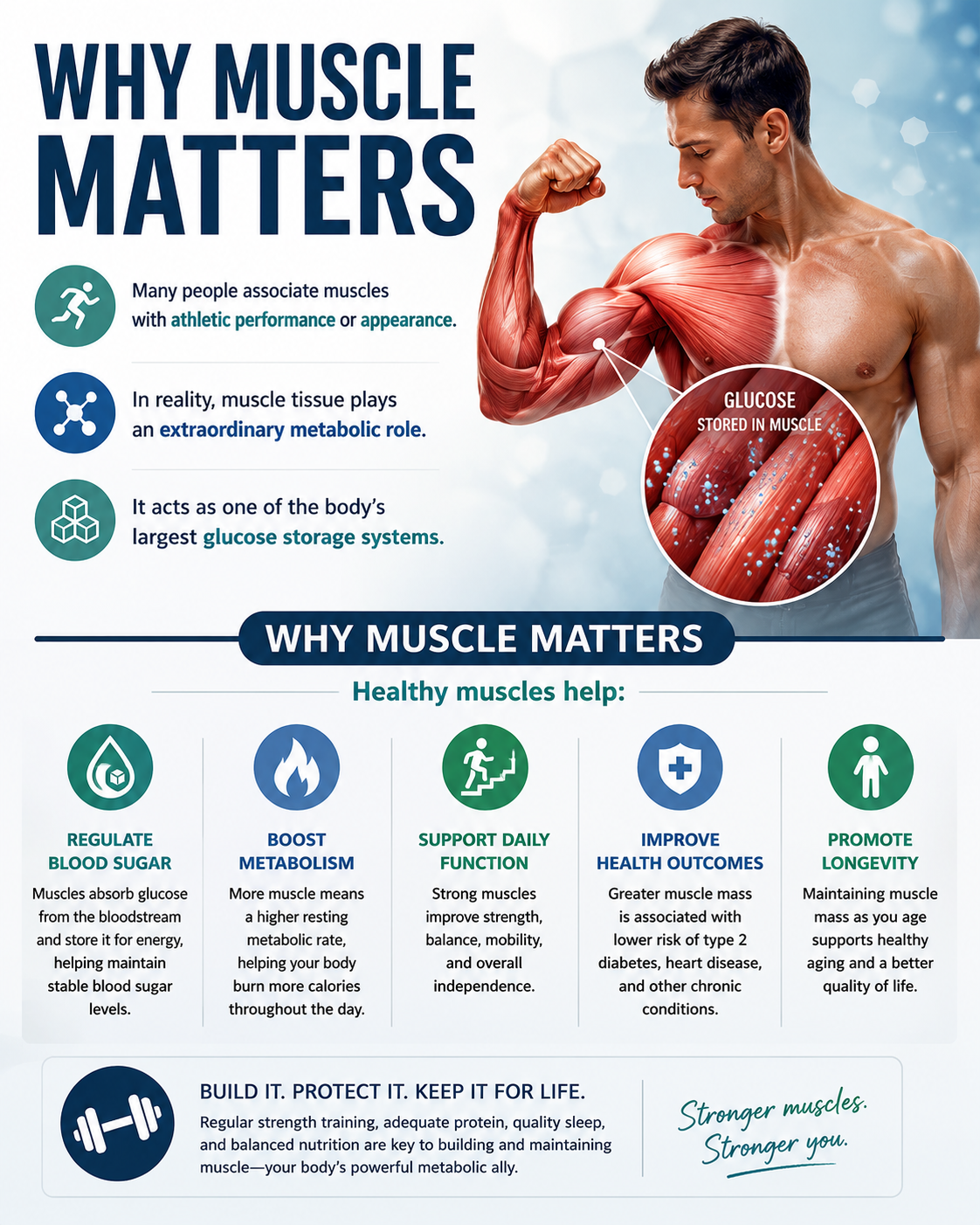
Many people associate muscles primarily with athletic performance, physical strength, or appearance. While muscles certainly contribute to movement and body composition, their role extends far beyond fitness. Skeletal muscle is one of the body’s most important metabolic organs, influencing blood sugar regulation, energy balance, healthy aging, and long-term disease prevention. Understanding the remarkable functions of muscle tissue helps explain why maintaining muscle mass is essential for overall health throughout life.
One of the most important functions of skeletal muscle is glucose storage. After eating carbohydrates, blood glucose levels naturally rise. In response, insulin helps move glucose from the bloodstream into cells, where it can be used for energy or stored for later use. Skeletal muscles serve as the body’s largest reservoir for glycogen, the stored form of glucose. Because muscle tissue accounts for a large proportion of total body mass, it plays a central role in maintaining healthy blood sugar levels and supporting metabolic stability.
Healthy muscles also improve insulin sensitivity. When muscle cells respond efficiently to insulin, they absorb glucose more effectively, reducing the amount of sugar circulating in the bloodstream. Better insulin sensitivity is associated with healthier metabolic function and may lower the risk of developing insulin resistance and type 2 diabetes. Regular physical activity, especially resistance training, can enhance this process by stimulating muscles to use glucose more efficiently during and after exercise.
Muscle tissue is also a major contributor to daily energy expenditure. Even while the body is at rest, muscles require energy to maintain their structure and perform essential biological functions. Individuals with greater muscle mass generally have a higher resting metabolic rate than those with less muscle mass, meaning they burn more calories throughout the day. Although muscle is not a shortcut to weight loss, preserving lean muscle can support healthy energy balance and complement long-term weight management strategies.
Beyond metabolism, muscles are essential for movement, balance, posture, and independence. Everyday activities such as climbing stairs, lifting groceries, standing from a chair, or walking across a room all depend on strong, functional muscles. As people age, gradual muscle loss—known as sarcopenia—can reduce mobility, increase the risk of falls, and diminish quality of life. Maintaining muscle strength throughout adulthood supports physical resilience and helps preserve independence in later years.
Muscles also communicate with other organs throughout the body. During exercise, contracting muscles release signaling molecules known as myokines, which influence metabolism, immune function, inflammation, and even brain health. Scientists increasingly recognize that skeletal muscle functions as an endocrine organ, participating in complex biological communication networks rather than simply generating movement. This systems-based perspective highlights the interconnected nature of human physiology.
Building and maintaining healthy muscles does not require becoming a competitive athlete. Consistent resistance training performed two to three times per week, combined with regular walking or aerobic activity, can stimulate muscle maintenance and growth. Adequate dietary protein provides the amino acids needed for muscle repair, while quality sleep supports recovery through hormonal regulation and tissue restoration. Proper hydration, balanced nutrition, and stress management further contribute to optimal muscle function.
Importantly, muscle health develops gradually through consistent habits rather than quick fixes. There is no supplement capable of replacing regular movement, nutritious eating, sufficient protein intake, and recovery. Lifestyle factors work together to support healthy muscle metabolism, cardiovascular function, and overall well-being.
Ultimately, muscle represents far more than strength or appearance. It is a dynamic metabolic organ that stores glucose, regulates blood sugar, supports healthy energy expenditure, improves physical function, and contributes to healthy aging. Protecting muscle health throughout life is an investment in long-term resilience, independence, and metabolic wellness. Whether your goal is better health, improved fitness, or successful aging, maintaining strong and healthy muscles is one of the most valuable strategies for supporting lifelong vitality.
Why Muscle Matters
Healthy muscles help:
Utilize blood glucose
Support insulin sensitivity
Increase resting energy expenditure
Improve mobility
Protect joints
Maintain independence with aging
Every movement activates an enormous network of metabolic processes.
Walking, lifting groceries, climbing stairs, gardening, and resistance training all stimulate these systems.
Resistance Training
Strength training does not require becoming a bodybuilder.
Simple exercises performed consistently may support:
Muscle preservation
Bone health
Balance
Posture
Joint stability
Metabolic flexibility
Examples include:
Bodyweight squats
Resistance bands
Light dumbbells
Push-ups against a wall
Chair stands
Two or three sessions weekly may produce meaningful benefits over time.
Walking: The Underrated Medicine
Walking is one of the simplest yet most powerful lifestyle habits for supporting long-term health. Although often overlooked because of its accessibility, regular walking influences nearly every major biological system in the body. Unlike high-intensity workouts that require specialized equipment or training, walking is suitable for people of almost every age and fitness level, making it one of the most sustainable forms of physical activity.
Each step activates large muscle groups, increasing glucose uptake from the bloodstream and helping improve insulin sensitivity. This process supports healthier blood sugar regulation while encouraging muscles to use stored energy more efficiently. Walking also enhances circulation, allowing oxygen and nutrients to reach tissues throughout the body while supporting cardiovascular health and endothelial function.
Beyond its metabolic benefits, walking positively influences the brain and nervous system. Research suggests that regular walking may improve mood, reduce stress hormones, enhance cognitive function, and support healthy aging by increasing blood flow to the brain. Time spent walking outdoors may provide additional benefits through sunlight exposure, circadian rhythm regulation, and psychological relaxation.
Walking also contributes to musculoskeletal health by strengthening bones, preserving muscle function, improving balance, and maintaining joint mobility. Consistent daily movement may reduce the risk of falls in older adults while supporting independence and physical resilience throughout life.
Perhaps most importantly, walking illustrates an essential principle of preventive medicine: meaningful health improvements often result from small, consistent behaviors rather than extreme interventions. A daily walk after meals, during work breaks, or in the evening can become a sustainable habit that supports metabolism, cardiovascular wellness, brain health, and longevity. While walking is not a cure for disease, it remains one of the safest, most evidence-supported, and underestimated tools for promoting lifelong health.
Walking remains one of the most accessible forms of movement.
Benefits include:
Improved circulation
Reduced stress
Joint mobility
Muscle activation
Cardiovascular conditioning
Enhanced glucose utilization
Short walks accumulated throughout the day can become powerful metabolic investments.
Recovery Is Part of Training
Muscles grow and adapt during recovery.
Recovery includes:
Sleep
Nutrition
Hydration
Stress management
Gentle mobility work
The objective is not maximizing exhaustion.
It is maximizing adaptation.
Building stronger muscles supports healthier metabolism at every age.
Your metabolism is not broken forever.
With the right daily habits, the body can often restore healthier energy balance, improve fat-burning efficiency, and support long-term metabolic resilience naturally.