
Sleep & Brain Health
Understanding How Sleep Shapes Memory, Mood, and Lifelong Cognitive Resilience
Sleep is not a passive state of rest. It is one of the brain’s most active and essential biological processes. During sleep, the brain consolidates memories, regulates emotions, clears metabolic waste, restores energy balance, and prepares neural networks for the demands of a new day.
Modern lifestyles increasingly challenge healthy sleep. Artificial light exposure, chronic stress, irregular schedules, excessive screen time, and social pressures contribute to widespread sleep disruption. Poor sleep quality has been linked to impaired concentration, reduced productivity, mood disturbances, metabolic dysfunction, and increased risk for cognitive decline later in life.
This learning hub explores the science of sleep through a systems-based perspective. Rather than viewing sleep simply as “time spent in bed,” we examine how sleep influences nearly every aspect of brain function and whole-body health.
Whether your goal is improving focus, supporting emotional well-being, enhancing recovery, or promoting healthy aging, understanding the foundations of sleep can help you build habits that protect one of your most valuable biological resources.
Why Sleep Matters Today
Modern society often celebrates productivity while overlooking the biological necessity of restorative sleep. Yet inadequate sleep affects millions of people worldwide and contributes to growing burdens of chronic disease, mental health challenges, and reduced quality of life.
Healthy sleep supports:
- Memory and learning
- Emotional regulation
- Decision-making and attention
- Immune resilience
- Metabolic balance
- Cardiovascular health
- Healthy brain aging
Sleep is not lost time. It is an investment in human performance, resilience, and longevity.
Why Modern Sleep Is Under Attack
Artificial light, irregular schedules, constant connectivity, chronic stress, and around-the-clock stimulation have transformed the human sleep environment. Many people now experience shorter sleep duration, fragmented sleep, and circadian disruption—factors increasingly linked to impaired cognition, metabolic dysfunction, and emotional distress.
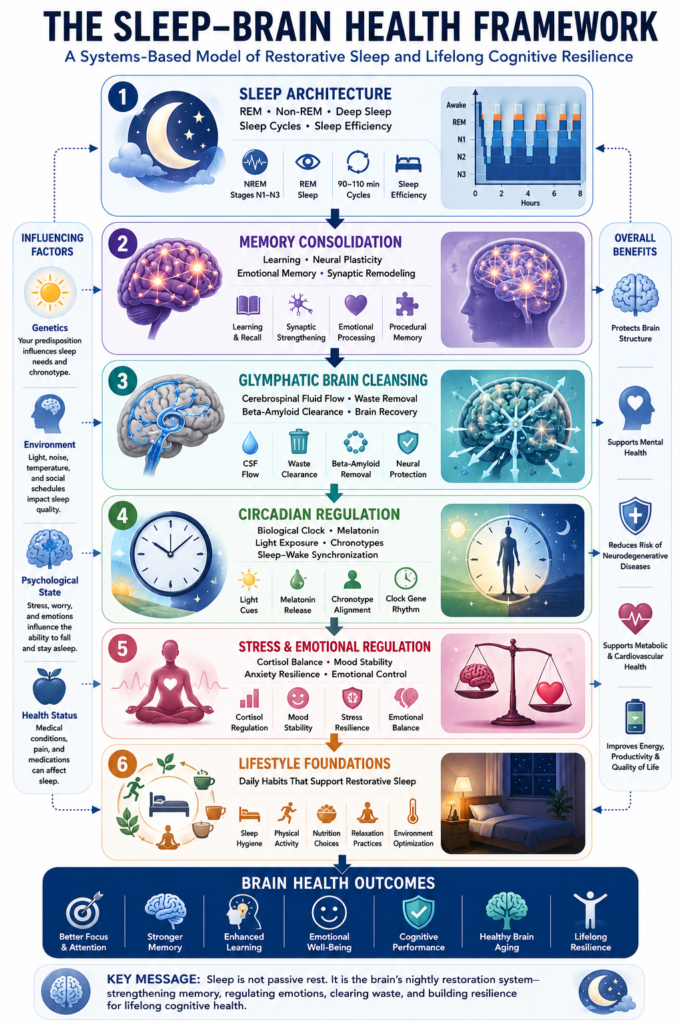
The Sleep–Brain Health Framework
Understanding How Sleep Supports Memory, Emotional Balance, and Lifelong Brain Function
This framework illustrates sleep as an active biological process essential for cognitive health and overall well-being. Restorative sleep begins with healthy sleep architecture, including REM and non-REM cycles that support recovery and adaptation. During sleep, the brain consolidates memories, strengthens neural connections, and regulates emotional experiences. The glymphatic system enhances the clearance of metabolic waste products that accumulate during wakefulness. Circadian rhythms coordinate biological timing, while stress regulation influences sleep quality and resilience. Daily lifestyle behaviors further shape these interconnected systems. Together, these pathways support attention, learning, emotional stability, healthy aging, and long-term cognitive resilience.
Sleep is not passive rest. It is the brain’s nightly restoration system—strengthening memory, regulating emotions, clearing waste, and building resilience for lifelong cognitive health.
- 🌙 月亮:Sleep Architecture
- 🧠 大脑:Memory Consolidation
- 💧 脑脊液流动:Glymphatic System
- ⏰ 时钟:Circadian Rhythm
- ❤️🩹 情绪平衡:Stress Regulation
- 🌿 生活方式:Lifestyle Foundations
Discover the principles of prevention before illness develops.
🟦 BEGINNER LEARNING PATH
Lesson 4 of 6
○○○●○○
What You Will Learn
1. The Architecture of Sleep
Discover how the brain cycles through different stages of sleep throughout the night.
Topics include:
- Non-REM sleep
- REM sleep
- Sleep cycles
- Deep sleep
- Sleep efficiency
Outcome: Understand that different stages of sleep serve unique biological functions.
2. Sleep and Memory Consolidation
Explore how sleep strengthens learning and cognitive performance.
Topics include:
- Short-term to long-term memory transfer
- Procedural learning
- Emotional memory processing
- Synaptic remodeling
- Neural plasticity
Outcome: Recognize why sleep is essential for memory and lifelong learning.
3. The Glymphatic System and Brain Cleaning
Learn how sleep supports the brain’s waste-clearance system.
Topics include:
- Glymphatic circulation
- Cerebrospinal fluid dynamics
- Protein clearance
- Beta-amyloid removal
- Neurodegenerative disease research
Outcome: Appreciate sleep’s role in maintaining long-term brain health.
4. Circadian Rhythms and Biological Timing
Understand the body’s internal clock and its influence on health.
Topics include:
- Circadian biology
- Light exposure
- Melatonin
- Chronotypes
- Social jet lag
Outcome: Learn how aligning behaviors with biological rhythms supports resilience.
5. Sleep, Stress, and Emotional Well-Being
Examine the bidirectional relationship between sleep and emotional health.
Topics include:
- Cortisol regulation
- Stress reactivity
- Anxiety and sleep
- Mood regulation
- Emotional resilience
Outcome: Understand how improving sleep can strengthen psychological well-being.
6. Lifestyle Strategies for Better Sleep
Translate sleep science into practical daily habits.
Topics include:
- Sleep hygiene
- Consistent sleep schedules
- Evening routines
- Physical activity
- Nutrition and stimulants
- Relaxation practices
Outcome: Build sustainable habits that support restorative sleep.
The Systems Perspective
Traditional thinking often asks:
“How many hours should I sleep?”
Systems thinking asks:
“How can I support the biological networks that make restorative sleep possible?”
Sleep emerges from interactions among the nervous system, endocrine signaling, circadian timing, environmental cues, emotional health, and lifestyle behaviors.
When these systems function in harmony, sleep becomes a powerful foundation for health rather than an afterthought.
How Sleep Supports the Brain
Healthy sleep contributes to:
- Improved attention and focus
- Enhanced memory formation
- Faster learning and adaptation
- Emotional stability
- Better decision-making
- Reduced cognitive fatigue
- Long-term brain resilience
Protecting sleep means protecting the brain itself.
Lesson
Lesson →
Sleep & Brain Health
04 Progress
Learning Progress
○○○●○○
4/ 6 Lessons Completed
parallelism:
| course | state |
|---|---|
| Lesson 1 | ○ |
| Lesson 2 | ○ |
| Lesson 3 | ○ |
| Lesson 4 | ✓current |
| Lesson 5 | ○ |
| Lesson 6 | ○ |
Circadian Rhythms
Explore our Sleep Reset Blueprint to learn practical strategies for supporting healthy sleep patterns.
Lifestyle Strategies
Learn how stress, metabolism, and brain energy interact in the Brain Energy Reset guide.
Frequently Asked Questions
What is the ideal amount of sleep?
Most adults benefit from approximately 7–9 hours of sleep per night, although individual needs vary.
Why do I feel tired even after sleeping?
Factors such as sleep quality, sleep disorders, stress, circadian disruption, and underlying health conditions can influence how restorative sleep feels.
Does sleep affect memory?
Yes. Sleep plays a critical role in consolidating memories and supporting learning processes.
Can improving sleep support healthy aging?
Evidence suggests that maintaining healthy sleep habits may contribute to cognitive resilience and overall well-being throughout aging.
Begin Your Sleep Learning Journey

Learning Journey
SLEEP LEARNING JOURNEY
Sleep & Brain Health
↓
The Sleep Reset Blueprint
↓
Brain Energy Reset
↓
The Brain Song™ Experience
↓
The Brain Longevity Blueprint
↓
Preventive Longevity Blueprint
Continue Exploring
➡️ The Sleep Reset Blueprint
A systems-based guide to restoring sleep quality, recovery, and cognitive resilience.
Why These Foundations Matter
In a world that increasingly demands constant attention and productivity, sleep remains one of the most accessible yet underappreciated tools for protecting health. By understanding the biological foundations of restorative sleep, individuals can make choices that support memory, emotional balance, energy regulation, and healthy aging.
Sleep is not a luxury.
It is one of the fundamental pillars upon which lifelong brain health is built.
Educational Disclaimer
The information provided on this page is intended for educational purposes only and should not be considered medical advice, diagnosis, or treatment. Always consult a qualified healthcare professional regarding personal health concerns or before making significant lifestyle changes.
Key Takeaway
Sleep is not lost productivity.
It is the biological process through which the brain restores itself, strengthens memories, regulates emotions, and prepares the body for the challenges of tomorrow.