
Sleep—The Brain’s Overnight Recovery System
Why Deep Rest Is Essential for Cognitive Renewal
Modern society often treats sleep as negotiable.
Yet sleep represents one of the most sophisticated recovery systems in human biology.
Without sufficient restorative sleep, brain energy falters.
What Happens During Sleep?
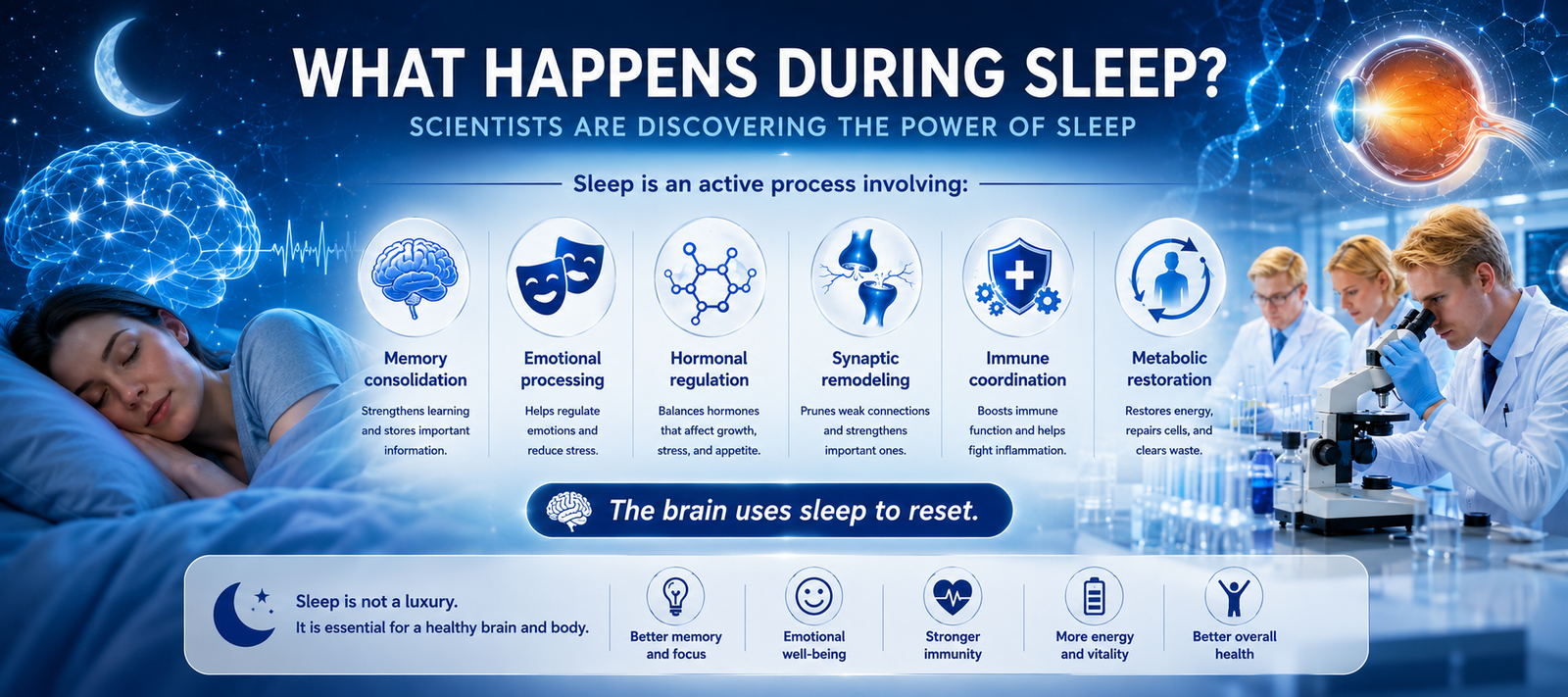
Figure 1. What Happens During Sleep?
Sleep is far more than a period of inactivity. It is a dynamic biological process during which the brain and body perform essential maintenance and restoration. During sleep, memories are consolidated, helping transform daily experiences into long-term knowledge and strengthening learning pathways. Emotional processing also occurs, allowing the brain to regulate stress responses and support psychological resilience.
At the same time, hormonal regulation helps balance appetite, metabolism, growth, and recovery. Synaptic remodeling refines neural connections by strengthening important pathways while pruning less useful ones, supporting neuroplasticity and cognitive efficiency. The immune system coordinates defense and repair activities, promoting resilience against illness and inflammation. Metabolic restoration enables cellular recovery, energy replenishment, and the clearance of waste products that accumulate throughout the day.
Rather than shutting down, the brain becomes remarkably active during sleep. Each night, sleep helps reset the nervous system, preparing us to think clearly, adapt effectively, and maintain long-term physical and cognitive health.
Sleep is an active process involving:
- Memory consolidation
- Emotional processing
- Hormonal regulation
- Synaptic remodeling
- Immune coordination
- Metabolic restoration
The brain uses sleep to reset.
The Glymphatic System
Researchers have identified a waste-clearance pathway sometimes called the glymphatic system.

Figure 2. This striking illustration symbolizes one of sleep’s most essential housekeeping functions: the brain’s overnight cleansing and restoration process. As red blood cells drift through the scene beside an alarm clock beneath a moonlit sky, the image emphasizes the intimate relationship between sleep, time, and physiological renewal.
During deep sleep, the circulation of cerebrospinal fluid increases significantly, allowing the brain to flush out metabolic byproducts that accumulate during waking hours. Emerging research suggests that protein debris and other waste materials may be cleared more efficiently during these restorative stages of sleep.
This nightly maintenance process supports neural health and may contribute to long-term cognitive resilience. When sleep becomes fragmented or chronically insufficient, the efficiency of these clearance mechanisms may be reduced, potentially affecting memory, concentration, and overall brain function.
The alarm clock serves as a reminder that sacrificing sleep for productivity carries hidden biological costs. Deep sleep is not merely a period of unconsciousness—it is an active investment in brain maintenance, recovery, and the preservation of lifelong neurological well-being.
During deep sleep:
- Cerebrospinal fluid circulation increases.
- Metabolic waste products are removed.
- Protein debris may be cleared more efficiently.
Sleep deprivation compromises this process.

Figure 3. This evocative image captures the mystery of sleep as one of the brain’s most profound biological processes. The sleeping figure rests peacefully while luminous neural pathways and cosmic patterns appear to flow around and through the mind, symbolizing the hidden activity that unfolds during the night.
Although the body appears still, the brain remains remarkably active. During sleep, memories are organized and consolidated, emotional experiences are processed, and billions of neural connections are strengthened, refined, or pruned to optimize future function.
The glowing network surrounding the face represents the intricate communication between neurons, while the celestial light above the forehead suggests the vast complexity of consciousness itself.
Sleep is not simply a passive state of rest but a dynamic period of restoration, regulation, and renewal. Hormonal balance, immune coordination, metabolic repair, and synaptic remodeling all depend on adequate sleep.
This dreamlike composition reminds us that every night, beneath closed eyes, the brain works tirelessly to heal, adapt, and prepare us for another day of learning, resilience, and human potential.
Sleep and Brain Energy
Poor sleep contributes to:
- Reduced ATP production
- Increased inflammation
- Insulin resistance
- Elevated stress hormones
- Mood instability
- Attention deficits
Over time, these changes may accelerate cognitive aging.
Practical Sleep Strategies
Maintain Consistent Timing
Go to bed and wake up at similar times.
Morning Light Exposure
Natural light supports circadian alignment.
Limit Evening Stimulation
Reduce bright screens before bedtime.
Moderate Caffeine Intake
Avoid excessive late-day consumption.
Create a Sleep Environment
Prioritize darkness, quiet, and comfort.
Exercise Regularly
Physical activity improves sleep quality.
Sleep Across the Lifespan
Older adults often experience:
- Reduced deep sleep
- Earlier awakenings
- Fragmented sleep
These changes deserve attention rather than resignation.
Sleep remains a modifiable factor at every age.
Key Takeaways
Sleep is not wasted time.
It is biological maintenance. Protecting sleep protects brain energy, emotional resilience, and long-term cognitive performance
👉 Discover How Natural the Brain Energy Reset Support
Circulation, Oxidative Stress, Neuroprotection, and Auditory Function