
Understanding the Role of Mitochondria in Hearing Health
The inner ear is extremely energy-dependent.
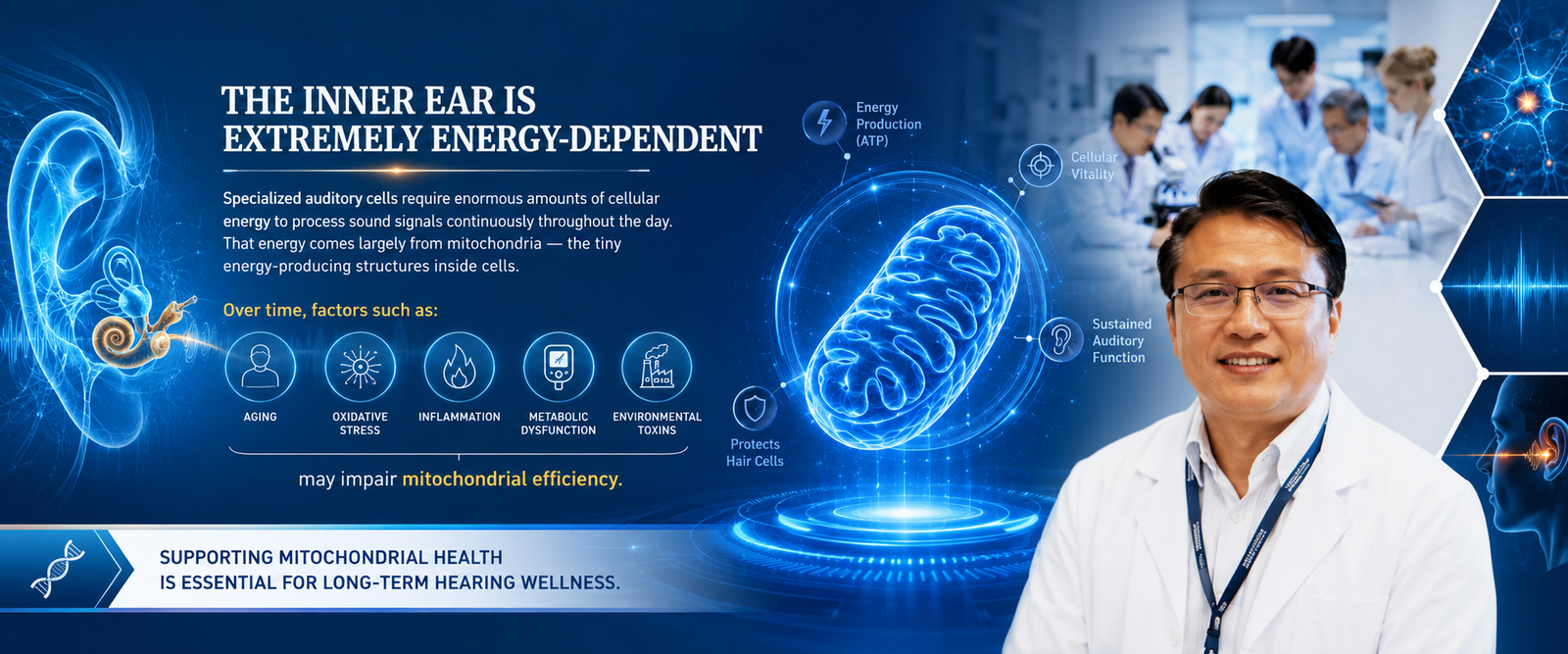
Figure 1. The inner ear is one of the most energy-demanding structures in the human body. Every second of the day, specialized auditory hair cells and neural pathways work continuously to convert sound waves into electrical signals that the brain can interpret. This highly complex process requires a constant supply of cellular energy, much of which is generated by mitochondria, often referred to as the “powerhouses” of the cell.
As we age, mitochondrial efficiency may gradually decline. Researchers have identified several factors that can influence this process, including oxidative stress, chronic inflammation, metabolic dysfunction, environmental toxin exposure, and normal biological aging. When cellular energy production becomes less efficient, auditory cells may become more vulnerable to stress and damage.
Scientists are increasingly exploring the relationship between mitochondrial health and long-term hearing function. While hearing loss is influenced by many factors, maintaining overall metabolic health, supporting healthy aging, and reducing excessive oxidative burden may help preserve the cellular systems that support lifelong auditory performance and sensory resilience.
Specialized auditory cells require enormous amounts of cellular energy to process sound signals continuously throughout the day. That energy comes largely from mitochondria — the tiny energy-producing structures inside cells.

Figure 2. Hearing depends on a remarkable amount of cellular energy. Every day, specialized auditory cells within the inner ear continuously convert sound vibrations into electrical signals that travel to the brain.
This process occurs thousands of times per second and relies heavily on mitochondria, the microscopic structures responsible for producing cellular energy.
Mitochondria act as biological power plants, supplying the energy required for hearing, communication between nerve cells, and maintenance of delicate sensory structures.
However, mitochondrial function may gradually decline over time. Factors such as aging, oxidative stress, chronic inflammation, metabolic dysfunction, and exposure to environmental toxins can place additional strain on these vital cellular systems.
Researchers increasingly recognize that mitochondrial health may play an important role in auditory resilience. Reduced energy production can make sensory cells more vulnerable to stress and age-related changes.
Some scientists believe this may contribute to auditory fatigue, reduced hearing performance, and hearing decline later in life. Supporting overall metabolic health may help preserve the cellular energy systems that contribute to long-term hearing wellness and healthy aging.
Over time, factors such as:
- aging,
- oxidative stress,
- inflammation,
- metabolic dysfunction,
- and environmental toxins may impair mitochondrial efficiency.
Some researchers believe this may contribute to auditory fatigue and age-related hearing decline.
That’s one reason many hearing-support supplements include:
- antioxidants,
- mitochondrial support nutrients,
- and circulation-support compounds.
While supplements alone are not a cure, supporting cellular energy systems may play a role in healthy auditory aging.
Protecting hearing may ultimately depend on protecting the body’s energy systems.
The ability to hear a loved one’s voice, enjoy music, and stay connected to the world is worth protecting. Begin your journey toward better hearing awareness and lifelong cognitive well-being.
👉 Dive Into the Full Systems-Based Hearing Guide