
Why Modern Humans Are Losing Mobility Faster Than Ever
The Hidden Joint Health Crisis Behind Aging, Inflammation, and Sedentary Living
Modern civilization has created a paradox. Humans are living longer than ever before, yet millions are losing mobility, flexibility, and functional independence decades earlier than previous generations. Around the world, chronic joint pain, stiffness, osteoarthritis, tendon degeneration, and movement limitations are increasing rapidly across nearly every age group.

For many people, the decline begins subtly.
A little knee stiffness after climbing stairs.
A sore lower back after sitting too long.
Reduced flexibility during exercise.
Morning stiffness in the hips, shoulders, or hands.
Over time, these seemingly minor issues can evolve into chronic pain patterns that impact daily life, exercise capacity, sleep quality, metabolic health, and overall longevity.
Joint health is not simply about pain.
It is deeply connected to inflammation, metabolism, circulation, muscle preservation, nervous system health, body composition, and aging biology itself.
This is why modern joint wellness must be approached through a systems-based framework.
The Joint Health Crisis of Modern Life
The human body evolved for constant movement. Walking, lifting, climbing, squatting, rotating, and carrying were once natural parts of daily survival. Today, however, sedentary lifestyles dominate modern civilization.
Many people spend:
- 8–12 hours sitting daily
- Long periods staring at screens
- Very little time walking outdoors
- Minimal time strength training
- Poor recovery and sleep patterns
- High exposure to processed foods and inflammatory lifestyles
The result is a biological environment that accelerates musculoskeletal degeneration.
Modern joint decline is driven by several interconnected factors:
- Chronic inflammation
- Metabolic dysfunction
- Excess body weight
- Poor circulation
- Muscle weakness
- Sleep disruption
- Reduced collagen support
- Nutrient deficiencies
- Stress hormone overload
- Sedentary behavior
Joint deterioration rarely occurs in isolation.
It usually develops within a larger metabolic and inflammatory environment.
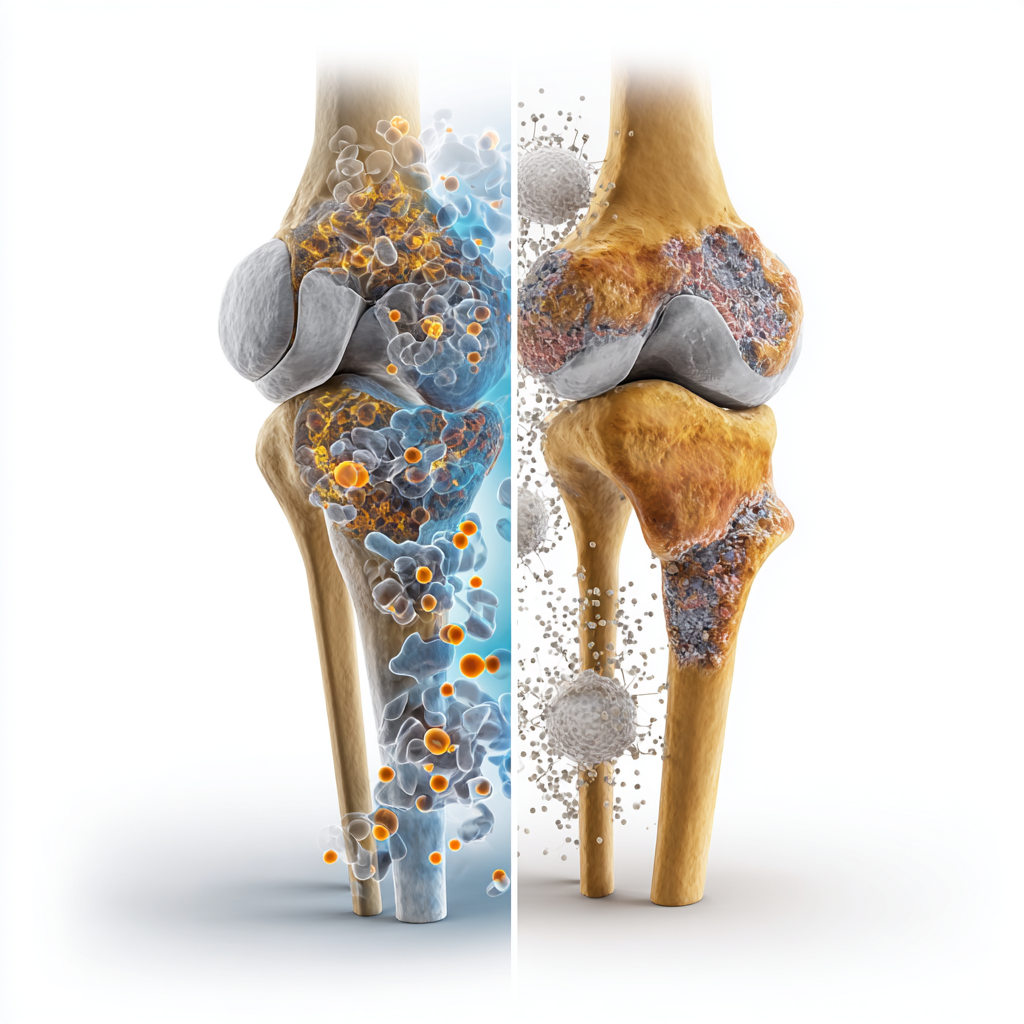
Understanding Cartilage and Joint Function
Healthy joints rely on a delicate interaction between cartilage, synovial fluid, ligaments, tendons, muscle support systems, and bone structure.
Cartilage acts as a protective cushion between bones. It reduces friction and helps joints move smoothly under pressure. Synovial fluid functions like a biological lubricant, helping nourish cartilage and support fluid movement.
Unlike many tissues in the body, cartilage has limited blood supply. This means recovery can be slow once degeneration begins.
Over time, chronic inflammation and mechanical stress may contribute to:
- Cartilage breakdown
- Joint stiffness
- Reduced shock absorption
- Bone-on-bone friction
- Reduced flexibility
- Pain during movement
- Mobility decline
As these processes progress, individuals often become less active, creating a vicious cycle.
Less movement leads to weaker muscles.
Weaker muscles reduce joint stability.
Reduced stability increases mechanical stress.
More stress increases inflammation.
This cycle can accelerate functional aging.
Inflammation and Joint Aging
One of the most overlooked drivers of joint decline is chronic low-grade inflammation.
Inflammation is not inherently bad. Acute inflammation helps the body heal after injury. However, chronic systemic inflammation can gradually damage tissues over years or decades.
Modern inflammatory drivers include:
- Ultra-processed foods
- Excess sugar intake
- Insulin resistance
- Obesity
- Poor sleep
- Chronic stress
- Smoking
- Sedentary lifestyles
- Environmental toxins
Inflammatory molecules can influence cartilage degradation pathways, increase pain sensitivity, and impair tissue recovery.
Many experts now view osteoarthritis not simply as “wear and tear,” but as a complex inflammatory and metabolic condition.
This represents a major shift in how joint health is understood.
The Connection Between Metabolism and Mobility
Metabolic health and joint health are deeply interconnected.
Excess body fat does more than increase mechanical pressure on joints. Fat tissue also acts as an endocrine organ that produces inflammatory signaling molecules.

This means obesity may contribute to:
- Increased inflammation
- Accelerated cartilage degeneration
- Higher pain sensitivity
- Reduced recovery capacity
- Lower physical activity levels
At the same time, chronic pain often reduces movement.
Reduced movement worsens insulin sensitivity and metabolic dysfunction.
The body gradually enters a self-reinforcing cycle:
Pain → Less Movement → Weight Gain → More Inflammation → More Pain
Breaking this cycle requires a systems-level strategy.
Muscle: The Forgotten Joint Protection Organ
Strong muscles are essential for protecting joints.
Muscle tissue stabilizes movement patterns, absorbs force, improves posture, and reduces excessive stress on cartilage.
Unfortunately, muscle mass naturally declines with age, especially after age 40.
This process, known as sarcopenia, can contribute to:
- Reduced balance
- Increased fall risk
- Lower joint stability
- Reduced mobility
- Greater pain sensitivity
Strength training is therefore one of the most powerful tools for healthy aging and joint resilience.
Even moderate resistance training may help:
- Improve joint support
- Enhance mobility
- Increase circulation
- Improve metabolic health
- Reduce inflammation
- Maintain independence later in life
Movement is medicine for the musculoskeletal system.
Recovery and Regeneration Matter
Joint health is also heavily influenced by recovery biology.
Sleep plays a major role in tissue repair, hormone regulation, inflammation control, and nervous system recovery.
Poor sleep has been associated with:
- Increased pain perception
- Higher inflammation levels
- Slower recovery
- Reduced physical performance
- Greater fatigue
Stress management also matters.
Chronic cortisol elevation may impair tissue healing and amplify inflammatory pathways.

This is why comprehensive joint wellness should include:
- Sleep optimization
- Stress reduction
- Nutrition support
- Recovery routines
- Mobility work
- Appropriate exercise
A Systems-Based Approach to Long-Term Joint Wellness
Modern joint health should not rely on a single intervention.
Long-term mobility and healthy aging require a broader lifestyle framework.
Key pillars include:
1. Anti-Inflammatory Nutrition
Focus on whole foods, colorful vegetables, lean proteins, omega-3 fats, hydration, and fiber-rich meals.
2. Movement and Mobility
Daily walking, mobility routines, stretching, and resistance training help preserve functional movement.
3. Weight and Metabolic Health
Improving insulin sensitivity and body composition may reduce inflammatory stress on joints.
4. Recovery Optimization
Sleep, stress management, and nervous system recovery support tissue repair.
5. Healthy Aging Support
Collagen support, muscle preservation, circulation, and longevity-focused habits may help maintain mobility over time.
The Future of Joint Longevity
The future of healthy aging will increasingly focus on preserving movement, independence, and functional resilience.
Living longer means little if mobility disappears.
Joint wellness is about more than avoiding pain.
It is about protecting human freedom.
Walking independently.
Exercising confidently.
Playing with grandchildren.
Traveling without limitation.
Maintaining strength and dignity throughout aging.
A systems-based joint health strategy recognizes that mobility is deeply connected to the entire biology of human aging.
The goal is not simply surviving longer.
The goal is remaining capable, resilient, and functional throughout the lifespan.