
Building a Realistic Prostate Wellness Strategy
Beyond the Supplement Bottle: Building a Complete Strategy for Long-Term Prostate Health
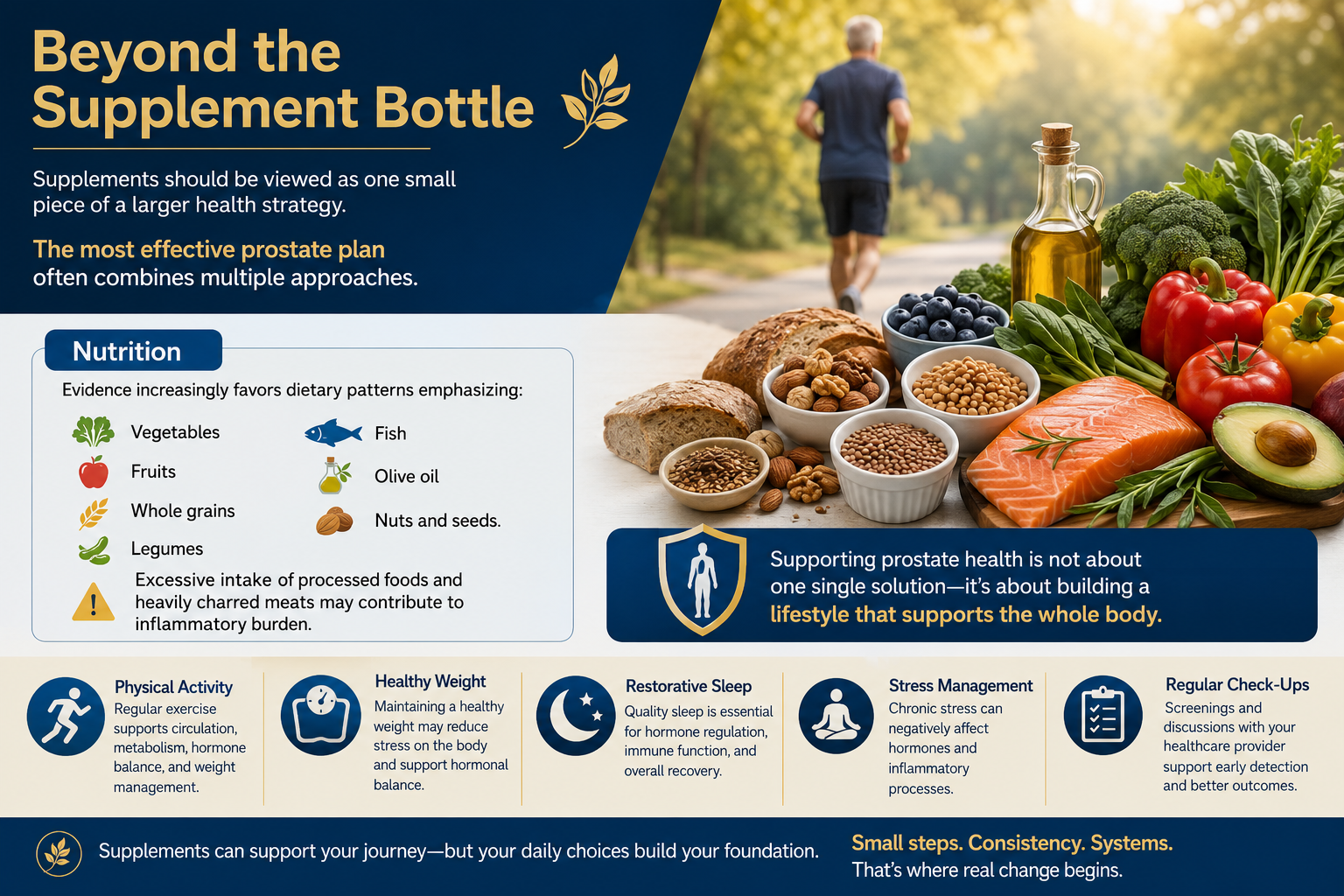
When discussing prostate health, many people immediately think of supplements. While certain evidence-informed supplements may play a supportive role for some individuals, they should never be viewed as a complete solution. Prostate health is influenced by a complex interaction of metabolism, hormones, immune function, inflammation, circulation, body composition, aging, genetics, and everyday lifestyle habits. A systems-based approach recognizes that lasting wellness is built from multiple healthy behaviors working together rather than relying on a single product.
Nutrition remains one of the strongest lifestyle factors associated with healthy aging and prostate wellness. Research increasingly supports dietary patterns centered on vegetables, fruits, whole grains, legumes, fish, olive oil, nuts, and seeds. These foods provide fiber, vitamins, minerals, healthy fats, antioxidants, and plant compounds that help support normal cellular function and maintain the body’s natural balance. Fatty fish also provide omega-3 fatty acids, while colorful fruits and vegetables supply a wide variety of protective phytochemicals that contribute to overall health.
Equally important is reducing foods that may contribute to chronic metabolic stress. Diets high in ultra-processed foods, refined sugars, excessive saturated fats, and heavily charred or processed meats have been associated with increased oxidative stress and low-grade inflammation. Although no single food determines prostate health, long-term dietary patterns may influence the internal environment in which tissues function.
Regular physical activity is another cornerstone of prostate wellness. Exercise supports healthy body weight, improves insulin sensitivity, enhances cardiovascular function, promotes efficient circulation, and helps regulate hormones that influence overall metabolic health. Both aerobic exercise and resistance training contribute unique benefits. Even moderate daily activities such as brisk walking, cycling, swimming, or gardening can improve physical fitness and support healthy aging.
Sleep should not be overlooked. During deep sleep, the body performs essential processes related to immune regulation, hormone balance, tissue maintenance, brain recovery, and metabolic regulation. Persistent sleep deprivation may disrupt cortisol rhythms, glucose control, and inflammatory pathways that influence many aspects of long-term health. Establishing consistent sleep habits therefore represents an important investment in whole-body wellness.
Stress management also deserves attention. Chronic psychological stress activates the body’s stress response systems, increasing cortisol and other signaling molecules that may affect immune function, metabolism, and inflammatory balance. Mindfulness, meditation, breathing exercises, social connection, enjoyable hobbies, and regular physical activity all help promote healthier nervous system regulation.
Routine medical care completes the picture. Regular discussions with healthcare professionals allow individuals to monitor age-appropriate prostate health, evaluate urinary symptoms, review medications, assess risk factors, and determine whether additional testing is appropriate. Early evaluation of new or persistent symptoms is always preferable to waiting until problems become more advanced.
For individuals who choose to use prostate-support supplements, they are best viewed as complementary tools within this broader lifestyle framework. No supplement can replace nutritious eating, consistent exercise, restorative sleep, stress management, healthy body composition, or preventive medical care. Instead, supplements may serve as one component of an integrated wellness strategy designed to support overall physiological resilience.
Ultimately, prostate health reflects the health of the entire body. By combining evidence-informed nutrition, regular movement, quality sleep, effective stress management, preventive healthcare, and appropriate supplementation when indicated, individuals create a stronger foundation for healthy aging. Sustainable daily habits—not quick fixes—offer the greatest opportunity to preserve vitality, maintain function, and support long-term prostate wellness throughout life.

Beyond the Supplement Bottle
Supplements should be viewed as one small piece of a larger health strategy.
The most effective prostate plan often combines multiple approaches.
Nutrition
Evidence increasingly favors dietary patterns emphasizing:
• Vegetables
• Fruits
• Whole grains
• Legumes
• Fish
• Olive oil
• Nuts and seeds
Excessive intake of processed foods and heavily charred meats may contribute to inflammatory burden.
Movement
Regular exercise may help support:
• Hormonal balance
• Weight management
• Insulin sensitivity
• Circulation
• Lower urinary tract function
Even moderate activity can make a meaningful difference.
Sleep
Poor sleep has been associated with:
• Metabolic dysfunction
• Increased inflammation
• Hormonal disruption
Restorative sleep supports whole-body resilience.
Stress Management
The nervous system influences urinary urgency and pelvic tension.
Mind-body practices may assist symptom perception and coping.
Examples include:
• Meditation
• Breathing exercises
• Walking outdoors
• Yoga
Medical Partnership
Consult a healthcare professional promptly if you experience:
• Blood in urine
• Inability to urinate
• Fever
• Significant pain
• Rapid symptom progression
• Unexplained weight loss
Supplements should complement—not replace—professional evaluation.
The Bottom Line
What science suggests is refreshingly straightforward:
Some prostate supplements may modestly improve urinary symptoms.
They are generally most useful for mild complaints.
Their effects are often gradual.
Results vary among individuals.
No supplement has been proven to cure BPH or prevent prostate cancer.
The strongest foundation for lifelong prostate health remains remarkably familiar:
Eat well.
Move regularly.
Sleep deeply.
Maintain metabolic health.
Stay informed.
Seek appropriate screening.
Aging is inevitable.
Suffering unnecessarily is not.
An evidence-based, prevention-first approach allows men to navigate prostate health with confidence, realism, and a commitment to long-term well-being.
This educational review examines one popular prostate support supplement by discussing its ingredient profile, formulation principles, and general wellness rationale. The goal is to help readers make more informed decisions based on transparent information rather than marketing claims alone.