
Deep Sleep and REM Sleep: The Architecture of Restoration
How Sleep Stages Restore the Body and Brain?
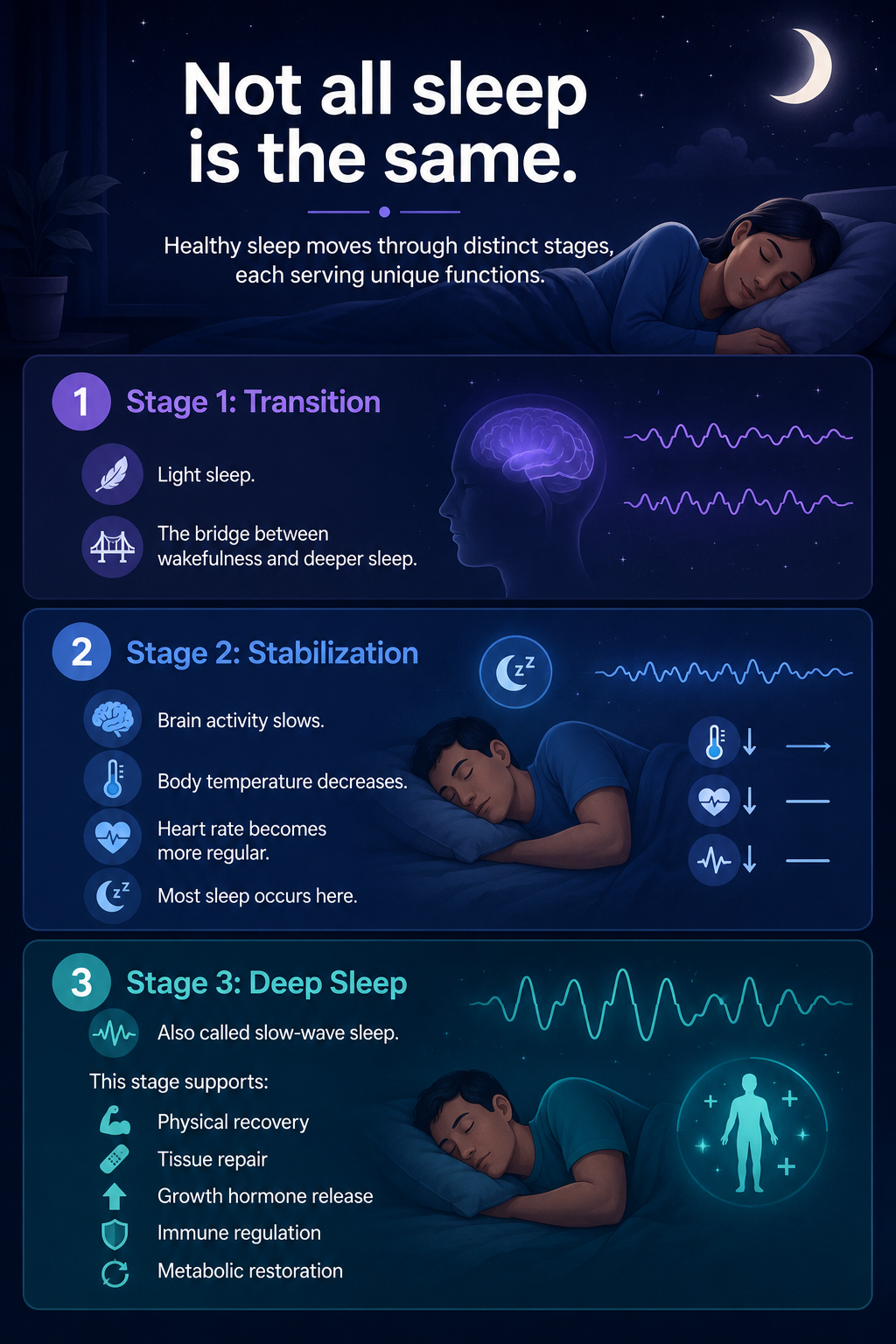
Healthy sleep is not a single, uniform state but a carefully organized biological process that cycles through several stages throughout the night. Each stage contributes differently to physical health, brain function, and long-term metabolic resilience. A complete sleep cycle typically repeats every 90 to 120 minutes, allowing the body to perform a wide range of restorative tasks.
Stage 1 is the transition from wakefulness to sleep. During this brief period, muscle activity slows, breathing becomes more regular, and the brain begins shifting away from conscious awareness. Stage 2 represents stable light sleep, where heart rate and body temperature decline while brain activity becomes more synchronized. Because this stage occupies the largest portion of the night, it plays an important role in preparing the body for deeper restoration.
Stage 3, also known as slow-wave or deep sleep, is the most physically restorative stage. During deep sleep, growth hormone release increases, damaged tissues are repaired, immune function is strengthened, and energy stores are replenished. This stage also supports healthy glucose regulation, cardiovascular recovery, and cellular maintenance. Insufficient deep sleep has been associated with impaired recovery, reduced physical performance, and metabolic dysfunction.
Healthy aging depends not only on sleeping long enough but also on obtaining sufficient amounts of each sleep stage. Protecting sleep quality through consistent routines, stress management, physical activity, and a supportive sleep environment helps optimize the body’s natural recovery systems every night.
Not all sleep is the same.
Healthy sleep moves through distinct stages, each serving unique functions.
REM Sleep: The Brain’s Nighttime Laboratory
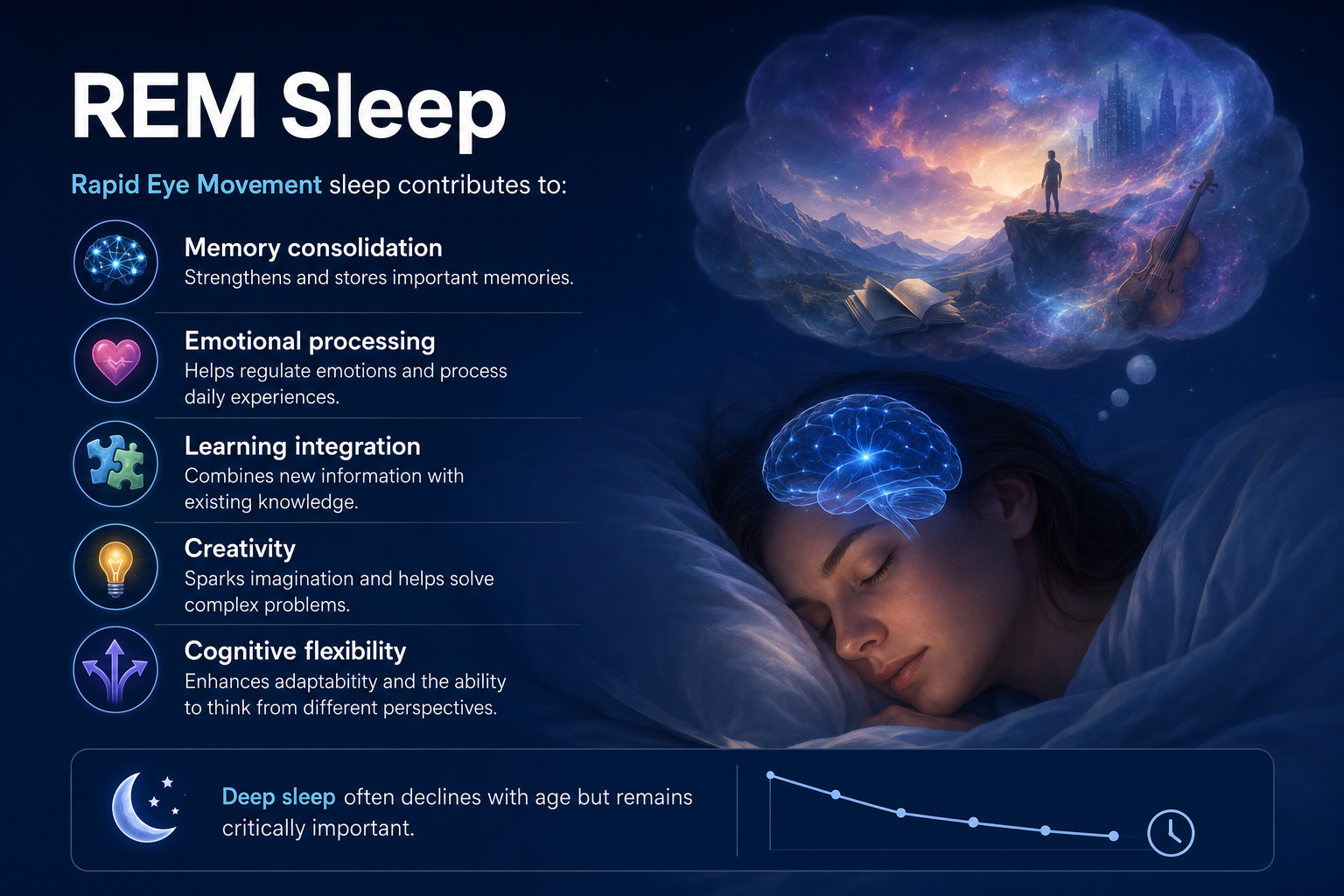
While deep sleep is essential for physical restoration, REM (Rapid Eye Movement) sleep serves as one of the brain’s most active and sophisticated periods of recovery. During REM sleep, brain activity increases, vivid dreaming becomes more common, and complex neural networks work together to strengthen cognitive performance and emotional resilience. Although deep sleep often decreases with age, maintaining healthy REM sleep remains equally important for lifelong brain health.
One of REM sleep’s primary functions is memory consolidation. Throughout the day, the brain continuously gathers new information. During REM sleep, these experiences are reorganized, integrated with existing knowledge, and selectively stored for long-term recall. This process supports learning, academic performance, and the formation of lasting memories.
REM sleep also plays a major role in emotional processing. Neural circuits involved in emotion regulation—including connections between the amygdala and prefrontal cortex—become highly active, allowing the brain to process emotional experiences, reduce stress responses, and improve psychological resilience. Individuals with insufficient REM sleep may experience greater emotional reactivity, irritability, and difficulty coping with daily challenges.
Another important function is learning integration. Rather than simply storing isolated facts, the brain identifies meaningful patterns and relationships between different pieces of information. This integration enhances problem-solving ability, decision-making, and the application of knowledge in real-world situations.
Researchers also associate REM sleep with creativity and cognitive flexibility. During dreaming, the brain forms novel connections between ideas that might not emerge during waking consciousness. These unique neural interactions may contribute to creative thinking, innovation, and adaptive reasoning.
Healthy REM sleep depends on the same lifestyle factors that support overall sleep quality: consistent sleep schedules, adequate sleep duration, regular physical activity, stress management, balanced nutrition, and limited exposure to bright light before bedtime. By protecting REM sleep alongside deep sleep, individuals support memory, emotional well-being, lifelong learning, and long-term cognitive vitality as part of a comprehensive strategy for healthy aging.
Deep sleep often declines with age but remains critically important.
Why Sleep Quality Matters
Why Sleep Quality Matters?
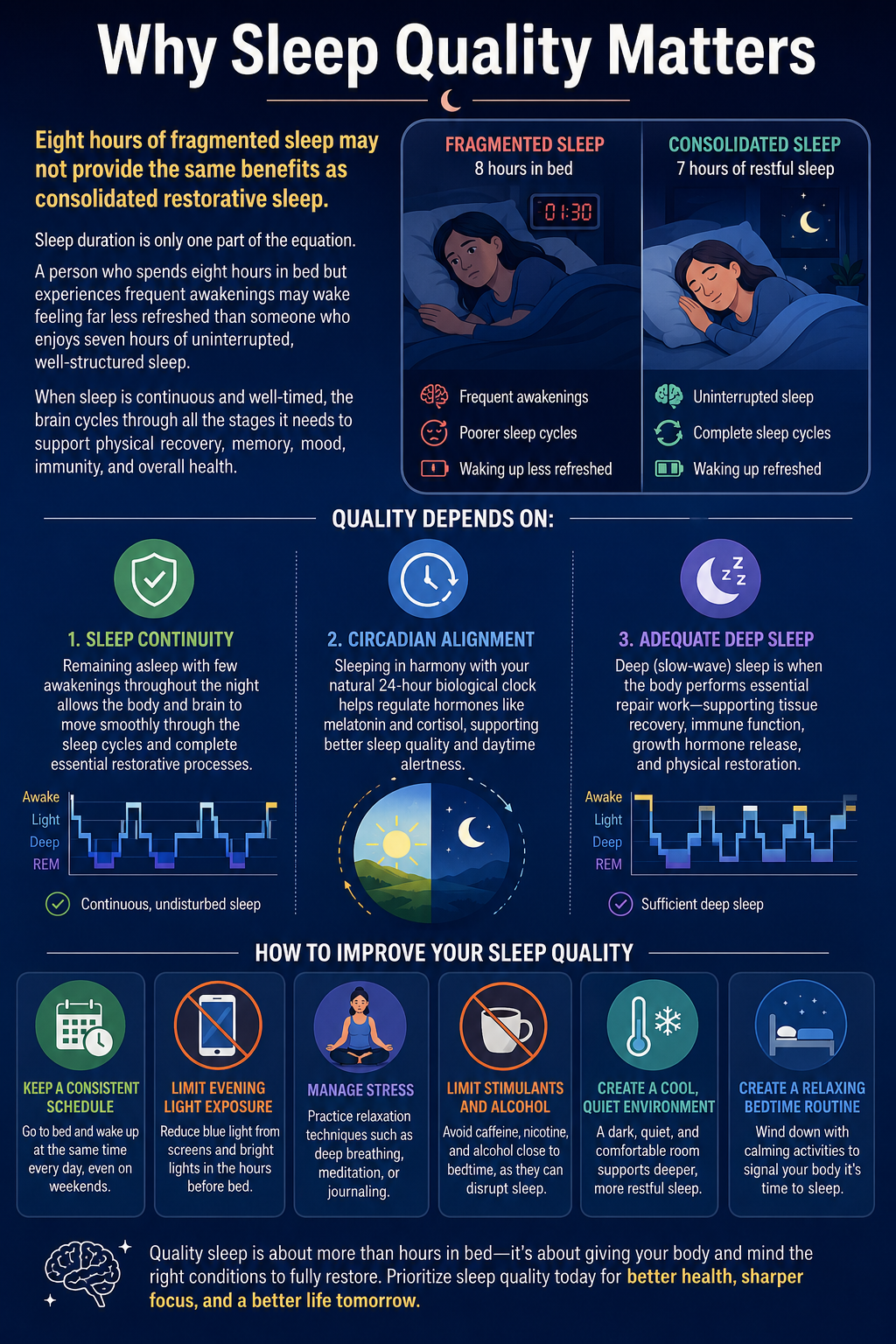
Sleep duration is only one part of the equation. The restorative value of sleep depends just as much on its quality. A person who spends eight hours in bed but experiences frequent awakenings may wake feeling far less refreshed than someone who enjoys seven hours of uninterrupted, well-structured sleep. During the night, the brain cycles through carefully coordinated sleep stages, each supporting physical recovery, memory processing, emotional regulation, immune function, and metabolic health. When these cycles are repeatedly interrupted, the body has fewer opportunities to complete these essential restorative processes.
High-quality sleep is characterized by smooth transitions through the normal sleep stages with minimal disruptions. Consistent sleep timing also helps synchronize the body’s internal biological clock, allowing hormones such as melatonin and cortisol to follow their natural rhythms. This circadian alignment supports more efficient recovery and better daytime alertness.
Several key factors influence sleep quality:
- Sleep continuity — Remaining asleep with few awakenings throughout the night.
- Circadian alignment — Sleeping in harmony with the body’s natural 24-hour biological clock.
- Adequate deep sleep — Spending sufficient time in slow-wave sleep, which supports tissue repair, immune regulation, growth hormone release, and physical recovery.
Improving sleep quality often begins with simple lifestyle habits such as maintaining a consistent sleep schedule, reducing evening light exposure, managing stress, limiting late-night stimulants, and creating a cool, quiet sleeping environment. These practices help the brain and body obtain the restorative sleep needed to support long-term health, cognitive performance, and healthy aging.
Eight hours of fragmented sleep may not provide the same benefits as consolidated restorative sleep.
Quality depends on:
• Sleep continuity
• Circadian alignment
• Adequate deep sleep
• Healthy REM cycling
Supporting Sleep Architecture

Habits that may promote healthier sleep cycles include:
✓ Regular schedules
✓ Physical activity
✓ Cooler bedroom temperatures
✓ Reduced alcohol intake
✓ Limited caffeine late in the day
✓ Stress management practices
The goal is not merely longer sleep.
The goal is restorative sleep that allows the brain and body to complete their nightly maintenance programs.
During deep sleep, the brain activates critical restoration systems linked to cellular repair, glymphatic clearance, inflammation control, and neural recovery.
Poor sleep does not simply cause fatigue — it may gradually influence metabolism, stress biology, cognitive aging, and whole-body resilience over time.
Sleep is not passive inactivity.
It is one of the body’s most important biological recovery systems.