
Why Mental Overload Has Become a Modern Epidemic
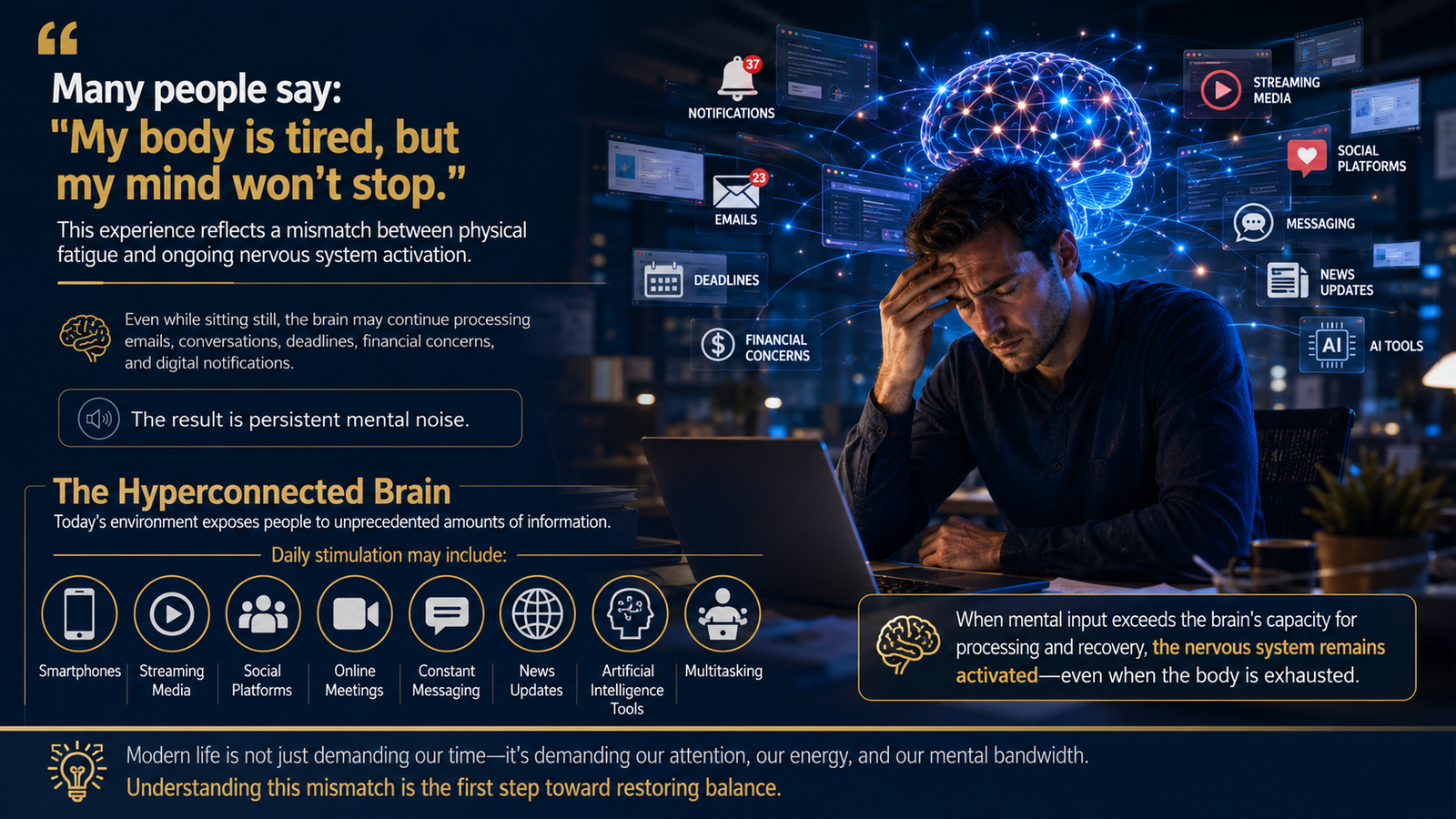
This figure illustrates a common experience in modern life: the body feels physically exhausted, yet the mind remains intensely active. Rather than entering a state of relaxation, the brain continues processing work responsibilities, financial concerns, digital notifications, social interactions, and countless streams of information. This mismatch between physical fatigue and persistent nervous system activation may make it difficult to unwind, concentrate, or transition into restful sleep.
The concept of the “hyperconnected brain” reflects the unprecedented cognitive demands created by today’s digital environment. Smartphones, streaming media, social platforms, online meetings, instant messaging, news updates, artificial intelligence tools, and constant multitasking continually compete for attention. While these technologies improve communication and productivity, they also increase cognitive load and reduce opportunities for genuine mental recovery.
Over time, sustained mental stimulation may contribute to elevated stress, reduced attention span, emotional fatigue, and difficulty disengaging from daily demands. Although the brain is highly adaptable, it also requires periods of quiet, restoration, and uninterrupted rest to maintain optimal function. Creating intentional moments of digital disconnection, practicing relaxation techniques, engaging in regular physical activity, and maintaining consistent sleep habits can help restore balance between the brain and body. Supporting healthy nervous system regulation is an important component of long-term cognitive performance, emotional resilience, and overall well-being.
Many people say:
“My body is tired, but my mind won’t stop.”
This experience reflects a mismatch between physical fatigue and ongoing nervous system activation.
Even while sitting still, the brain may continue processing emails, conversations, deadlines, financial concerns, and digital notifications.
The result is persistent mental noise.
The Hyperconnected Brain
Today’s environment exposes people to unprecedented amounts of information.
Daily stimulation may include:
- Smartphones
- Streaming media
- Social platforms
- Online meetings
- Constant messaging
- News updates
- Artificial intelligence tools
- Multitasking
Each source competes for limited attention.
Over time, attention becomes fragmented.
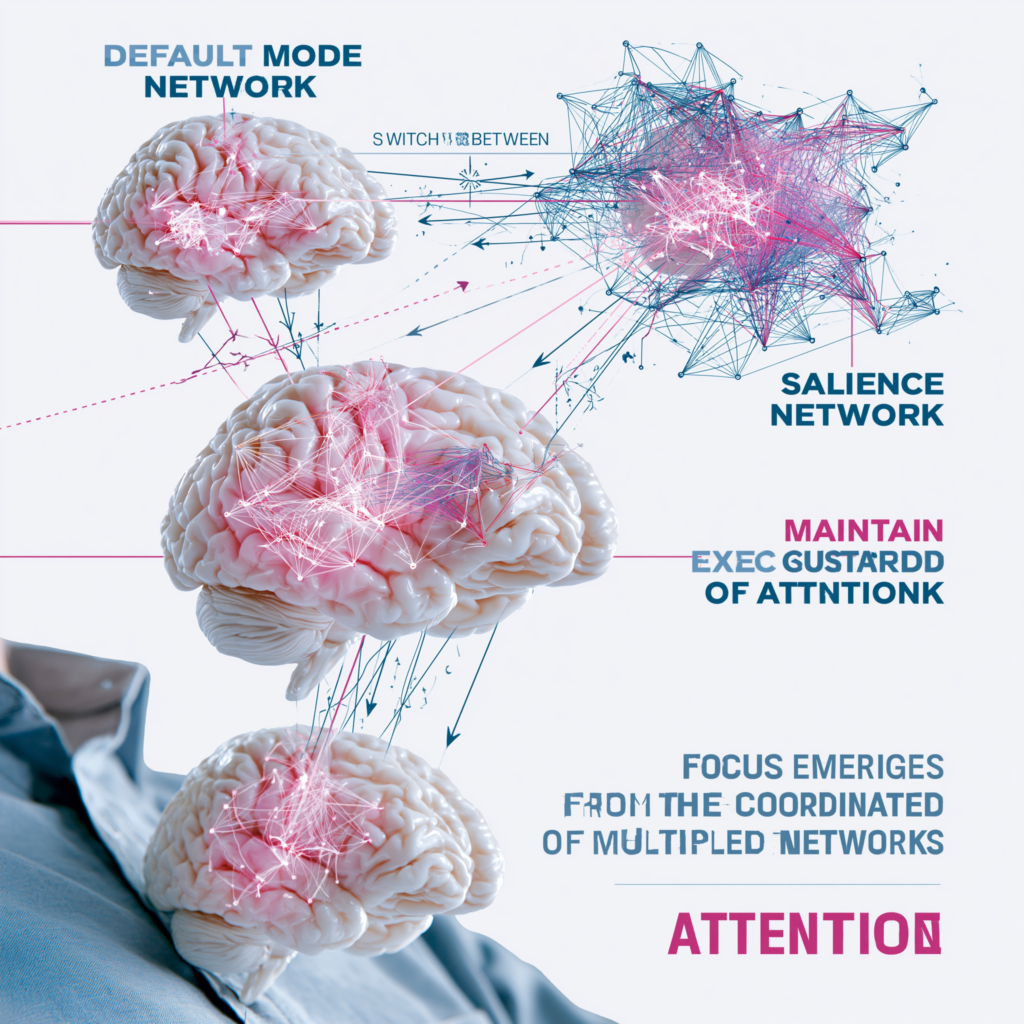
Instead of deep focus, many people experience continuous partial attention.
The Stress Response
The sympathetic nervous system prepares the body for challenge.
Heart rate rises.
Attention narrows.
Stress hormones increase.
This response is highly adaptive during emergencies.
Problems arise when activation becomes chronic.
Long-term sympathetic dominance may contribute to:
- Difficulty relaxing
- Poor sleep
- Muscle tension
- Mental fatigue
- Reduced concentration
- Emotional irritability
Many wellness practices attempt to encourage a shift toward parasympathetic recovery.
Audio as a Relaxation Ritual
The Brain Song™ encourages users to pause external stimulation.
During listening sessions, individuals may naturally:
- Sit quietly
- Slow breathing
- Reduce multitasking
- Close their eyes
- Shift attention inward
These behaviors themselves are already associated with improved relaxation.
The audio becomes part of a broader self-care routine rather than an isolated intervention.
Creating Cognitive Recovery
Elite athletes understand the importance of recovery.
Training without rest eventually reduces performance.
The brain follows similar principles.
Mental recovery allows attention, emotional regulation, and decision-making systems to reset.
Even brief periods of intentional calm throughout the day may improve overall wellbeing.
Rather than chasing constant productivity, The Brain Song™ promotes sustainable cognitive balance.
Ready to experience The Brain Song™ for yourself?
Understanding the science is only the beginning. The true value of audio wellness emerges through consistent practice. Explore how The Brain Song™ can become part of your daily rhythm—supporting moments of focus, emotional balance, cognitive relaxation, and mental recovery through intentional listening habits.