
Aging and Vascular Function
Understanding Vascular Aging Through a Systems-Based Perspective
Healthy circulation is one of the body’s most essential physiological functions. Every second, the cardiovascular system delivers oxygen, nutrients, hormones, and immune cells to trillions of cells while simultaneously removing carbon dioxide and metabolic waste. This remarkable transportation network depends not only on the heart itself but also on the health of blood vessels, the endothelium, the nervous system, metabolism, and the body’s ability to regulate inflammation. As people grow older, these interconnected systems gradually undergo biological changes that may influence circulation efficiency and overall physical resilience.
One important aspect of vascular aging involves the gradual reduction in blood vessel flexibility. Young, healthy arteries naturally expand and contract with each heartbeat, helping blood flow efficiently throughout the body. Over time, however, structural proteins within vessel walls may change, oxidative stress may accumulate, and chronic low-grade inflammation may affect endothelial function. These age-related changes can reduce vascular elasticity, making circulation less efficient and increasing the workload placed on the cardiovascular system.
The endothelium—the thin layer of cells lining the inside of every blood vessel—plays a particularly important role in vascular health. Rather than serving as a passive barrier, the endothelium functions as an active communication center that regulates blood vessel relaxation, blood clotting, immune signaling, and inflammatory responses. Healthy endothelial cells help maintain balanced circulation by producing signaling molecules, including nitric oxide, which supports normal blood vessel dilation and healthy blood flow. Preserving endothelial function is therefore considered an important component of long-term cardiovascular wellness.
Lifestyle choices strongly influence these biological processes throughout life. Regular physical activity stimulates healthy circulation, encourages natural nitric oxide production, and helps maintain vascular flexibility. Aerobic exercise, resistance training, and daily movement each contribute to improved cardiovascular efficiency while supporting metabolic health. Even moderate activities such as brisk walking or cycling can positively influence endothelial function when performed consistently over time.
Nutrition provides another foundation for vascular resilience. Diets emphasizing vegetables, fruits, legumes, whole grains, fish, nuts, seeds, and healthy unsaturated fats supply vitamins, minerals, antioxidants, and plant compounds that help support normal vascular function. At the same time, maintaining healthy blood sugar regulation and limiting excessive intake of highly processed foods may help reduce oxidative stress and inflammatory burden that can affect blood vessels over many years.
Sleep quality also plays a central role in cardiovascular recovery. During restorative sleep, the body performs numerous maintenance processes that influence hormone regulation, autonomic nervous system balance, immune activity, and metabolic function. Chronic sleep deprivation has been associated with impaired endothelial function, elevated stress hormone levels, and reduced cardiovascular resilience. Consistent sleep habits therefore complement other healthy lifestyle practices that support circulation across the lifespan.
Stress management represents another often-overlooked contributor to vascular wellness. Persistent psychological stress activates the sympathetic nervous system and elevates stress hormones that may temporarily increase heart rate and blood pressure. Incorporating relaxation techniques such as mindfulness, breathing exercises, regular physical activity, and adequate recovery may help support healthier autonomic balance and promote long-term cardiovascular health.
The Nitric Boost Guide presents these concepts through a systems-based educational framework rather than focusing on a single nutrient or isolated intervention. It explains how vascular function is influenced by the interaction of nitric oxide signaling, endothelial biology, mitochondrial energy production, metabolic health, physical activity, recovery, sleep, and healthy lifestyle habits. By connecting these physiological systems, readers gain a broader understanding of why circulation depends on the coordinated function of the entire body rather than any single organ or supplement.
Ultimately, healthy circulation reflects the combined effects of daily behaviors practiced consistently over time. While aging is inevitable, many aspects of vascular health remain modifiable through evidence-informed lifestyle choices. Supporting blood vessel flexibility, endothelial function, metabolic resilience, and cardiovascular fitness can contribute to healthier aging, improved physical performance, greater energy, and long-term wellness. Understanding how these interconnected systems work together empowers individuals to make informed decisions that promote cardiovascular health throughout every stage of life.
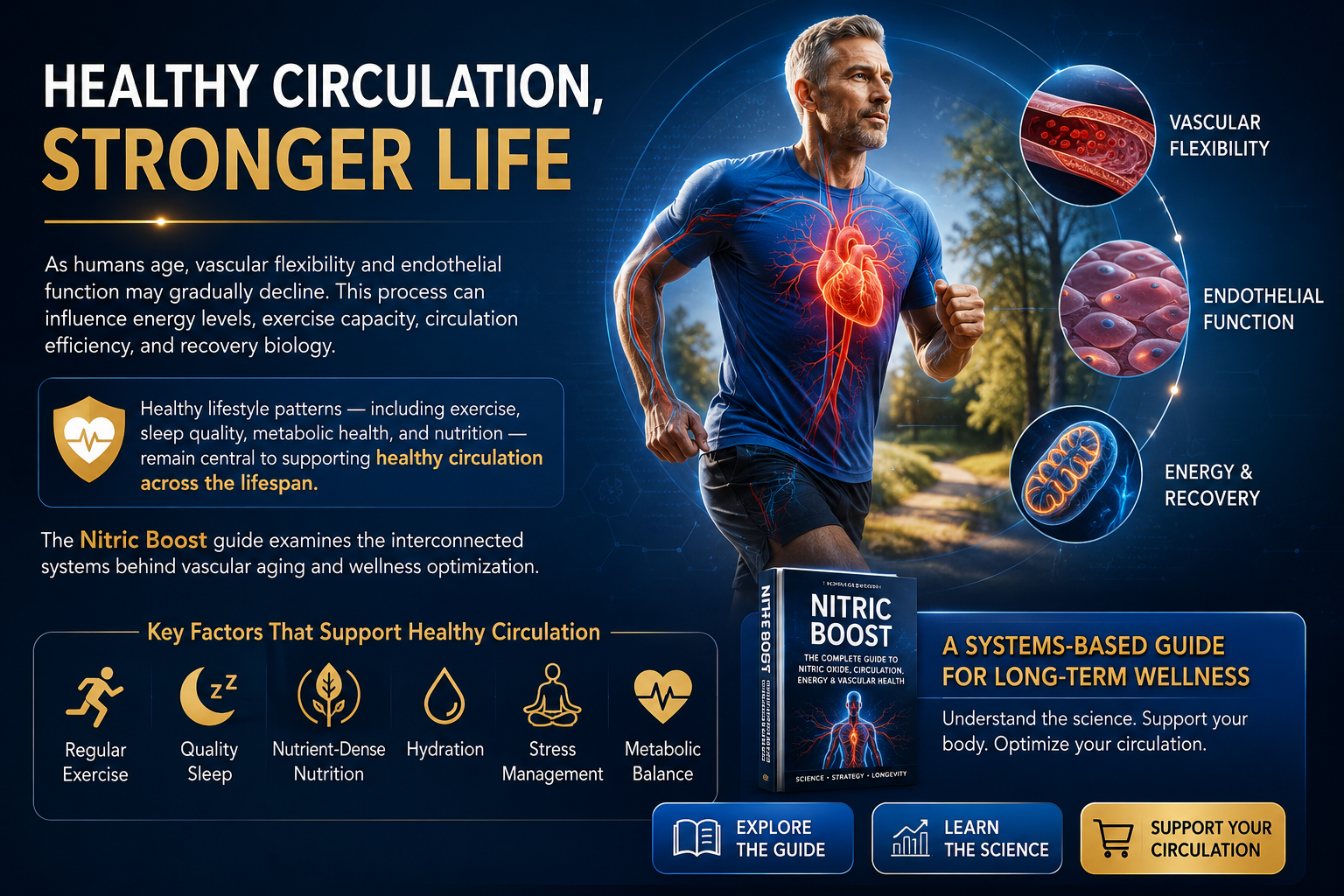
As humans age, vascular flexibility and endothelial function may gradually decline. This process can influence energy levels, exercise capacity, circulation efficiency, and recovery biology.
Healthy lifestyle patterns — including exercise, sleep quality, metabolic health, and nutrition — remain central to supporting healthy circulation across the lifespan.
Exercise and Nitric Oxide: The Natural Pathway to Better Circulation
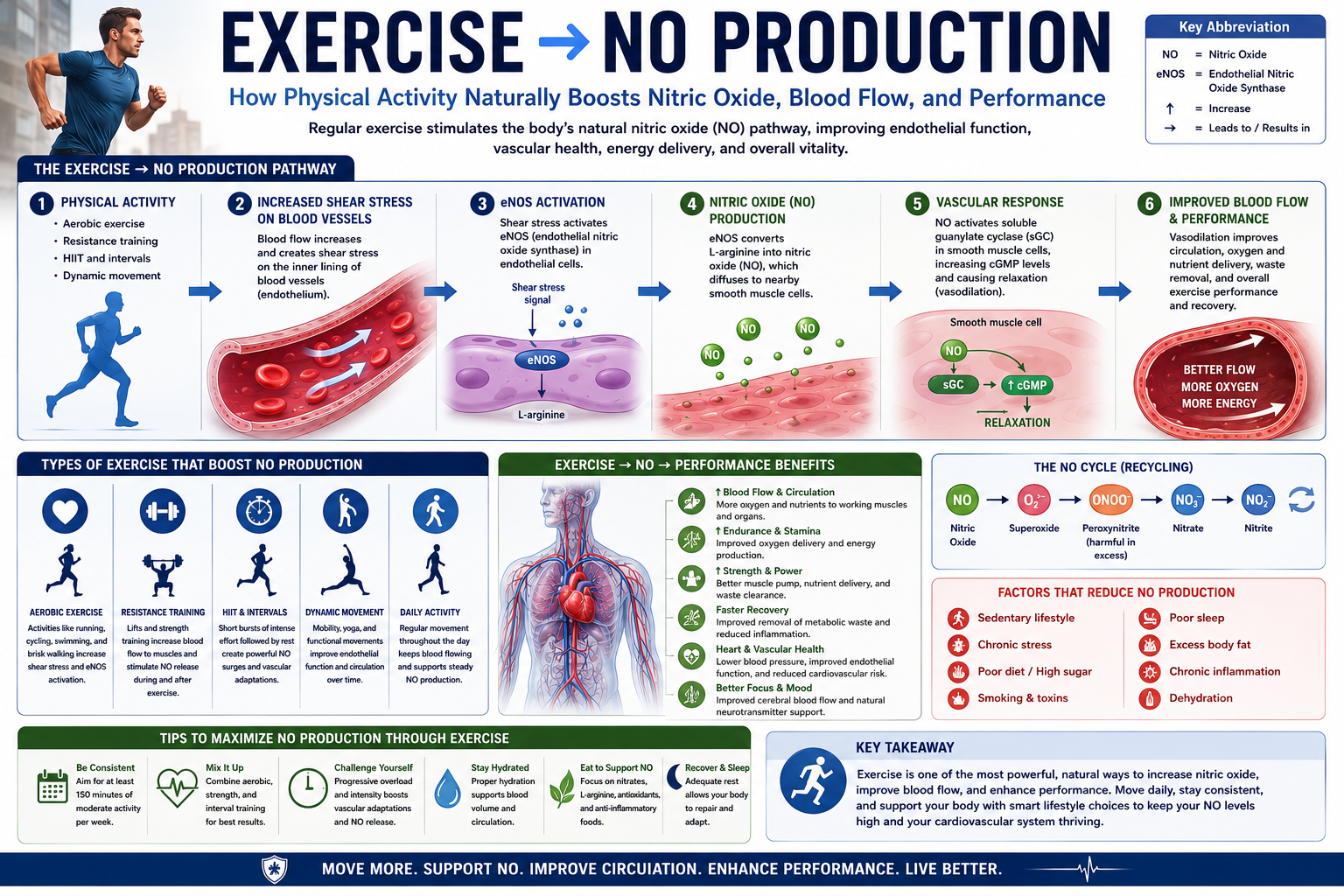
Regular physical activity is one of the most effective natural ways to support the body’s production of nitric oxide (NO), a key signaling molecule that helps maintain healthy blood vessel function. As exercise begins, increased blood flow creates gentle shear stress along the endothelial lining of blood vessels. This mechanical stimulus activates endothelial nitric oxide synthase (eNOS), the enzyme responsible for converting L-arginine into nitric oxide. Once released, nitric oxide relaxes the surrounding smooth muscle, allowing blood vessels to widen and improving circulation throughout the body.
Enhanced blood flow delivers more oxygen and nutrients to working muscles while helping remove metabolic waste products generated during exercise. These physiological changes contribute to improved endurance, greater exercise performance, faster recovery, and healthier cardiovascular function. Over time, consistent physical activity also helps preserve endothelial health, support metabolic balance, and maintain vascular flexibility as part of the natural aging process.
Different forms of exercise—including aerobic training, resistance exercise, high-intensity interval training (HIIT), and daily movement—all stimulate nitric oxide production through complementary mechanisms. When combined with adequate sleep, balanced nutrition, proper hydration, and stress management, exercise becomes a cornerstone of lifelong vascular health.
This systems-based pathway illustrates that nitric oxide production is not driven by a single factor but by the coordinated interaction of movement, metabolism, endothelial biology, and healthy lifestyle habits. By exercising regularly, individuals can naturally support circulation, cardiovascular resilience, energy production, and long-term healthy aging.
The Nitric Boost guide examines the interconnected systems behind vascular aging and wellness optimization.
#HealthyAging #EndothelialHealth #BloodFlow #NitricOxide #ExerciseRecovery #CardioHealth #LongevityScience #WellnessJourney #Metabolism #RecoveryBiology
Improving circulation is not about finding a single miracle solution—it begins with understanding how nitric oxide, vascular function, nutrition, movement, recovery, and healthy lifestyle habits work together. Before considering any supplement, explore the science behind healthy blood flow and learn which evidence-based strategies may help support long-term cardiovascular wellness and overall vitality.