
Why Human Health Is a System—Not a Collection of Separate Organs
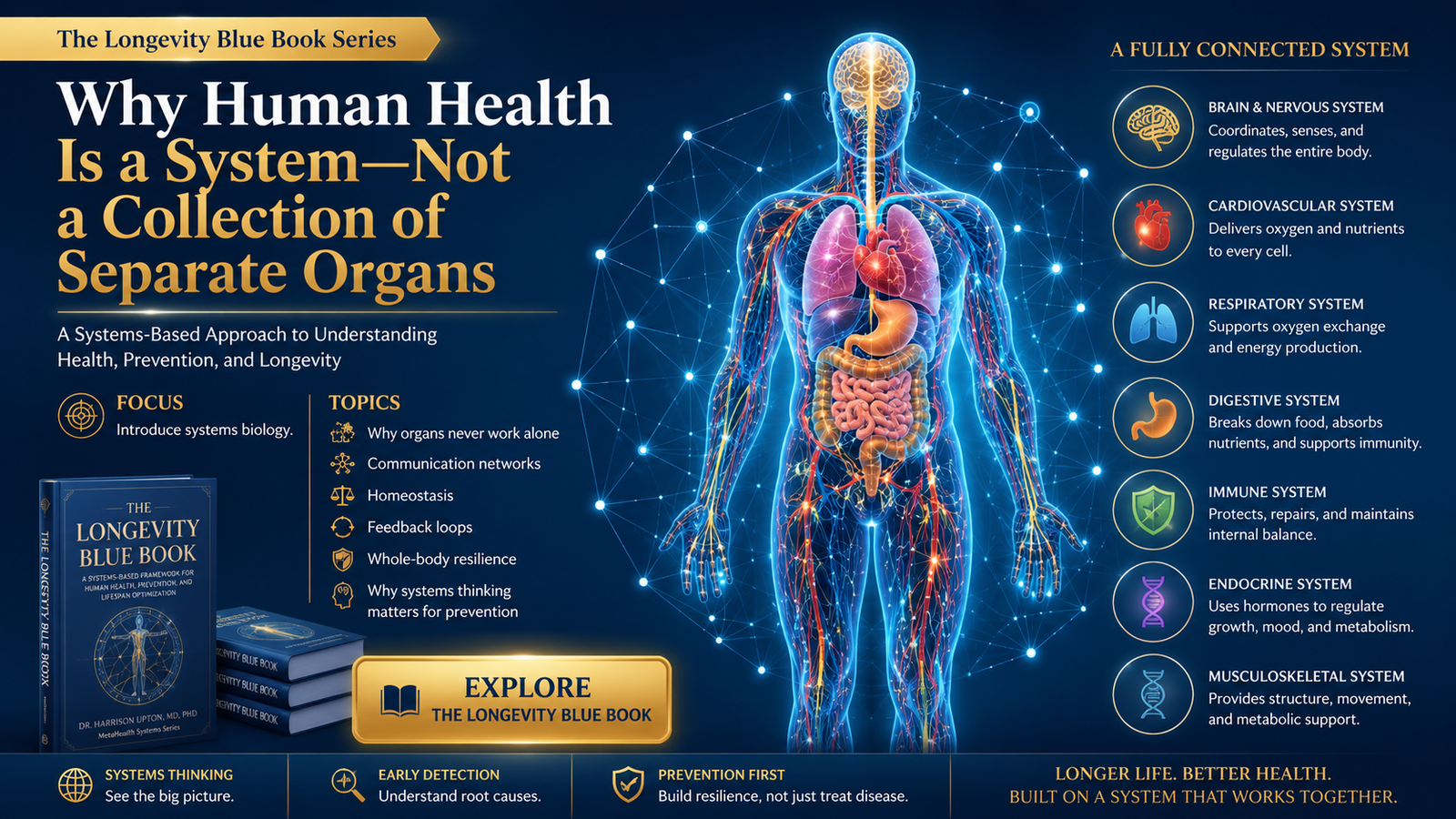
Modern medicine has produced remarkable advances by studying individual organs in extraordinary detail. Specialists understand the heart, brain, lungs, kidneys, liver, immune system, and endocrine glands with increasing precision. Yet one of the most important lessons emerging from systems biology is that no organ functions independently. Every cell, tissue, and organ constantly exchanges information with countless others through complex biological communication networks.
The human body operates as a highly integrated system rather than a collection of isolated parts. The brain communicates through electrical impulses and neurotransmitters. Hormones released by endocrine glands travel through the bloodstream to coordinate metabolism, growth, reproduction, and stress responses. The immune system continuously exchanges molecular signals with the nervous system, digestive tract, and circulatory system. Even the trillions of microorganisms within the gut microbiome influence immune regulation, nutrient metabolism, inflammation, and brain function through biochemical signaling pathways.
These interactions create an extraordinary level of coordination known as biological homeostasis. Homeostasis refers to the body’s ability to maintain a relatively stable internal environment despite constant changes occurring both inside and outside the body. Blood pressure, body temperature, blood glucose, oxygen delivery, electrolyte balance, hydration, immune activity, and hormone concentrations are continuously monitored and adjusted through interconnected control systems.
Central to homeostasis are feedback loops. Negative feedback mechanisms help maintain stability by correcting deviations from normal ranges. For example, when blood glucose rises after a meal, insulin helps transport glucose into cells and promotes energy storage. As glucose levels return toward normal, insulin secretion decreases. Similar regulatory loops govern blood pressure, calcium balance, thyroid hormones, sleep-wake cycles, and countless other physiological processes.
Positive feedback loops also exist but are used more selectively, typically to amplify important biological events such as blood clotting, childbirth, or certain immune responses. Together, these feedback systems allow the body to respond dynamically to changing conditions while preserving internal balance.
Because every biological system communicates with many others, dysfunction rarely remains confined to a single organ. Chronic sleep deprivation may impair glucose regulation, elevate stress hormones, weaken immune function, increase inflammation, and reduce cognitive performance. Likewise, persistent psychological stress influences cardiovascular function, digestive health, hormonal balance, metabolism, and recovery. Poor nutrition may affect mitochondrial energy production, vascular function, brain performance, immune resilience, and healthy aging simultaneously.
Viewing health through a systems perspective helps explain why many chronic conditions share overlapping biological pathways. Inflammation, oxidative stress, insulin resistance, endothelial dysfunction, mitochondrial impairment, circadian disruption, and hormonal imbalance often interact with one another rather than acting independently. Addressing only one symptom without considering these interconnected mechanisms may overlook important contributors to long-term health.
This systems-based understanding also highlights why lifestyle habits can produce broad physiological benefits. Regular physical activity improves cardiovascular fitness, supports insulin sensitivity, enhances mitochondrial function, strengthens muscles and bones, promotes brain health, and reduces inflammatory burden. Quality sleep supports memory consolidation, immune regulation, hormonal balance, metabolic recovery, and tissue repair. Nutrient-dense dietary patterns provide the building blocks required for cellular maintenance while supporting healthy gut microbial diversity and energy metabolism.
Rather than searching for a single intervention capable of solving every health problem, systems biology encourages strengthening the resilience of the entire biological network. Resilience refers to the body’s capacity to adapt to physical, metabolic, emotional, and environmental challenges while maintaining healthy function. The stronger and more adaptable these interconnected systems become, the better the body can respond to stressors across the lifespan.
This perspective has important implications for preventive medicine. Instead of waiting for disease to develop within a specific organ, prevention seeks to preserve the communication networks that support whole-body function. Monitoring metabolic health, maintaining healthy circulation, supporting sleep quality, reducing chronic inflammation, managing stress, staying physically active, and eating a balanced diet all contribute to the integrity of these interconnected systems.
Understanding human health as an integrated biological ecosystem represents a shift from reductionist thinking toward a more comprehensive model of lifelong wellness. By recognizing that every organ participates in a coordinated network, we gain a deeper appreciation of how everyday lifestyle choices influence long-term vitality. Systems thinking reminds us that protecting health is not simply about treating individual organs—it is about maintaining the remarkable communication, balance, and resilience that allow the entire human body to function as one unified system.
Focus
Introduce systems biology.
Topics
- Why organs never work alone
- Communication networks
- Homeostasis
- Feedback loops
- Whole-body resilience
- Why systems thinking matters for prevention
Whole-Body Integration: The Foundation of Health and Longevity
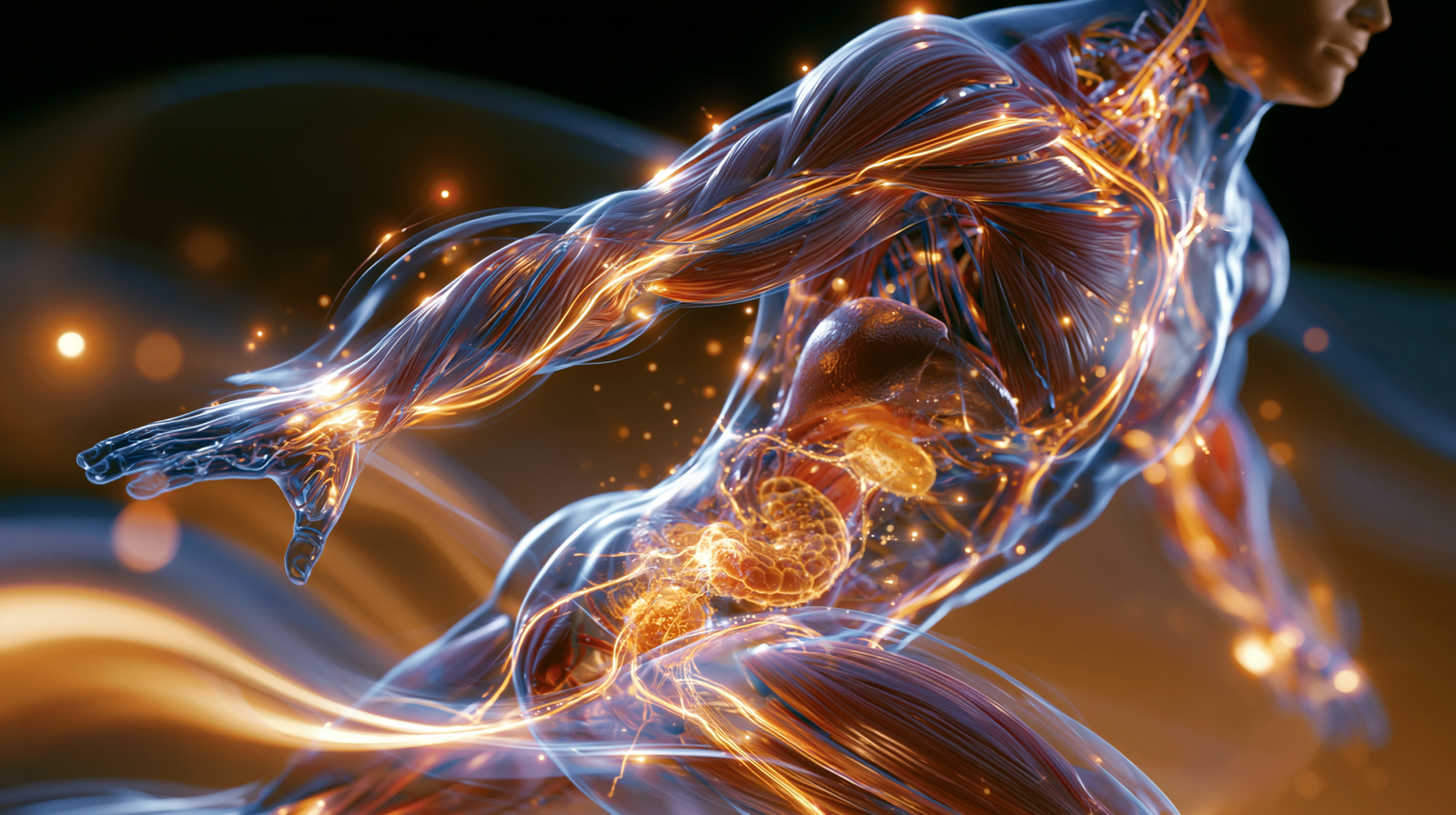
Figure Description — The Human Body as an Integrated Biological System
This dynamic illustration portrays the human body as a single interconnected biological network rather than a collection of independent organs. A translucent anatomical figure is shown in motion, symbolizing vitality, adaptability, and continuous physiological communication. Glowing golden pathways flow throughout the body, representing the transmission of electrical signals, hormones, nutrients, oxygen, and biochemical messengers that coordinate function across multiple organ systems.
Visible structures—including the brain, heart, lungs, digestive organs, muscles, and vascular pathways—highlight the remarkable integration required to sustain life. No organ functions in isolation. Instead, the nervous, cardiovascular, endocrine, immune, respiratory, digestive, and musculoskeletal systems communicate continuously through complex feedback loops that maintain internal stability despite changing environmental demands.
The flowing streams of light emphasize homeostasis—the body’s ability to regulate temperature, metabolism, circulation, energy production, and cellular repair through coordinated biological signaling. Motion further symbolizes resilience, illustrating how healthy physiology depends on constant adaptation rather than static balance.
This figure also reflects the central concept of systems biology: health emerges from interactions among networks rather than from any single organ alone. Disturbances in one physiological system can influence many others, while healthy lifestyle habits—including physical activity, quality sleep, balanced nutrition, stress management, and metabolic health—can strengthen multiple systems simultaneously.
As an introductory visual for The Longevity Blue Book, this illustration reinforces the idea that preventive medicine should focus on preserving communication, integration, and resilience across the entire human organism. Understanding the body as a unified biological ecosystem provides the foundation for promoting lifelong health, functional longevity, and whole-body wellness.
Understanding the science behind longevity is the first step toward making more informed health decisions. The Longevity Blue Book brings together evidence-informed research, systems biology, and preventive medicine into one accessible learning resource. Whether you are exploring healthy aging, improving your understanding of human physiology, or building a stronger foundation for lifelong wellness, this guide offers a practical framework to help you see the bigger picture of health.