
Understanding Auditory Aging
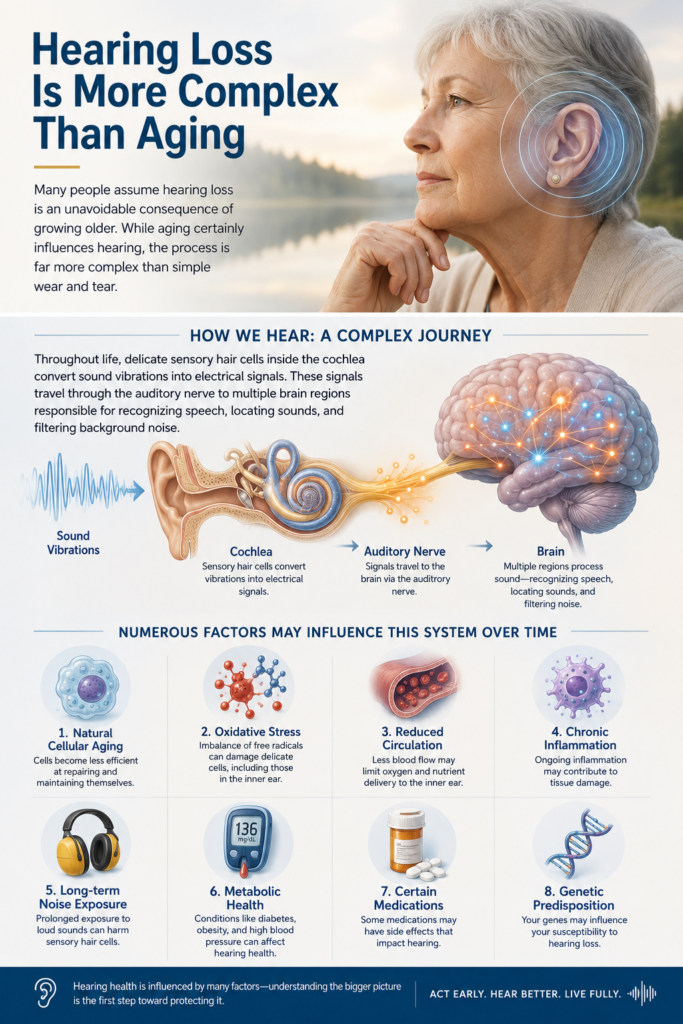
Many people assume hearing loss is an unavoidable consequence of growing older. While aging certainly influences hearing, the process is far more complex than simple wear and tear.
Throughout life, delicate sensory hair cells inside the cochlea convert sound vibrations into electrical signals. These signals travel through the auditory nerve to multiple brain regions responsible for recognizing speech, locating sounds, and filtering background noise.
Over time, numerous factors may influence this system, including:
- Natural cellular aging
- Oxidative stress
- Reduced circulation
- Chronic inflammation
- Long-term noise exposure
- Metabolic health
- Certain medications
- Genetic predisposition
The result may be gradual difficulty understanding conversations, especially in noisy environments, even before noticeable hearing loss develops.
Understanding Why Hearing Changes with Age: A Systems Biology Perspective
Many people believe that hearing loss is simply an unavoidable part of getting older. Although advancing age is one of the strongest risk factors for hearing decline, modern research shows that the process is far more complex than normal aging alone. Hearing reflects the coordinated function of multiple biological systems, and changes in any of these systems can influence how well we detect, process, and understand sound.
The hearing pathway begins deep within the inner ear, where thousands of microscopic sensory hair cells inside the cochlea transform sound vibrations into electrical signals. Unlike many other cells in the human body, these specialized hair cells have very limited regenerative capacity. Once significantly damaged or lost, they are generally not replaced.
The electrical signals generated by these cells travel through the auditory nerve to numerous regions of the brain, where they are interpreted as speech, music, environmental sounds, and spatial information.
Healthy hearing therefore depends not only on the ears themselves but also on the nervous system, circulation, metabolism, and cognitive processing.
One of the primary contributors to age-related hearing decline is natural cellular aging. As cells age, their ability to repair DNA damage, maintain healthy proteins, and generate sufficient energy gradually decreases.
Mitochondria—the tiny energy-producing structures inside cells—may become less efficient, reducing the energy available to support the highly active cells of the inner ear. Because cochlear hair cells require continuous energy to function, even modest declines in mitochondrial performance may influence long-term hearing health.
Oxidative stress is another important biological factor. During normal metabolism, cells naturally produce reactive oxygen species. Under healthy conditions, antioxidant defense systems neutralize these molecules. However, excessive oxidative stress may overwhelm these protective mechanisms, contributing to cellular injury within the delicate structures of the cochlea. Researchers continue to investigate how oxidative damage may accelerate hearing decline over time.
Healthy circulation also plays a critical role. The cochlea receives its oxygen and nutrients through an exceptionally small and delicate blood supply. Reduced vascular function, endothelial dysfunction, or impaired microcirculation may decrease nutrient delivery to these sensitive tissues. Because the inner ear has limited energy reserves, interruptions in blood flow may have a greater impact than in many other organs.
Chronic low-grade inflammation has also emerged as a potential contributor to hearing changes. Persistent inflammatory activity may influence blood vessels, nerve tissues, and cellular repair processes throughout the body. Although inflammation is an essential part of normal immune function, prolonged activation may gradually affect tissues involved in auditory processing.
Environmental exposures accumulate across a lifetime as well. Repeated exposure to loud noise—from occupational settings, recreational activities, concerts, machinery, or personal listening devices—may gradually damage sensory hair cells. This damage often develops slowly and may remain unnoticed until speech understanding becomes increasingly difficult, particularly in noisy environments.
Metabolic health has become another major focus of hearing research. Conditions associated with impaired glucose regulation, obesity, insulin resistance, and cardiovascular disease may influence the health of the small blood vessels and nerves that support auditory function. Growing evidence suggests that hearing should be viewed within the broader context of whole-body metabolic wellness rather than as an isolated sensory disorder.
Certain medications may also affect hearing. Some antibiotics, chemotherapy agents, loop diuretics, and other medications have been associated with ototoxic effects in susceptible individuals. Healthcare professionals carefully balance these risks against the benefits of treatment, particularly when managing serious medical conditions.
Finally, genetics help determine an individual’s baseline susceptibility. Some people inherit genetic variations that influence cochlear development, cellular resilience, antioxidant capacity, or vulnerability to environmental stressors. Genetics do not determine destiny, but they may partly explain why hearing ages differently from one person to another.
Taken together, these findings support a systems-based understanding of hearing health. Rather than viewing hearing loss as a single disease caused solely by aging, it is more accurate to see it as the result of interactions among biology, lifestyle, environment, genetics, and overall health. Protecting hearing throughout life therefore involves more than avoiding loud noise. Regular physical activity, cardiovascular fitness, healthy nutrition, blood sugar management, adequate sleep, stress reduction, and appropriate hearing protection all contribute to preserving the complex biological network that allows us to communicate, connect, and fully experience the sounds of everyday life.
Brain Networks Supporting Cognitive Health and Longevity

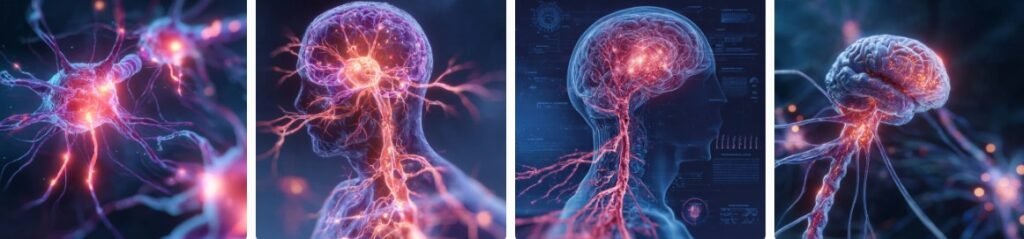
This illustration presents a futuristic visualization of the interconnected relationship between the brain, sound, energy, and advanced neurotechnology. Radiant waves, neural circuits, and glowing energy fields symbolize the continuous communication occurring within the nervous system as electrical signals travel across complex brain networks. The central beam of light represents synchronized neural activity, while surrounding digital interfaces reflect real-time monitoring and systems-level analysis. Together, these elements illustrate how brain function emerges from dynamic biological communication, highlighting the potential of neuroscience, artificial intelligence, and systems biology to support cognitive wellness, neural resilience, and healthy brain aging.
Understanding these biological changes helps people appreciate why hearing wellness involves much more than simply increasing volume. Prevention and healthy lifestyle choices often begin long before symptoms become obvious.
Ready to take the next step? Explore practical strategies and evidence-based approaches designed to support hearing health, cognitive wellness, and healthy aging. Small actions today may help preserve the connections that matter most tomorrow.