
Building Your Personal Metabolism Reset Blueprint
The most successful metabolic strategies are rarely the most extreme.
Instead, they combine small sustainable behaviors into a coordinated system.
The most effective approaches to improving metabolic health are rarely based on extreme diets, exhausting exercise programs, or short-term challenges. Instead, long-term success emerges from the consistent practice of simple, sustainable habits that work together as an integrated biological system.
Rather than focusing on a single intervention, modern systems biology recognizes that metabolism is regulated through the continuous interaction of nutrition, physical activity, sleep, hydration, stress regulation, and social well-being.
This illustration presents the Six Daily Pillars as a practical framework for supporting healthy metabolic function. Each pillar influences multiple physiological pathways while reinforcing the others. Nutritious whole foods provide essential nutrients that fuel cellular energy production and help maintain stable blood glucose levels. Regular physical activity improves insulin sensitivity, preserves muscle mass, enhances mitochondrial efficiency, and supports cardiovascular health. Restorative sleep allows hormonal regulation, tissue repair, memory consolidation, and metabolic recovery to occur.
Adequate hydration supports circulation, nutrient transport, temperature regulation, digestion, and countless biochemical reactions within cells. Daily balance—including stress management, mindful routines, and realistic expectations—helps reduce chronic activation of the stress response, which may otherwise interfere with healthy metabolism. Finally, meaningful social connection encourages accountability, emotional resilience, healthy behaviors, and long-term adherence to lifestyle changes.

These six pillars are interconnected rather than independent. Improvements in one area often strengthen the others through positive biological feedback loops. Better sleep increases exercise performance, regular movement enhances sleep quality, healthy nutrition supports cognitive function, and reduced stress promotes healthier eating behaviors and glucose regulation. Over time, these reinforcing interactions contribute to greater metabolic flexibility, improved energy utilization, healthier body composition, and increased physiological resilience.
The central message of this framework is that lasting metabolic improvement is achieved through consistency rather than intensity. Small, evidence-informed actions performed every day gradually reshape the body’s regulatory networks and create durable health benefits. By viewing metabolism as a coordinated system instead of a collection of isolated processes, individuals can develop sustainable habits that support lifelong wellness, disease prevention, healthy aging, and overall quality of life.
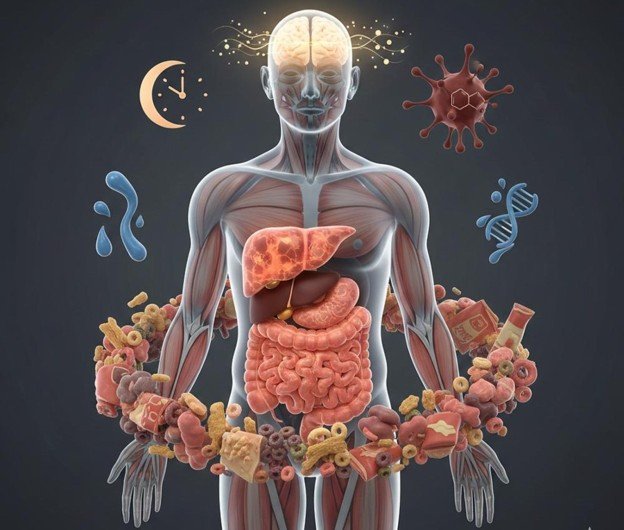
The Systems Biology of Human Metabolism
This illustration demonstrates that metabolism is not controlled by a single organ but emerges from the coordinated interaction of multiple biological systems that communicate continuously throughout the body.
At the center of the figure is the human body, highlighting the brain, liver, stomach, intestines, and other major metabolic organs that collectively regulate energy balance, nutrient utilization, and physiological adaptation.
Surrounding these organs are symbolic representations of key influences, including circadian rhythms, hydration, immune activity, genetics, and dietary intake, emphasizing that metabolic health reflects an integrated network rather than an isolated biochemical process.
The brain serves as the body’s central regulatory hub, integrating hormonal signals related to hunger, satiety, stress, and energy expenditure.
The liver regulates glucose production, glycogen storage, lipid metabolism, and detoxification, while the gastrointestinal tract absorbs nutrients, houses the gut microbiome, and communicates extensively with the brain through neural, immune, and endocrine pathways. The DNA symbol illustrates the influence of inherited genetic variation, although lifestyle and environmental factors strongly shape how these genes are expressed. The immune symbol highlights the growing recognition that chronic low-grade inflammation can influence insulin sensitivity, metabolic flexibility, and long-term health outcomes. Hydration supports circulation, nutrient transport, enzymatic reactions, and cellular homeostasis, making adequate fluid balance an essential component of metabolic function. The moon and clock icon emphasize the importance of circadian biology, illustrating how sleep quality and daily biological rhythms influence hormone secretion, glucose regulation, appetite control, and mitochondrial energy production.
Encircling the body is a diverse collection of foods, symbolizing the nutritional environment that provides both opportunities and challenges for metabolic health. Food choices influence blood sugar regulation, microbial diversity, inflammatory balance, and overall energy metabolism. No single food determines metabolic health; rather, consistent dietary patterns interact with physical activity, sleep, stress management, and other lifestyle behaviors to shape long-term outcomes.
Overall, this figure reinforces the central principle of systems biology: metabolism is an interconnected, adaptive network. Sustainable improvements arise when multiple physiological systems are supported simultaneously through healthy daily habits, creating greater resilience, metabolic flexibility, disease prevention, and healthy aging
Final Thoughts
The Metabolism Reset Blueprint is not a crash diet or a 30-day challenge.
It is a practical framework for supporting the body’s remarkable capacity for adaptation.
Progress is measured not only by changes on a scale, but by improvements in:
- Energy
- Mood
- Strength
- Sleep quality
- Physical function
- Daily resilience
- Long-term health
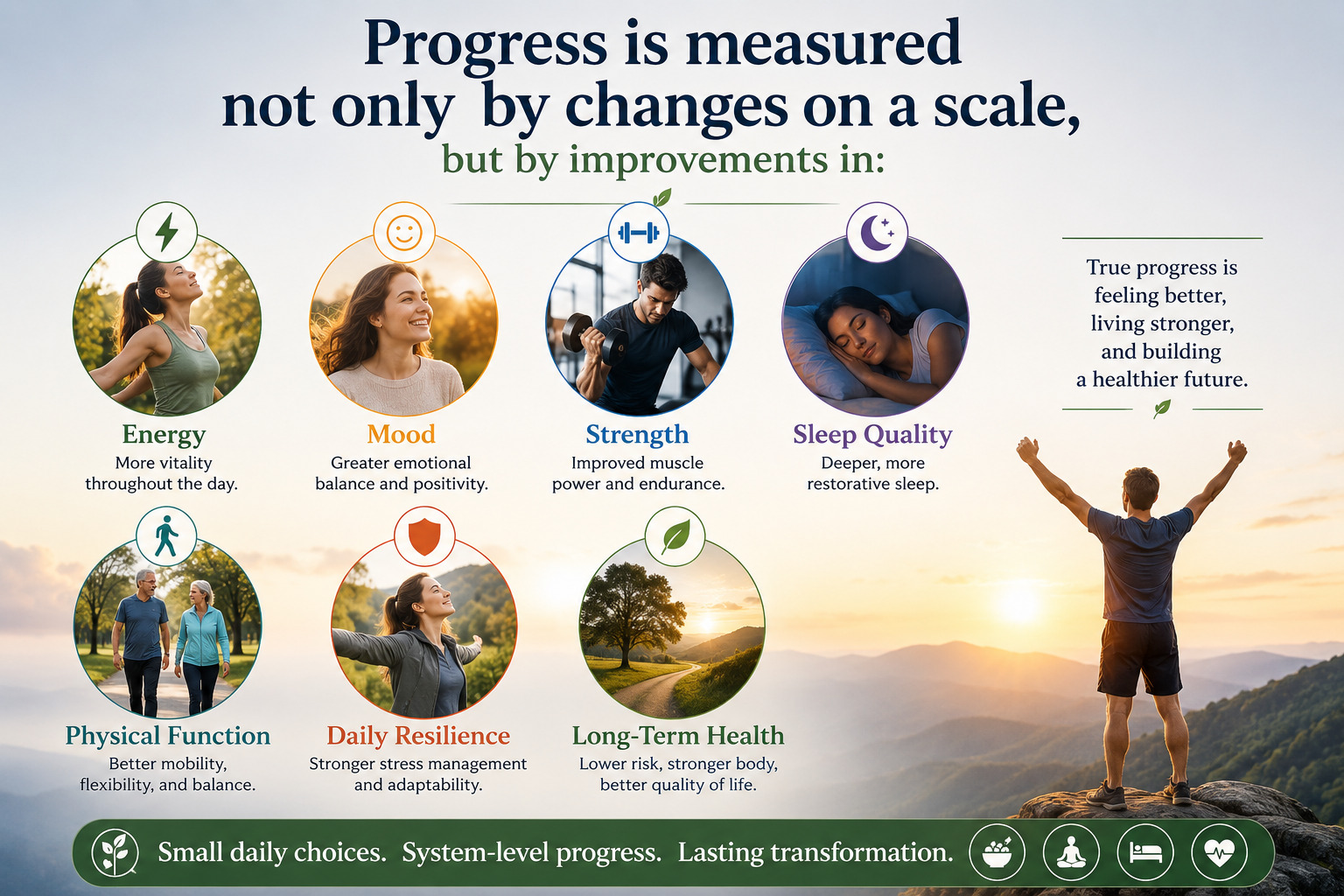
The Six Indicators of True Metabolic Progress
This figure emphasizes that meaningful metabolic progress extends far beyond changes in body weight. While the number on a scale may fluctuate from day to day, true improvements in health are reflected by positive changes across multiple dimensions of physical and mental well-being. A systems-based approach recognizes that metabolism influences nearly every organ system, making overall function a more meaningful indicator of long-term success than weight alone.
The six outcomes illustrated—energy, mood, strength, sleep quality, physical function, and daily resilience—represent key markers of a healthier, more adaptive body. Increased energy reflects more efficient cellular metabolism and mitochondrial function. Improved mood is closely linked to balanced blood sugar, healthy brain chemistry, restorative sleep, and reduced chronic inflammation. Greater strength indicates preserved muscle mass and enhanced metabolic capacity, while higher-quality sleep supports hormonal regulation, recovery, and cognitive performance. Better physical function allows individuals to move with greater confidence, flexibility, and endurance during daily activities. Daily resilience reflects the body’s ability to adapt to physical, emotional, and environmental stress while maintaining physiological balance.
Together, these interconnected improvements demonstrate that sustainable lifestyle habits create broad biological benefits. Rather than pursuing rapid weight loss alone, the goal is to build a healthier, more resilient metabolic system that supports vitality, independence, disease prevention, and healthy aging. Lasting transformation is measured not simply by appearance, but by how well the body performs, recovers, and thrives over time.
A smarter approach to metabolism is ultimately a smarter approach to living—one that values consistency, balance, and sustainable habits that can support wellbeing for years to come.
Understanding how metabolism actually works may be one of the most important steps toward sustainable health, energy, and long-term weight management.