Biomarker Center
Understanding the Numbers That Shape Your Health Future
Learn how biomarkers reveal hidden changes in your body long before symptoms appear. Discover how preventive medicine uses measurable signals to guide smarter health decisions and support long-term longevity.
Why Biomarkers Matter Today
Many chronic diseases begin silently years before symptoms appear.
Biomarkers help uncover hidden changes in metabolism, inflammation, cardiovascular function, and recovery—allowing earlier action and more informed decisions.
Understanding your numbers is one of the most powerful steps toward preventive health.
Introduction
Modern healthcare often waits until disease develops before taking action. Biomarkers offer a different approach.
Biomarkers are measurable indicators of biological function. They help us understand how the body is performing beneath the surface and can reveal early signs of imbalance before symptoms become obvious.
From blood sugar and cholesterol to inflammatory markers and sleep metrics, biomarkers provide valuable insights into metabolic health, cardiovascular risk, immune function, and healthy aging.
Understanding these numbers empowers individuals to move from reactive healthcare toward precision prevention.
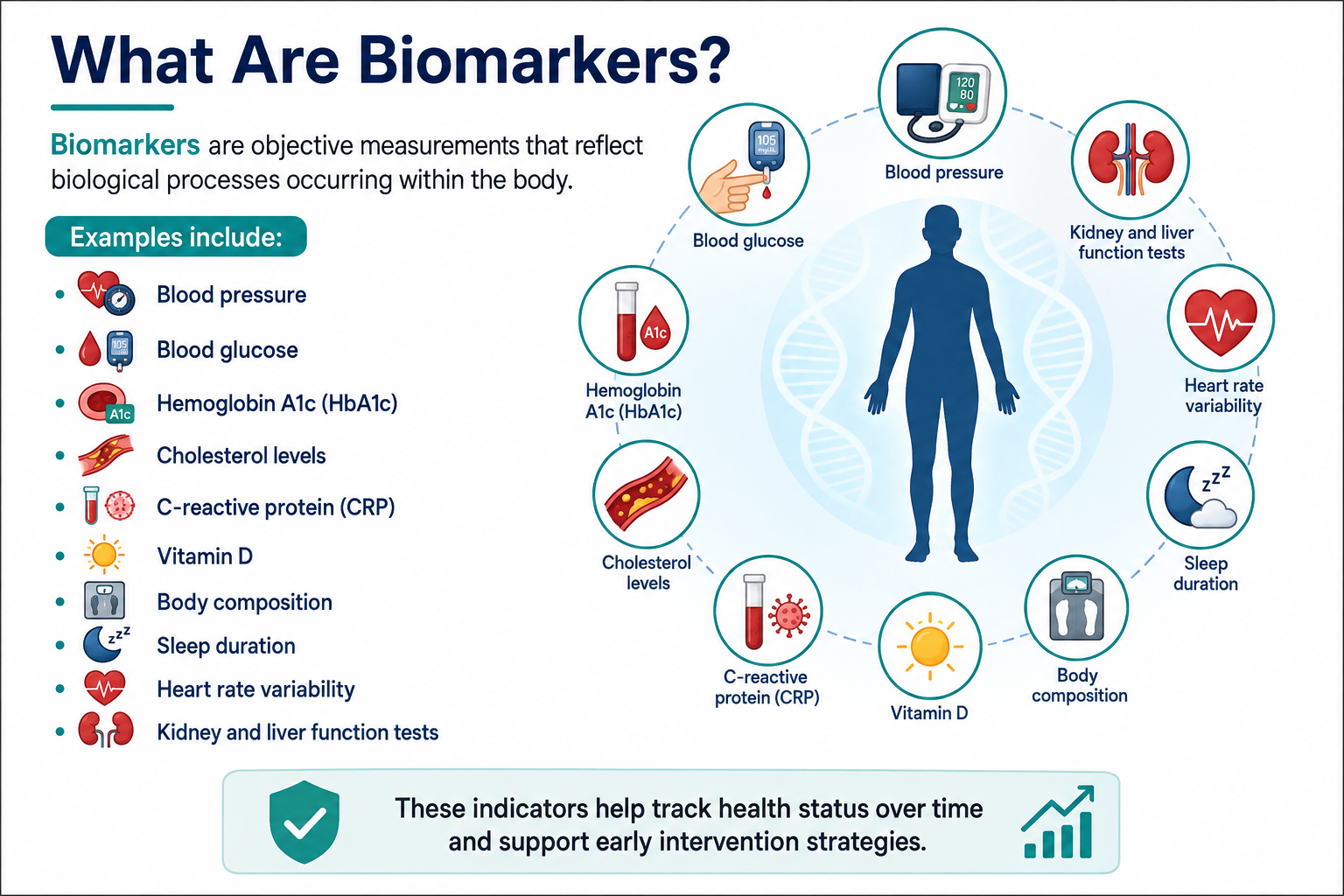
What Are Your Biomarkers Telling You About Your Health?
Biomarkers provide measurable signals that help reveal what is happening inside the body. They include clinical measurements such as blood pressure, blood glucose, HbA1c, cholesterol, C-reactive protein, vitamin D, body composition, sleep duration, heart rate variability, and kidney and liver function tests. By tracking these indicators over time, individuals and healthcare professionals can identify meaningful trends, recognize potential health risks earlier, and evaluate changes associated with lifestyle or preventive strategies. Biomarkers transform complex biological information into practical insights that support personalized prevention, informed health decisions, and long-term healthy longevity.
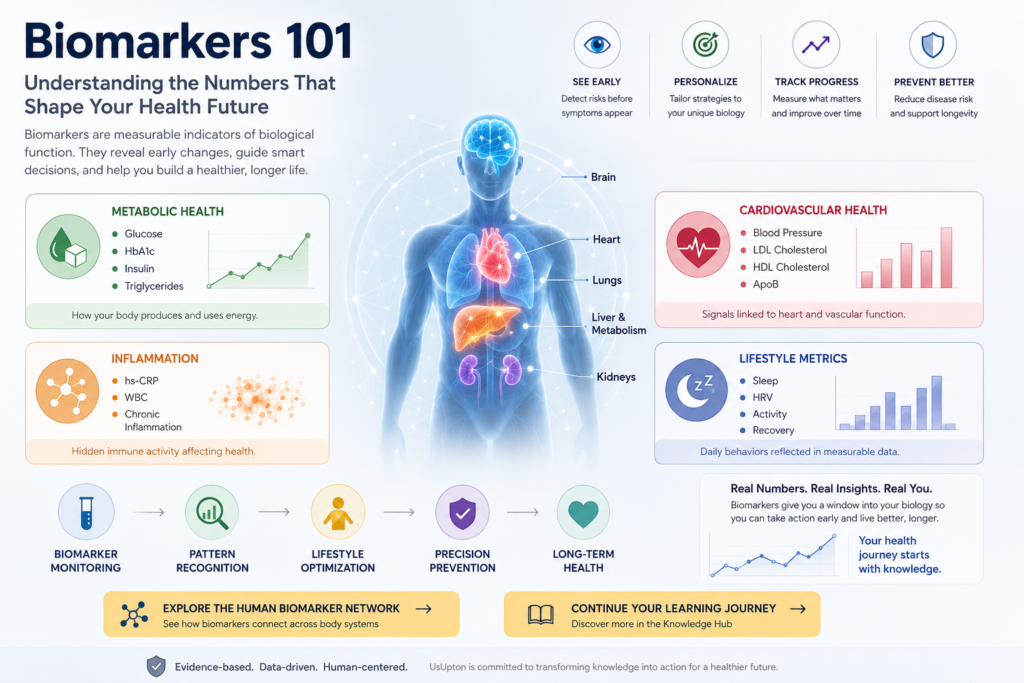
The Biomarker Intelligence Dashboard
See What Your Body Is Telling You Before Symptoms Appear
Biomarkers transform invisible biology into actionable knowledge. By understanding your numbers today, you can make informed decisions that support health, resilience, and longevity tomorrow.
- 🧠 Brain
- ❤️ Heart
- 🍽️ Liver & Metabolism
- 🫁 Lungs
- 🦴 Kidneys

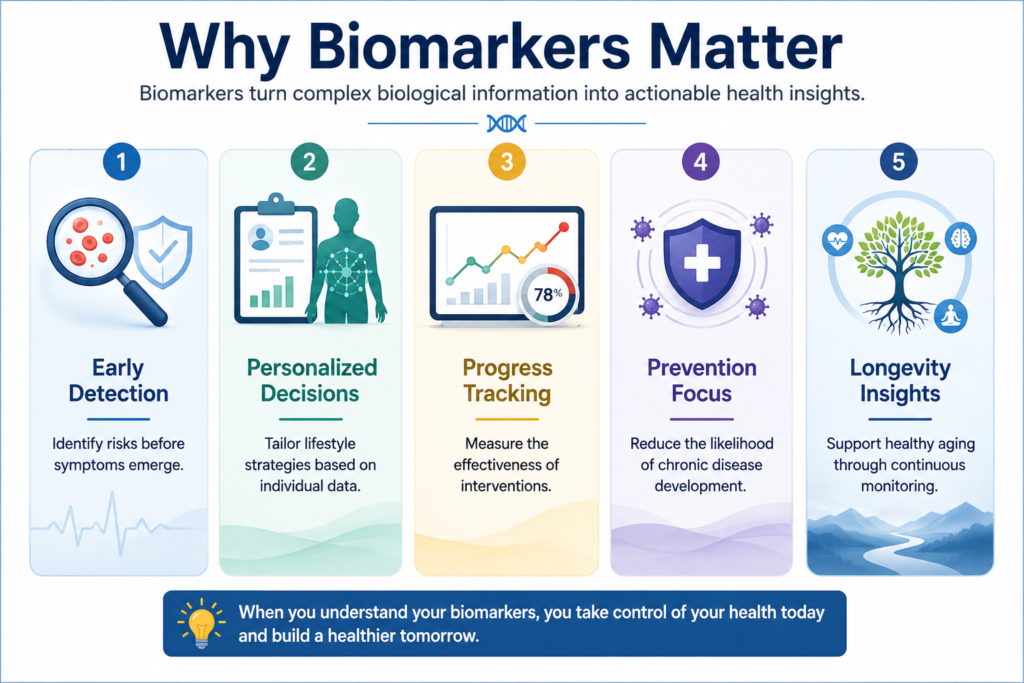
What Can Your Biomarkers Tell You Before Symptoms Appear?
Biomarkers matter because they provide measurable insights into how the body is functioning and changing over time. Regular monitoring can help identify potential health risks before symptoms appear, allowing earlier attention and preventive action. Biomarker data can also support more personalized decisions about nutrition, exercise, sleep, and other lifestyle factors. Repeated measurements help track progress and evaluate whether interventions are working. By connecting early detection, personalized strategies, progress tracking, and prevention, biomarkers create a clearer picture of health and provide valuable insights for reducing chronic disease risk, supporting healthy aging, and promoting long-term healthy longevity.
Which Biomarkers Should You Know About Your Health?
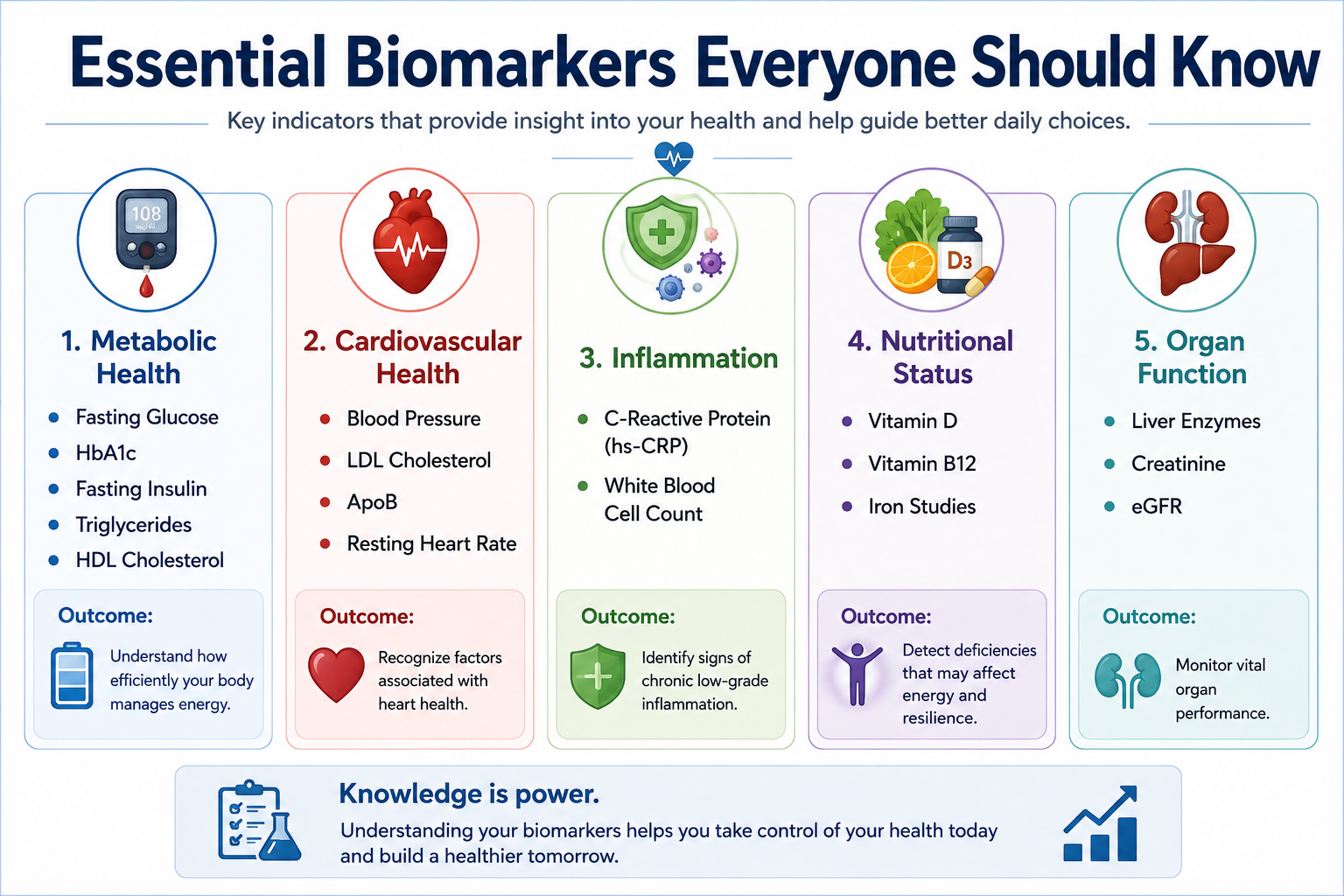
Essential biomarkers provide a practical window into several important areas of health. Metabolic markers such as glucose, HbA1c, insulin, triglycerides, and HDL help reveal how the body manages energy. Cardiovascular measurements provide insight into factors associated with heart and vascular health, while inflammatory markers may identify persistent low-grade inflammation. Vitamin D, vitamin B12, and iron studies help assess nutritional status. Liver enzymes, creatinine, and eGFR provide information about organ function. Together, these biomarkers create a broader health picture, helping identify trends, guide preventive strategies, monitor progress, and support healthier aging over time. How Should You Read a Biomarker Result?
What Does Your Biomarker Result Really Mean for Your Health?
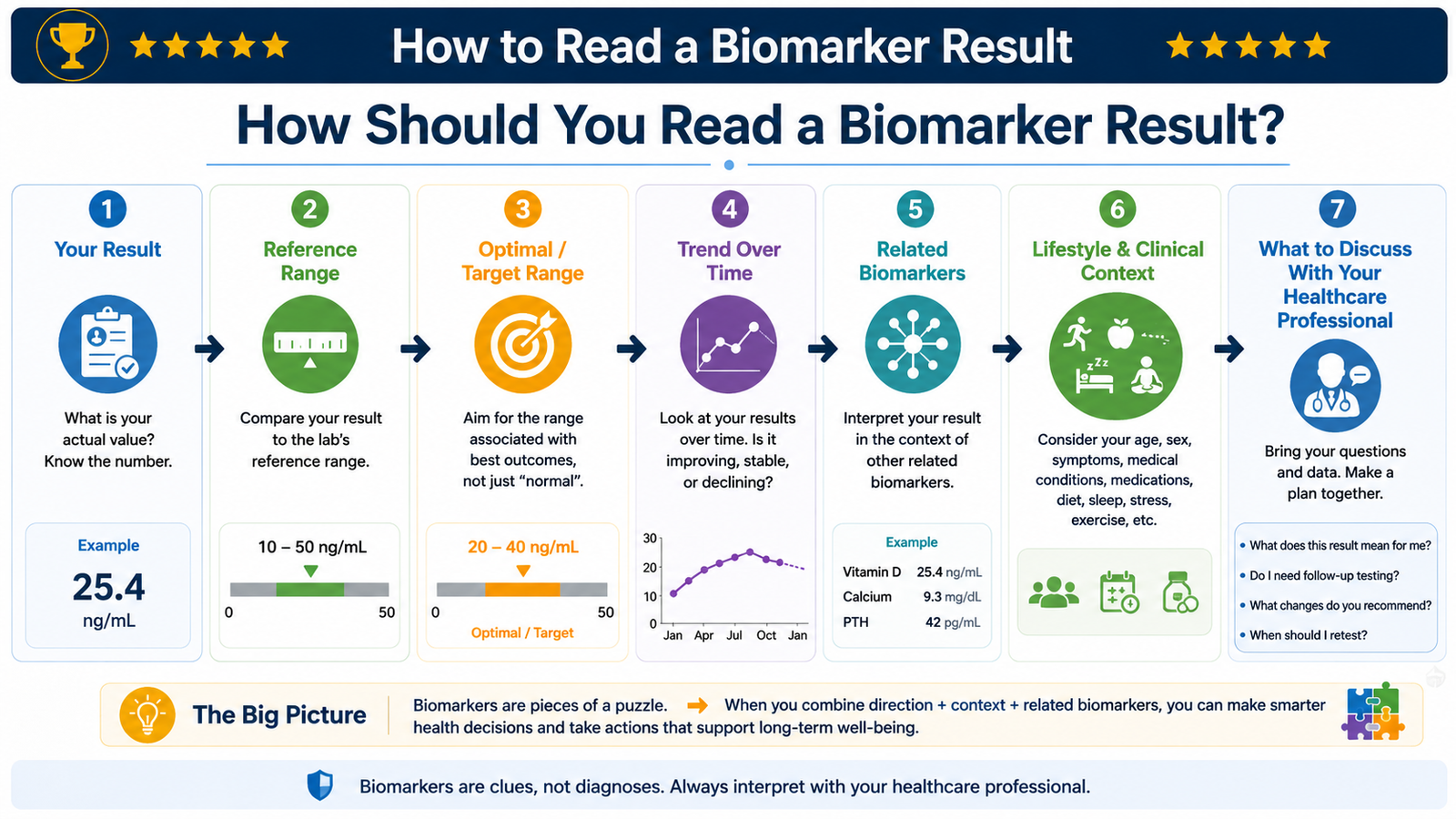
A biomarker result is more meaningful when viewed as part of a larger health story. Start by understanding your current value, laboratory reference range, and appropriate clinical target. Then look beyond a single measurement by tracking changes over time. Trends can reveal whether a biomarker is improving, remaining stable, or moving in an unfavorable direction. Interpretation becomes even stronger when related biomarkers, lifestyle habits, symptoms, medications, medical history, and other clinical factors are considered together. This broader perspective supports earlier recognition of meaningful changes and more informed conversations with healthcare professionals.The real value of biomarker monitoring comes from turning information into action. When results are reviewed alongside trends and personal health context, they can help identify areas that may deserve greater attention. These insights can guide conversations about nutrition, physical activity, sleep, weight management, preventive screening, and follow-up testing.
How Can Your Biomarkers Guide You Toward Better Health?
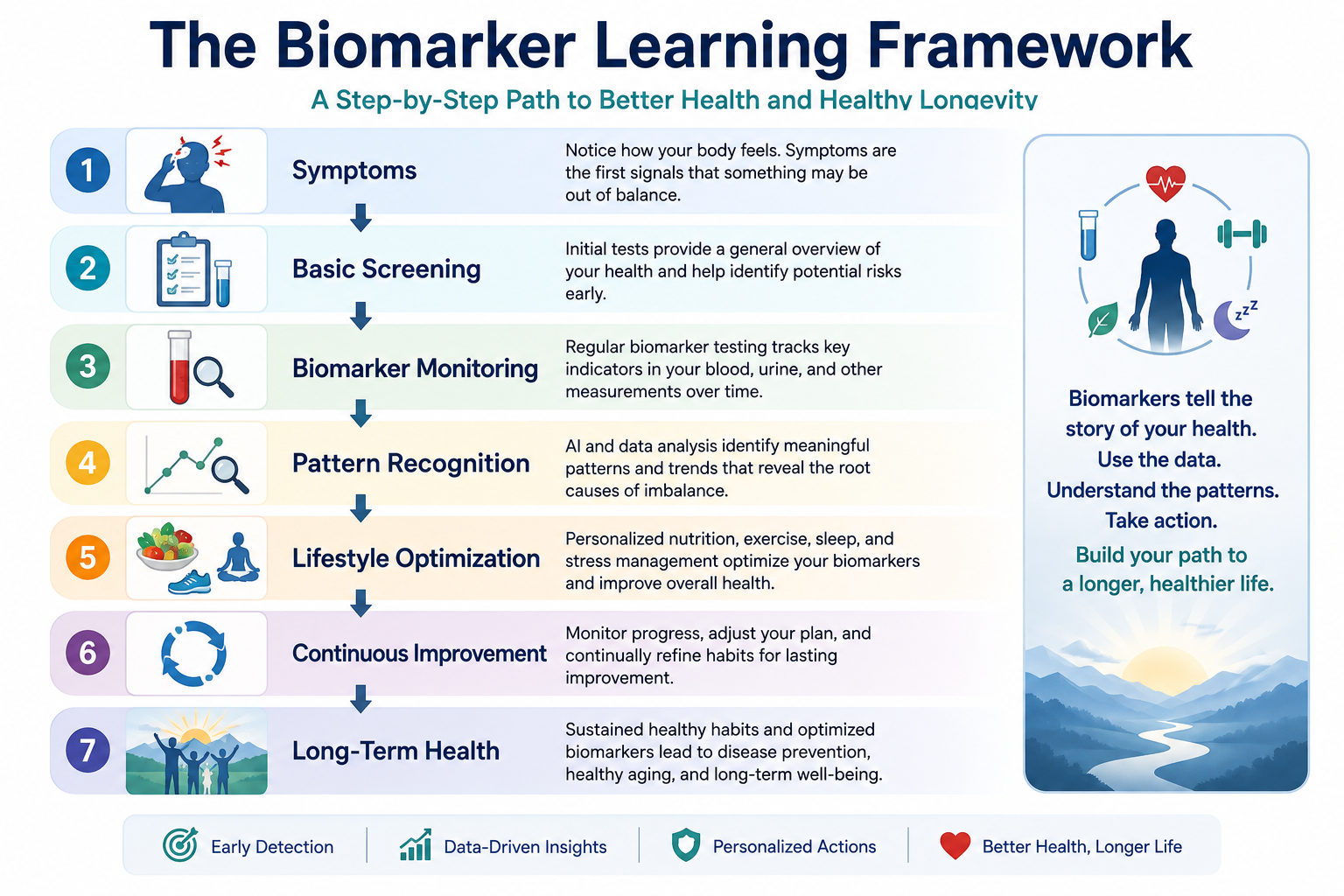
The Biomarker Learning Framework shows how health understanding can evolve from recognizing symptoms to building a long-term strategy for healthier living. Basic screening establishes a starting point, while ongoing biomarker monitoring reveals changes that may not be immediately visible. Over time, patterns across laboratory results, lifestyle factors, and health measurements can provide deeper insights. These insights help guide improvements in nutrition, physical activity, sleep, and other daily habits. By repeatedly measuring progress and refining actions, biomarker-informed health management becomes a continuous cycle supporting prevention, personalized decision-making, healthy aging, and long-term health optimization.
How Often Should You Check Your Biomarkers?
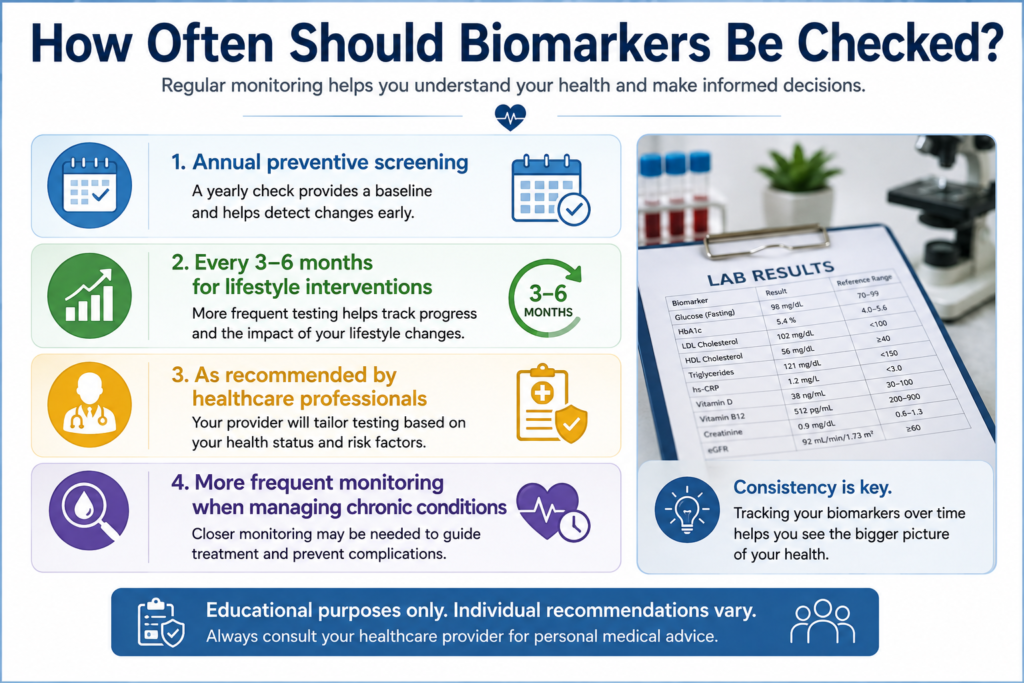
Regular biomarker monitoring can help reveal how health changes over time, but the appropriate testing schedule depends on individual needs. For general preventive care, many biomarkers may be reviewed during annual health assessments. When someone is making significant lifestyle changes, selected markers may be reassessed every three to six months to evaluate progress. People managing chronic conditions may require more frequent monitoring based on clinical guidance. Testing frequency can also vary by age, health history, medications, risk factors, and previous results. Biomarker monitoring should therefore be personalized in consultation with qualified healthcare professionals rather than following a single schedule.
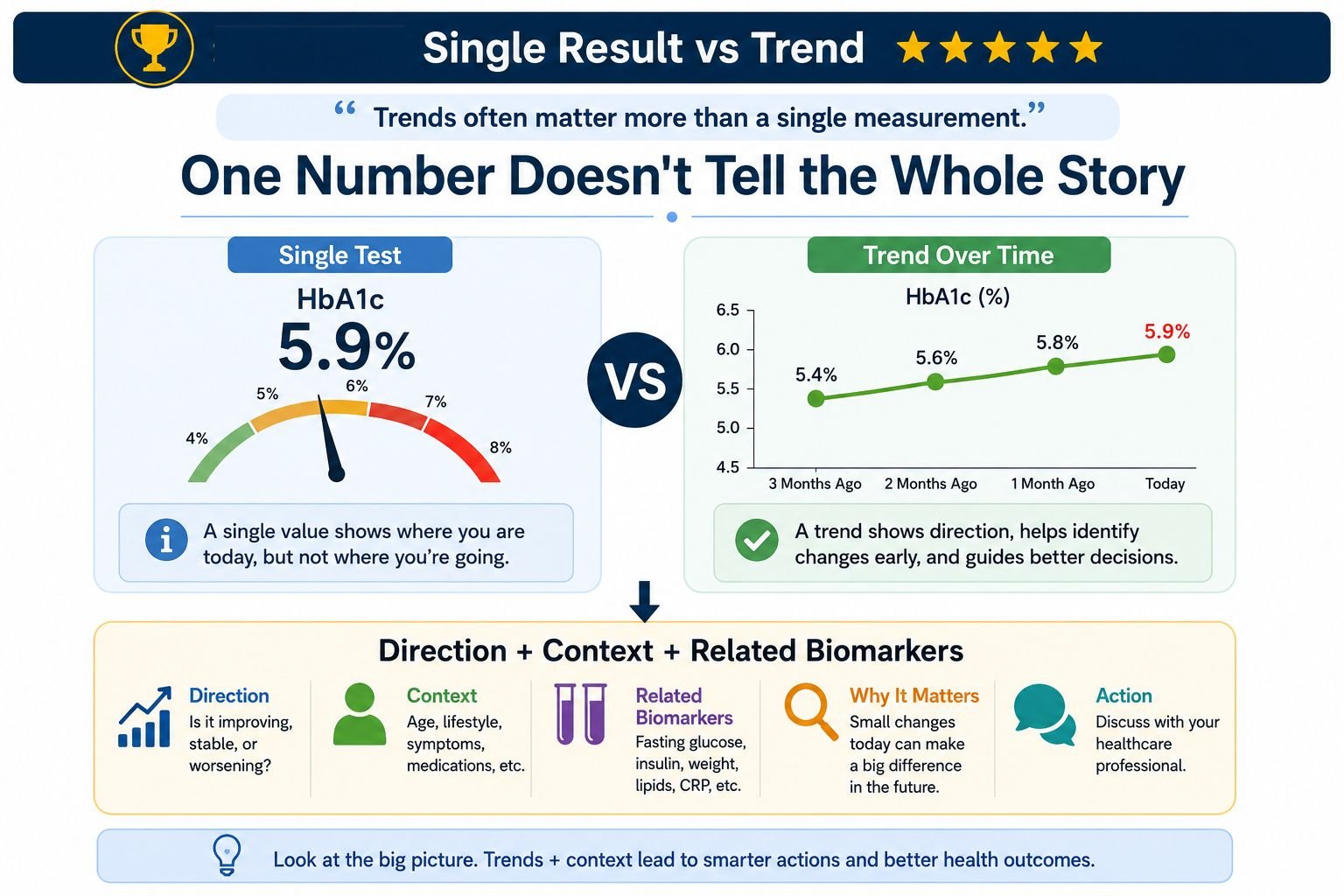
What Can Your Biomarker Trends Tell You About Your Health?
A single biomarker result provides a snapshot of your health, but trends over time can reveal a much more meaningful story. Repeated measurements help show whether a biomarker is improving, remaining stable, or moving in an unfavorable direction. Effective interpretation also considers age, lifestyle, symptoms, medications, and related biomarkers such as glucose, insulin, lipids, weight, and inflammation markers. Looking at direction, context, and connected health signals together can help identify important changes earlier, support more informed discussions with healthcare professionals, and guide smarter preventive health decisions over time.
Featured Visual Framework
The Human Biomarker Network
Explore how metabolic, inflammatory, cardiovascular, and lifestyle biomarkers interact as an integrated system rather than isolated numbers.
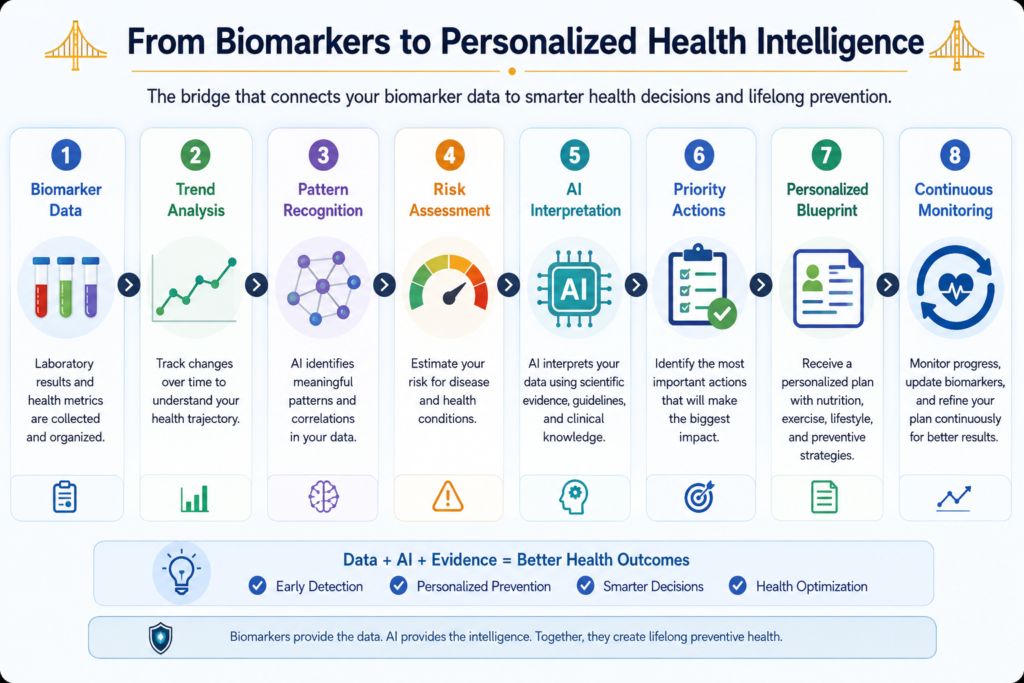
How Can Your Biomarkers Guide Smarter Health Decisions?
Biomarkers become more powerful when they are connected to intelligent analysis. This framework shows how laboratory data can be tracked over time, analyzed for meaningful patterns, and combined with risk assessment and scientific evidence. AI can then help interpret these insights, identify priority actions, generate a personalized health Blueprint, and continuously refine recommendations as new health data becomes available.
Recommended Learning Path
Key Takeaways
- Biomarkers provide measurable insights into health.
- Many chronic diseases develop silently over time.
- Early monitoring supports prevention and better decisions.
- Trends often matter more than a single measurement.
- Health optimization begins with understanding your numbers.
Continue Exploring
Lesson
Lesson →
Biomarkers 101
05 Progress
Learning Progress
○○○○●○
5 / 6 Lessons Completed
parallelism:
| course | state |
|---|---|
| Lesson 1 | ○ |
| Lesson 2 | ○ |
| Lesson 3 | ○ |
| Lesson 4 | ○ |
| Lesson 5 | ✓current |
| Lesson 6 | ○ |
Biomarkers 101: Understanding the Numbers That Shape Your Health Future | UsUpton
Learn the fundamentals of biomarkers, including blood sugar, inflammation, cardiovascular health, and longevity indicators. Discover how preventive medicine uses health data to support early intervention and lifelong wellness.
Frequently Asked Questions
Are biomarkers only blood tests?
No. Biomarkers can come from blood, urine, imaging studies, wearable devices, and physiological measurements.
Which biomarkers should beginners focus on?
Blood pressure, fasting glucose, HbA1c, lipid profile, hs-CRP, and body composition are commonly discussed starting points.
Can biomarkers predict disease?
They help identify patterns associated with risk but cannot guarantee future outcomes.