🩺 Clinical Decision Trees
Make Better Health Decisions Through Visual Clinical Pathways
Clinical Decision Trees organize complex medical guidelines into clear, step-by-step visual pathways that support evidence-based decision-making. From preventive screening and risk assessment to diagnosis, treatment planning, and disease prevention, these frameworks simplify clinical reasoning for healthcare education.
Designed for patients, students, educators, and healthcare professionals, our decision trees transform medical recommendations into easy-to-follow visual algorithms that promote preventive care and informed health decisions.
Browse Clinical Decision Tree Categories
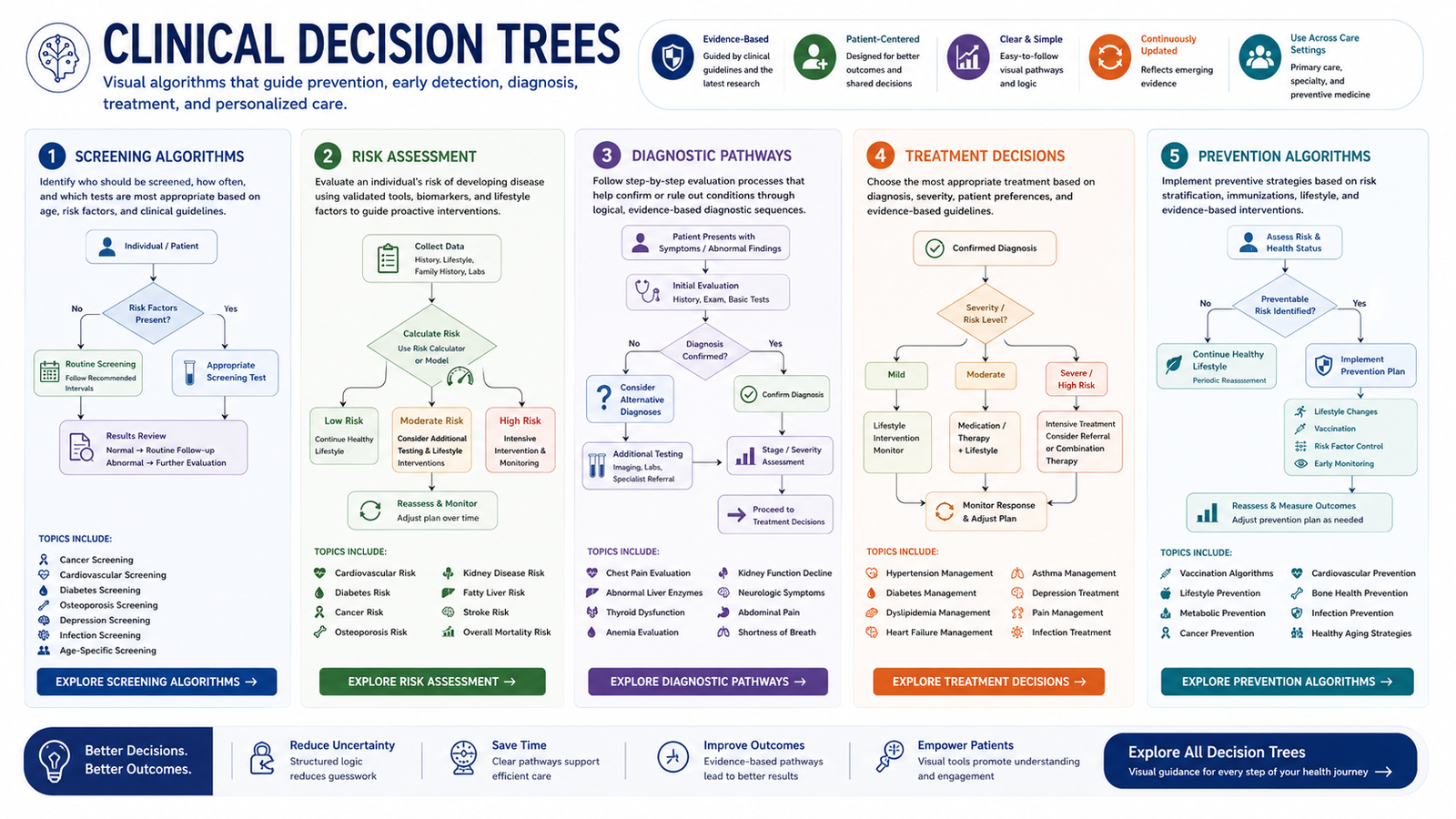
Navigate Better Decisions with Visual Clinical Pathways
Clinical Decision Trees transform complex medical guidelines into clear, step-by-step visual pathways that support screening, risk assessment, diagnosis, treatment, and disease prevention. Explore evidence-based algorithms that illustrate how healthcare professionals evaluate symptoms, interpret biomarkers, assess risk factors, and choose appropriate interventions based on current clinical practice. These visual decision trees simplify medical reasoning, making complex healthcare processes easier to understand for students, clinicians, and patients alike. By connecting scientific evidence with practical decision-making, they promote earlier detection, more informed choices, personalized care, and better long-term health outcomes through preventive medicine and healthy longevity.
🔍 Screening Algorithms
Explore visual screening pathways that help identify health risks early based on age, risk factors, symptoms, and evidence-based clinical recommendations.
Topics include:
- Diabetes Screening
- Hypertension Screening
- Colorectal Cancer Screening
- Breast Cancer Screening
- Cervical Cancer Screening
- Prostate Cancer Screening
- Osteoporosis Screening
- Sleep Apnea Screening
Explore Screening Algorithms →
📊 Risk Assessment
Understand how lifestyle, biomarkers, family history, and clinical measurements contribute to disease risk through structured visual assessment frameworks.
Topics include:
- Cardiovascular Risk
- Diabetes Risk
- Dementia Risk
- Obesity Risk
- Metabolic Syndrome
- Fall Risk
- Osteoporosis Risk
- Healthy Aging Risk
Explore Risk Assessment →
🩺 Diagnostic Pathways
Follow evidence-based diagnostic workflows that guide the evaluation of symptoms, laboratory findings, imaging studies, and clinical examinations.
Topics include:
- Chest Pain Evaluation
- Elevated Blood Glucose
- High Blood Pressure
- Abnormal Liver Tests
- Thyroid Disorders
- Cognitive Decline
- Fatigue Assessment
- Iron Deficiency
Explore Diagnostic Pathways →
💊 Treatment Decisions
Visualize how lifestyle interventions, medications, monitoring, and follow-up strategies are selected based on clinical findings and guideline recommendations.
Topics include:
- Diabetes Management
- Hypertension Treatment
- Cholesterol Management
- Weight Management
- Osteoporosis Care
- Sleep Disorder Management
- Heart Disease Prevention
- Lifestyle Medicine
Explore Treatment Decisions →
🛡️ Prevention Algorithms
Learn structured prevention pathways that connect healthy behaviors, biomarker monitoring, preventive screening, early intervention, and long-term health optimization.
Topics include:
- Chronic Disease Prevention
- Healthy Aging
- Cancer Prevention
- Cardiovascular Prevention
- Brain Health Protection
- Metabolic Health
- Vaccination Strategies
- Lifestyle Medicine
Explore Prevention Algorithms →

Why Clinical Decision Trees Matter
Clinical Decision Trees simplify complex medical guidelines into clear, logical pathways that are easier to understand and apply. They connect symptoms, risk factors, biomarkers, diagnostic testing, treatment options, and preventive strategies into structured visual frameworks. By making evidence-based recommendations more accessible, these decision trees support consistent clinical reasoning, informed health decisions, early disease detection, and lifelong preventive care.