
A Systems-Based Approach to Hearing Support
Hearing health is not just about the ears.
It may reflect the condition of:
- the cardiovascular system,
- the nervous system,
- mitochondrial energy production,
- inflammatory balance,
- metabolic health,
- and overall biological resilience.
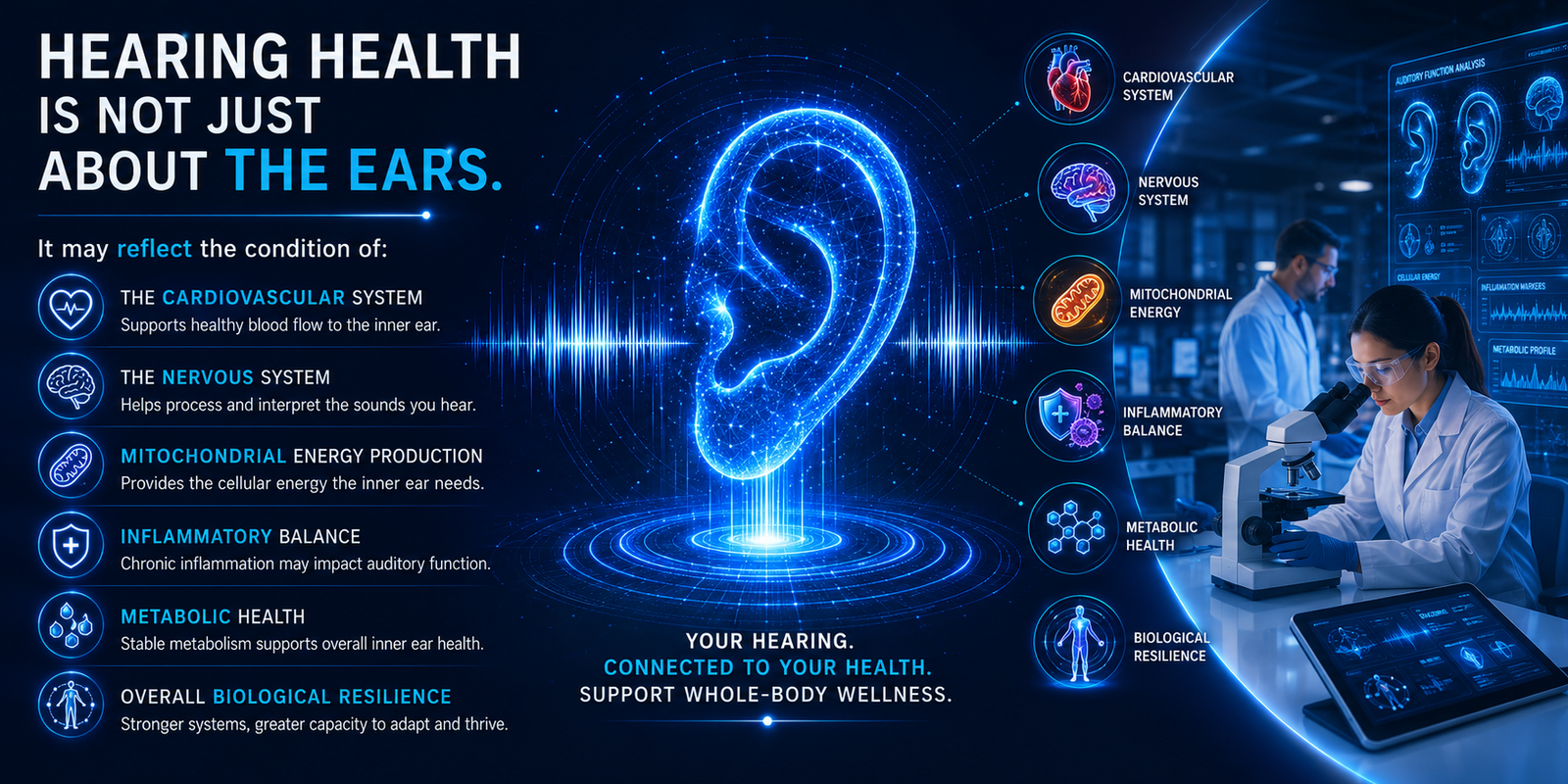
Hearing Health Is More Than the Ears
Hearing is often thought of as a function of the ears alone, but modern systems biology presents a much broader perspective. Auditory wellness is closely connected to the health of multiple biological systems that work together to process sound, maintain balance, and support communication throughout life.
Healthy blood circulation delivers oxygen and nutrients to the delicate structures of the inner ear, while the nervous system interprets sound signals and coordinates auditory processing in the brain. Mitochondria provide the cellular energy required for sensory function, and balanced inflammatory responses help maintain a healthy environment for neural tissues. Metabolic health—including glucose regulation, vascular function, and hormonal balance—may also influence long-term auditory resilience.
Rather than viewing hearing as an isolated organ system, this integrated framework emphasizes whole-body wellness. Regular physical activity, nutrient-rich nutrition, restorative sleep, stress management, and preventive healthcare all contribute to maintaining the biological conditions that support healthy hearing.
By recognizing these interconnected systems, individuals can adopt sustainable lifestyle habits that promote not only auditory function but also cognitive health, vitality, and healthy aging, reinforcing the idea that hearing wellness is an important reflection of overall biological resilience.
A Systems-Based Strategy for Hearing Wellness
That is why modern preventive approaches increasingly focus on whole-body support rather than isolated symptom management.
A systems-based hearing strategy may include:
- lifestyle optimization,
- metabolic health improvement,
- sleep recovery,
- stress reduction,
- antioxidant nutrition,
- and evidence-informed supplementation.

Modern hearing wellness extends beyond the ears themselves. A systems-based approach recognizes that auditory function is influenced by the health of multiple interconnected biological systems working together throughout the body.
Lifestyle optimization provides the foundation, with regular physical activity, balanced nutrition, and healthy daily routines supporting circulation, neural communication, and long-term sensory function. Metabolic health is equally important, as stable blood sugar regulation and efficient cellular energy production help maintain the delicate structures of the inner ear.
Quality sleep allows the brain and nervous system to recover, consolidate auditory information, and restore physiological balance, while effective stress management may help reduce chronic nervous system activation that can affect overall well-being. An antioxidant-rich dietary pattern featuring colorful fruits, vegetables, nuts, fish, and healthy fats provides nutrients that support normal cellular defenses against oxidative stress.
Some individuals also choose evidence-informed dietary supplements as part of a broader wellness plan. While supplements are not substitutes for healthy habits or medical care, selected ingredients may complement nutrition and lifestyle strategies when used responsibly.
Beyond Better Hearing: A Goal of Lifelong Wellness
Together, these interconnected practices create a comprehensive framework that supports hearing health, cognitive resilience, and healthy aging. Rather than relying on a single intervention, long-term auditory wellness is best viewed as the result of consistent habits that promote whole-body biological resilience and lifelong sensory vitality.
The goal is not simply louder sound — but healthier aging, better resilience, and improved long-term quality of life.

The ultimate goal of hearing wellness is not simply making sounds louder—it is supporting the biological systems that allow people to communicate, learn, stay independent, and remain engaged throughout life. Healthy hearing contributes to conversations with family and friends, appreciation of music, environmental awareness, and cognitive vitality.
A systems-based perspective recognizes that hearing reflects the combined influence of cardiovascular health, metabolic function, nervous system integrity, cellular energy production, and healthy lifestyle habits. By supporting these interconnected systems, individuals may strengthen overall resilience while promoting long-term auditory function and healthy aging.
Understanding the science behind hearing health empowers people to move beyond quick fixes and make informed wellness decisions grounded in prevention and whole-body care. Prioritizing regular exercise, balanced nutrition, restorative sleep, stress management, hearing protection, and evidence-informed supplementation when appropriate can help create a strong foundation for lifelong sensory wellness.
Rather than focusing solely on louder sound, the broader objective is to enhance quality of life, preserve cognitive function, maintain social connection, and support the body’s remarkable capacity for adaptation over time. Small, consistent habits practiced every day can contribute to healthier hearing and greater overall well-being for years to come.
Understanding the biology behind hearing health empowers people to make smarter, more informed wellness decisions.