Assess Your Risks
Understand What May Affect Your Future Health
Health risk is shaped by many factors—including biomarkers, lifestyle, family history, age, medical history, and changes over time.
Understanding these factors can help you identify what matters most, recognize opportunities for prevention, and make more informed decisions about your health.
Know Your Risk → Identify What Matters → Take Action
Explore Your Risks →

Understand
Learn the fundamentals of health risk, risk factors, and preventive assessment.
→ Start with Articles

Learn & Build Skills
Follow structured learning pathways for understanding and managing health risks.
→ Courses

Explore the Science
Go deeper into prevention, risk assessment, biomarkers, and evidence-based health decisions.
→ Explore Books

Go Deeper
Access advanced learning pathways connecting risk, biomarkers, prevention, and personalized strategies.
→ Explore Premium Learning

Apply
Use practical guides, assessment frameworks, checklists, and tools to turn risk knowledge into action.
→ Explore Resource Guides

Test & Personalize
Test your understanding and identify the risk topics most relevant to explore next.
→ Take the AI Knowledge Test
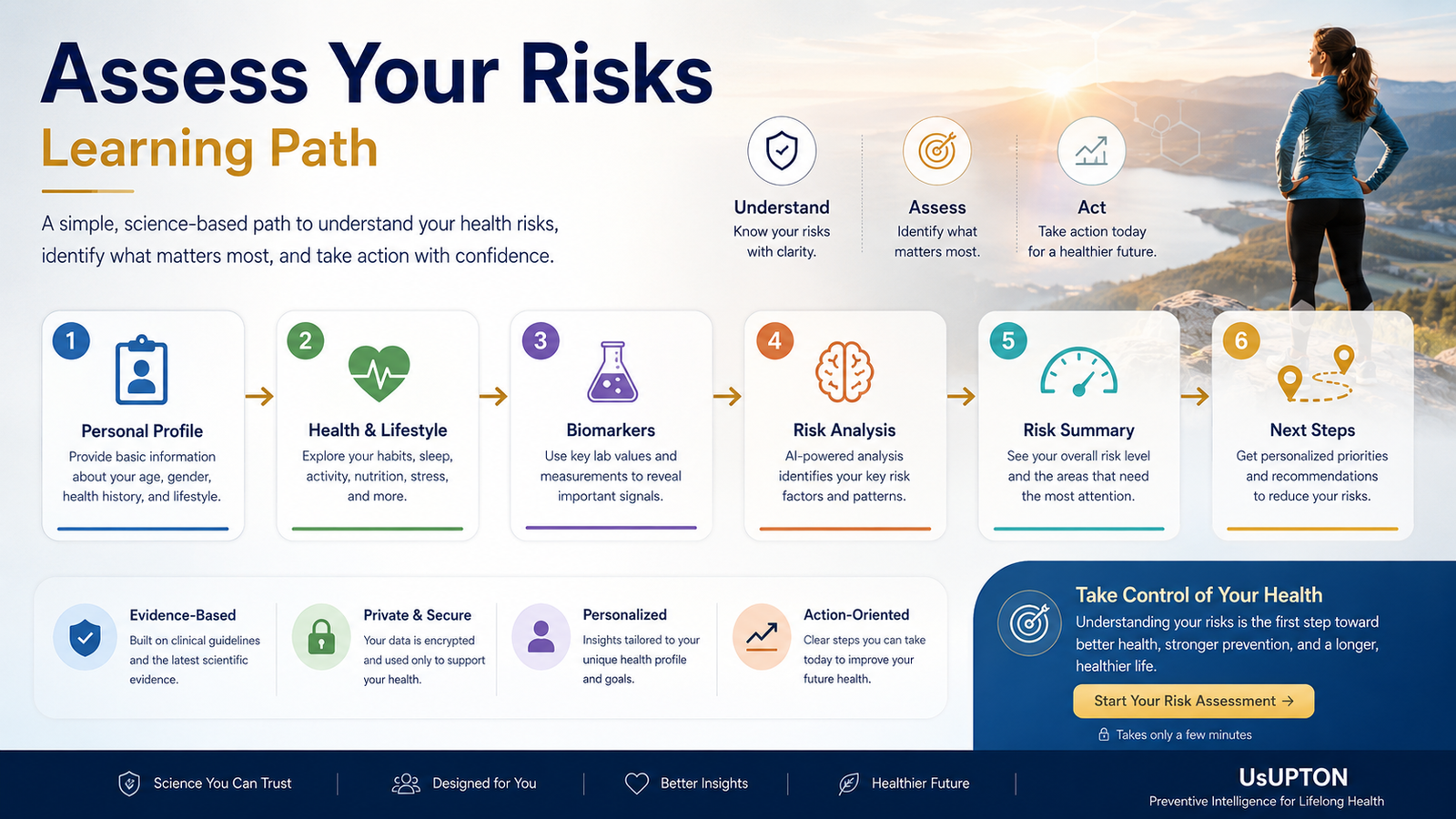
Explore the health risks that matter most to you. Learn how metabolic health, cardiovascular factors, brain health, cancer risk, healthy aging, and everyday lifestyle choices can influence long-term well-being. Each pathway helps you understand key risk drivers, recognize modifiable factors, connect relevant biomarkers and behaviors, and identify practical opportunities for prevention, monitoring, and healthier decisions over time.
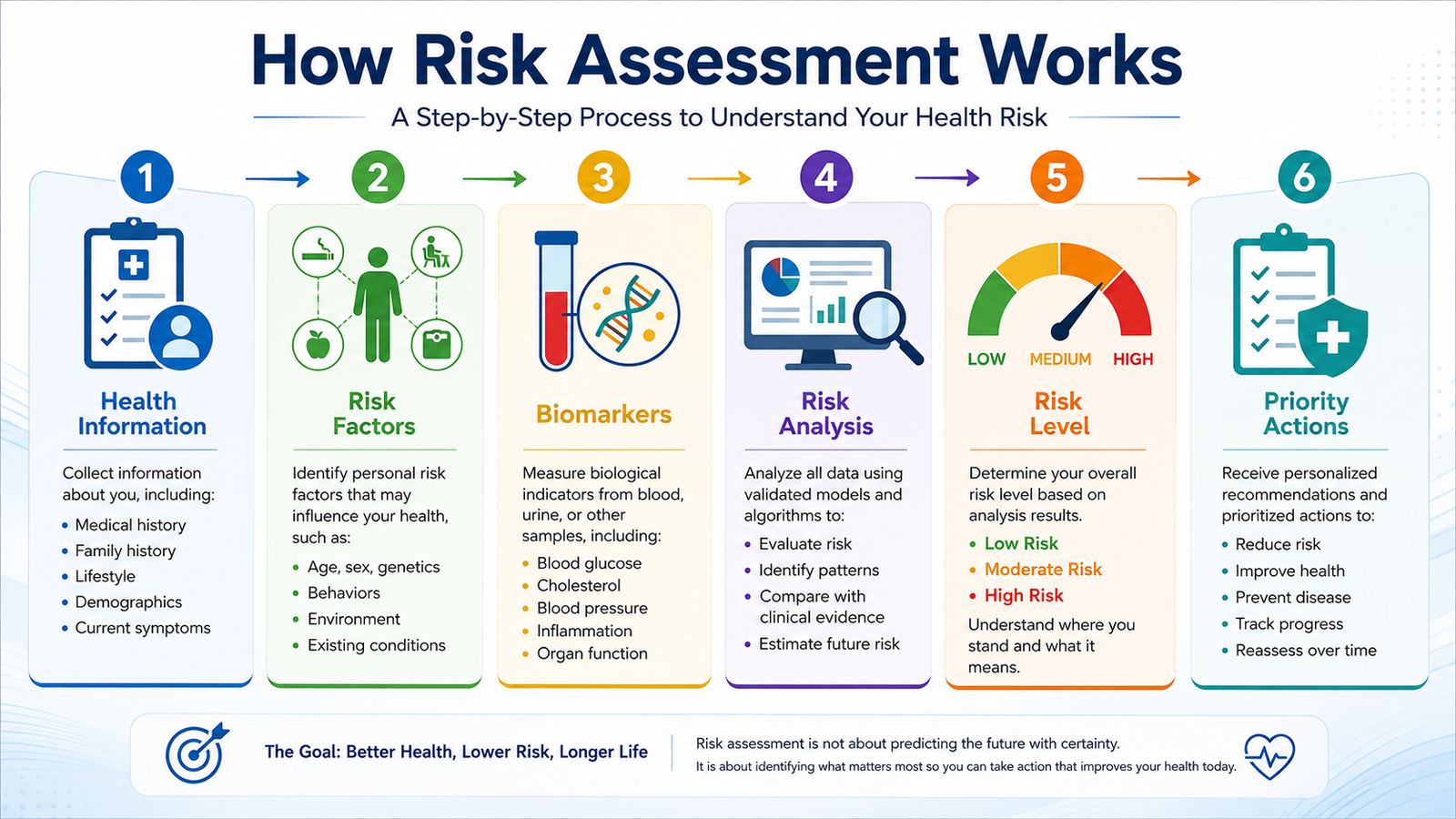
Risk assessment brings health information, risk factors, and biomarkers together to identify what may deserve attention. By analyzing these signals in context, potential risks can be prioritized and connected to practical actions. The goal is not to predict the future with certainty, but to recognize meaningful risks earlier, focus on what matters most, and support better preventive health decisions.
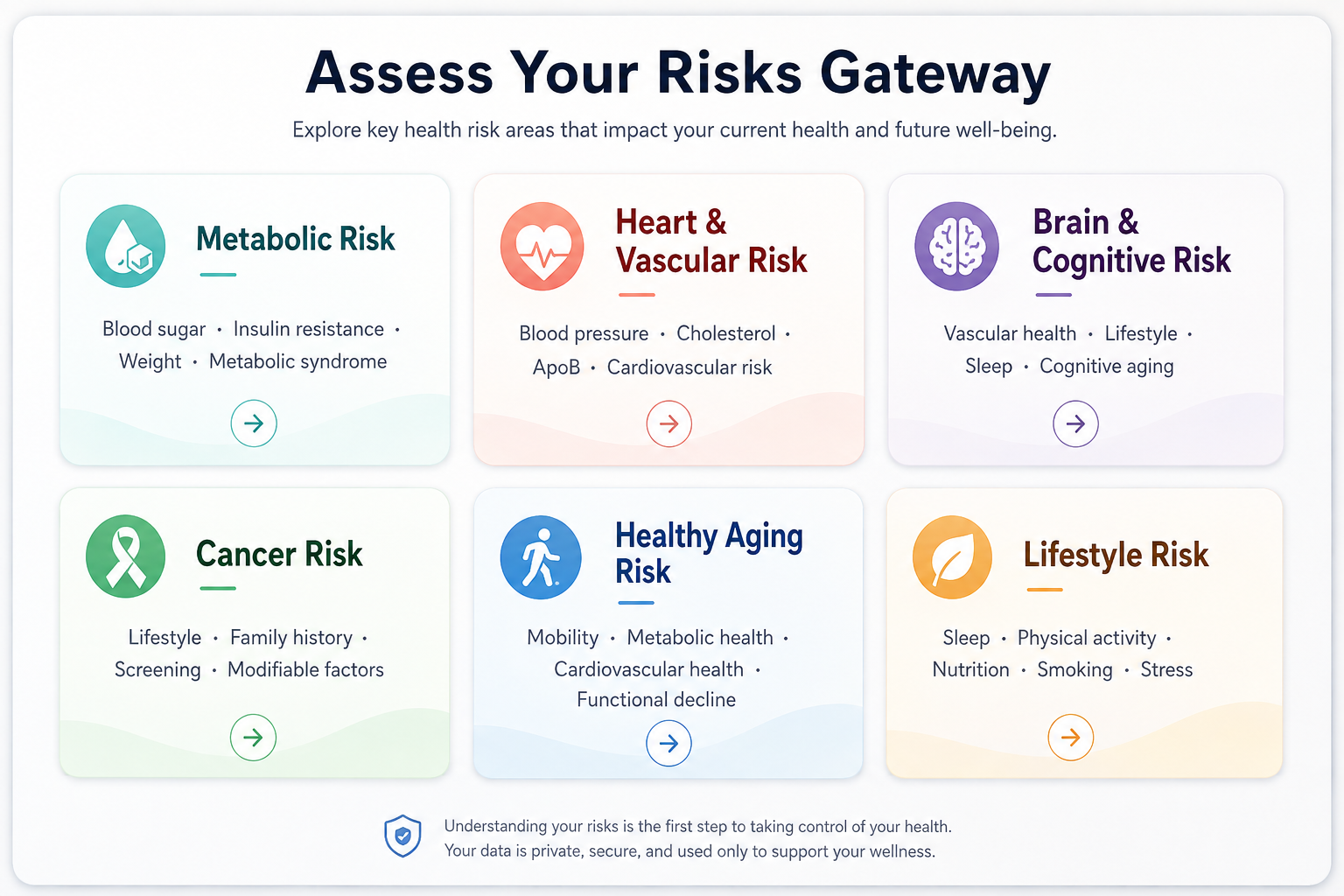
Some health risks cannot be changed, but many important risk drivers can be improved, managed, or monitored. Understanding modifiable factors—such as blood sugar, blood pressure, cholesterol, weight, activity, nutrition, sleep, and smoking—helps identify opportunities for action. Non-modifiable factors, including age, genetics, family history, and medical history, provide important context for prevention, screening, and ongoing monitoring.
Understand Your Biomarkers
Your Numbers Are Part of the Story
Biomarkers can provide objective information about what is happening inside the body.
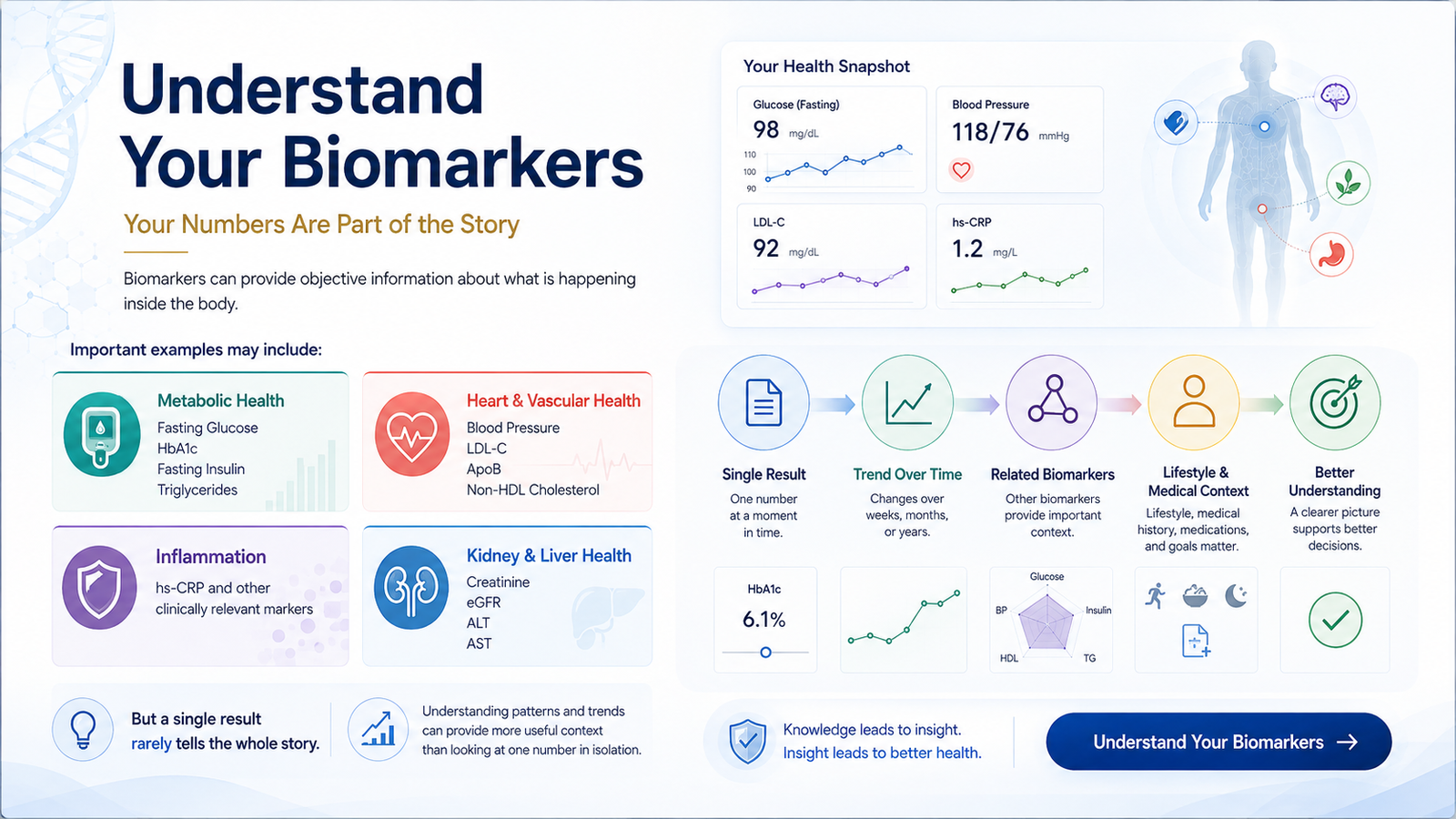
Biomarkers provide objective signals about metabolic, cardiovascular, inflammatory, kidney, and liver health, but a single result rarely tells the whole story. Looking at trends over time, related biomarkers, and lifestyle and medical context can provide a clearer picture. Understanding these patterns helps reveal meaningful changes, support better risk assessment, and guide more informed preventive health decisions over time.
Risk Is Not a Diagnosis
A risk estimate does not mean that you have—or will develop—a disease.
Risk assessment is designed to help identify patterns, risk factors, and areas that may deserve greater attention.
It does not replace diagnosis, individualized medical evaluation, or professional medical advice.
When symptoms, abnormal test results, or significant health concerns are present, appropriate evaluation by a qualified healthcare professional is important.
From Risk to Action
Understanding Risk Is Only the Beginning
Knowing that a risk exists is useful.
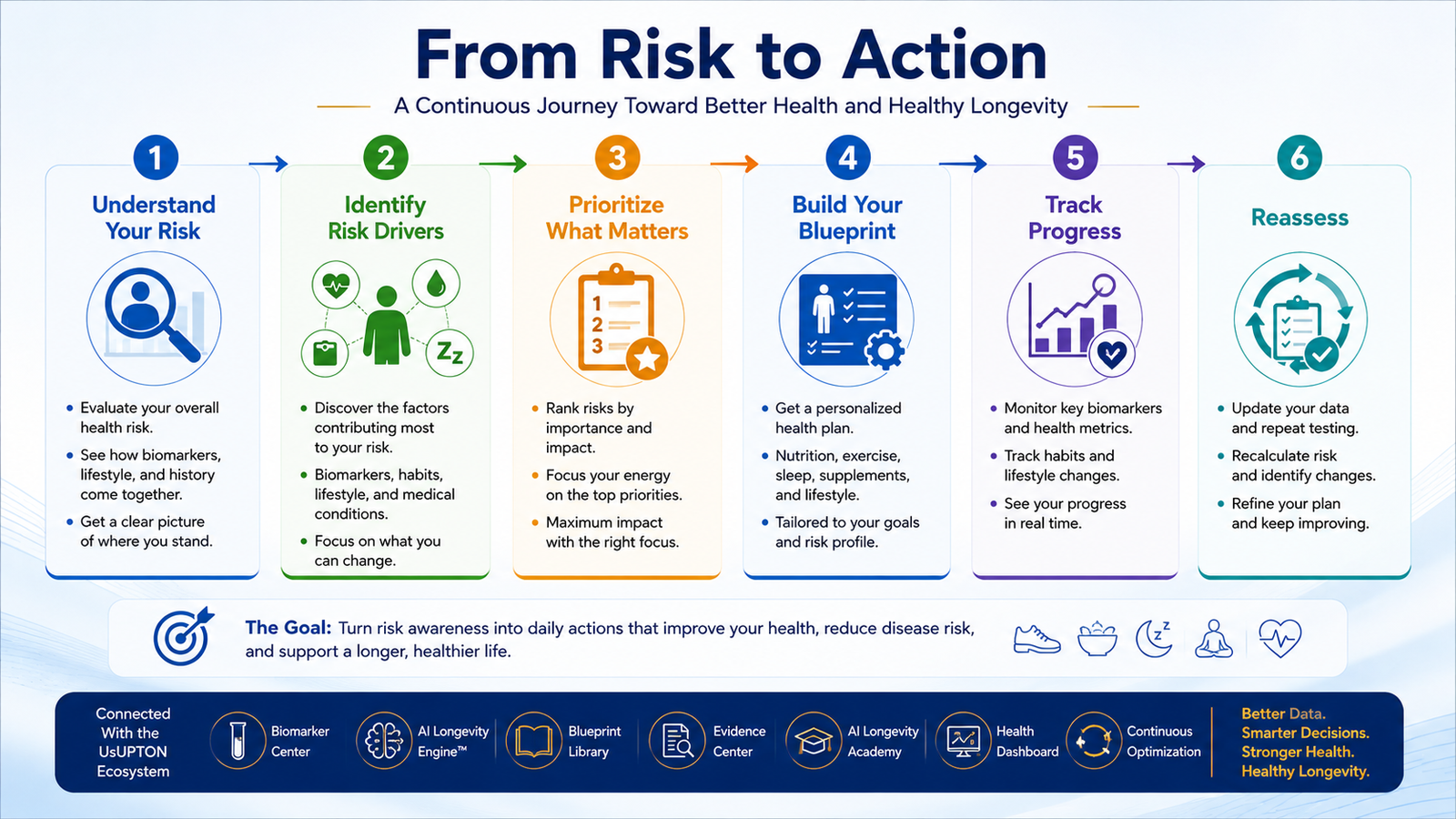
Understanding risk is only the beginning. Identify the biomarkers, behaviors, history, and other factors driving that risk, then prioritize what matters most. Turn those priorities into practical actions for nutrition, activity, sleep, monitoring, and prevention. Track meaningful changes over time and reassess as your health evolves—creating a continuous pathway from risk to priorities, action, progress, and improvement.
Choose Your Next Step
You do not need to understand everything at once.
Start with the question that matters most to you.
01 — Understand
Learn What Your Health Data Means
Explore biomarkers, health concepts, and the science behind preventive health.
Understand Your Biomarkers →
02 — Assess
Identify the Risks That Matter Most
Explore metabolic, cardiovascular, brain, cancer, healthy aging, and lifestyle risk factors.
Explore Risk Assessments →
03 — Act
Turn Priorities Into a Practical Plan
Move from understanding your health to building practical strategies for nutrition, exercise, sleep, monitoring, and prevention.
Explore Health Blueprints →
Start With What Matters Most
Better prevention begins with understanding where you are today.
Choose a health area, understand the factors that matter, and move from risk awareness toward practical action.
Understand Your Biomarkers →
Explore Risk Assessments →
Build Your Blueprint →
Educational Use
UsUPTON provides health education and decision-support information designed to help people better understand health risks, biomarkers, prevention, and healthy aging.
The information on this page is for educational purposes only and is not a diagnosis or a substitute for individualized medical care.
UsUPTON connects health education, biomarkers, risk assessment, and practical health strategies into a continuous pathway toward better prevention and healthy longevity.
Understand Your Risk. Focus on What Matters. Build a Healthier Future.