
Mental Fatigue Isn’t Always a Lack of Motivation
Feeling mentally drained doesn’t necessarily mean you’re lazy. Cognitive fatigue can reflect prolonged concentration, poor sleep, chronic stress, or inadequate recovery. Giving the brain regular opportunities to rest may improve focus and long-term resilience.
Mental Fatigue Is a Biological Signal—Not a Personal Failure
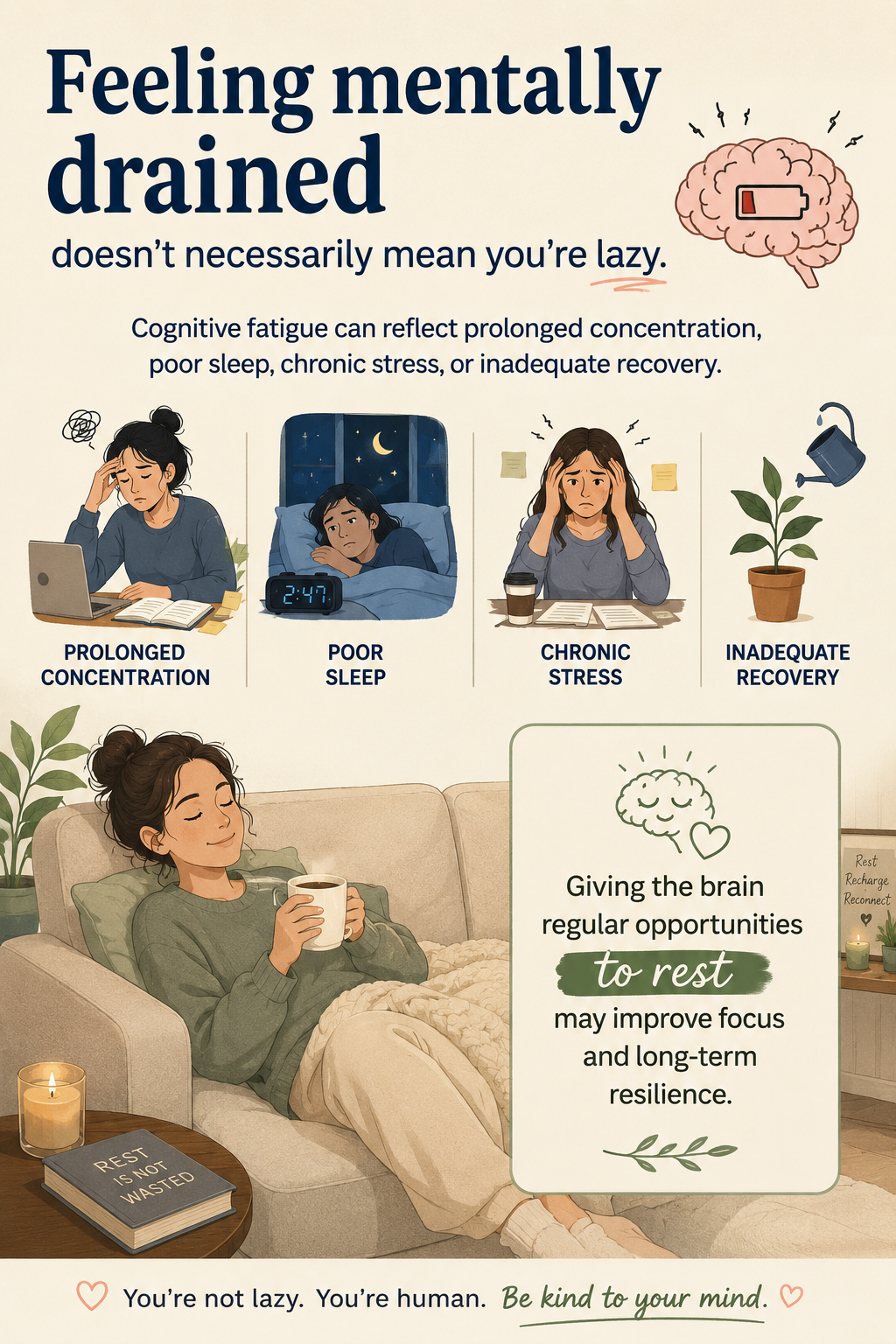
Many people assume that feeling mentally exhausted means they are unmotivated, undisciplined, or simply not trying hard enough. In reality, cognitive fatigue is a normal biological response that often reflects how intensely the brain has been working. Just as muscles become tired after prolonged physical activity, the brain also requires regular periods of recovery to maintain optimal performance.
The human brain represents only about 2% of total body weight, yet it consumes roughly 20% of the body’s resting energy. Every decision, conversation, memory, and problem-solving task depends on a continuous supply of oxygen, glucose, healthy blood flow, and efficient mitochondrial energy production. When these systems are challenged for extended periods, mental fatigue can naturally develop.
One of the most common contributors to cognitive fatigue is prolonged concentration. Hours of sustained attention—whether working at a computer, studying, driving, or multitasking—place continuous demands on the brain’s executive networks. Over time, these networks become less efficient, making it harder to maintain focus, process information quickly, and resist distractions. This decline is not a sign of laziness but a reflection of normal neurological function.
Sleep also plays a central role in brain recovery. During healthy sleep, the brain performs numerous maintenance activities that support long-term cognitive health. These include memory consolidation, removal of metabolic waste products, restoration of neurotransmitter balance, and regulation of hormones involved in stress and energy metabolism. Even a single night of poor-quality sleep can reduce attention, slow reaction time, impair decision-making, and increase feelings of mental exhaustion.
Chronic psychological stress is another major factor influencing cognitive performance. When stress remains elevated for prolonged periods, the body produces higher levels of stress hormones that can affect concentration, emotional regulation, and memory. Constant activation of the body’s stress response may also interfere with sleep quality, creating a cycle in which inadequate recovery leads to greater mental fatigue the following day.
Modern lifestyles introduce additional challenges. Smartphones, social media, continuous notifications, video meetings, streaming content, and constant digital connectivity expose the brain to an unprecedented volume of information. Although technology provides many benefits, continuous stimulation may leave little opportunity for genuine mental recovery. The brain often remains active long after work has ended, making it difficult to fully relax.
Fortunately, cognitive resilience can often be supported through simple, sustainable lifestyle habits. Regular physical activity improves circulation and oxygen delivery while supporting healthy brain function. Brief breaks throughout the workday help reduce cognitive overload and restore attention. Spending time outdoors, practicing mindfulness, engaging in enjoyable hobbies, and limiting unnecessary digital stimulation may also promote healthier recovery.
Nutrition contributes as well. Balanced meals that provide adequate protein, healthy fats, fiber, vitamins, and minerals help support stable energy production throughout the day. Proper hydration is equally important, as even mild dehydration can reduce concentration and increase feelings of fatigue.
Recovery should not be viewed as wasted time. Instead, it is an essential biological process that allows the brain to restore its capacity for learning, creativity, emotional regulation, and decision-making. High performance depends not only on periods of focused work but also on intentional periods of rest.
Ultimately, feeling mentally drained does not necessarily indicate weakness or poor motivation. More often, it reflects the remarkable effort the brain invests in managing the demands of modern life. By prioritizing quality sleep, regular movement, stress management, balanced nutrition, and opportunities for mental recovery, individuals can help support healthier cognitive function, improved focus, and greater long-term resilience. Sustainable brain health is built through consistent daily habits that respect the brain’s natural need for both activity and recovery.
#MentalFatigue #BrainRecovery #Focus #SleepHealth #StressManagement #BrainEnergy #Wellness #Longevity #HealthyMind #CognitivePerformance
Brain Recovery Begins at the Cellular Level

The brain is one of the most energy-demanding organs in the human body. Every thought, memory, decision, and emotional response depends on billions of neurons communicating through complex electrical and chemical signaling networks. The glowing neural connections illustrated here symbolize the extraordinary activity continuously taking place within the brain, even during moments of quiet reflection.
When concentration is prolonged, sleep is insufficient, or stress remains elevated, these neural networks must work harder to maintain performance. Over time, the brain’s energy reserves may become strained, contributing to mental fatigue, slower information processing, reduced attention, and decreased cognitive flexibility. Rather than indicating a lack of motivation, mental exhaustion often reflects the biological need for recovery.
Healthy brain function depends on far more than mental effort alone. Restorative sleep allows the brain to consolidate memories, regulate neurotransmitters, and remove metabolic waste products that accumulate during waking hours. Regular physical activity supports healthy blood flow and oxygen delivery, while balanced nutrition provides the glucose, healthy fats, vitamins, and minerals required for efficient cellular energy production. Stress management practices, periods of relaxation, and time away from constant digital stimulation also help restore neural balance.
Modern neuroscience increasingly recognizes that cognitive performance emerges from the interaction of multiple systems, including metabolism, circulation, mitochondrial function, sleep, and emotional regulation. Supporting these interconnected biological networks may help improve focus, resilience, learning capacity, and healthy cognitive aging over time.
Protecting brain energy is therefore not simply about working harder—it is about allowing the brain to recover, adapt, and function efficiently throughout a lifetime of learning.
The science of brain aging is evolving rapidly. Rather than accepting cognitive decline as an unavoidable part of growing older, we can begin to understand the biological systems that support mental vitality. By learning how brain energy is generated, protected, and renewed, you take the first step toward building habits that support lifelong cognitive resilience. Explore the next chapter to discover practical strategies that help nourish the brain and promote healthier aging from the inside out.