
Insulin Is Your Body’s Energy Traffic Controller
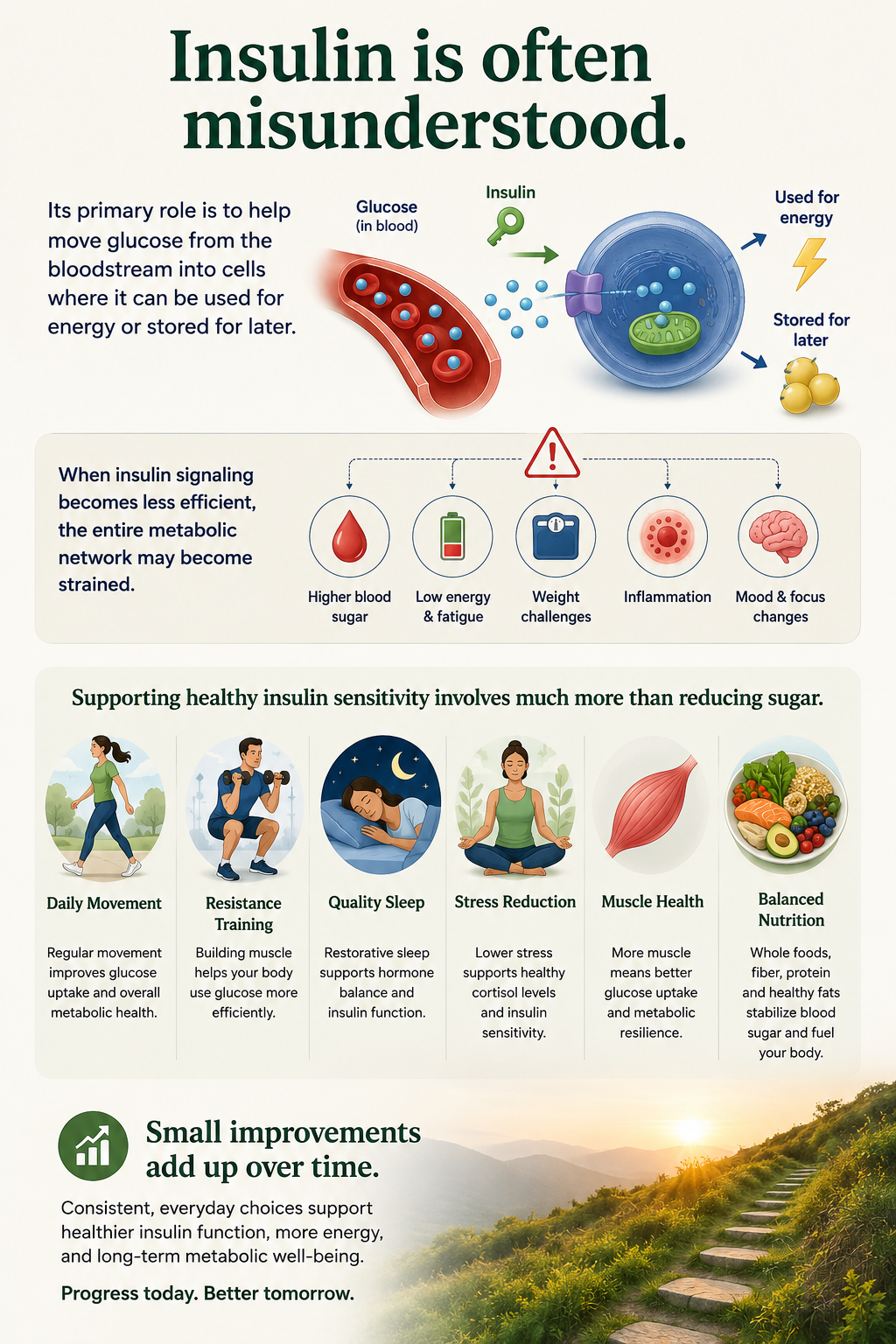
Insulin is often misunderstood.
Its primary role is to help move glucose from the bloodstream into cells where it can be used for energy or stored for later.
When insulin signaling becomes less efficient, the entire metabolic network may become strained.
Supporting healthy insulin sensitivity involves much more than reducing sugar.
Daily movement, resistance training, quality sleep, stress reduction, muscle health, and balanced nutrition all contribute to healthier insulin function.
Small improvements add up over time.
Understanding Insulin: The Key to a Healthy Metabolic System
Insulin is one of the most important hormones in the human body, yet it is also one of the most misunderstood. Many people associate insulin only with diabetes or believe that it becomes active only after eating sugary foods. In reality, insulin is a vital metabolic messenger that helps coordinate how the body uses, stores, and distributes energy throughout the day.
After carbohydrates are digested, they are broken down into glucose, which enters the bloodstream. Rising blood glucose signals the pancreas to release insulin. Insulin then acts like a biological messenger, helping glucose move from the bloodstream into muscle cells, liver cells, and fat cells, where it can be used immediately for energy or stored for future needs. This process allows the body to maintain relatively stable blood glucose levels while ensuring that tissues receive the fuel they require.
Healthy insulin function supports far more than blood sugar regulation. Efficient insulin signaling contributes to normal energy production, muscle maintenance, exercise recovery, brain function, and overall metabolic flexibility. It also works closely with numerous other hormones involved in appetite regulation, stress responses, sleep, and growth. Rather than acting alone, insulin operates within an interconnected network that helps keep the body’s metabolic systems in balance.
Over time, however, insulin signaling may become less efficient. This condition, commonly referred to as reduced insulin sensitivity or insulin resistance, means that cells respond less effectively to insulin’s signals. As a result, the pancreas often compensates by producing larger amounts of insulin in an effort to maintain normal blood glucose levels. Although this adaptation can be effective for a period of time, it may place increasing demands on the body’s metabolic systems.
Reduced insulin sensitivity is influenced by many interacting factors rather than a single cause. Physical inactivity, excess body fat, loss of muscle mass, chronic psychological stress, poor sleep, aging, genetics, and dietary patterns may all contribute. Because these factors interact with one another, improving insulin sensitivity usually requires a comprehensive lifestyle approach rather than focusing on a single nutrient or food.
Regular physical activity is one of the most effective ways to support healthy insulin function. Walking after meals, cycling, swimming, resistance training, and other forms of movement encourage muscles to absorb glucose more efficiently. Resistance training is particularly valuable because muscle tissue serves as one of the body’s largest glucose storage sites. Maintaining healthy muscle mass may therefore improve long-term metabolic health.
Nutrition also plays an important role. Meals that emphasize vegetables, whole grains, legumes, lean protein, healthy fats, nuts, seeds, and fiber-rich foods may help support more stable blood glucose responses. Limiting highly processed foods and sugar-sweetened beverages can further reduce excessive glucose fluctuations. Rather than striving for perfection, consistent healthy eating patterns tend to produce the greatest long-term benefits.
Sleep is another frequently overlooked component of metabolic health. Even short periods of inadequate sleep may influence hormones involved in appetite regulation, glucose metabolism, and insulin signaling. Establishing consistent sleep habits and obtaining sufficient restorative sleep can therefore contribute to healthier metabolic function.
Stress management deserves equal attention. Chronic stress activates hormonal pathways that may influence glucose production and insulin regulation. Relaxation techniques, mindfulness practices, social connection, enjoyable physical activity, and adequate recovery time all help support a healthier physiological environment.
The encouraging news is that insulin sensitivity is often responsive to gradual lifestyle improvements. Small, sustainable changes practiced consistently may provide meaningful benefits over time. Choosing to walk more, strengthen muscles, improve sleep quality, manage stress, and eat balanced meals can collectively support healthier insulin function and overall metabolic resilience.
Ultimately, insulin should not be viewed as an enemy but as an essential partner in human physiology. Understanding how this remarkable hormone works helps us appreciate the importance of caring for the entire metabolic system. By supporting healthy daily habits, we also support the body’s natural ability to regulate energy, maintain balance, and promote long-term health and healthy aging.
#Insulin #Metabolism #BloodSugarReset #Longevity #HealthEducation
Blood Sugar Regulation: A Dynamic Systems Biology Network
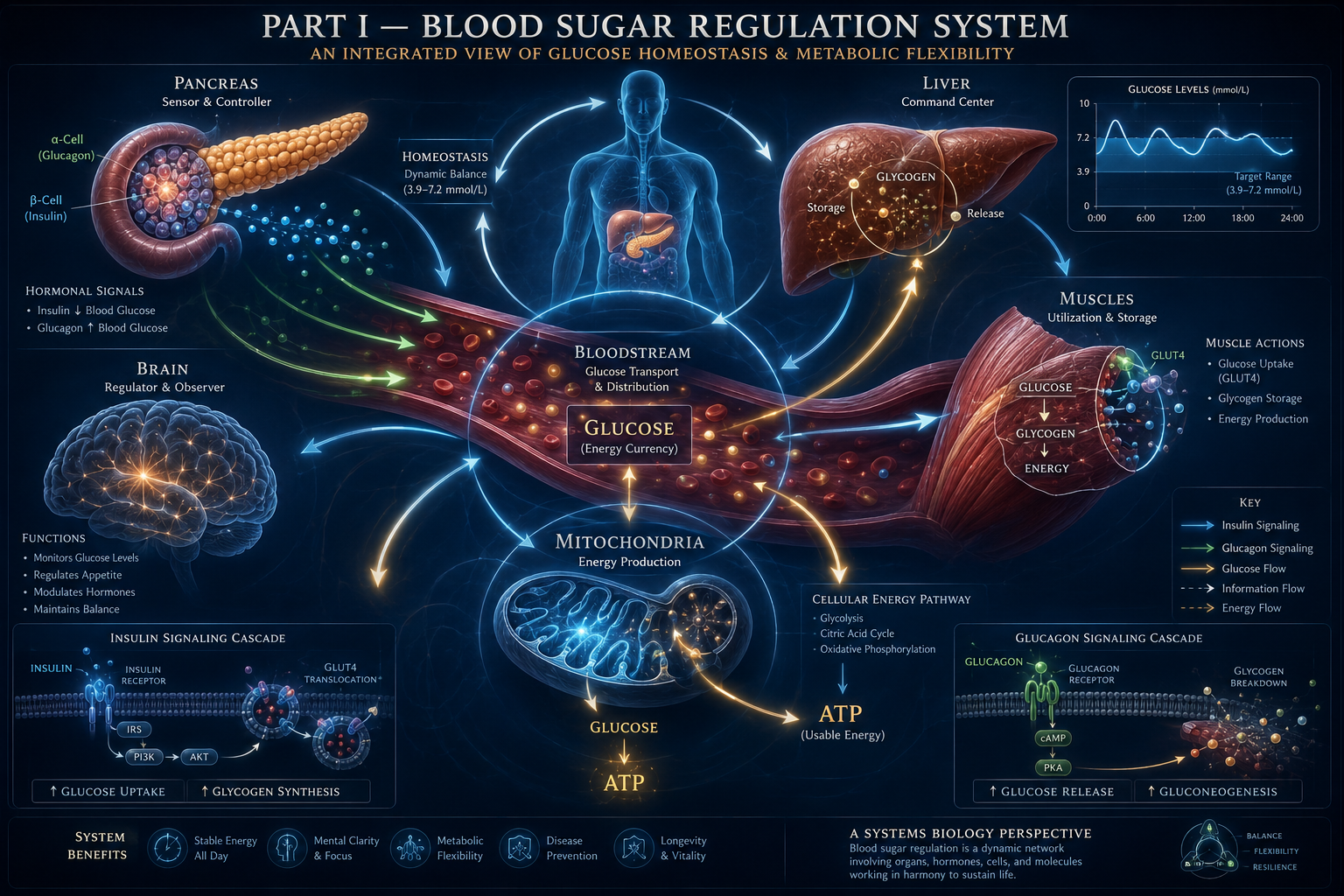
Blood sugar regulation is one of the body’s most sophisticated homeostatic systems. Rather than being controlled by a single organ or hormone, it relies on continuous communication among the pancreas, liver, skeletal muscles, brain, bloodstream, and mitochondria. Together, these interconnected systems maintain a relatively stable supply of glucose—the body’s primary source of cellular energy—despite constant changes in food intake, physical activity, stress, and sleep.
At the center of this network is the pancreas, which continuously monitors blood glucose concentrations. Specialized β-cells release insulin when glucose levels rise after a meal, while α-cells secrete glucagon when glucose falls during fasting or prolonged exercise. These two hormones work in opposition, creating a finely balanced feedback system that helps maintain glucose homeostasis.
The bloodstream serves as the body’s transportation network, delivering glucose to every organ. However, glucose cannot efficiently enter most cells without appropriate hormonal signaling. Insulin activates receptors on target tissues and stimulates the movement of GLUT4 transporters to the cell membrane, particularly in skeletal muscle. This process allows glucose to enter cells where it can be converted into glycogen for storage or metabolized to produce ATP, the universal energy currency of life.
The liver functions as the body’s metabolic command center. Following meals, it stores excess glucose as glycogen under the influence of insulin. During fasting, glucagon signals the liver to break down glycogen and produce new glucose through gluconeogenesis, ensuring a continuous energy supply for vital organs, especially the brain. This buffering role allows blood glucose to remain within a narrow physiological range despite fluctuations in dietary intake.
Skeletal muscle is the largest glucose-utilizing tissue in the body and plays a central role in metabolic health. During physical activity, muscles dramatically increase glucose uptake to meet rising energy demands. Regular exercise and resistance training improve insulin sensitivity, enabling muscles to remove glucose from the bloodstream more efficiently while increasing glycogen storage capacity. Because muscle tissue acts as a major reservoir for glucose disposal, maintaining healthy muscle mass is one of the most effective long-term strategies for supporting metabolic function.
Within every cell, mitochondria convert glucose into ATP through glycolysis, the citric acid cycle, and oxidative phosphorylation. Efficient mitochondrial function transforms circulating glucose into usable energy, supporting movement, cognition, immune function, and countless other biological processes.
The brain continuously monitors glucose availability because it depends heavily on a stable energy supply. Through complex neuroendocrine pathways, it coordinates appetite, hormonal regulation, autonomic nervous system activity, and behavioral responses to help preserve metabolic balance.
This integrated systems perspective demonstrates that healthy blood sugar regulation depends on coordinated communication rather than any single organ acting alone. Nutrition, physical activity, sleep quality, stress management, muscle health, and mitochondrial function all influence this dynamic network. Understanding glucose regulation as a whole-body system provides a more complete framework for supporting metabolic flexibility, disease prevention, healthy aging, and lifelong physiological resilience.
Healthy blood sugar is about far more than preventing diabetes. It influences energy production, brain function, cardiovascular health, inflammation, and the biological processes associated with healthy aging. Before considering any supplement or lifestyle program, take a few minutes to understand the science behind glucose regulation and explore evidence-based strategies that support long-term metabolic resilience. Informed decisions are the foundation of lasting health.