
Movement Powers the Mind
Exercise benefits more than muscles and the heart. Regular physical activity may improve blood flow, increase oxygen delivery, support neuroplasticity, and stimulate growth factors associated with healthy brain function. Every walk is an investment in your brain.
How Exercise Helps Build a Healthier Brain

When most people think about exercise, they picture stronger muscles, better cardiovascular fitness, or weight management. Yet one of the body’s most remarkable responses to movement occurs inside the brain. Modern neuroscience has shown that regular physical activity supports numerous biological processes that help maintain healthy brain function throughout life. From improving circulation to stimulating neural adaptation, movement is increasingly recognized as one of the most important lifestyle habits for lifelong cognitive health.
The brain consumes approximately 20% of the body’s oxygen despite representing only about 2% of total body weight. Every thought, memory, emotion, and movement depends on a continuous supply of oxygen and nutrients delivered through healthy blood circulation. During physical activity, heart rate increases, blood vessels dilate, and circulation improves, helping deliver oxygen and glucose to active brain tissue. Researchers believe this enhanced blood flow supports normal neuronal function while helping maintain the health of the brain’s extensive vascular network.
Exercise may also promote neuroplasticity, the brain’s remarkable ability to adapt by forming and strengthening neural connections. Neuroplasticity allows us to learn new skills, store memories, recover from certain injuries, and continuously adapt to changing environments. Although neuroplasticity naturally declines with age, studies suggest that regular aerobic and resistance exercise may help preserve this important capability. Every walk, bike ride, or workout provides an opportunity to stimulate the brain’s adaptive capacity.
Another important benefit involves brain-derived neurotrophic factor (BDNF) and other growth factors. BDNF is sometimes called “fertilizer for the brain” because it helps support the growth, survival, and communication of neurons. Physical activity has been associated with increased production of BDNF in many studies, particularly aerobic exercise. While scientists continue investigating the precise mechanisms, higher levels of BDNF are associated with learning, memory formation, and healthy cognitive aging.
Movement also supports the brain indirectly by improving metabolic health. Healthy blood sugar regulation, insulin sensitivity, mitochondrial function, and cardiovascular fitness all contribute to efficient brain energy production. Because neurons require a constant supply of energy, maintaining overall metabolic health may help support attention, concentration, and mental performance. This systems-based perspective reminds us that brain health cannot be separated from the health of the rest of the body.
Regular physical activity has important effects on emotional well-being as well. Exercise stimulates the release of neurotransmitters and signaling molecules that are associated with improved mood and stress regulation. Many individuals report feeling calmer, more focused, and mentally refreshed after even moderate exercise. Physical activity may also help reduce chronic stress, which is known to influence inflammation, sleep quality, and cognitive performance.
Sleep represents another important connection between movement and brain health. People who engage in regular exercise often experience improved sleep quality, allowing the brain to perform essential overnight functions such as memory consolidation, metabolic waste clearance, emotional regulation, and neural recovery. Better sleep creates a positive cycle that supports learning, decision-making, and overall cognitive resilience.
Importantly, supporting brain health does not require intense athletic training. Scientific evidence consistently shows that moderate activities such as brisk walking, cycling, swimming, dancing, resistance training, gardening, and even regular household movement contribute to healthier aging. Consistency matters far more than perfection. Small amounts of movement accumulated throughout the day may provide meaningful long-term benefits when maintained over months and years.
Current preventive medicine emphasizes that exercise is not simply a way to burn calories—it is one of the body’s most powerful biological regulators. It influences circulation, inflammation, metabolism, hormone balance, mitochondrial function, immune activity, and brain plasticity simultaneously. These interconnected systems work together to support cognitive performance across the lifespan.
Ultimately, every step represents an investment in your future brain. Choosing to move regularly supports not only physical strength and cardiovascular health but also memory, learning, focus, emotional resilience, and healthy cognitive aging. As researchers continue uncovering the remarkable connections between movement and the brain, one message remains clear: an active body helps build a healthier, more resilient mind.
#ExerciseMedicine #BrainHealth #BloodFlow #Neuroplasticity #HealthyAging #Movement #BrainEnergy #Fitness #Longevity #Wellness
The Brain: A Universe of Connections
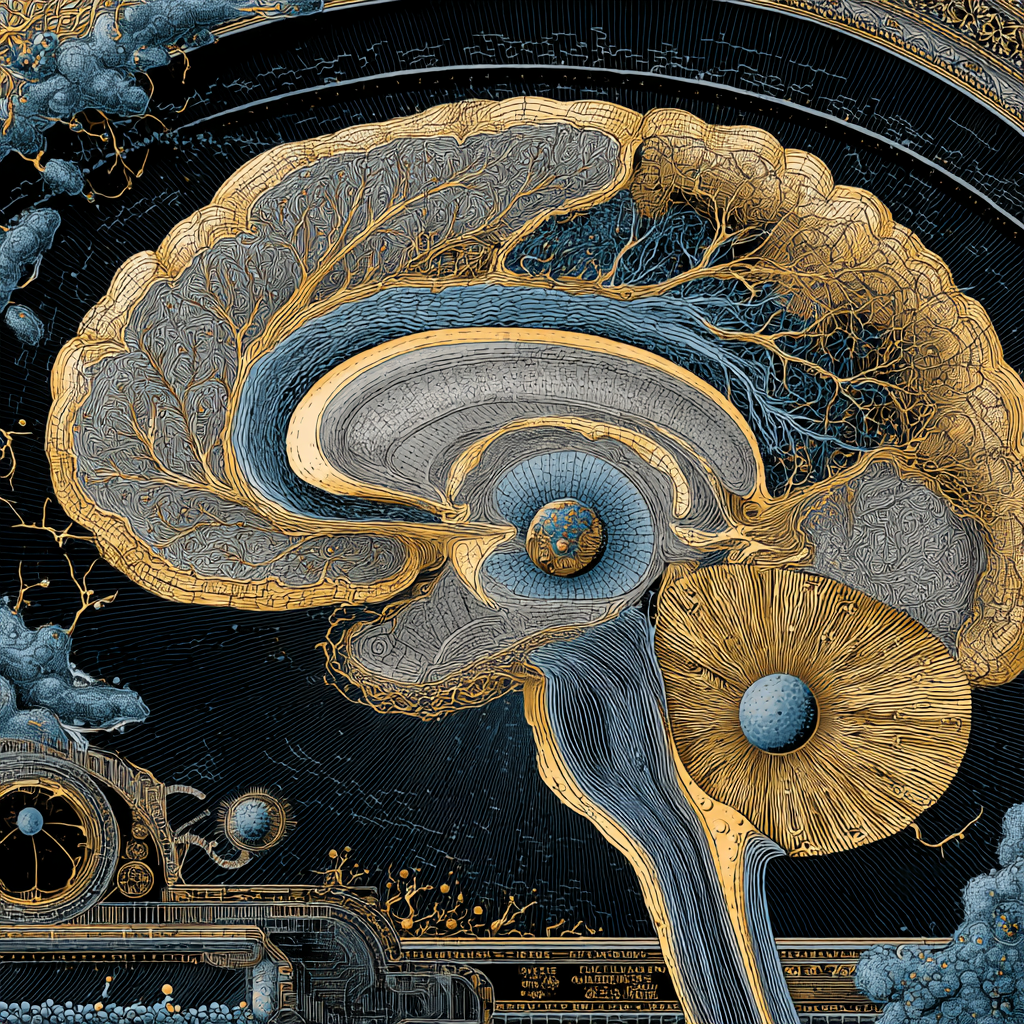
The human brain is often described as the most complex structure in the known universe. Containing approximately 86 billion neurons and trillions of synaptic connections, it continuously processes sensory information, stores memories, regulates emotions, coordinates movement, and supports every conscious thought. The intricate illustration above highlights the remarkable architecture of the brain, where specialized regions communicate through an extraordinary network of interconnected pathways.
No single part of the brain works alone. The cerebral cortex supports higher cognitive functions such as reasoning, language, and decision-making, while deeper structures regulate memory, motivation, emotional responses, and autonomic functions. The cerebellum fine-tunes balance, coordination, and motor learning, and the brainstem maintains essential life-sustaining processes including breathing and heart rate.
Healthy brain function depends on much more than genetics. Adequate blood flow, oxygen delivery, mitochondrial energy production, restorative sleep, balanced nutrition, regular physical activity, and lifelong learning all contribute to maintaining resilient neural networks. Researchers also continue exploring how neuroplasticity allows the brain to reorganize and strengthen its connections throughout life.
Rather than viewing the brain as a static organ, modern neuroscience recognizes it as a dynamic, adaptive biological system that continuously responds to daily experiences. Every healthy habit—from exercise and quality sleep to intellectual curiosity and stress management—helps support the remarkable network that powers memory, learning, creativity, and lifelong cognitive health.
Music, Sound, and the Brain: More Than Entertainment

Music is far more than a source of enjoyment—it is one of the few experiences that activates multiple brain regions simultaneously. Listening to music engages networks involved in hearing, attention, memory, emotion, language, movement, and reward. The illustrations above symbolize the remarkable interaction between sound waves and the brain’s complex neural circuitry.
When sound enters the ears, it is converted into electrical signals that travel through the auditory pathways to the brain. There, specialized regions analyze rhythm, pitch, melody, timing, and speech while integrating emotional and autobiographical memories. This widespread activation helps explain why a familiar song can instantly evoke powerful emotions or vivid life experiences.
Researchers continue investigating how music may support neuroplasticity—the brain’s ability to reorganize and strengthen neural connections throughout life. Studies suggest that musical engagement may improve attention, learning, working memory, and cognitive flexibility while also promoting relaxation and emotional well-being. Music therapy is also being explored as a supportive intervention for neurological rehabilitation, healthy aging, and stress management.
Although music is not a cure for neurological disease, it represents a fascinating example of how sensory experiences influence brain function. Combined with regular exercise, restorative sleep, balanced nutrition, lifelong learning, and social engagement, music may become part of a comprehensive lifestyle approach that supports lifelong brain health, cognitive resilience, and overall well-being.
The brain responds to the experiences we give it every day. Alongside regular exercise, quality sleep, balanced nutrition, and lifelong learning, music can become a meaningful part of a brain-healthy lifestyle. If you’re interested in exploring how carefully designed soundscapes may support relaxation, focus, and cognitive wellness, discover our featured resource below.