
Your Muscles Are Metabolic Powerhouses
Many people think muscles are only important for strength.
In reality, healthy skeletal muscle is one of the body’s largest consumers of glucose.
Maintaining muscle through regular resistance exercise and physical activity helps support:
• Blood sugar regulation
• Energy production
• Healthy aging
• Functional independence
Movement is not simply exercise.
It is metabolic medicine.
Muscle: Your Body’s Metabolic Engine

When most people think about skeletal muscle, they imagine strength, athletic performance, or physical appearance. While muscles certainly allow us to lift, carry, climb, and move, their role extends far beyond mobility. Modern research has revealed that skeletal muscle is one of the body’s most metabolically active organs, influencing blood sugar regulation, energy metabolism, healthy aging, and overall resilience.
In fact, skeletal muscle accounts for approximately 40% of total body weight in many healthy adults and serves as one of the largest destinations for glucose after eating. Rather than acting only as the body’s “motor,” muscle functions as an important metabolic tissue that communicates continuously with the brain, liver, fat tissue, and immune system.
Muscle and Blood Sugar Regulation
After a meal, carbohydrates are broken down into glucose, which enters the bloodstream. Insulin helps move this glucose into cells where it can be used for energy or stored for later use. Skeletal muscle is responsible for taking up a substantial portion of this circulating glucose, making it one of the body’s primary regulators of blood sugar.
Regular physical activity improves the ability of muscle cells to respond to insulin, often referred to as insulin sensitivity. Resistance training and aerobic exercise also stimulate specialized glucose transport proteins that help muscles absorb glucose more efficiently—even during exercise when insulin levels are relatively low.
Supporting healthy muscle mass may therefore contribute to healthier blood sugar regulation as part of an overall healthy lifestyle.
More Than Strength
Muscle tissue continuously consumes energy, even when the body is at rest. Healthy muscle supports resting metabolic processes and helps maintain energy balance throughout the day.
Resistance exercise also stimulates muscle protein synthesis, helping preserve lean body mass during aging. This becomes increasingly important after the age of 30, when adults gradually begin losing muscle mass if it is not regularly challenged through movement and adequate nutrition.
Maintaining muscle is not only about lifting heavier weights. It is about preserving the body’s capacity to perform everyday tasks, recover from illness, and remain independent later in life.
A Key Component of Healthy Aging
Age-related muscle loss, known as sarcopenia, is associated with reduced mobility, lower physical function, and an increased risk of falls and frailty. Although aging naturally influences muscle mass, regular strength training, sufficient dietary protein, quality sleep, and consistent physical activity can help slow this process.
Healthy muscles support balance, posture, joint stability, and overall movement efficiency. They also enable people to continue enjoying recreational activities, travel, household tasks, and independent living as they grow older.
For these reasons, many experts now consider muscle health one of the foundations of longevity and preventive medicine.
Muscle as an Endocrine Organ
Scientists have also discovered that contracting muscles release signaling molecules called myokines. These compounds help muscles communicate with other organs throughout the body and may influence inflammation, immune function, metabolism, and tissue repair.
Although researchers continue studying these complex biological pathways, the findings reinforce an important idea: muscles are active participants in whole-body health rather than passive structures responsible only for movement.
Small Steps Make a Big Difference
Supporting muscle health does not require becoming a competitive athlete. Consistency is far more important than intensity.
Helpful habits include:
- Performing resistance exercises two to three times per week
- Walking regularly throughout the day
- Reducing prolonged sitting
- Consuming adequate dietary protein
- Prioritizing restorative sleep
- Staying physically active across the lifespan
Even modest improvements in daily movement can accumulate over months and years, contributing to healthier metabolism, greater functional capacity, and improved quality of life.
The Bigger Picture
Muscle health is closely connected to nearly every major system in the body. It influences glucose regulation, mitochondrial energy production, hormonal signaling, cardiovascular fitness, balance, mobility, and healthy aging. Rather than viewing exercise solely as a way to build strength or burn calories, it may be more helpful to see movement as an investment in long-term metabolic health.
Every walk, every resistance workout, and every active choice supports the remarkable biological network that keeps the body functioning efficiently.
Movement is not simply exercise—it is one of the most powerful tools for supporting lifelong metabolic health.
#MuscleHealth #HealthyMetabolism #ExerciseMedicine #BloodSugar #Longevity
Cellular Defense: The Front Line of Immunity

This illustration highlights the remarkable interaction between immune cells as they identify and respond to potential threats within the body. Immune defense is a highly coordinated process involving communication between white blood cells, signaling molecules, and surrounding tissues. These complex cellular interactions help detect abnormal cells, support tissue repair, and maintain overall immune balance. Scientists continue to study how inflammation, metabolism, genetics, and lifestyle influence immune function. Understanding these microscopic processes reminds us that maintaining health depends on the coordinated work of billions of cells functioning together every moment.
Blood Sugar Regulation System
An Integrated View of Glucose Homeostasis & Metabolic Flexibility
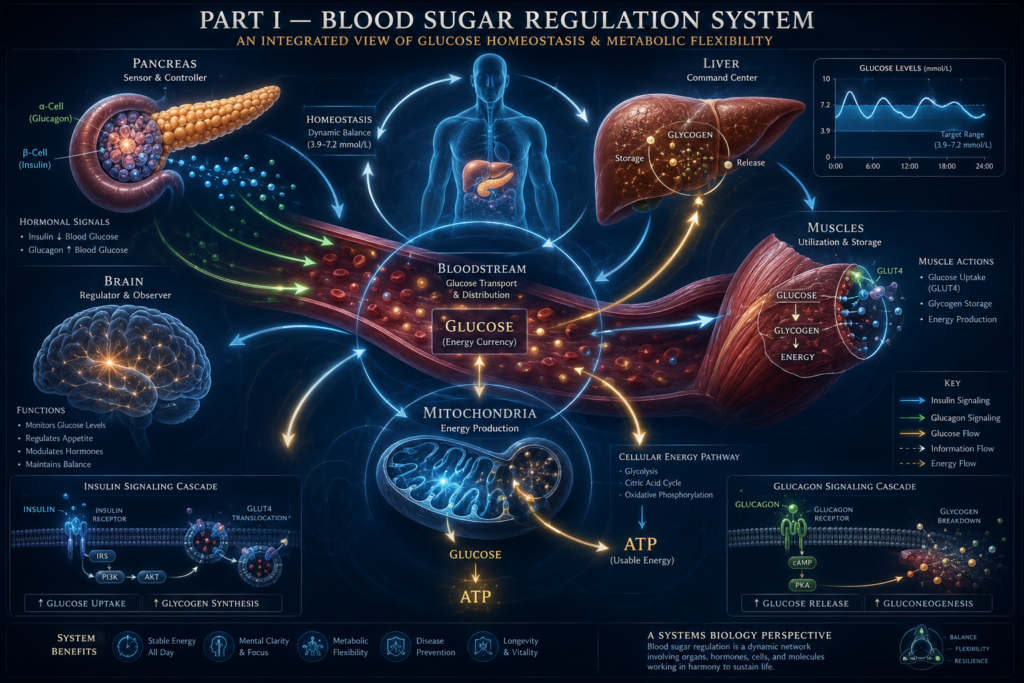
This systems biology framework illustrates how the body continuously regulates blood sugar through coordinated communication between the pancreas, liver, muscles, brain, bloodstream, and mitochondria. Rather than acting independently, these organs form an integrated metabolic network that maintains glucose homeostasis and supplies cells with the energy needed for daily life. Insulin and glucagon function as complementary hormones, directing glucose storage and release according to the body’s changing needs. Meanwhile, skeletal muscle serves as a major site of glucose uptake, while mitochondria convert glucose into ATP—the universal energy currency of the cell. Understanding blood sugar regulation from a whole-body perspective highlights the importance of nutrition, physical activity, sleep, and metabolic flexibility in supporting long-term health, disease prevention, and healthy aging.
Understanding how your body regulates blood sugar is one of the foundations of long-term metabolic health. This comprehensive guide explains how the pancreas, liver, muscles, brain, hormones, and mitochondria work together to maintain glucose balance and energy production. Through clear illustrations and evidence-informed explanations, you’ll discover why stable blood sugar influences far more than diabetes risk—it supports energy, cognitive performance, cardiovascular health, healthy aging, and overall metabolic resilience.