
Stress and Blood Sugar Are Closely Connected
Stress affects much more than emotions.
When stress hormones remain elevated for prolonged periods, they may influence glucose production, appetite, and metabolic regulation.
Supporting blood sugar also means supporting the nervous system.
Healthy breathing, walking, mindfulness, social connection, quality sleep, and recovery all contribute to better metabolic balance.
A healthier metabolism begins with a calmer body.
#StressManagement #BloodSugarReset #PreventiveHealth #MindBody #Wellness

Stress and Blood Sugar Are Closely Connected
Stress affects far more than emotional well-being. When the body experiences ongoing psychological or physical stress, it releases hormones such as cortisol and adrenaline that prepare us to respond to challenges. While these responses are beneficial in the short term, persistent elevation of stress hormones may increase glucose production by the liver, reduce insulin sensitivity, stimulate appetite, and encourage cravings for calorie-dense, highly processed foods. Over time, chronic stress can make maintaining healthy blood sugar levels more difficult and may contribute to metabolic imbalance.
Supporting healthy blood sugar therefore also means supporting the nervous system. Daily habits that promote relaxation and recovery can help regulate the body’s stress response while complementing healthy nutrition and regular physical activity. Simple practices—including deep breathing, walking, mindfulness, meaningful social connections, restorative sleep, and adequate recovery—may improve resilience, reduce stress-related metabolic strain, and promote healthier glucose regulation.
A healthier metabolism is built through consistent, sustainable lifestyle choices rather than quick fixes. By caring for both the mind and the body, individuals can support long-term metabolic health, enhance overall well-being, and create a stronger foundation for healthy aging. Small daily actions that calm the nervous system may produce meaningful benefits for blood sugar balance over time.

Future Precision Metabolism System
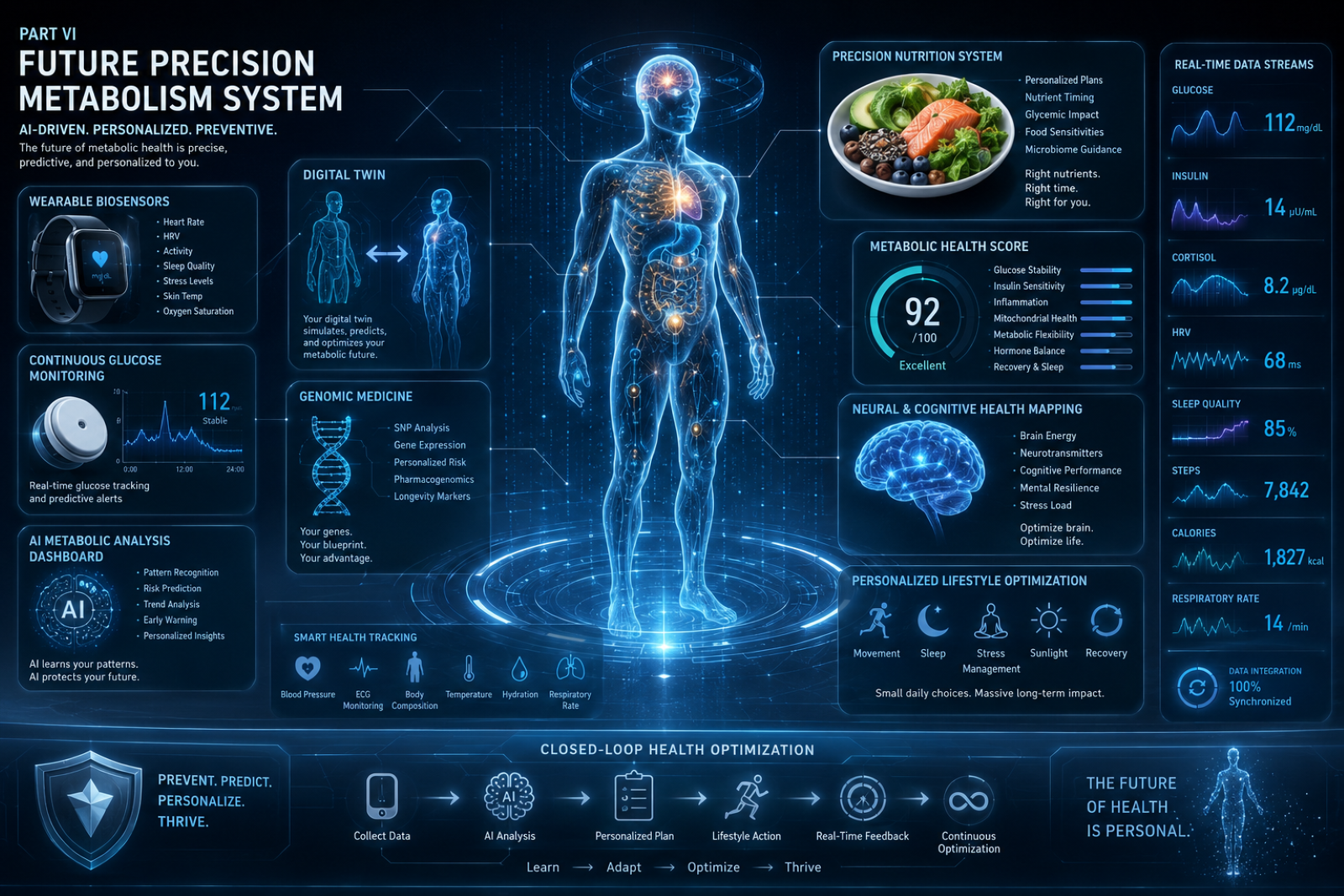
The Future Precision Metabolism System represents a vision for the next generation of preventive healthcare, where artificial intelligence, continuous monitoring, and systems medicine work together to optimize metabolic health throughout life. Instead of reacting to disease after symptoms appear, this integrated framework continuously collects, analyzes, and interprets biological data to identify subtle physiological changes long before clinical illness develops.
At the center of the system is a dynamic digital twin—a virtual representation of an individual’s health that evolves in real time using data from wearable biosensors, continuous glucose monitoring, genomic information, laboratory biomarkers, lifestyle behaviors, and environmental influences. Advanced AI models continuously compare incoming data with personalized health baselines, enabling accurate risk prediction, adaptive recommendations, and early intervention.
The platform combines multiple dimensions of precision health. Wearable devices monitor heart rate, heart rate variability, sleep quality, physical activity, body temperature, and other physiological signals. Continuous glucose monitoring provides detailed insights into glycemic responses throughout the day, while genomic analysis helps identify inherited metabolic risks and opportunities for personalized nutrition and preventive strategies. Together, these data streams provide a comprehensive picture of metabolic resilience rather than relying on isolated clinical measurements.
Artificial intelligence transforms these complex datasets into meaningful clinical insights. The system evaluates glucose stability, insulin sensitivity, inflammation, mitochondrial function, metabolic flexibility, hormone balance, recovery capacity, and overall metabolic health. Instead of generating generic advice, AI delivers highly individualized recommendations regarding nutrition, meal timing, exercise, sleep optimization, stress management, and recovery based on each person’s unique biological responses.
Precision nutrition becomes a central component of metabolic optimization. By integrating real-time metabolic data with dietary information, the system can recommend foods, nutrient timing, and eating patterns that best support healthy glucose regulation, microbiome diversity, energy production, and long-term metabolic health. As new information becomes available, recommendations automatically adapt to reflect changing physiology and personal goals.
The Future Precision Metabolism System also embraces the principles of closed-loop health optimization. Continuous feedback allows every intervention to be measured, evaluated, and refined over time. This ongoing learning process enables the system to improve prediction accuracy while empowering individuals to make informed lifestyle decisions that support healthy aging.
Ultimately, this vision extends beyond diabetes prevention or weight management. It represents a transition from reactive medicine to precision prevention, where AI, systems biology, digital biomarkers, and personalized healthcare work together to preserve metabolic resilience, reduce chronic disease risk, extend healthspan, and help individuals achieve healthier, longer lives.
Continue Learning: