
Strong Muscles Protect Joints
Healthy muscles help absorb force before it reaches your joints.
Resistance training doesn’t just build strength—it may also improve stability, balance, coordination, and movement efficiency.
Better muscles often mean happier joints.
Strength supports mobility throughout life.
Strong Muscles, Healthier Joints: Why Strength Training Supports Lifelong Mobility
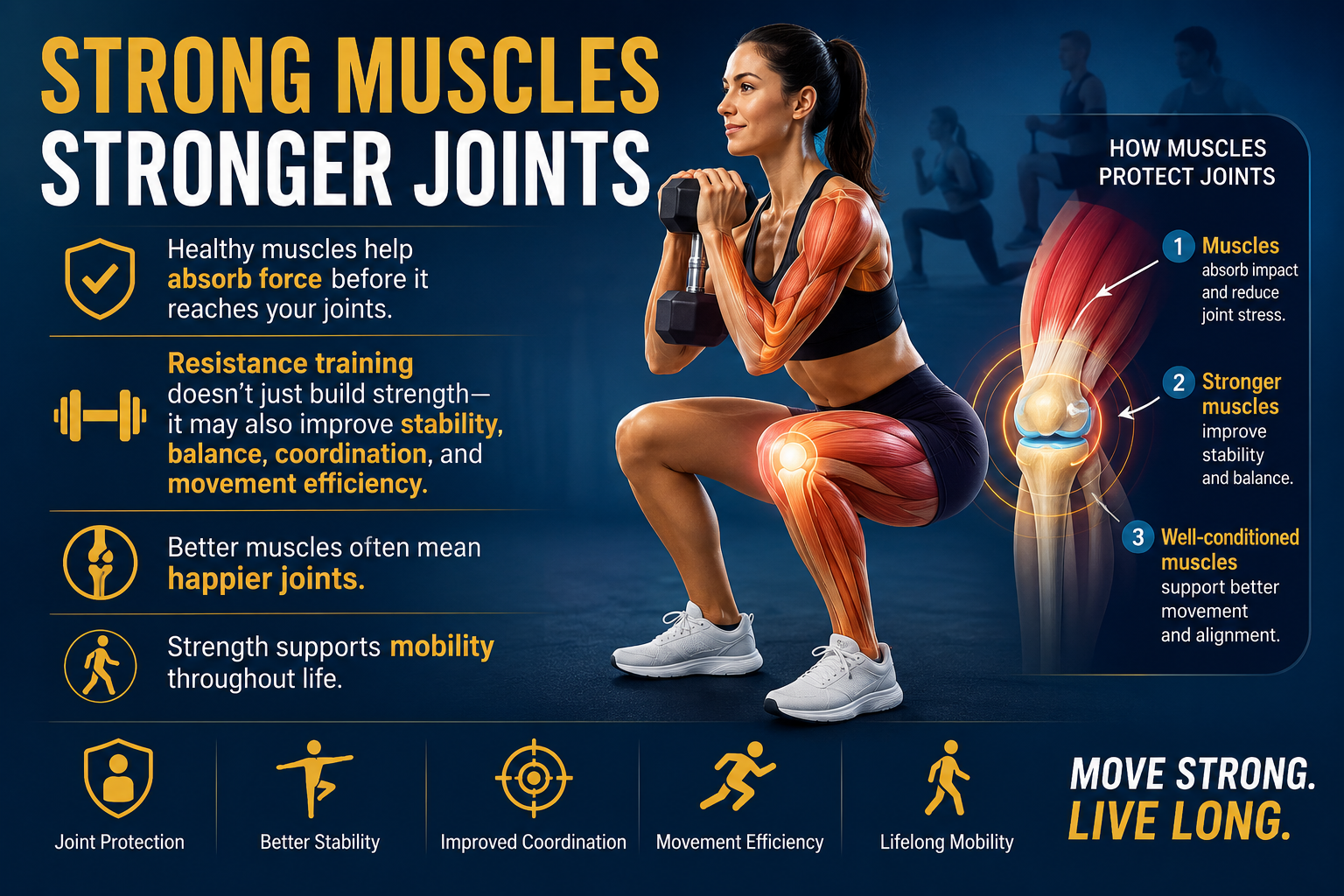
Many people think of muscles primarily in terms of appearance or athletic performance. While stronger muscles can certainly improve physical fitness, their most important role may be protecting the body during everyday movement. Healthy muscles help stabilize joints, absorb impact, and support efficient movement patterns that reduce unnecessary stress on bones, cartilage, tendons, and ligaments.
Every step we take generates forces that travel through the feet, ankles, knees, hips, and spine. When muscles surrounding these joints are strong and well-conditioned, they act as natural shock absorbers. Instead of allowing excessive force to reach the joints directly, muscles help distribute mechanical loads more evenly throughout the body. This protective function becomes increasingly important as we age, when natural changes in muscle mass and connective tissue may affect stability and movement.
Resistance training is one of the most effective ways to maintain and improve muscular strength. Contrary to common misconceptions, resistance exercise is not limited to bodybuilders or competitive athletes. It can include bodyweight exercises, resistance bands, free weights, weight machines, or functional movements that challenge the muscles safely and progressively.
The benefits of resistance training extend well beyond muscle size. Regular strength training may improve joint stability by strengthening the muscles that surround and support major joints. Stronger muscles help control movement more effectively, reducing unnecessary joint motion and improving alignment during activities such as walking, climbing stairs, lifting objects, or participating in recreational sports.
Balance and coordination also benefit from regular resistance exercise. Muscles continuously communicate with the nervous system through specialized sensory receptors that provide information about body position and movement. As strength improves, this communication often becomes more efficient, supporting better posture, quicker reactions, and improved coordination. These adaptations may help reduce the risk of falls and injuries, particularly among older adults.
Another important benefit is movement efficiency. Strong muscles require less relative effort to perform daily tasks, allowing individuals to move with greater confidence and less fatigue. Activities that once felt physically demanding—carrying groceries, gardening, standing from a chair, or playing with grandchildren—often become easier when muscular strength improves. Better movement efficiency may also encourage people to remain physically active, creating a positive cycle that further supports overall health.
Resistance training also contributes to long-term metabolic health. Skeletal muscle plays a central role in glucose regulation, energy metabolism, and insulin sensitivity. Maintaining healthy muscle mass supports not only mobility but also broader physiological systems involved in healthy aging. Strong muscles therefore benefit much more than the joints alone—they contribute to the health of the entire body.
Importantly, effective strength training does not require extremely heavy weights or lengthy workouts. Consistency is generally more valuable than intensity. Performing resistance exercises two or three times per week while gradually increasing difficulty over time allows muscles to adapt safely. Adequate recovery, balanced nutrition, sufficient protein intake, hydration, and quality sleep further support muscle repair and growth.
Proper exercise technique is equally important. Individuals with existing joint pain, chronic medical conditions, or previous injuries should consider consulting a qualified healthcare professional or certified exercise specialist before beginning a new resistance-training program. Personalized guidance can help ensure exercises are appropriate for individual needs and abilities.
Healthy joints depend on many interconnected factors, including muscle strength, flexibility, cardiovascular fitness, nutrition, sleep, body weight, and recovery. No single exercise or supplement can fully protect the joints on its own. Instead, lifelong mobility is best supported through a comprehensive lifestyle that combines regular physical activity with healthy daily habits.
Ultimately, stronger muscles help create a stronger foundation for movement. By absorbing force, improving stability, enhancing balance, and promoting efficient movement, healthy muscles help protect the joints throughout daily life. Investing in muscular strength today can support greater independence, confidence, and mobility for years to come, making strength training one of the most valuable components of preventive health and healthy aging.
Healthy Joints Depend on Healthy Cartilage
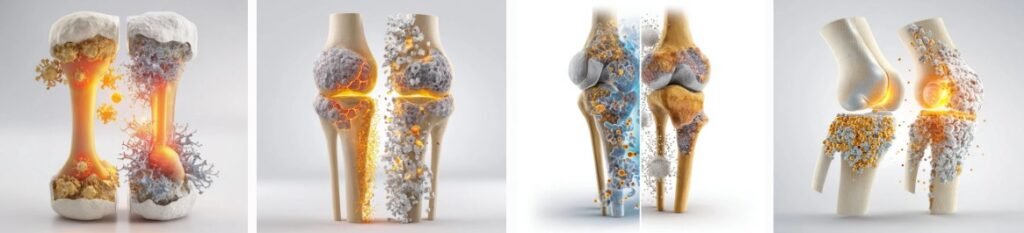
The illustration highlights the progressive changes that can occur within a joint as cartilage gradually deteriorates. Healthy cartilage provides a smooth, resilient surface that allows bones to glide effortlessly during movement while absorbing mechanical forces generated by walking, climbing stairs, or exercising. It also works together with synovial fluid, ligaments, tendons, muscles, and surrounding bone to maintain stable and pain-free motion.
As cartilage becomes thinner or damaged through aging, repetitive stress, injury, or chronic inflammation, the joint’s protective cushioning may decline. Increased friction between bone surfaces can contribute to stiffness, reduced mobility, discomfort, and changes in joint structure over time. The surrounding tissues—including muscles, ligaments, and the joint capsule—may also be affected as the body attempts to compensate for altered movement patterns.
Modern research increasingly recognizes that joint health is influenced by many interconnected biological systems rather than cartilage alone. Regular low-impact exercise, resistance training, healthy body weight, balanced nutrition, quality sleep, and effective inflammation management all contribute to maintaining healthy joint function. Strong muscles help absorb impact before it reaches the joints, while consistent movement nourishes cartilage by promoting the circulation of synovial fluid.
Although aging cannot be stopped, healthy lifestyle habits may help preserve joint function, support mobility, and promote long-term musculoskeletal health. Protecting the entire joint system—not just the cartilage—is a key principle of preventive medicine and healthy aging.
Movement Is Medicine for Your Joints
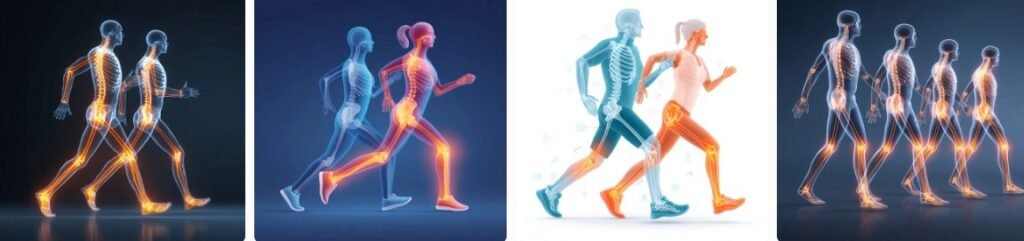
The images illustrate one of the most important principles of musculoskeletal health: joints are designed to move. Every step, stretch, and stride activates a remarkable network of bones, cartilage, muscles, tendons, ligaments, and nerves working together to produce smooth, coordinated movement. Rather than simply wearing out with age, healthy joints often benefit from regular, moderate physical activity.
Walking is one of the safest and most accessible forms of exercise for people of all ages. As the body moves, muscles absorb impact forces before they reach the joints, while coordinated muscle contractions improve stability and balance. Movement also stimulates the circulation of synovial fluid—the natural lubricant that nourishes cartilage and helps reduce friction between joint surfaces. Because cartilage has no direct blood supply, regular motion plays an essential role in delivering nutrients and supporting its long-term health.
Consistent physical activity provides benefits beyond the joints themselves. Walking helps strengthen muscles, improve cardiovascular fitness, support healthy body weight, enhance bone health, and promote better coordination. It may also reduce stiffness after prolonged sitting and contribute to greater flexibility and confidence during daily activities.
The goal is not intense exercise but sustainable movement. Combined with resistance training, adequate recovery, balanced nutrition, and healthy sleep, regular walking forms a powerful foundation for lifelong mobility. Healthy movement is one of the simplest and most effective investments in joint function, independence, and healthy aging.
#JointGenesis #StrengthTraining #HealthyMuscles #JointSupport #Mobility #ActiveAging #ExerciseScience #Longevity #Wellness #HealthyLiving
Start protecting your mobility today — one small step can support stronger joints, better movement, and healthier aging.